
The Geometry of Being
Critique
1. Introduction This abstract painting presents a vibrant intersection of geometric forms and primary colors. The composition, reminiscent of early 20th-century modernism, features a grid-like structure that organizes the visual space. The artist employs a heavy impasto technique, adding a significant tactile quality to the bold blocks of color. 2. Description The work is divided into several rectangular sections filled with intense shades of red, yellow, and blue. Thick, dark lines separate these color fields, suggesting a window frame or an industrial architectural structure. In the foreground, a reflective, tilted surface holds a small, circular metallic object, while a tall cylindrical form occupies the right edge of the frame. 3. Analysis The composition relies heavily on the tension between horizontal and vertical lines, which is disrupted by the diagonal placement of the foreground plane. The color palette is restricted but impactful, using pure pigments that create a high-contrast environment. The visible, textured brushstrokes within each color block add a layer of complexity and movement to otherwise static geometric shapes. 4. Interpretation and Evaluation The piece successfully bridges the gap between strict geometric abstraction and expressive, textured painting. The interplay of light on the metallic surfaces and the depth created by the overlapping planes evoke an urban or industrial interior. This work demonstrates a sophisticated understanding of spatial organization and the emotive power of raw color and texture. 5. Conclusion While the initial impression is one of rigid structure, the richness of the paint application reveals a more spontaneous and organic process. This painting is a powerful exploration of balance and contrast within a modern aesthetic framework. It stands as a compelling example of how traditional geometric themes can be revitalized through a more tactile and expressive approach.
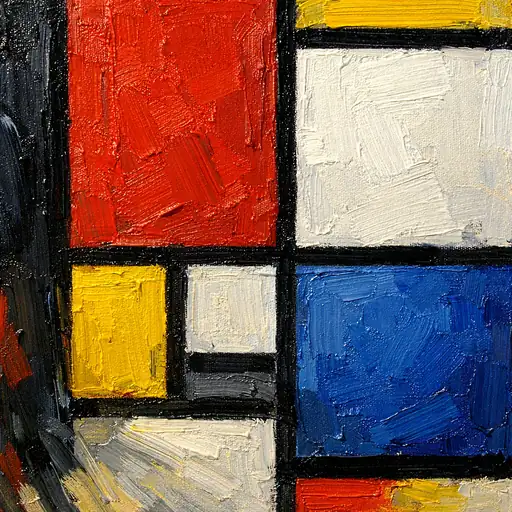 Equilibrium within the Primary Grid
 Echoes Across the Horizon
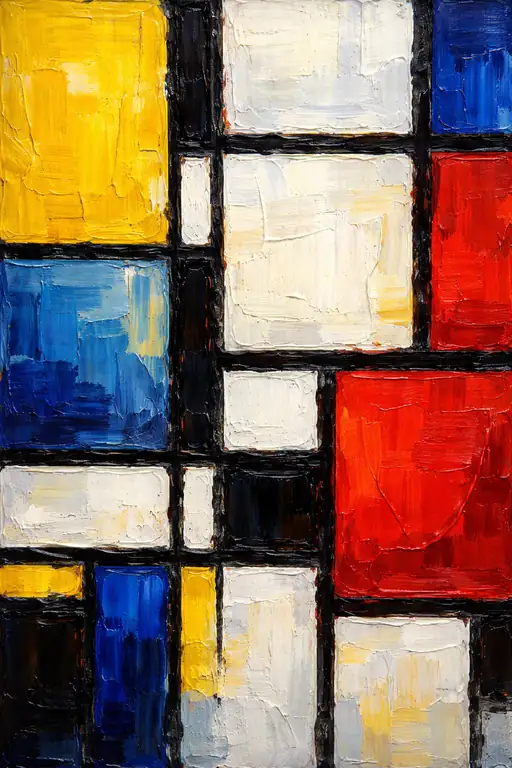 Order and Impulse
 Rhythm of the Primary Soul
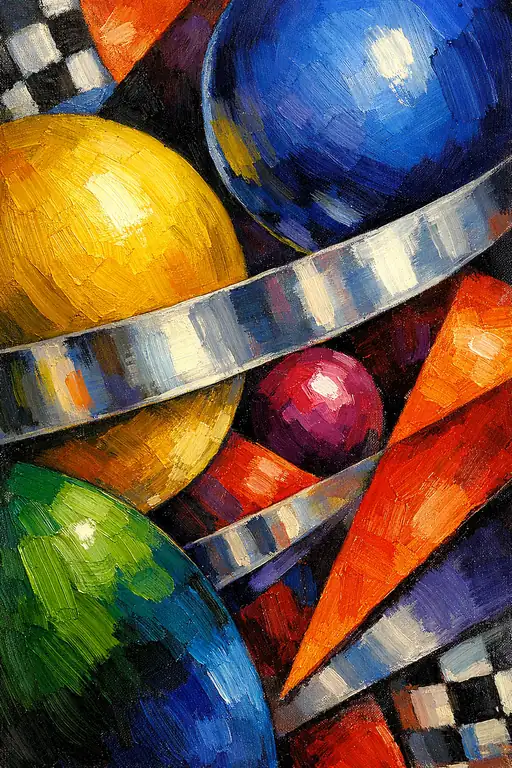 Dynamic Symphony of Shapes
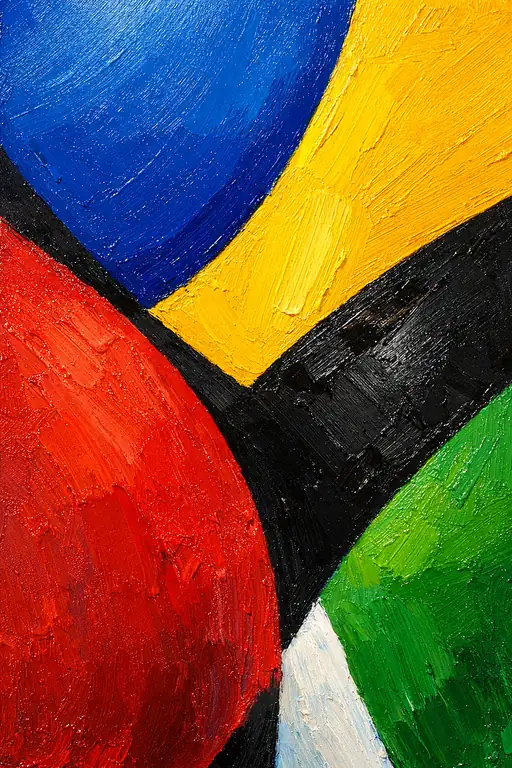 The Bold Pulse of Colors
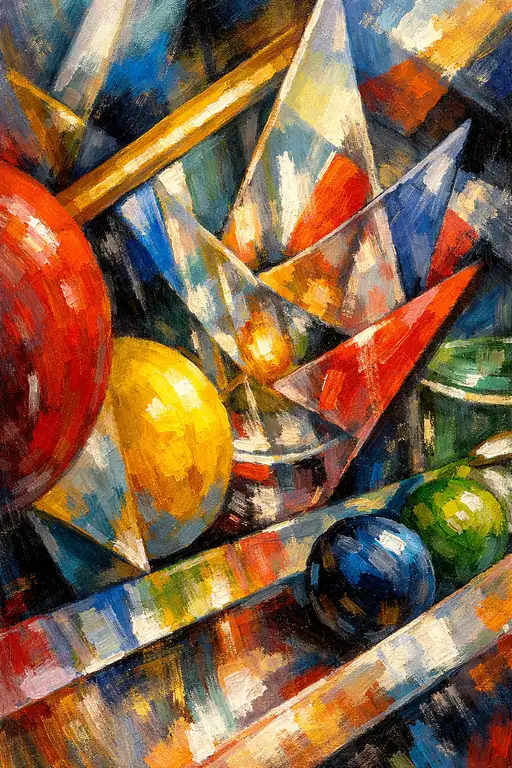 Convergence of Prismatic Dreams
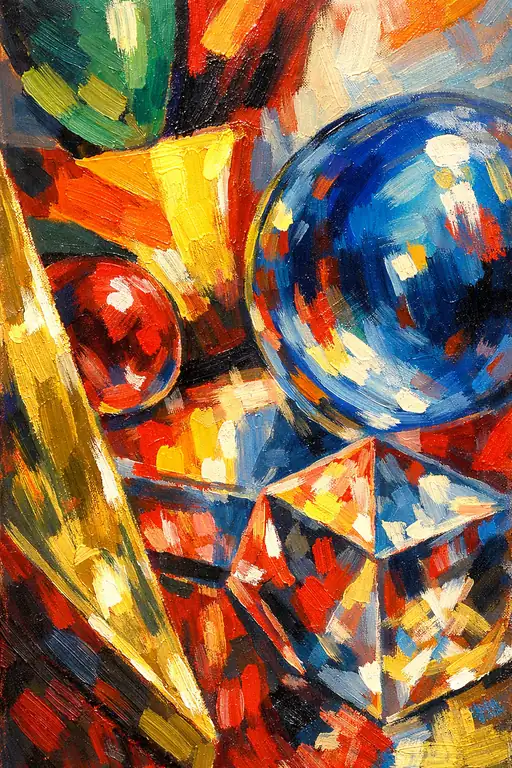 Collision of Primal Echoes
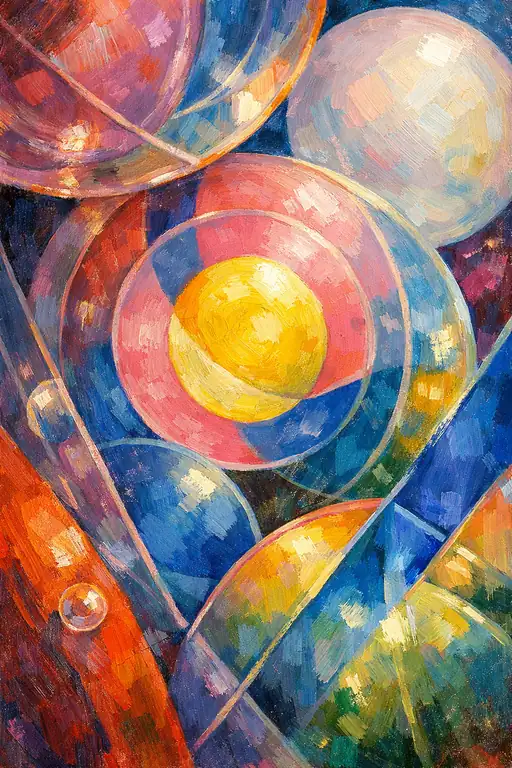 Rhythm of the Prism Bubbles
 Symphony of Geometric Dimensions
 Geometric Rhythm of My Mind