
Monologue of the Gilded Knight
Critique
1. Introduction This painting presents a surreal and intellectually evocative scene that blends elements of classical architecture with oversized, symbolic objects. The composition is set within a grand, arched hall featuring a checkered floor, where monumental chess pieces and instruments of time and observation are meticulously arranged. It draws inspiration from 18th-century architectural fantasies, yet it introduces a dreamlike scale that challenges the viewer’s perception of reality and space. 2. Description In the foreground, a large, golden chess knight stands as a dominant figure, its surface reflecting a warm, metallic luster. Beside it lie an ornate pocket watch and a metallic tube, possibly a telescope or a scroll case, partially covered by heavy red velvet drapery. The middle ground reveals more chess knights receding into the distance across a vast black-and-white marble floor. Through a central archway, a vista of a classical city with soaring towers and smaller, distant figures unfolds under a sunlit, cloudy sky. 3. Analysis The artist employs a strong linear perspective, with the tiles of the checkered floor converging toward the distant city to create a profound sense of depth. High-contrast lighting from an unseen source on the upper left casts long, dramatic shadows that emphasize the three-dimensional form of the knight and the texture of the marble. The palette is rich and theatrical, dominated by deep ochres, blacks, and whites, with the vibrant red of the fabric providing a stark visual counterpoint. Every element is rendered with a precise, almost academic level of detail. 4. Interpretation and Evaluation The juxtaposition of the chess pieces, the clock, and the classical city suggests a complex allegory of strategy, time, and civilization. The oversized nature of the objects transforms the scene into a stage where human life appears secondary to the grand concepts they represent. The technical execution is masterful, particularly in the rendering of light on the golden surface of the knight and the varying textures of velvet and stone. This work succeeds in creating a sense of quiet, monumental mystery that invites prolonged contemplation of its symbolic narrative. 5. Conclusion Ultimately, the painting is a sophisticated exploration of space and symbolism, skillfully executed in a style that honors classical traditions while embracing surrealist themes. The initial impact of its grand scale transitions into a deeper appreciation for the meticulous craftsmanship and the layered meanings within the composition. It remains a compelling example of how historical aesthetics can be effectively recontextualized to create a modern, thought-provoking visual experience.
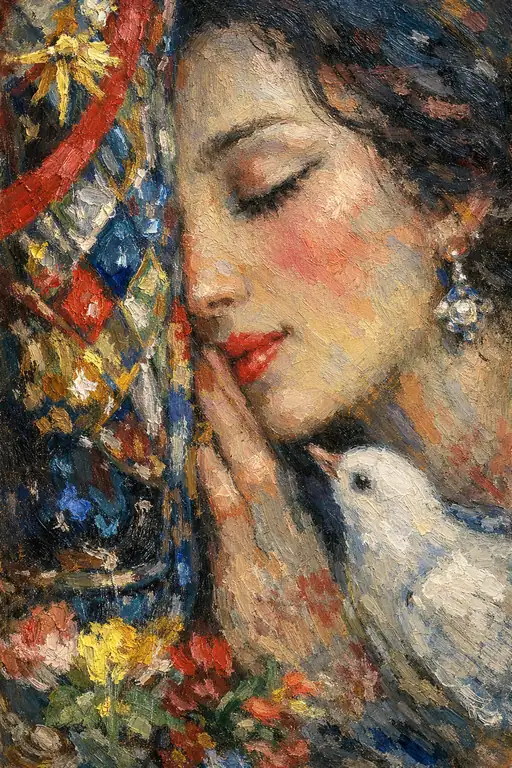 The Slumbering Dove's Dream
 The Stargazer's Silent Oracle
 The Marble Spiral of Ambition
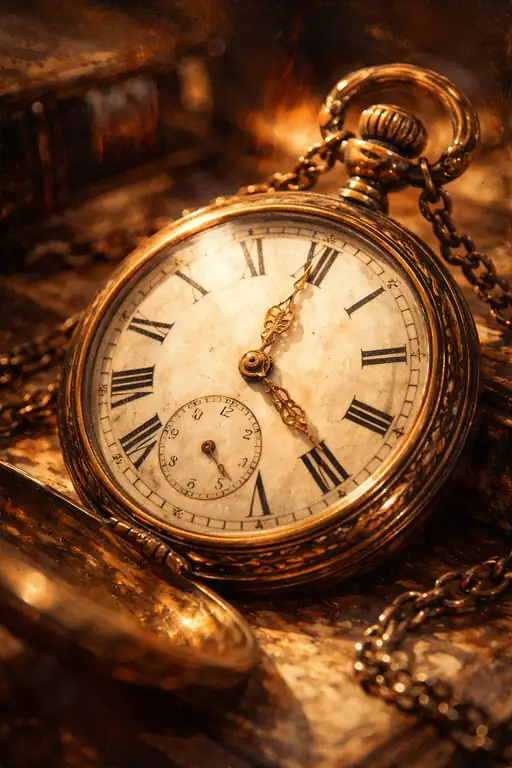 A Nostalgic Meditation on Time's Elegance
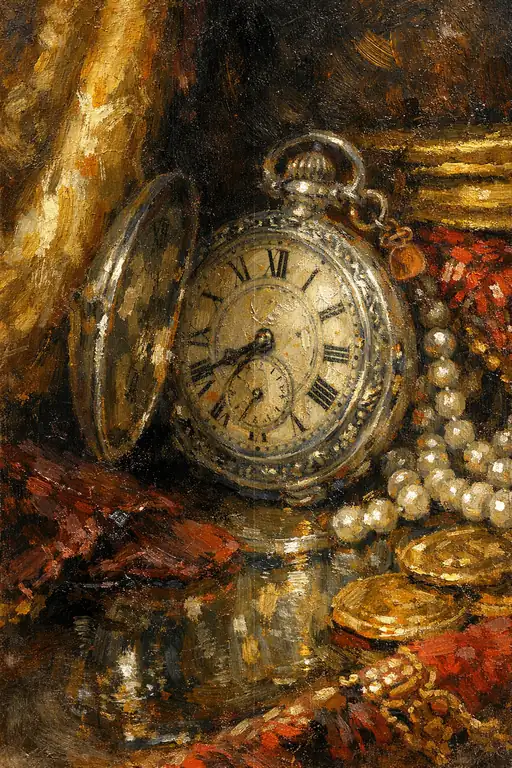 Echoes of Forgotten Time
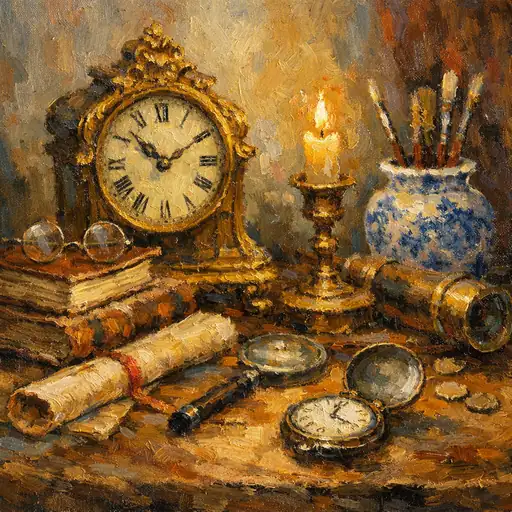 Whispers of the Golden Hour
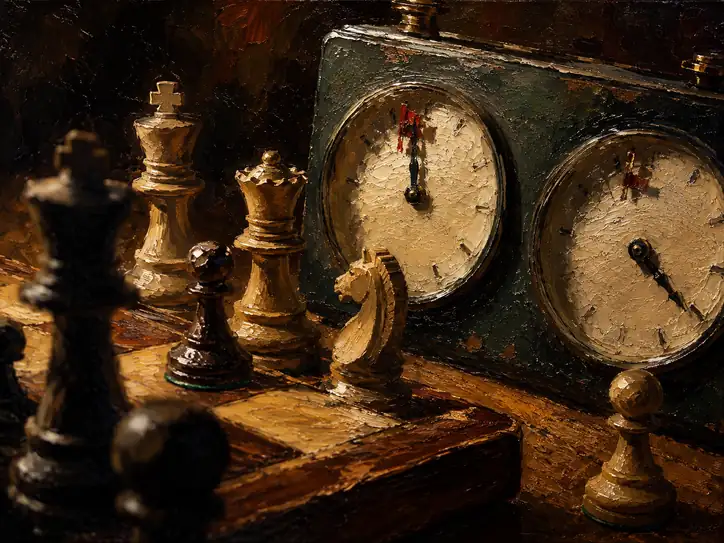 A Breath Before the Fall
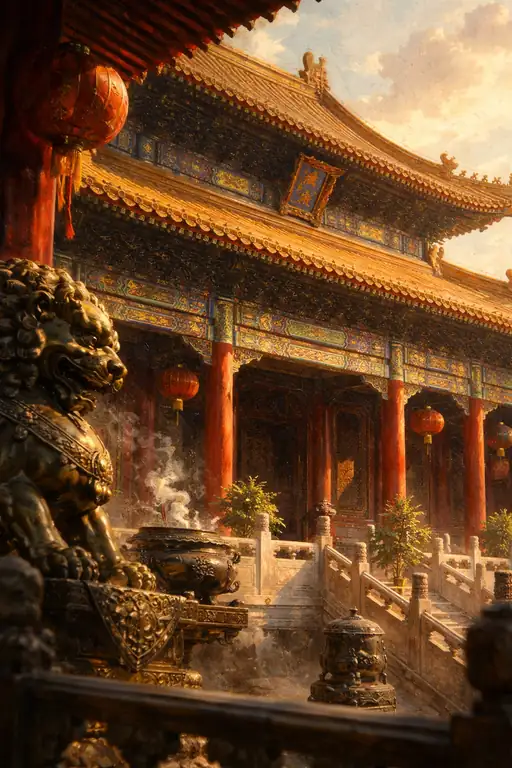 The Sentinel of the Golden Palace
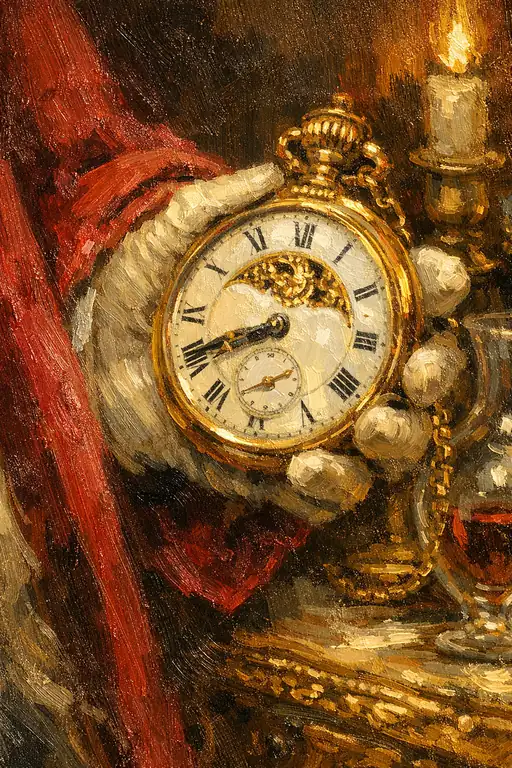 The Elegant Weight of Time
 Rococo Dreams in the Dome
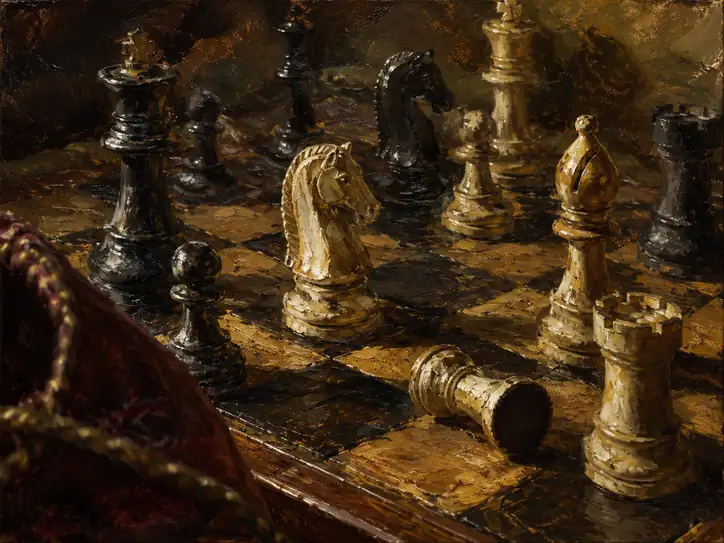 Fate Decided in Silence
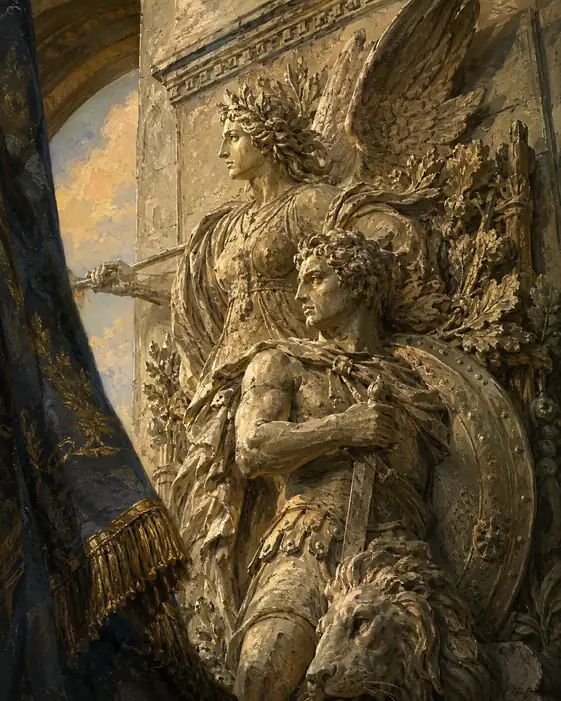 Eternal Anthem of Courage