
Echoes of a Thousand Jewels
Critique
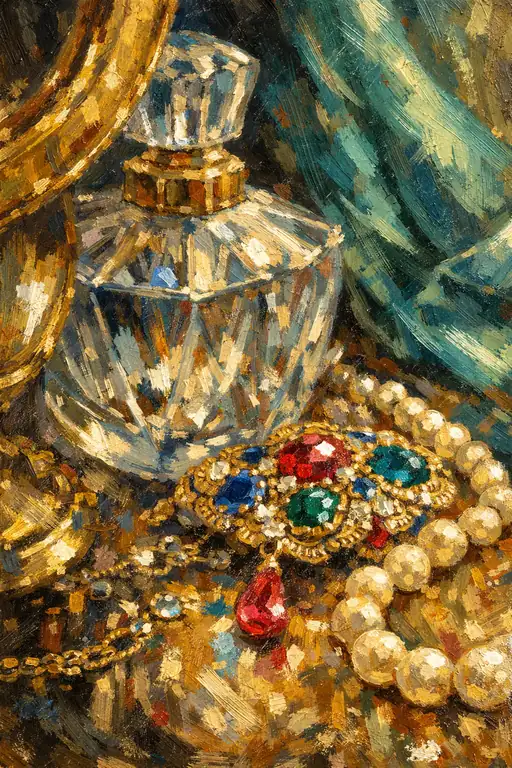
1. Introduction This oil painting presents a captivating close-up study of opulence, focusing on an array of oversized gemstones and rich textiles. The composition is tightly framed, inviting the viewer to appreciate the raw materiality and the interplay of light on diverse surfaces. By concentrating on these luxurious details, the artist evokes a sense of historical grandeur and sensory indulgence. This critique explores the masterful use of impasto and the vibrant color palette that brings this still life to life. 2. Description The center of the piece features a large, multifaceted blue sapphire and a brilliant red ruby, both encased in intricate gold settings embellished with smaller pearls and diamonds. To the right, a swath of turquoise silk draped elegantly contrasts with a heavily textured, fiery orange fabric that occupies the lower corner. The background remains dark and indistinct, which further emphasizes the brilliance of the jewels and the varied textures of the cloth. Every element is rendered with bold, decisive strokes that highlight the physical presence of the objects. 3. Analysis The artist’s technique is characterized by thick, expressive brushwork that gives the painting a remarkable three-dimensional quality. The highlights on the gemstones are achieved through sharp, white dabs of paint, simulating the reflection of an unseen light source. In contrast, the orange fabric is depicted with long, rhythmic strokes that follow its folds, creating a sense of weight and movement. The color harmony is achieved through the primary colors of the gems—red, blue, and yellow gold—complemented by the secondary orange and turquoise, creating a visually stimulating experience. 4. Interpretation and Evaluation This work can be interpreted as a celebration of craftsmanship and the beauty of inanimate objects. The exaggerated scale of the jewels suggests a world of fantasy or royalty, where every detail is magnified for maximum impact. The tactile nature of the paint itself becomes a secondary subject, as the viewer is as much engaged with the physical application of pigment as with the items depicted. The painting successfully balances the precision required for jewelry with the freedom of expressionist textile rendering, showcasing the artist's technical versatility. 5. Conclusion The initial attraction to the brilliant colors is quickly followed by a deeper appreciation for the artist's ability to manipulate light and shadow. The painting transcends its simple subject matter by transforming static objects into a dynamic display of energy and texture. It serves as a testament to the power of close observation and the ability of art to elevate the mundane into the extraordinary. This piece leaves a lasting impression of richness, both in terms of its subject and its masterful execution.
Same Subcategory
 Shattered Radiance of a Whispered Scent
 The Primal Heart of Radiant Gems
Similar Artworks
 A Symphony of Scattered Splendor
 A Symphony of Brilliance: The Overwhelming Treasure Trove
 Prisms of a Forgotten Dream
 Opulent Symphony of Hidden Gems and Royal Splendor
 Treasures of the Glistening Depths
 Whispers of Opulence
 The Pulse of Prismatic Passion
 The Emerald's Silent Gaze
 A Symphony of Precious Stones
 The Starlight Captured Within