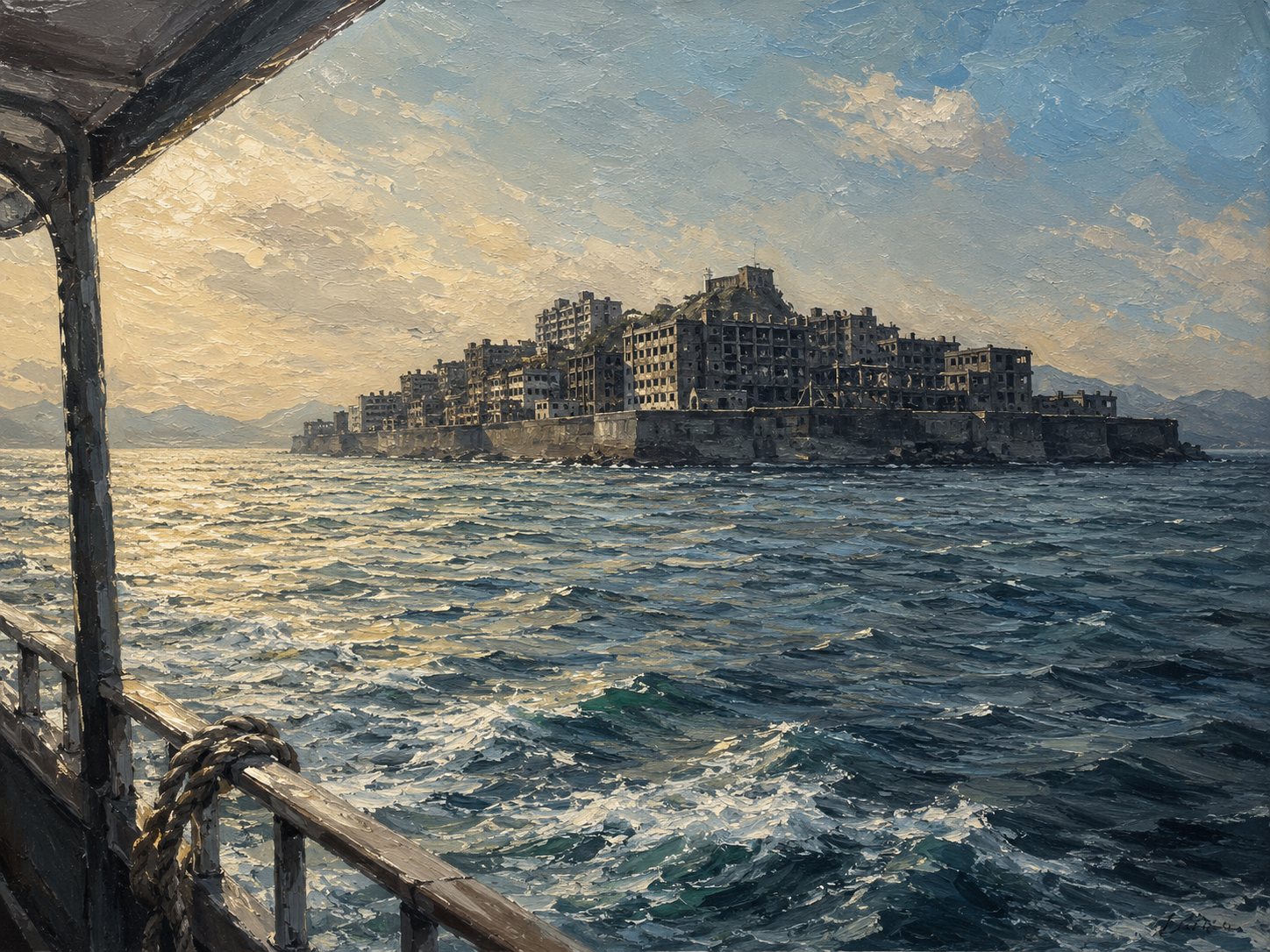
The Iron Giant's Final Sunset
Critique
1. Introduction This oil painting presents a dramatic view of Hashima Island, commonly known as Gunkanjima, as seen from the deck of a moving vessel. The composition places the viewer directly on the boat, looking across a turbulent sea toward the silhouette of the abandoned industrial island. Through a thick, textured application of paint, the artist captures a sense of rugged history and the overwhelming presence of the sea. 2. Description In the immediate foreground, the weathered railing of a boat and a coiled rope are visible on the left, rendered with bold, decisive strokes. The middle ground is dominated by deep blue waves with white crests, reflecting the golden light of a setting sun. The island itself rises in the background, a dense cluster of decaying concrete buildings that stand as silent witnesses to a bygone era under a sky filled with soft, glowing clouds. 3. Analysis The artist employs an impasto technique, using heavy layers of oil paint to create a tactile surface that mirrors the chaotic energy of the water and the crumbling texture of the ruins. A strong color contrast exists between the cool, dark tones of the ocean and the warm, incandescent yellows and oranges of the sky and the sunlit buildings. The low-angle lighting emphasizes the geometric complexity of the island’s architecture, casting long, dramatic shadows. 4. Interpretation and Evaluation The work can be interpreted as a meditation on the transience of human industry in the face of nature’s enduring power. The choice of the boat’s perspective suggests a journey of discovery or a final farewell to a disappearing world. Technically, the mastery of light and the visceral quality of the brushwork are exceptional, effectively conveying the atmosphere of a specific moment in time and space with great emotional weight. 5. Conclusion This painting successfully transforms a historical site into a powerful visual experience that balances industrial decay with natural beauty. The initial impression of a cold, abandoned place is gradually replaced by an appreciation for the warmth of the light and the vitality of the painterly surface. It stands as a significant architectural and maritime study, demonstrating a profound understanding of light, texture, and historical narrative.
Same Subcategory
Similar Artworks
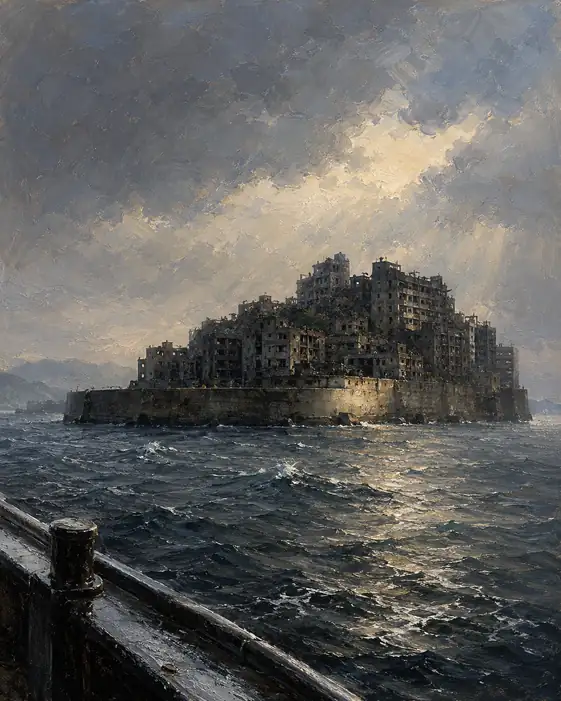 The Island That Outlived Its Voices
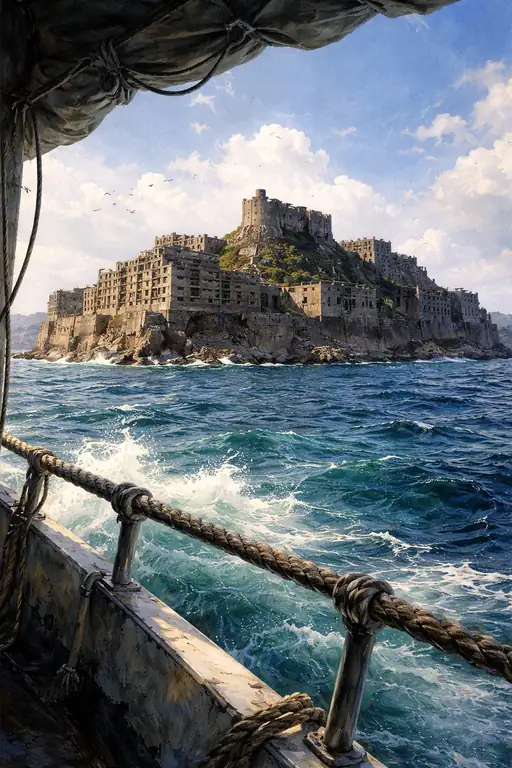 A Silent Dream of Stone and Sea
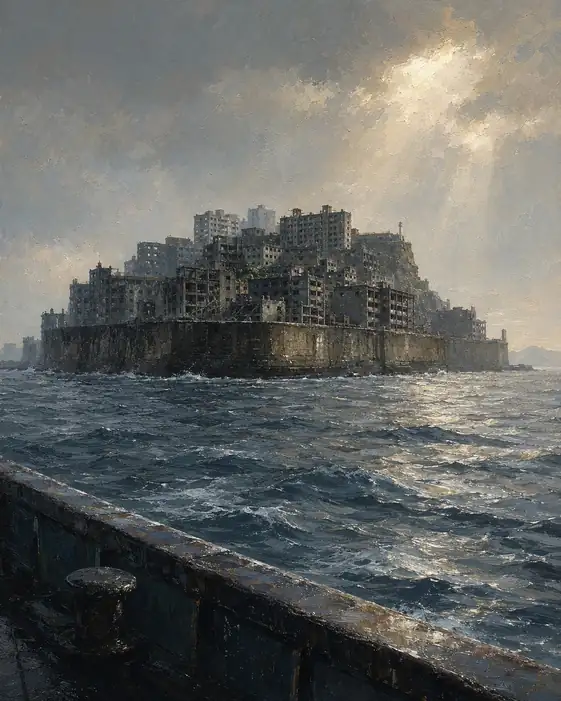 The Island Waits Beneath a Wounded Sky
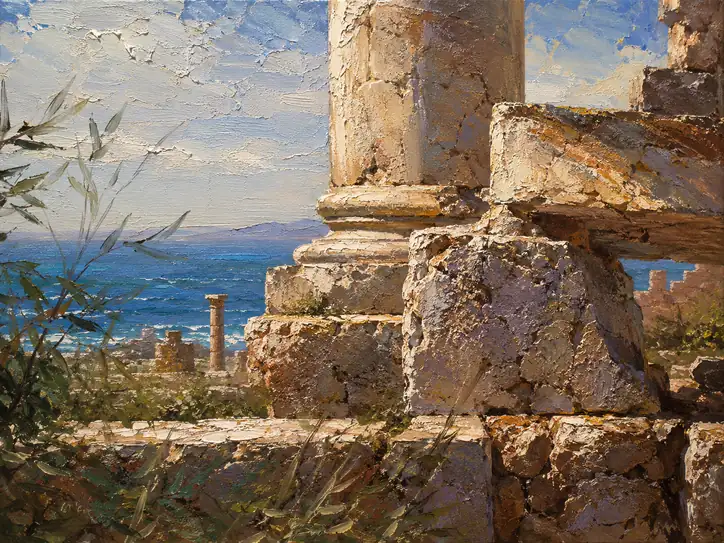 Sentinel of the Eternal Ocean
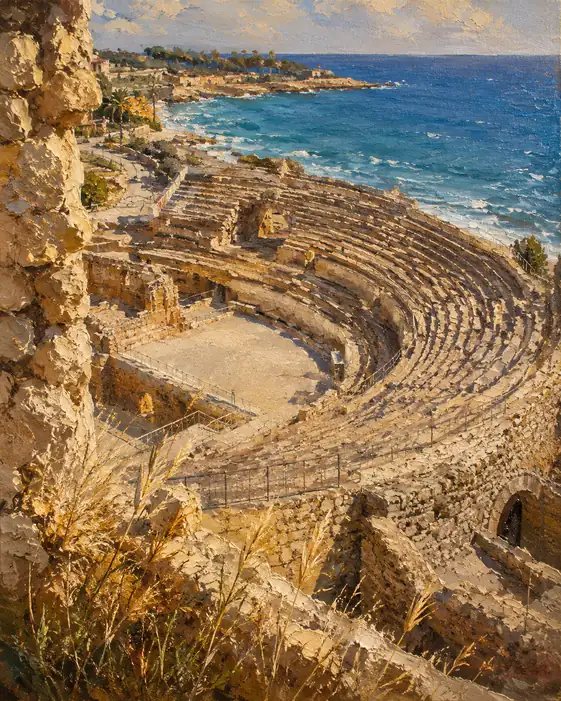 Whispers of the Eternal Stage
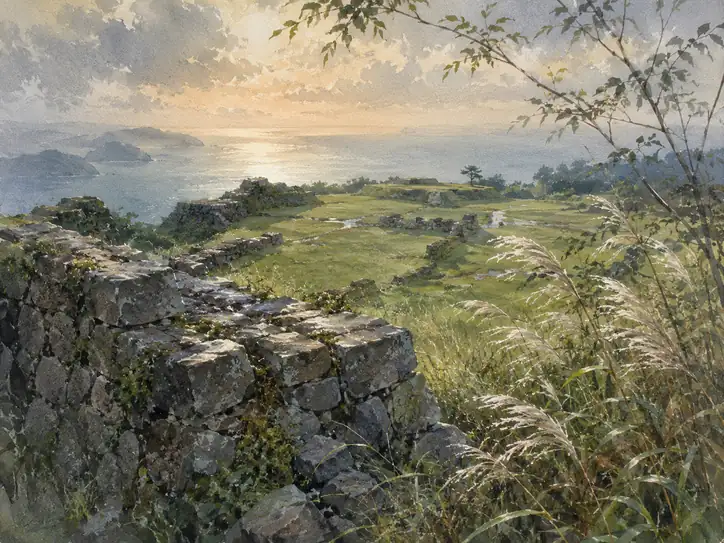 The Shore of Forgotten Dreams
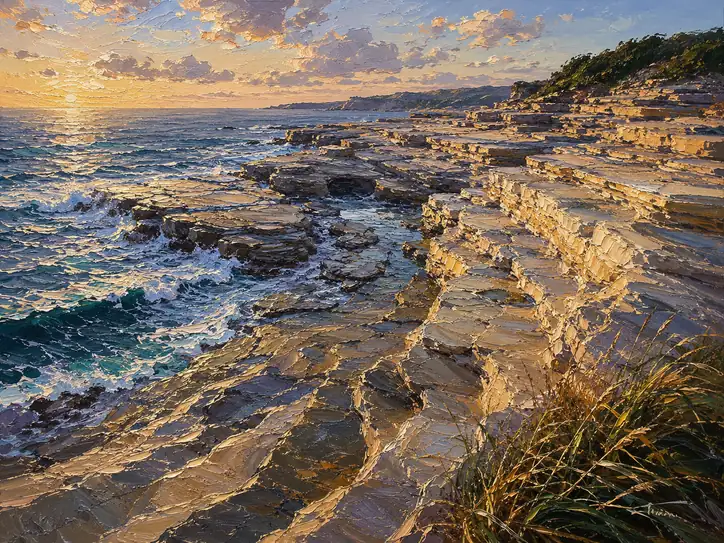 Golden Pulse of the Ancient Shore
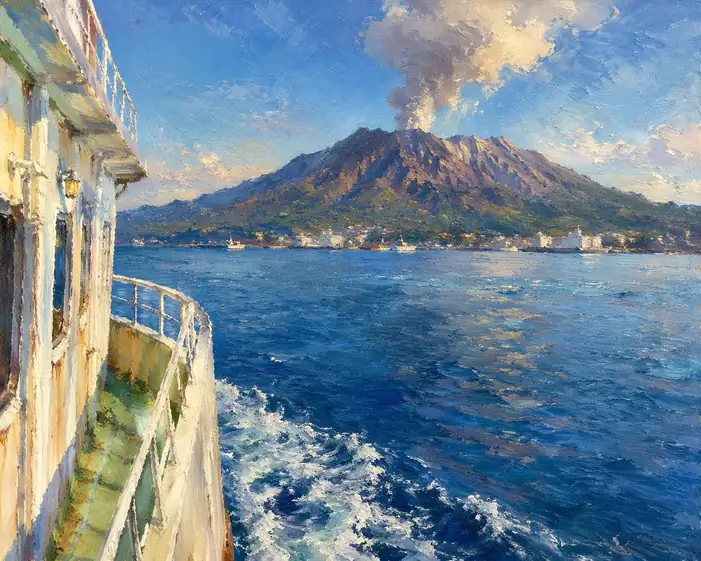 Echoes of the Fiery Peak
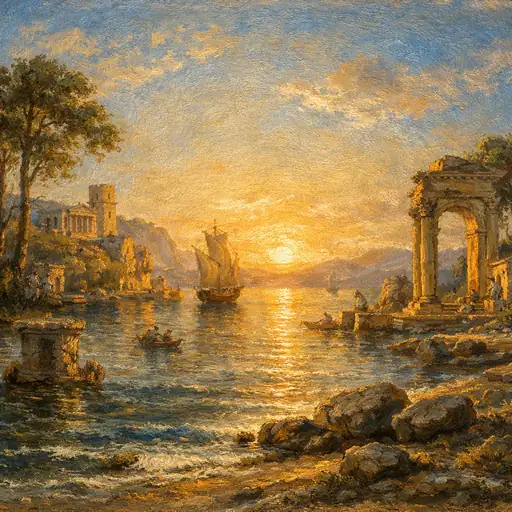 Golden Nostalgia Upon the Distant Horizon
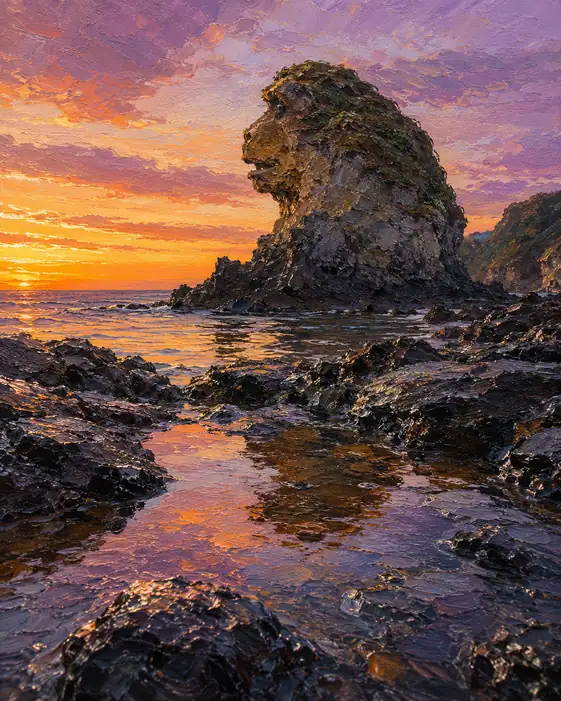 The Stone Lion Drinks the Sunset