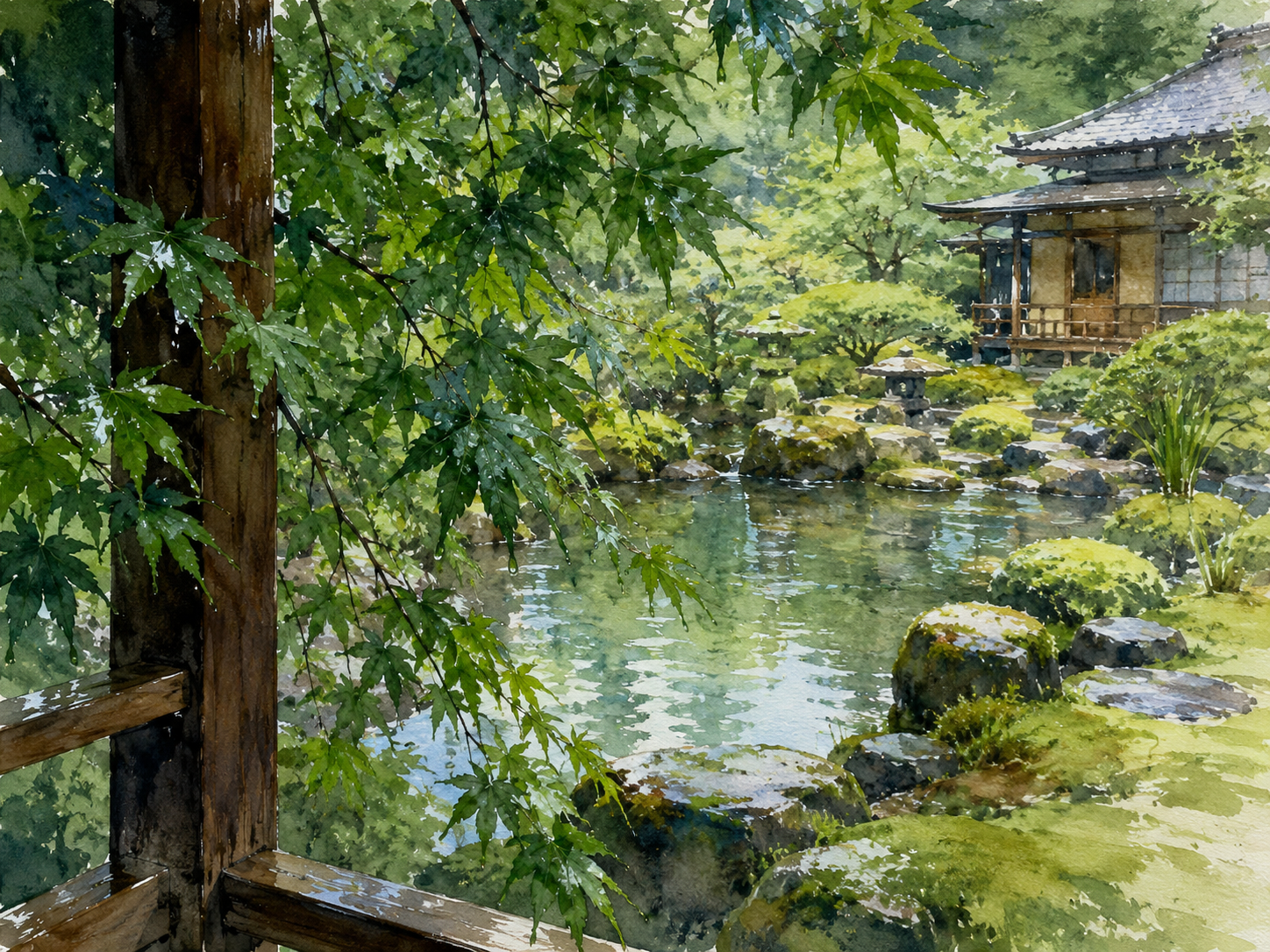
Whispers of the Summer Rain
Critique
1. Introduction This watercolor painting presents a tranquil scene of a traditional Japanese garden during the lush summer season. Framed from a wooden structure, the composition draws the viewer into a serene environment where nature and architecture coexist. The artwork establishes a profound sense of place by focusing on the interplay between organic growth and the built environment, serving as a visual meditation on natural beauty. 2. Description In the foreground, dark wooden pillars frame the view alongside vibrant green maple leaves hanging from above. The middle ground features a clear pond reflecting the verdant canopy and soft sky. Moss-covered rocks and a traditional stone lantern are meticulously placed at the water's edge. In the background, a Japanese building with shoji screens nestles among dense foliage, completing the harmonious scene. 3. Analysis The artist demonstrates mastery of watercolors through wet-on-wet techniques that create fluid reflections in the pond. A rich spectrum of greens conveys the vitality of the season, while fine brushwork is evident in the detailed maple leaves. The composition uses foreground elements to create depth, leading the eye naturally toward the distant architectural features and creating a balanced visual path. 4. Interpretation and Evaluation The work captures the aesthetic of "wabi-sabi," emphasizing the beauty of natural aging and the transient environment. The depiction of wet surfaces suggests a recent rainfall, heightening the sensory experience of coolness. This painting is highly evaluated for its technical precision and its ability to evoke peace, reflecting a deep understanding of traditional Japanese garden design principles. 5. Conclusion Through its delicate handling of light, the painting transforms a garden view into a narrative of stillness. The initial impression evolves into a deeper appreciation for the complex layers of the natural world. This artwork successfully harmonizes traditional subject matter with a refined technique, offering the viewer a moment of respite and a renewed perspective on Japanese aesthetics.
Same Subcategory
 The Garden's Silent Breath
 Tranquil Pulse of the Water Garden
Similar Artworks
 Harmony in the Sunlit Ripples
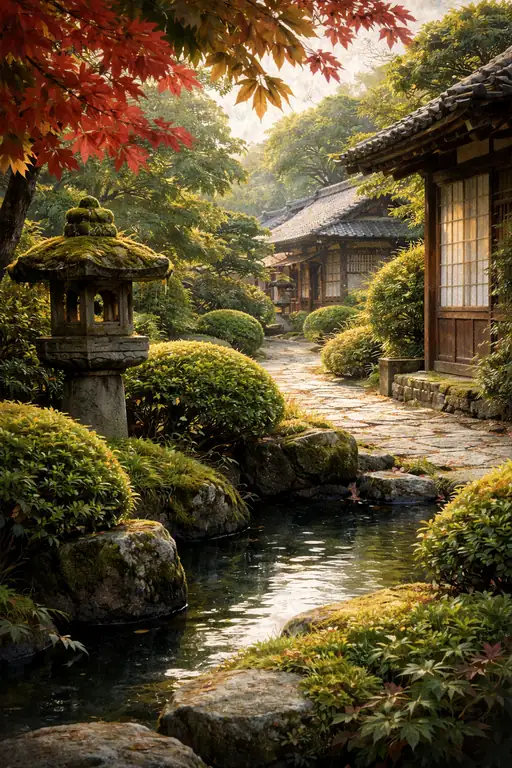 Autumn's Quietude: Reflections of a Timeless Garden
 A Single Ripple in Twilight
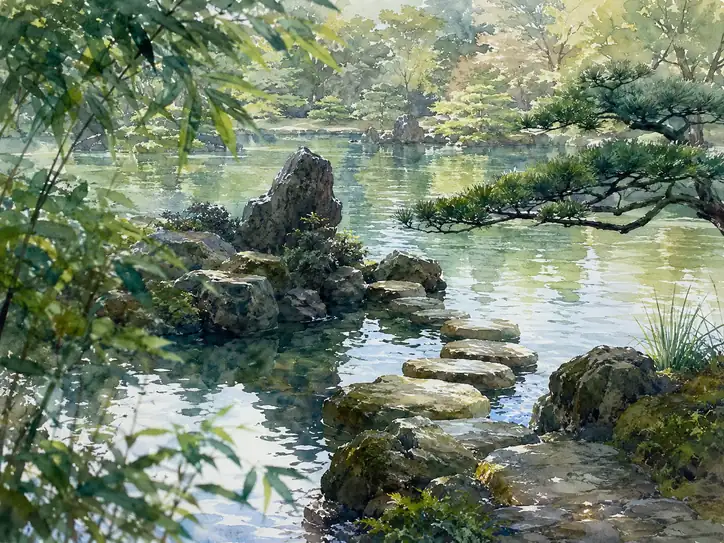 Path of Silent Stones
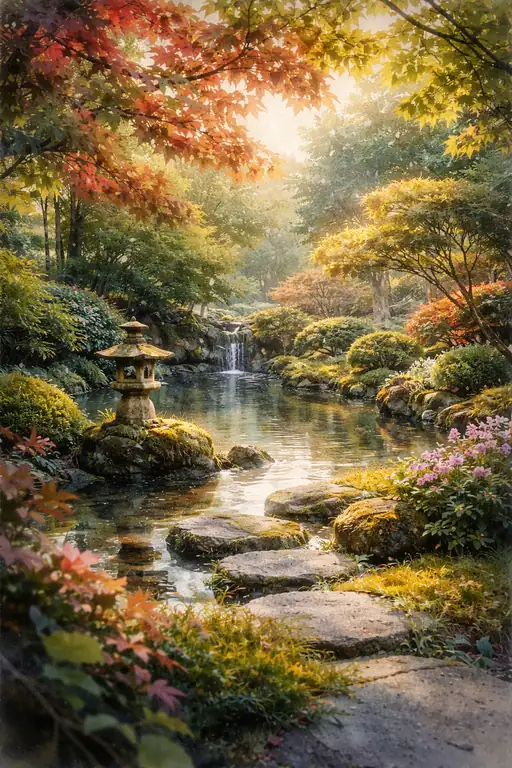 Whispers of the Stone Guardian
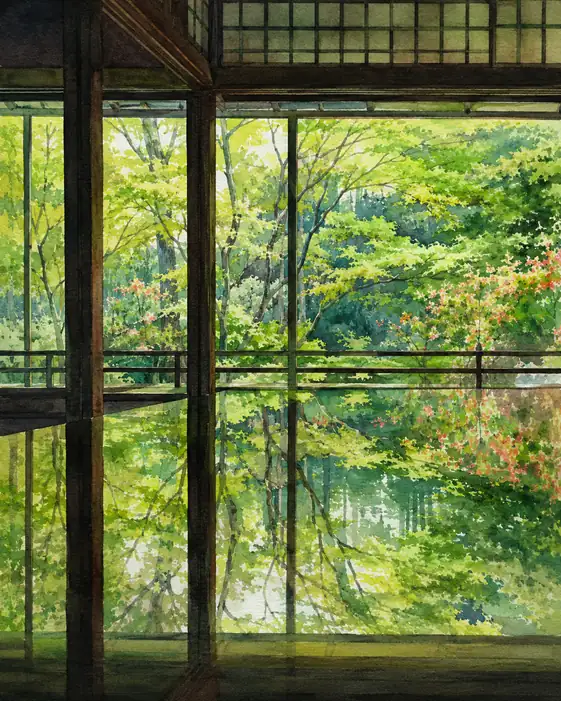 The Garden Enters the Room as Light
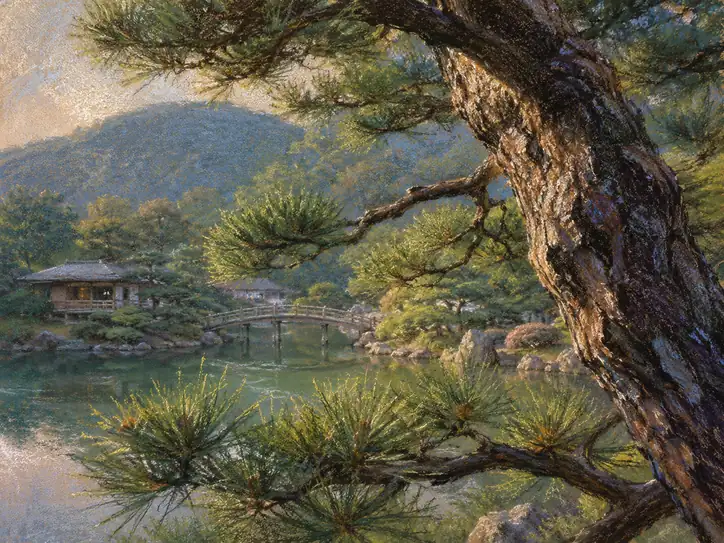 Golden Peace in the Pine-Framed Garden
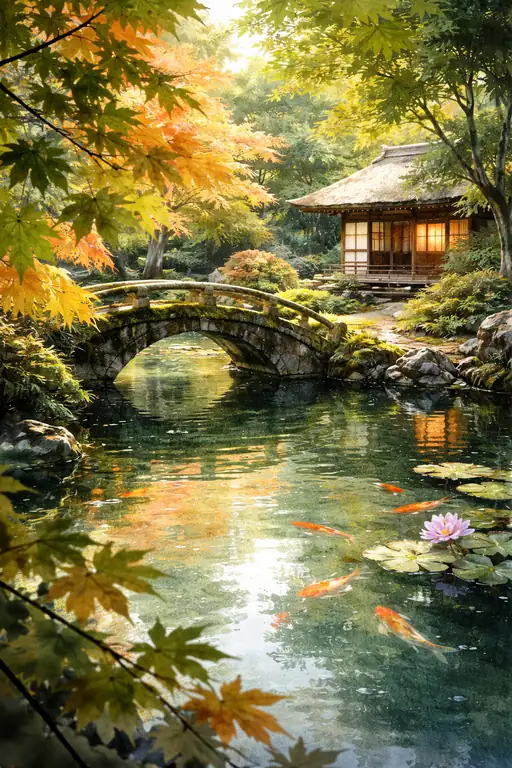 The Autumn Sanctuary of Koi
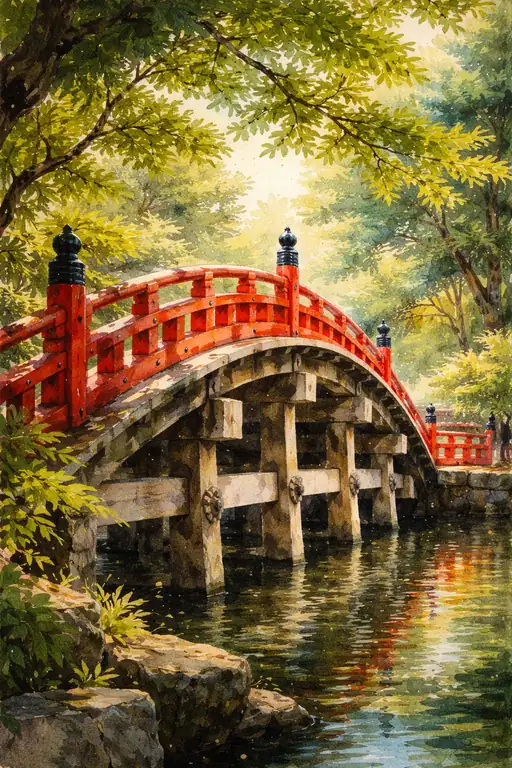 Crimson Arch Through the Sunlit Verdure
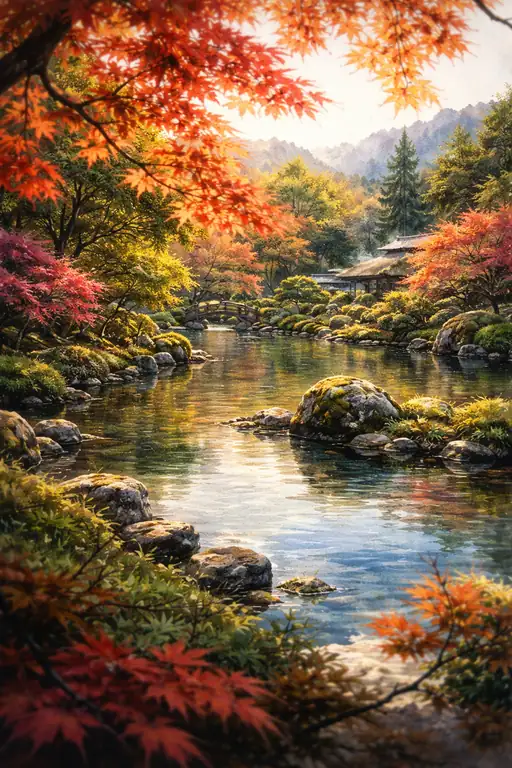 Autumn's Embrace at the Still Water