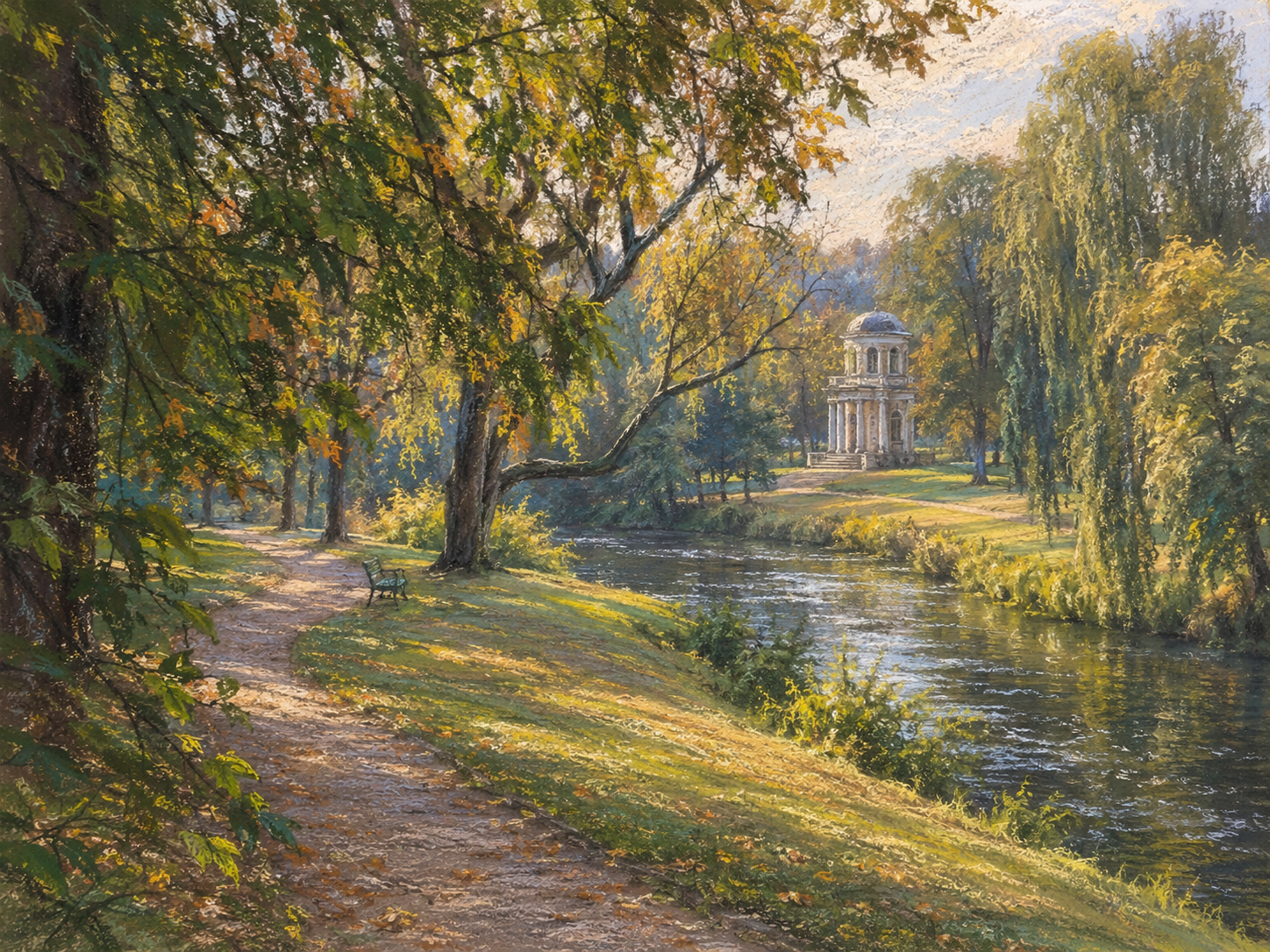
Autumn Whispers at the Monopteros
Critique
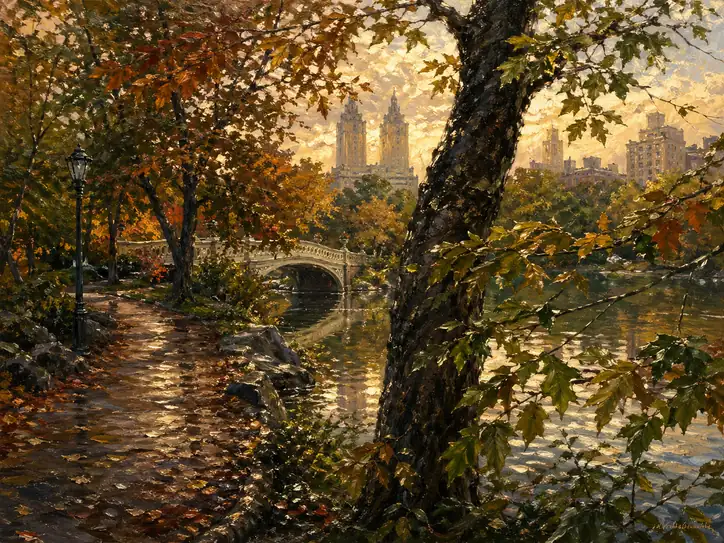
1. Introduction This radiant oil painting depicts a tranquil park landscape during the autumn season, characterized by a winding riverside path and a distant neoclassical rotunda. The composition captures the serene beauty of a managed garden, emphasizing the harmonious integration of classical architecture and natural scenery. It evokes a sense of peace and contemplation, inviting the viewer to stroll through the sun-dappled grounds. 2. Description In the foreground, a dirt path curves along a grassy riverbank, leading the eye toward a small green bench nestled under large trees with yellowing leaves. A calm river flows through the center, reflecting the soft light and the surrounding greenery. In the mid-ground, a white stone rotunda with a domed roof stands elegantly among tall, slender trees, marking a focal point against the luminous sky. 3. Analysis The artist employs a soft, impressionistic brushwork that emphasizes the play of light and shadow across the foliage and water. The color palette is dominated by warm yellows, ochres, and greens, contrasted with the cool grays of the rotunda and the dark blues of the river. Light filters through the canopy, creating a dappled effect on the grass and path, which enhances the overall sense of atmospheric depth. 4. Interpretation and Evaluation The work successfully conveys the idyllic atmosphere of a European estate garden, blending romanticism with a structured sense of perspective. The juxtaposition of the man-made rotunda with the organic forms of the weeping willows creates a balanced and aesthetically pleasing scene. The technical skill in rendering the shimmering reflections on the water and the delicate textures of the autumn leaves is particularly noteworthy. 5. Conclusion This painting is a masterful tribute to the timeless beauty of the natural world when shaped by human design. While it initially presents a simple park scene, the sophisticated handling of light and composition reveals a deeper appreciation for the tranquility of the setting. Ultimately, the work serves as a compelling exploration of the aesthetic dialogue between classical architecture and the changing seasons.
Same Subcategory
Similar Artworks
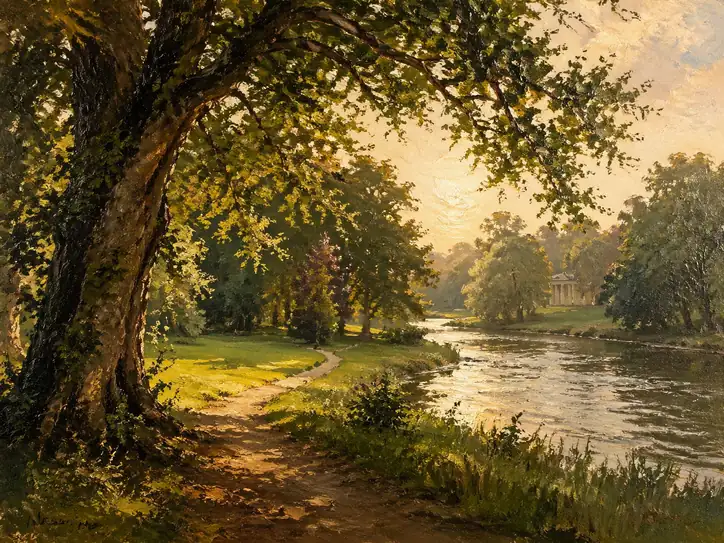 The Neoclassical Echo at Sunset
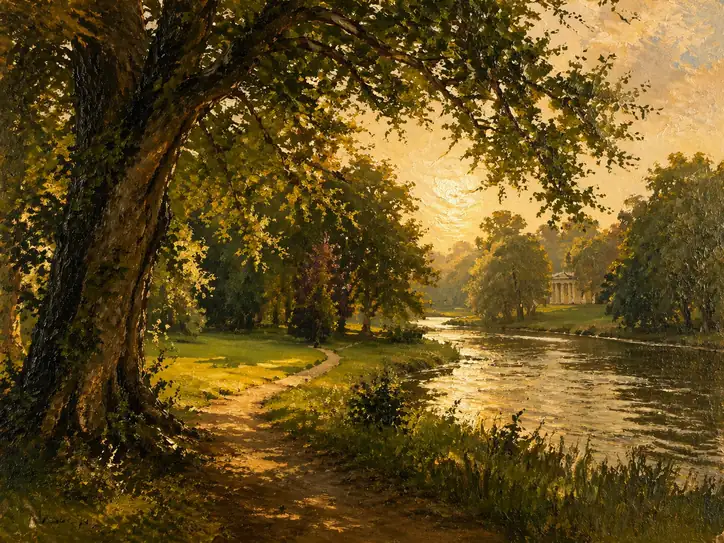 Pastoral Glow by the Classical Pavilion
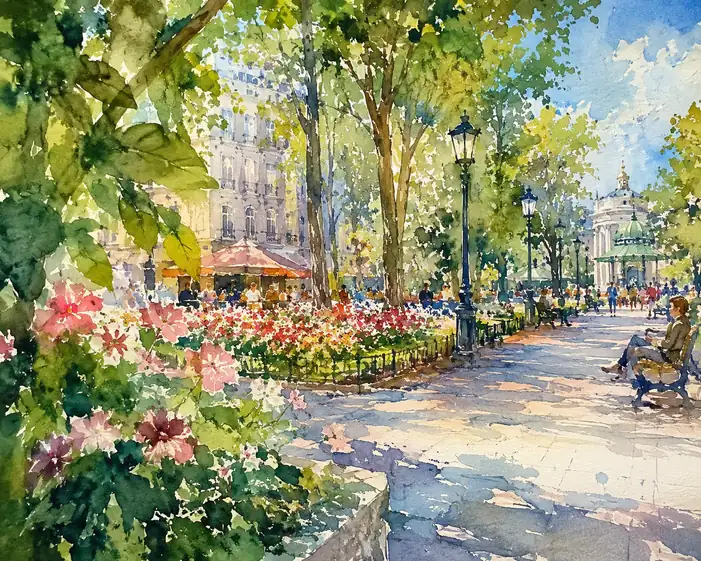 Sunlight and Shadows in the Tuileries Breeze
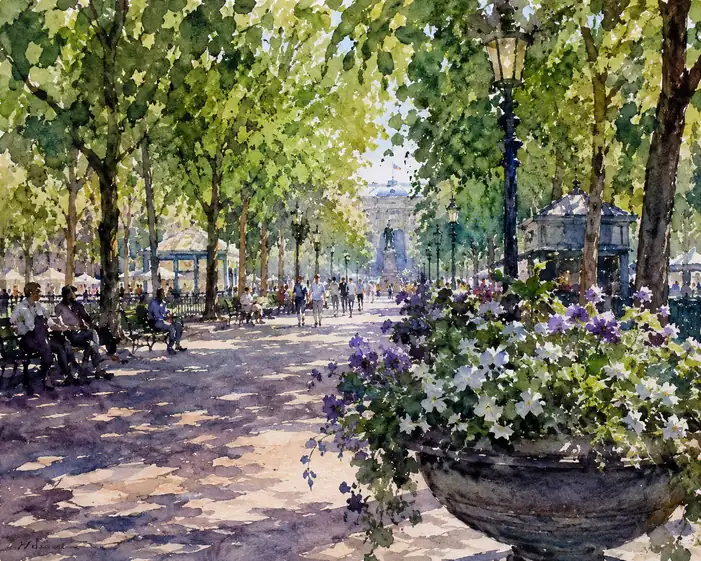 Azure Echoes in the Silent Pavilion Garden
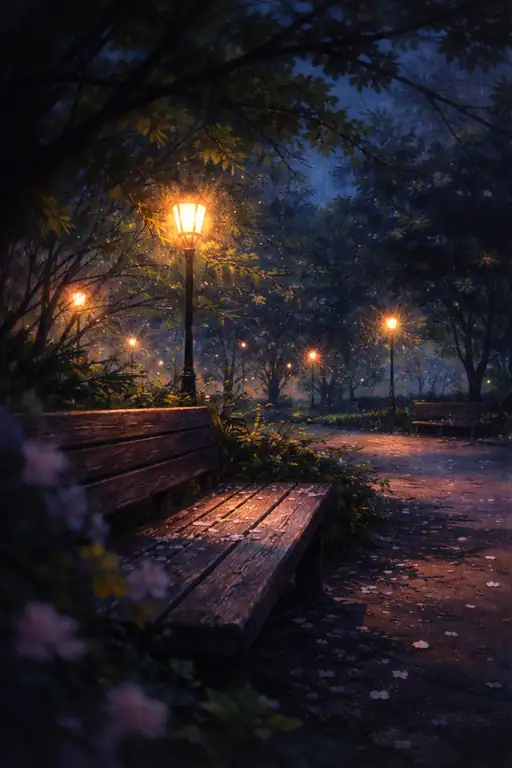 Sanctuary of Shadows and Ember Light
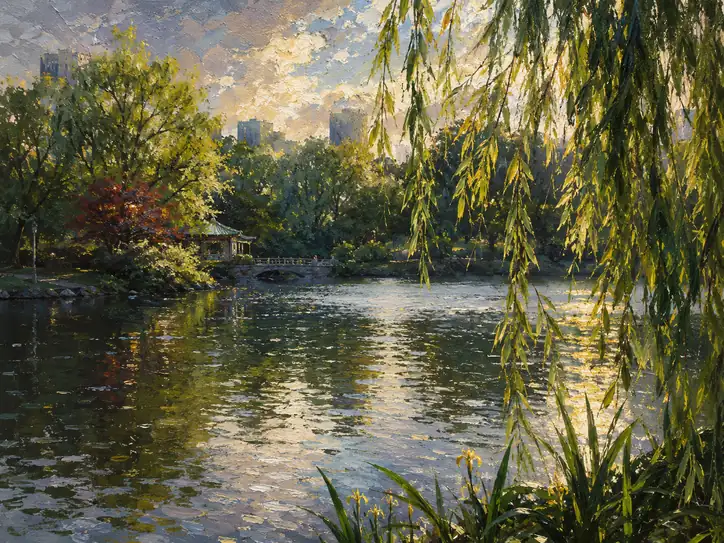 Beyond the Willow's Veil
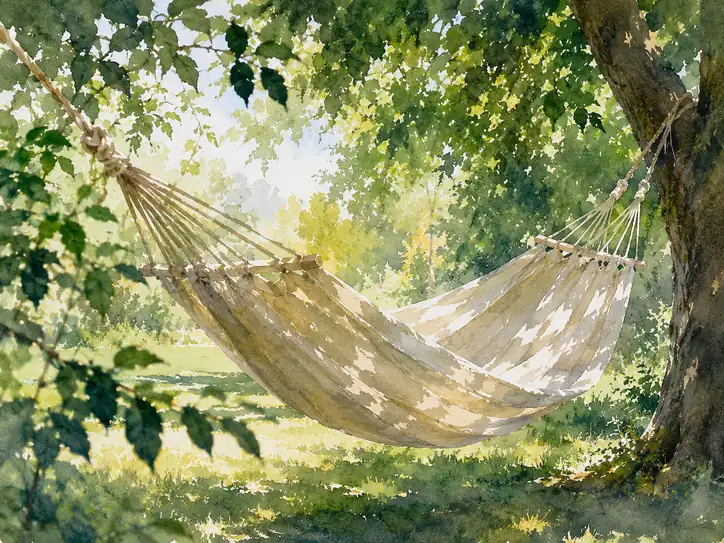 Where the Summer Breeze Rests
 The Golden Hour's Quiet Embrace
 A Quiet Moment After the Rain
 Whispers of a Sunlit Afternoon