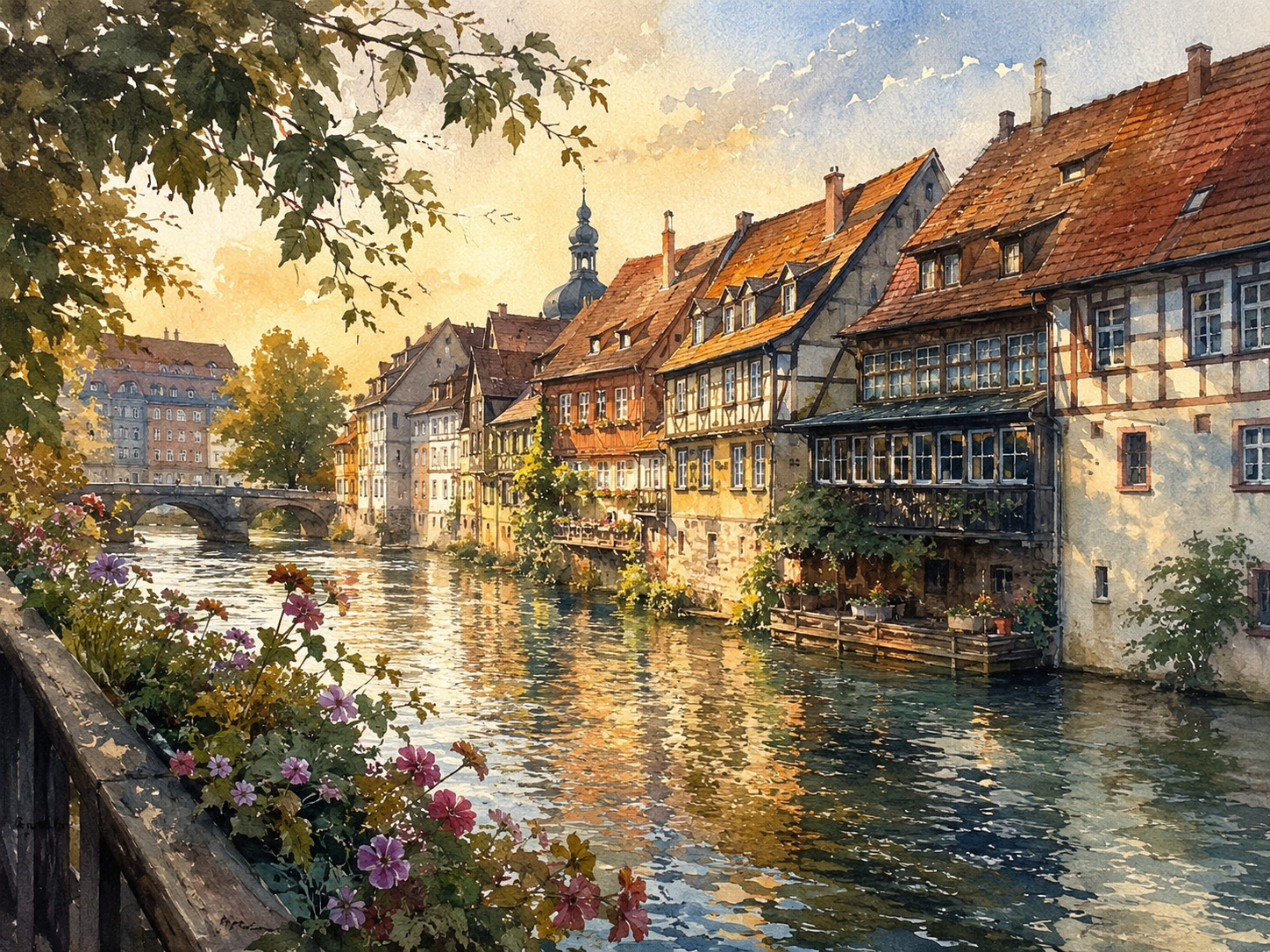
Bamberg's Golden Reflection
Critique
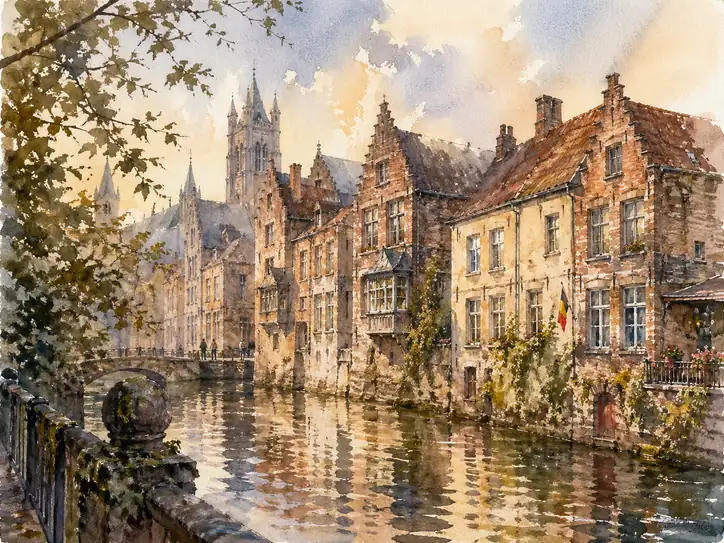
1. Introduction This vibrant watercolor painting depicts a picturesque riverfront in a historic European town, likely inspired by the "Little Venice" districts of Germany. The scene is bathed in the warm, golden light of the late afternoon, which illuminates the intricate timber-framed facades of the houses lining the water. Through a masterful application of transparent washes and fine-lined details, the work captures the harmonious relationship between the town’s architectural heritage and its natural aquatic setting. 2. Description The right side of the composition is dominated by a row of traditional half-timbered houses, their steeply pitched roofs and rhythmic window patterns receding toward a distant stone bridge. In the foreground on the left, a cluster of pink and purple wildflowers grows along a wooden railing, adding a touch of natural vitality to the scene. The river occupies the central portion of the canvas, its surface a kaleidoscope of rippling reflections that mirror the warm hues of the buildings and the soft, cloud-streaked sky above. 3. Analysis The artist employs a warm color palette, dominated by golden yellows, earthy terracottas, and soft ochres, which creates a unified and welcoming atmosphere. The structured, linear elements of the timber frames provide a strong sense of order and rhythm, which is balanced by the fluid, organic movements of the water and the delicate foliage of the overhanging tree branches. The use of negative space in the sky and the strategic placement of light highlights on the water’s surface contribute to a profound sense of luminosity. 4. Interpretation and Evaluation This piece serves as a celebration of the enduring charm of historic urban environments, emphasizing a lifestyle that exists in quiet synchronicity with the river. The inclusion of the foreground flowers creates a layered perspective that invites the viewer to step into the scene, bridging the gap between the observer and the distant architecture. The technical execution is exceptional, particularly in the way the artist manages the bleeding of colors to suggest the shifting transparency of the water while maintaining the precise details of the buildings. 5. Conclusion The painting succeeds in evoking a powerful sense of place and time through its sensitive handling of light and medium. The contrast between the rigid geometry of the historic homes and the transient beauty of the reflected light creates a dynamic visual experience that feels both grounded and ethereal. What initially appears as a classic travel illustration is elevated into a contemplative study of cultural heritage and the timeless beauty of life by the water.
Same Subcategory
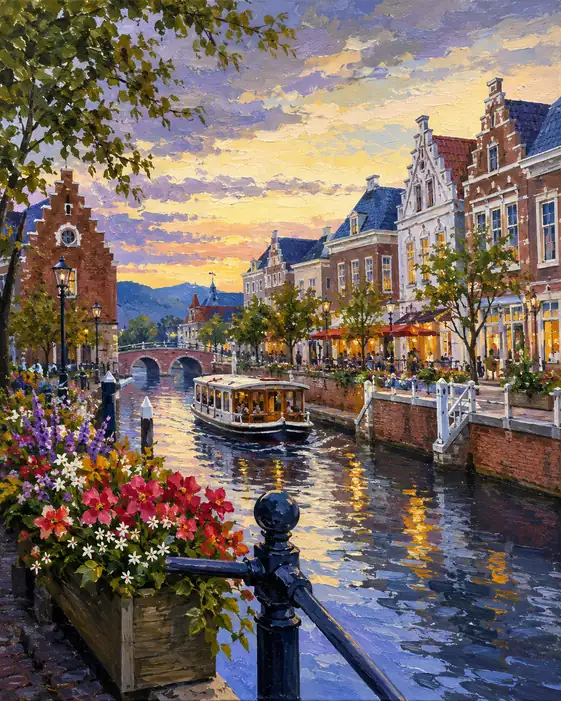 Twilight Glow along the Amsterdam Canal
 The Wind's Song Over the Luminous Harbor
Similar Artworks
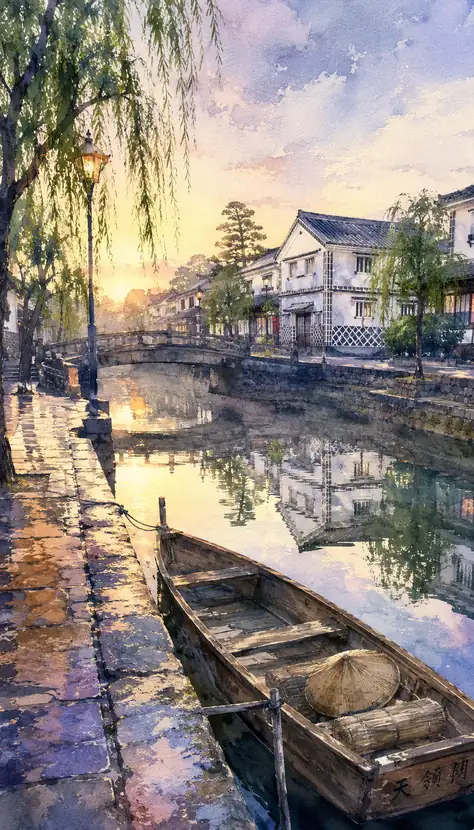 The Boat That Waited for Evening
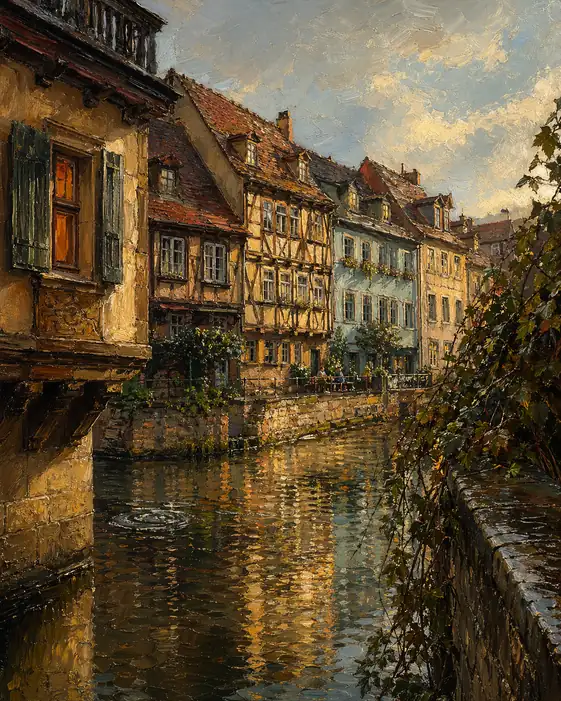 Textured Memories: Sunlit Canal of Bamberg
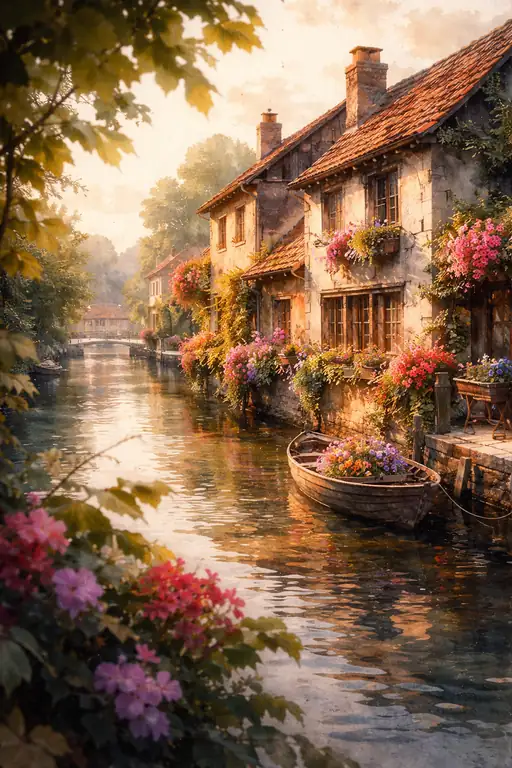 Symphony of the Waterway
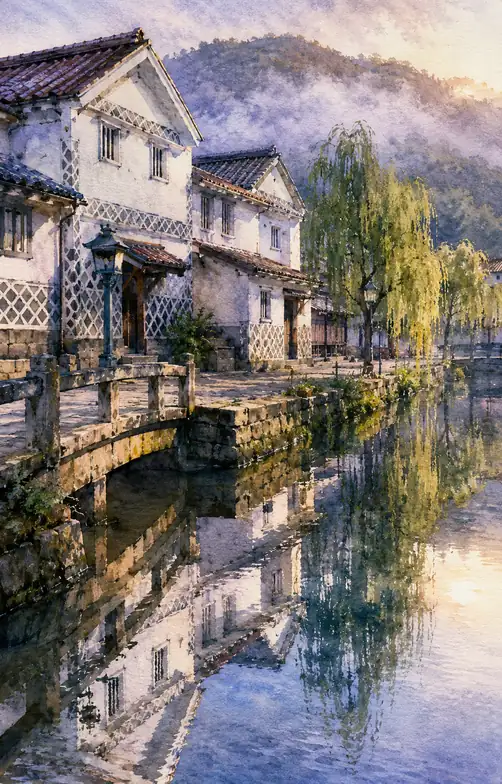 Willows Write the Morning Twice
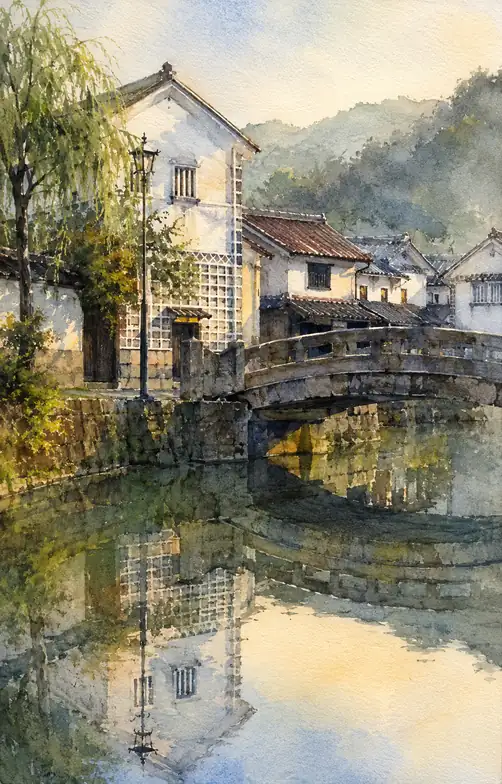 The Town the Water Remembers
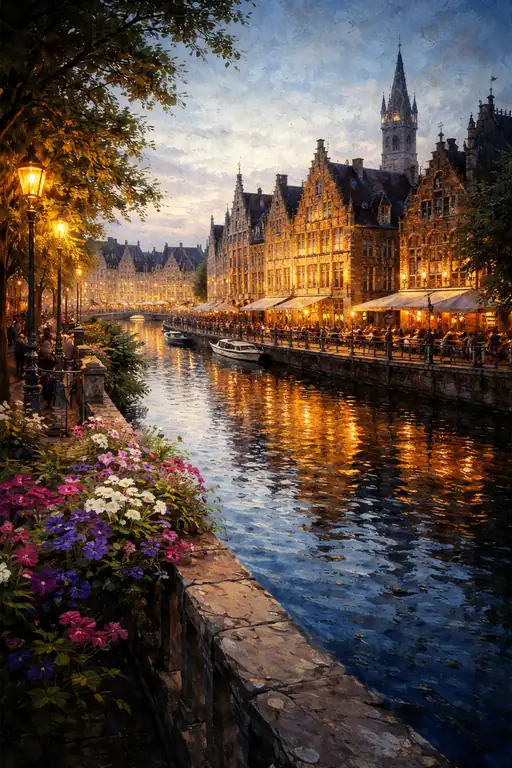 Twilight Echoes of Ghent
 Golden Hour at the Village Square
 Embrace of the Evening
 Whispers from a Sun-Drenched Canal
 A Bridge to Forgotten Afternoon