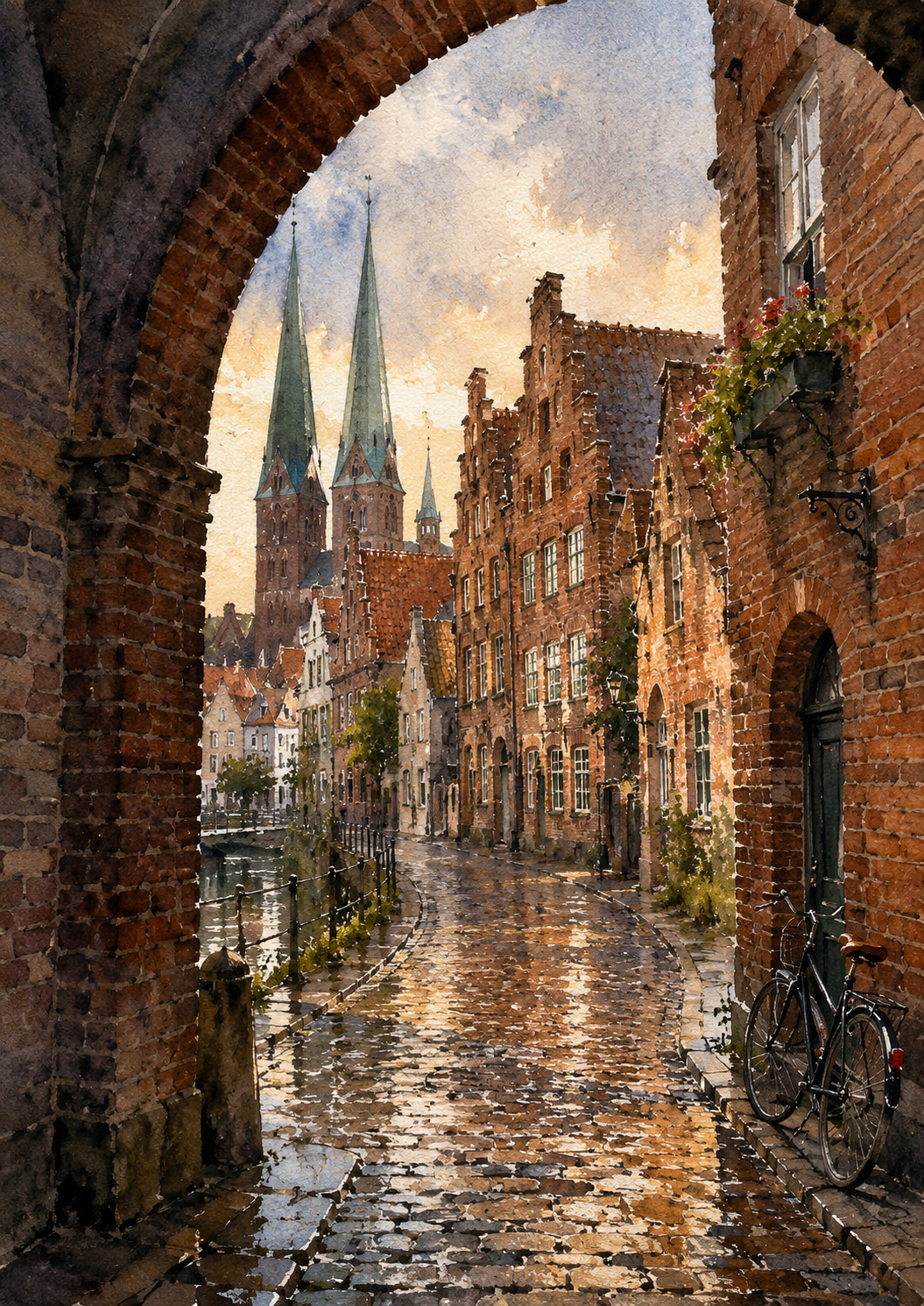
The Arch's Glimpse into Time
Critique
1. Introduction This watercolor-style painting captures a serene street scene in a historic European town, viewed through the elegant frame of a brick archway. The composition emphasizes the atmospheric qualities of a city after rainfall, where the wet surfaces catch and amplify the soft, golden light of the late afternoon. Through a delicate balance of architectural detail and fluid color washes, the work invites the viewer into a moment of quiet reflection within an ancient urban setting. 2. Description The foreground is dominated by a large, textured brick arch that serves as a natural frame for the scene beyond. A curved cobblestone path, glistening with rain, leads the eye from the entrance into the heart of the town. On the right, a row of traditional gabled brick houses stands tall, with a solitary bicycle leaned against one of the walls. To the left, a narrow canal reflects the sky, while two prominent green-tipped spires rise majestically in the hazy distance. 3. Analysis The artist utilizes a framing technique to create a profound sense of depth and intimacy, drawing the viewer’s gaze through the dark portal toward the illuminated street. The color palette is centered on warm ochres and burnt siennas of the brickwork, contrasted by the cool, ethereal grays and greens of the distant towers. The rendering of the wet cobblestones is particularly effective, using dappled light and reflections to break up the solidity of the stone and add a sense of movement. 4. Interpretation and Evaluation This piece offers a romanticized interpretation of urban history, where the enduring nature of stone and brick is softened by the transient effects of weather and light. The inclusion of the bicycle adds a subtle contemporary touch, grounding the historical setting in the present day. The technical mastery of light and shadow creates a welcoming atmosphere, suggesting that the city is not just a monument to the past, but a living, breathing space filled with quiet stories. 5. Conclusion The painting succeeds in capturing a specific, evocative mood through a combination of structural precision and atmospheric layering. The contrast between the heavy framing of the foreground and the luminous openness of the background creates a compelling visual journey. What begins as a simple architectural study develops into a poetic exploration of light, texture, and the timeless charm of European urban landscapes.
Same Subcategory
 The Warmth of a Rain-Slicked Evening
Similar Artworks
 Rainy Stroll in the Old Town
 The Silent Guardian of the Misty City
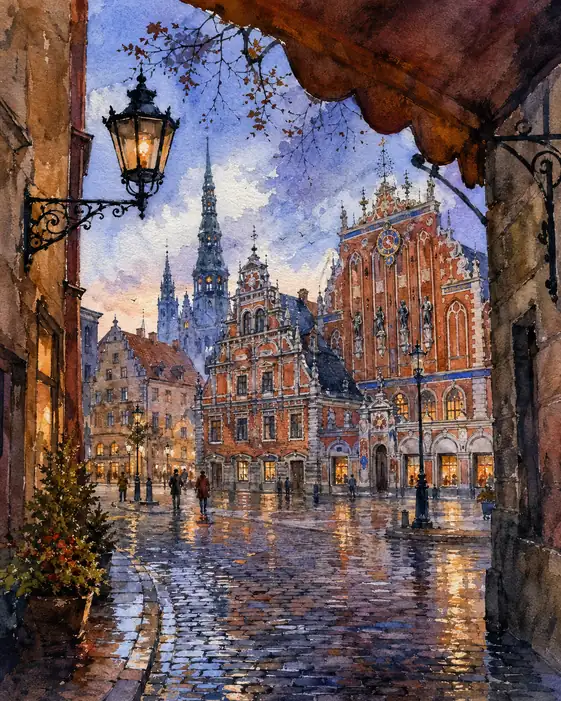 Riga Reflections After the Rain
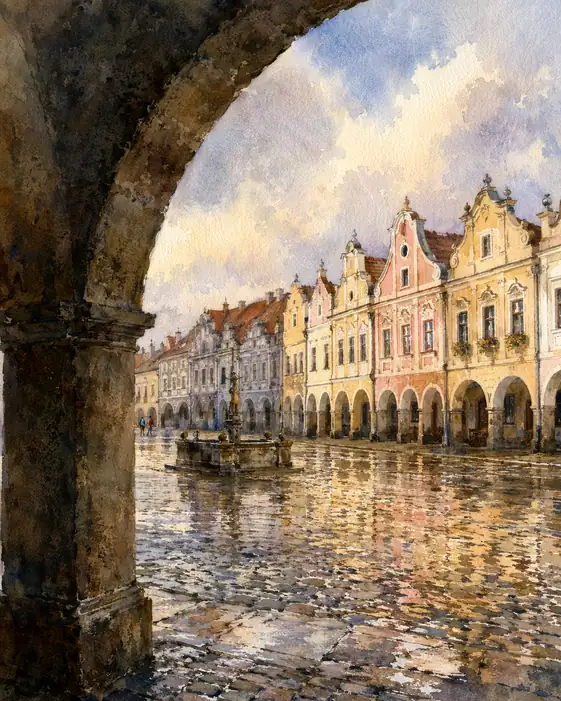 The Last Dance
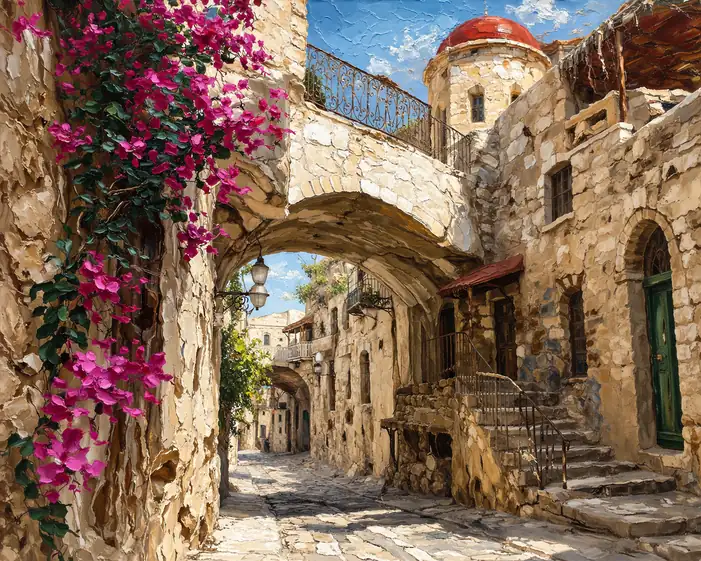 Sun-Drenched Stone Alley with Bougainvillea
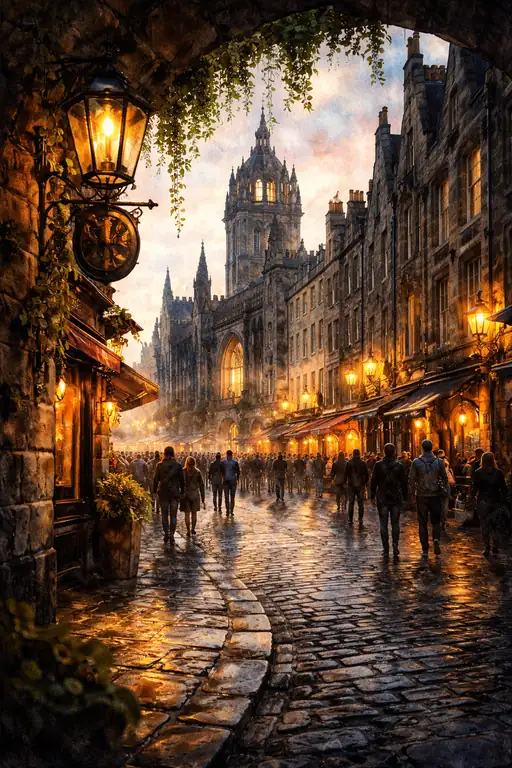 Golden Era Recalled
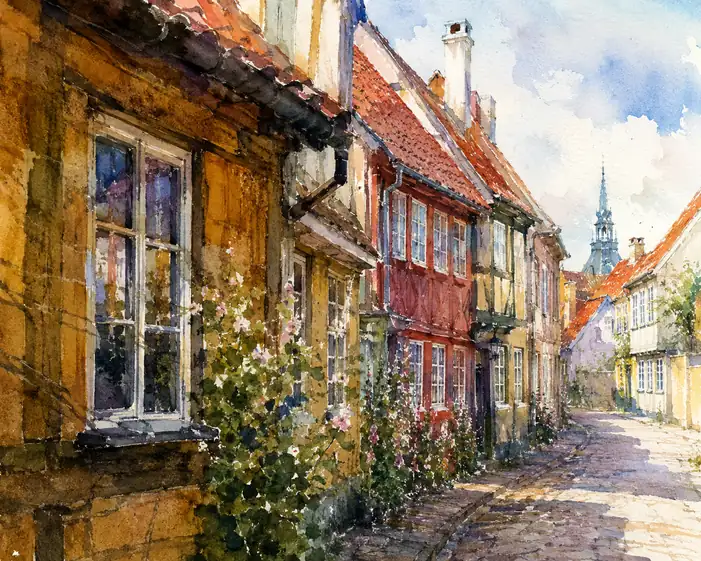 A Luminous Afternoon in the Old Town
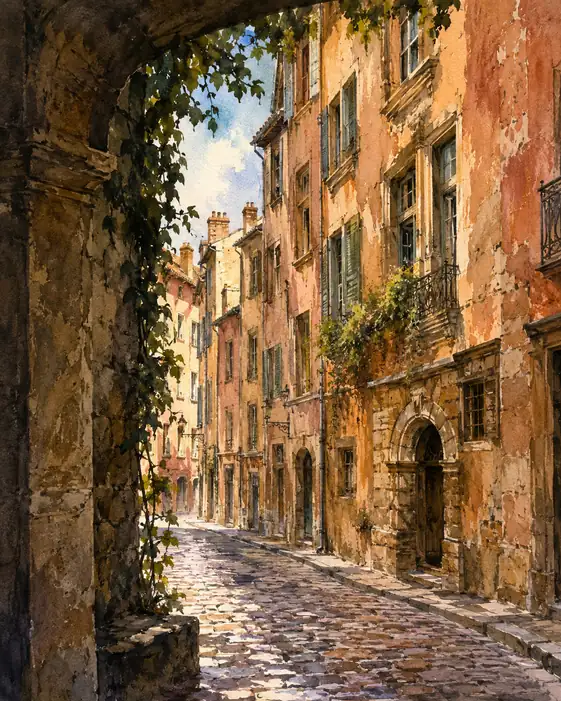 Golden Afternoon in the Mediterranean Alley
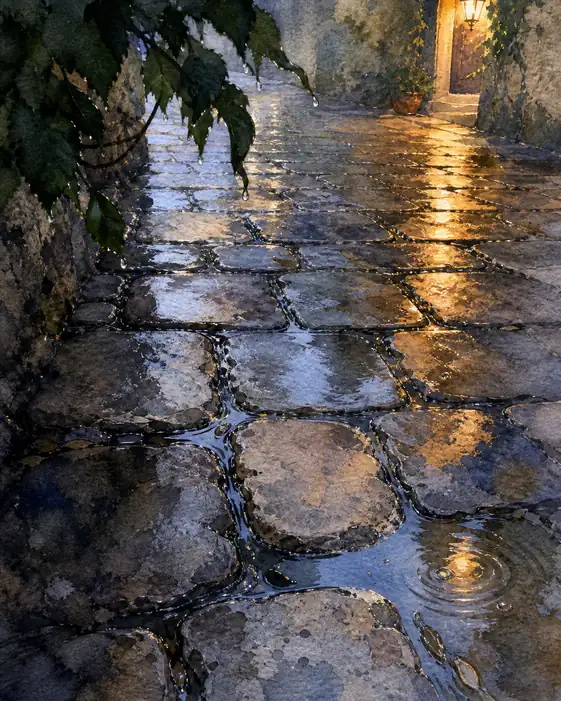 Echoes on the Wet Stones
 Lyrical Rain in the Old Quarter