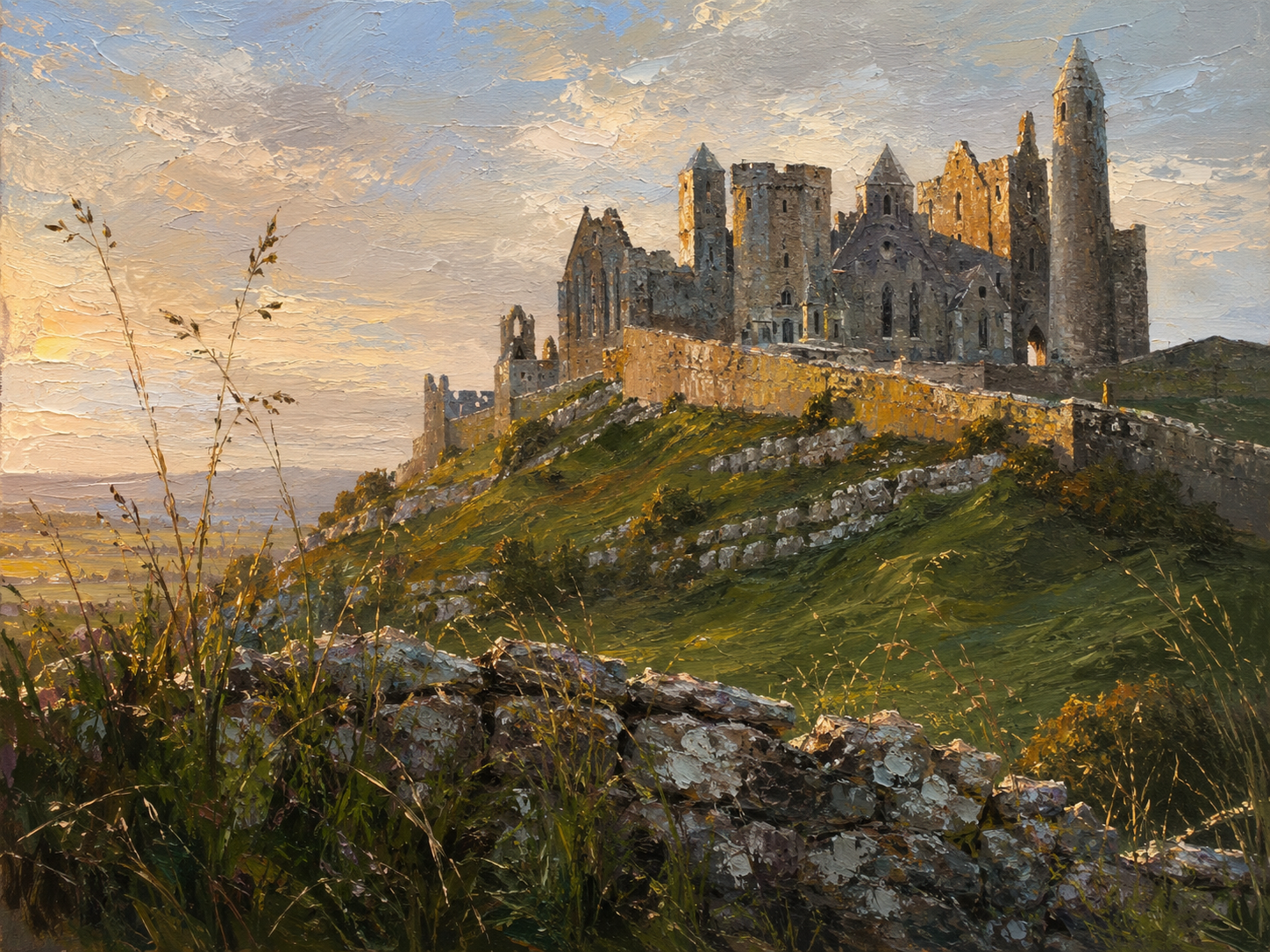
Remnants of a Forgotten Glory
Critique
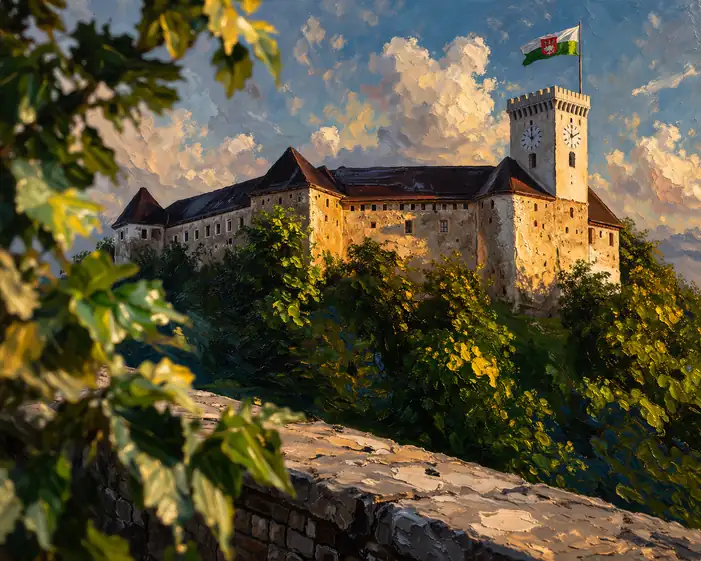
1. Introduction This landscape painting presents a majestic view of medieval stone ruins perched atop a verdant hill. The composition effectively balances the sprawling greenery of the slope with a dramatic, textured sky that suggests the transition of time during sunset. Through this work, the artist creates a space where historical grandeur and natural silence coexist in perfect harmony. The heavy use of traditional oil techniques provides a sense of physical weight and presence to the scene. 2. Description The central and right portions of the canvas are dominated by a massive complex of stone buildings, including towers and a chapel. These structures glow with a warm amber light from the setting sun, while grey-blue clouds drift behind them in a vast sky. In the foreground, a roughly constructed stone wall and thin, translucent blades of grass are placed to emphasize the spatial depth of the landscape. The sky features bold strokes of yellow, white, and blue, blending together to form a highly atmospheric backdrop. 3. Analysis The defining characteristic of this piece is the masterful application of the impasto technique, which gives the painting a rich, tactile quality. Thick layers of paint are visible on the hill's surface and the walls of the buildings, adding a three-dimensional reality to the medium. The composition utilizes a strong diagonal line from the foreground wall up toward the ruins, guiding the viewer's eye through the space. The lighting treatment uses backlighting to define the silhouettes of the architecture, enhancing the overall sense of volume. 4. Interpretation and Evaluation This work beautifully captures the relationship between man-made structures and the surrounding environment through exceptional color sense and technical skill. The contrast between the fleeting brilliance of the evening light and the enduring texture of the stone architecture is handled with great maturity. The structural integrity of the composition is matched by a creative brushwork that introduces rhythm and movement to the static image. Overall, the piece demonstrates a high level of originality in its ability to evoke the temperature and atmosphere of the scene. 5. Conclusion As one observes the work more closely, a deep poetic lyricism emerges beyond the simple depiction of a historical site. The intersection of light, shadow, and rugged material creates a profound sense of tranquility that resonates with the viewer. It is an accomplished work of art that successfully integrates visual richness with a reflective spiritual quality. The initial impression of grandeur eventually transforms into a lasting appreciation for the silent dialogue between history and nature.
Same Subcategory
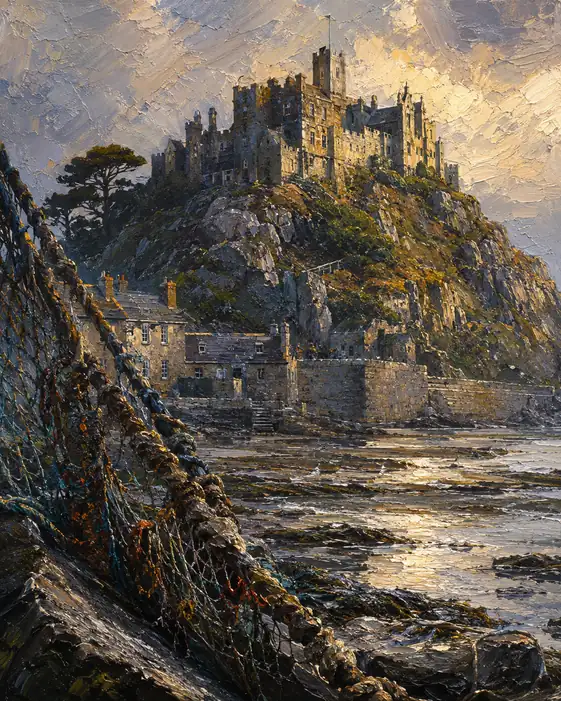 Where the Tide Meets My Childhood Dreams
Similar Artworks
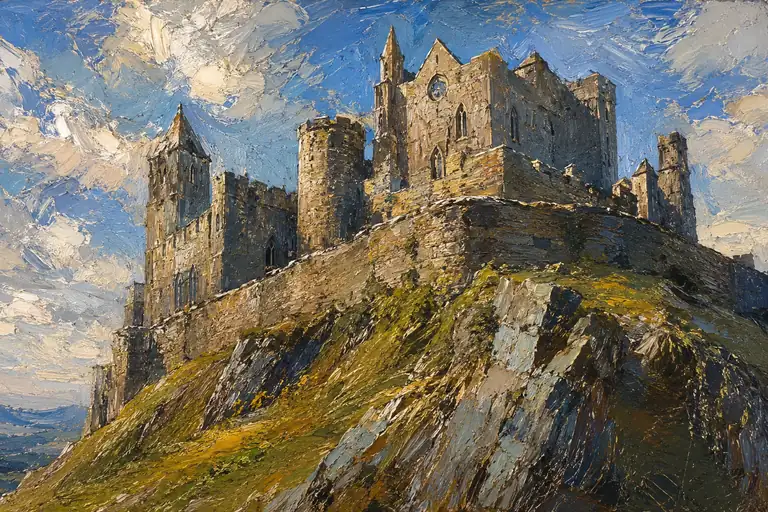 The Sovereign of the Silent Cliff
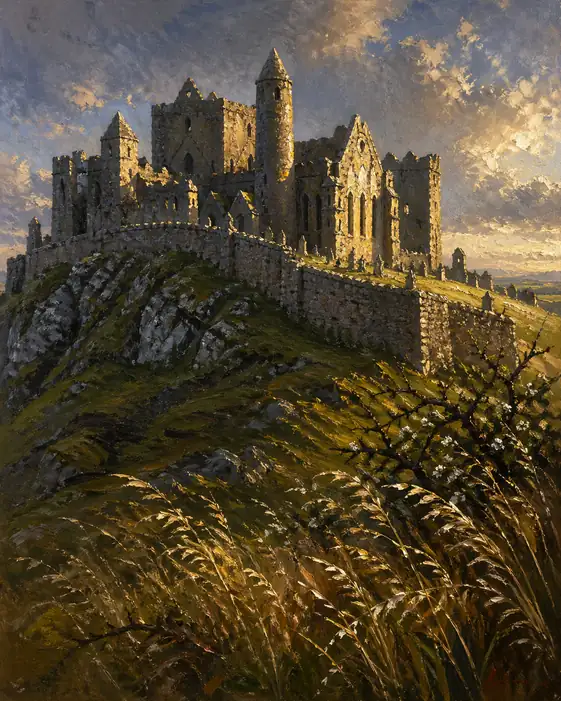 Majestic Castle Ruins at Sunset
 Citadel of the Golden Hour
 Stalwart Presence in the Crimson Sky
 Eternal Echoes of the Golden Keep
 Eternal Witness in Golden Light
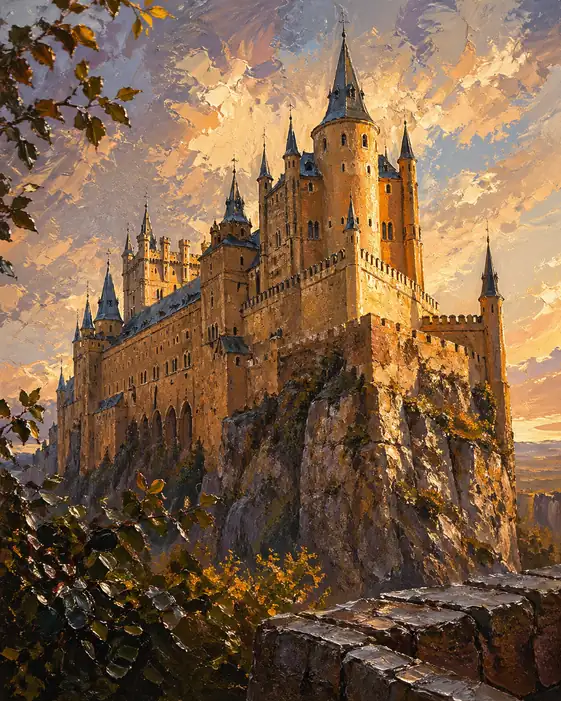 Majesty on the Sunlit Crag
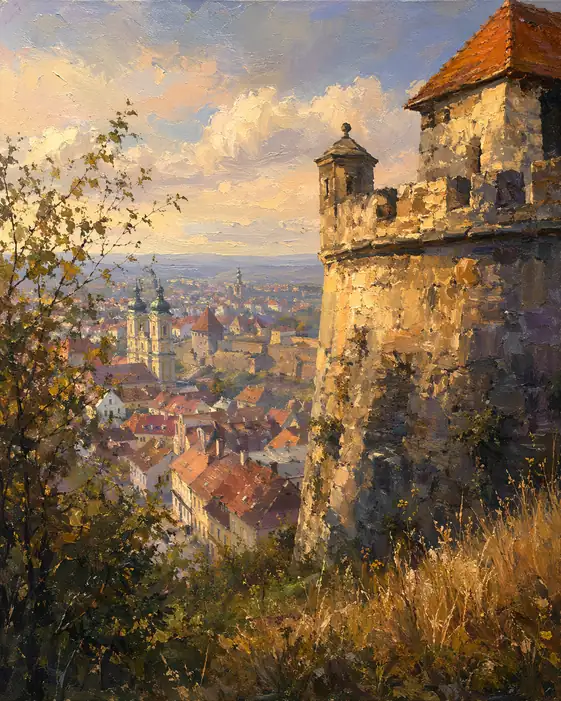 The Golden Fortress: Time and Light
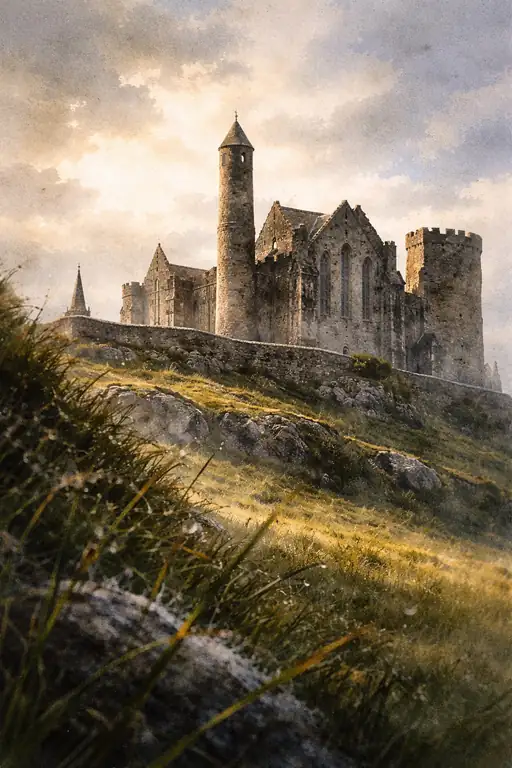 Silence of the Forgotten Abbey
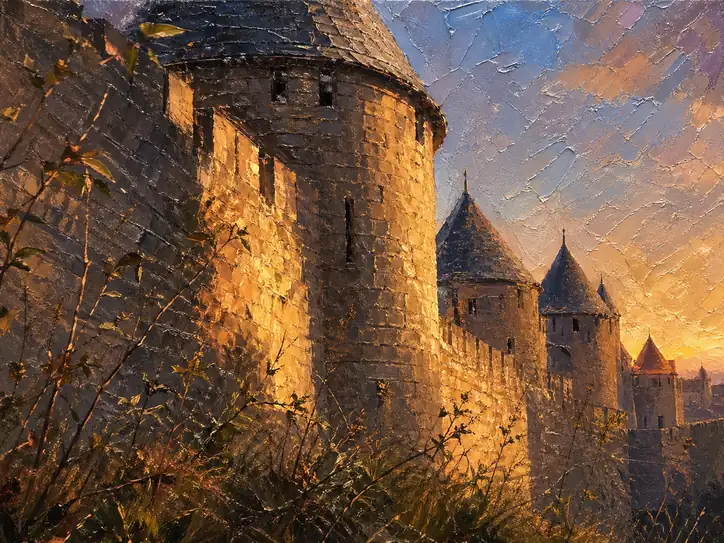 Eternal Sentinel of the Golden Hour