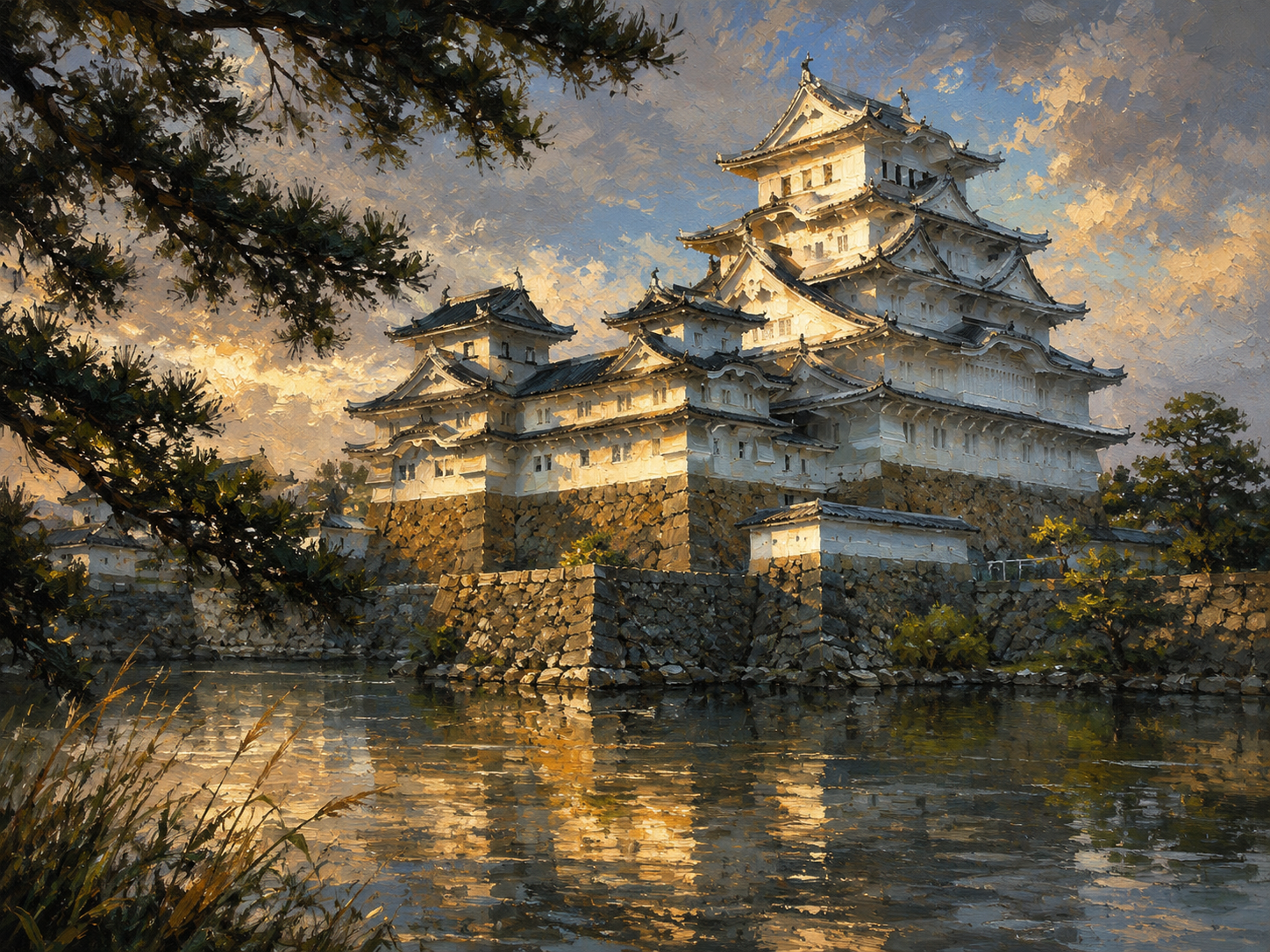
Eternal Gaze in the Amber Sunset
Critique
1. Introduction This majestic oil painting portrays Himeji Castle, also known as the White Heron Castle, glowing under the radiant light of a setting sun. The artwork captures the architectural splendor of one of Japan's most iconic landmarks with a rich, impasto technique and dramatic lighting. The composition emphasizes the verticality and strength of the castle's structure, reflecting its historical significance and enduring beauty against an expressive evening sky. 2. Description The main keep and its surrounding turrets dominate the upper center of the frame, their white plastered walls catching the golden hues of the sunset. Below the elegant structure, the rugged stone foundations are rendered with heavy texture, meeting the calm waters of the surrounding moat. The surface of the water mirrors the castle's reflection, broken only by subtle ripples and the glint of sunlight. Framing the scene on the left is a dark, sprawling pine branch, while small shrubs on the right add a touch of natural greenery to the foreground. 3. Analysis The artist effectively uses a layered composition to create depth, contrasting the detailed foreground foliage with the solid mass of the castle and the expansive sky. The use of a palette knife or heavy brushstrokes is evident in the rendering of the stonework, giving it a tangible, weathered quality. The color scheme relies on the warm contrast between the brilliant ambers of the illuminated walls and the cool, deep blues in the shadowed areas. The sky is a complex tapestry of scattered clouds, painted with broad, confident strokes that suggest a dynamic atmosphere. 4. Interpretation and Evaluation This piece is an exceptional example of architectural landscape painting, successfully conveying both the physical presence and the spiritual atmosphere of the site. By capturing the castle at the "golden hour," the artist elevates the subject beyond mere documentation, turning it into a poetic meditation on light and time. The handling of the reflections in the moat is particularly noteworthy, as it adds a sense of movement and vitality to the otherwise static subject. The overall execution demonstrates a sophisticated mastery of the oil medium and a deep sensitivity to Japanese aesthetics. 5. Conclusion Through its powerful use of texture and light, the painting offers a deeply moving portrait of a national treasure. While the initial impact comes from the castle's imposing silhouette, the true depth of the work is found in the meticulous interplay of light on the ancient stones and water. It is a highly accomplished and technically superior work that pays fitting tribute to the timeless beauty of Himeji Castle.
Same Subcategory
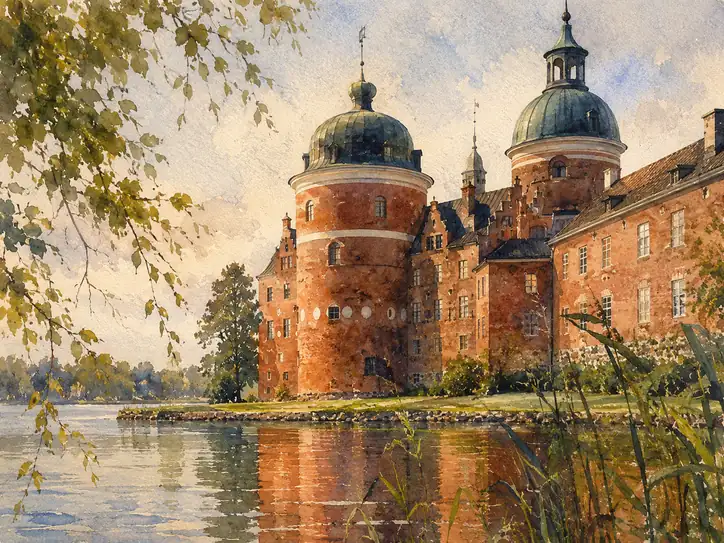 Echoes on the Mirror Lake
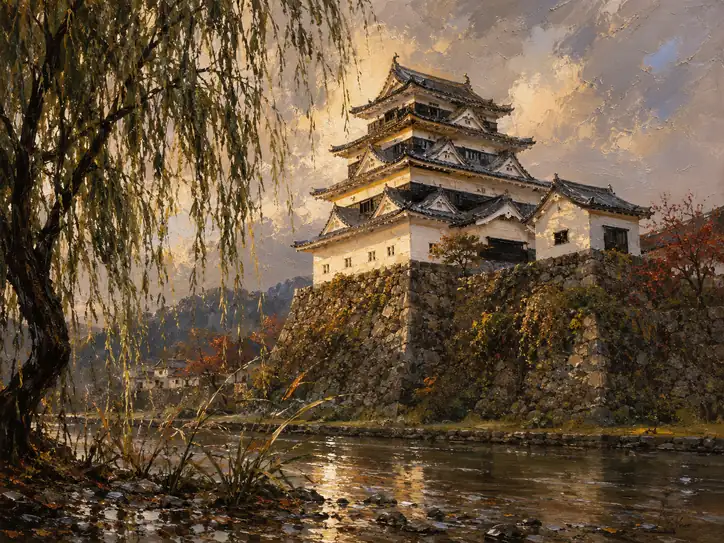 Eternal Echoes of the Golden Keep
Similar Artworks
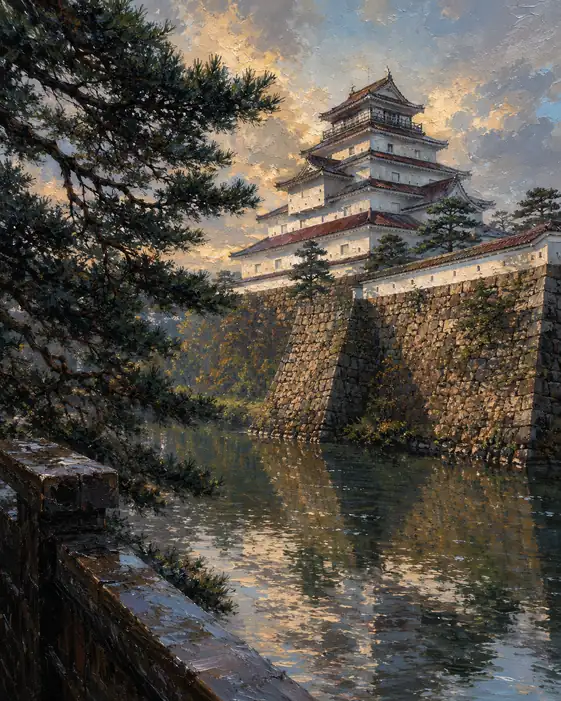 Sentinel of the Golden Twilight
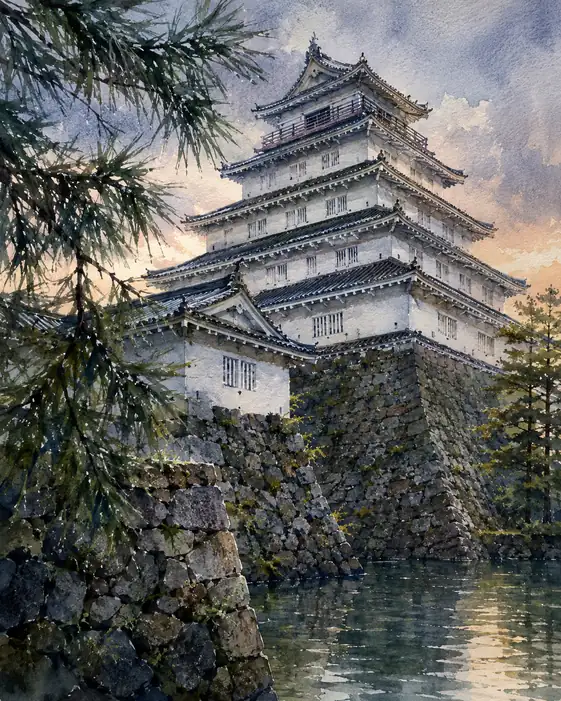 The Citadel of Sunsets
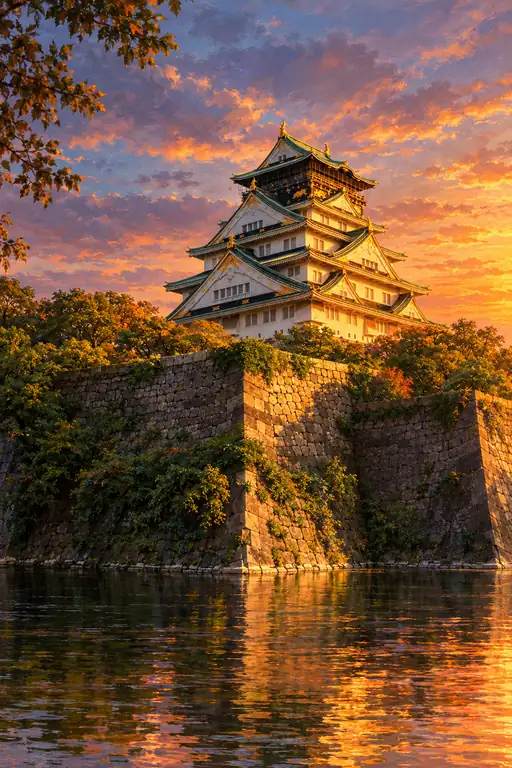 Stone Keeps the Evening Close
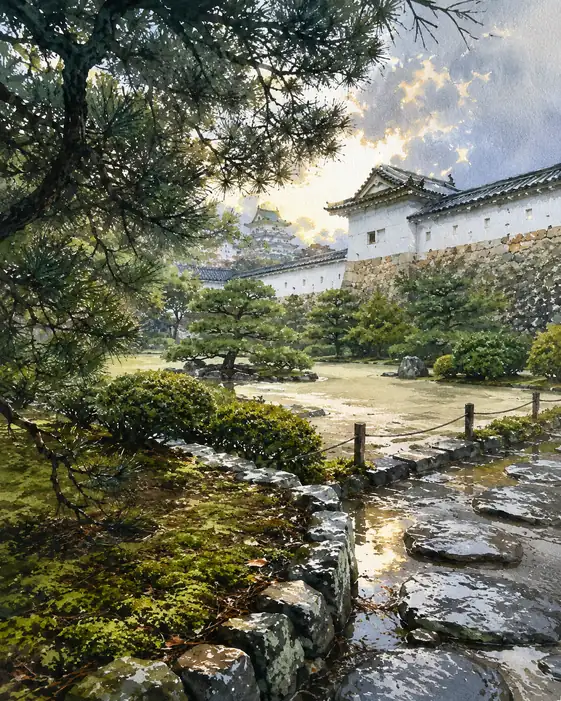 Echoes of the Rain on Castle Stones
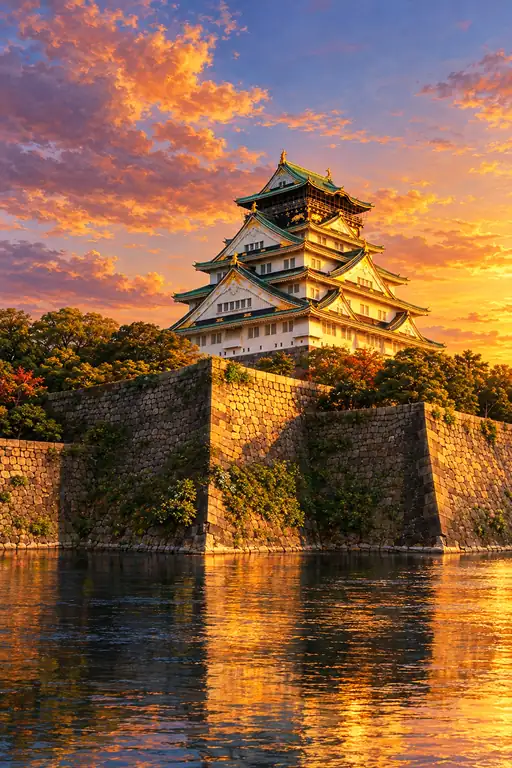 Time Stands in a Changing Sky
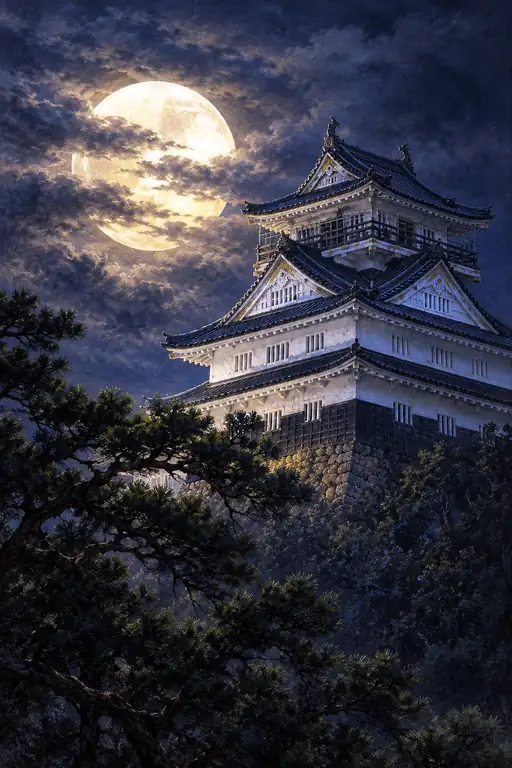 Through the Branches, Eternity
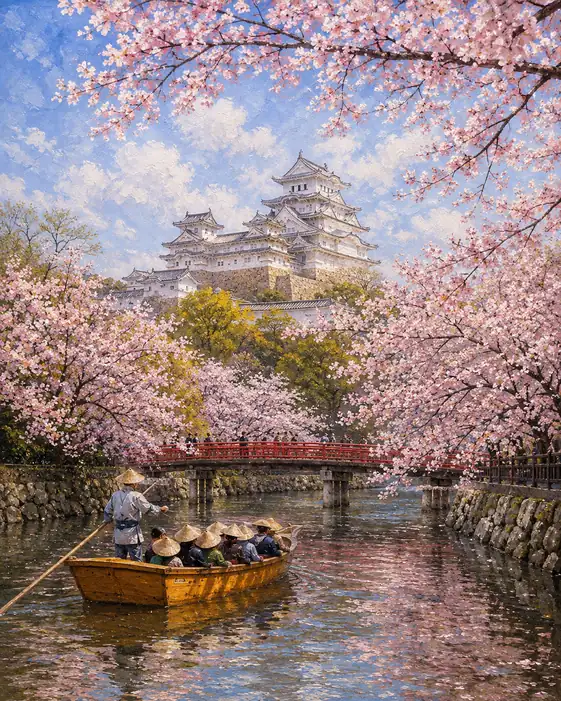 Rowing Through Spring Toward White Heron Castle
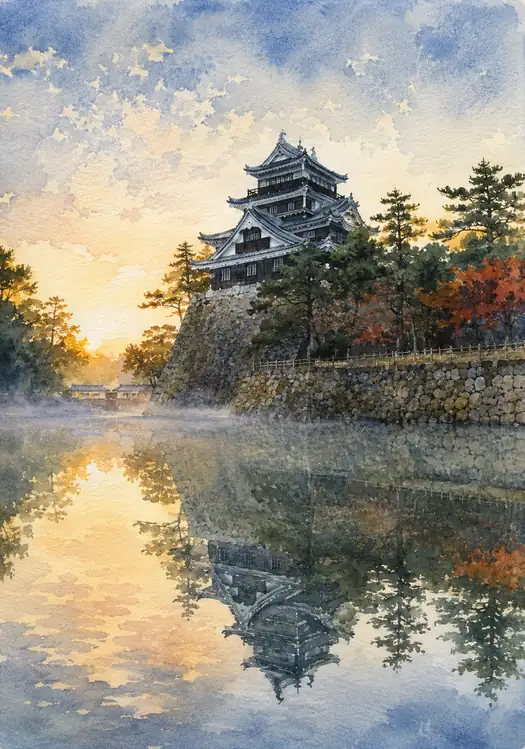 A Fortress Softened by Water
 Citadel of the Eternal Sunset
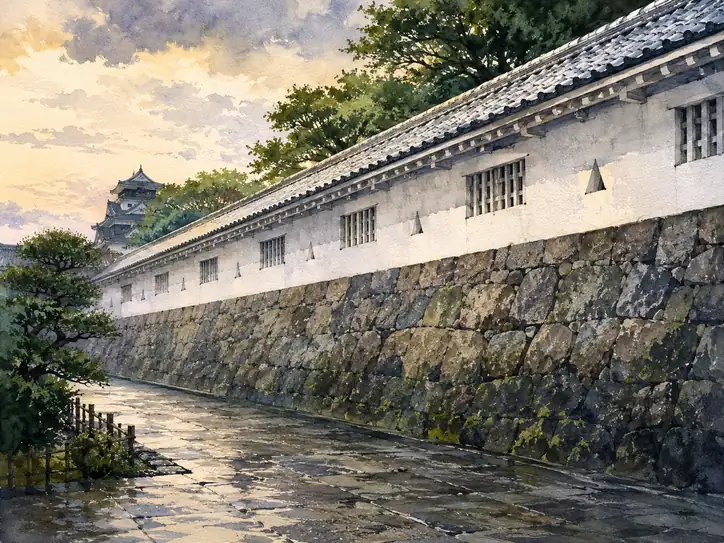 The Citadel's Quiet Breath