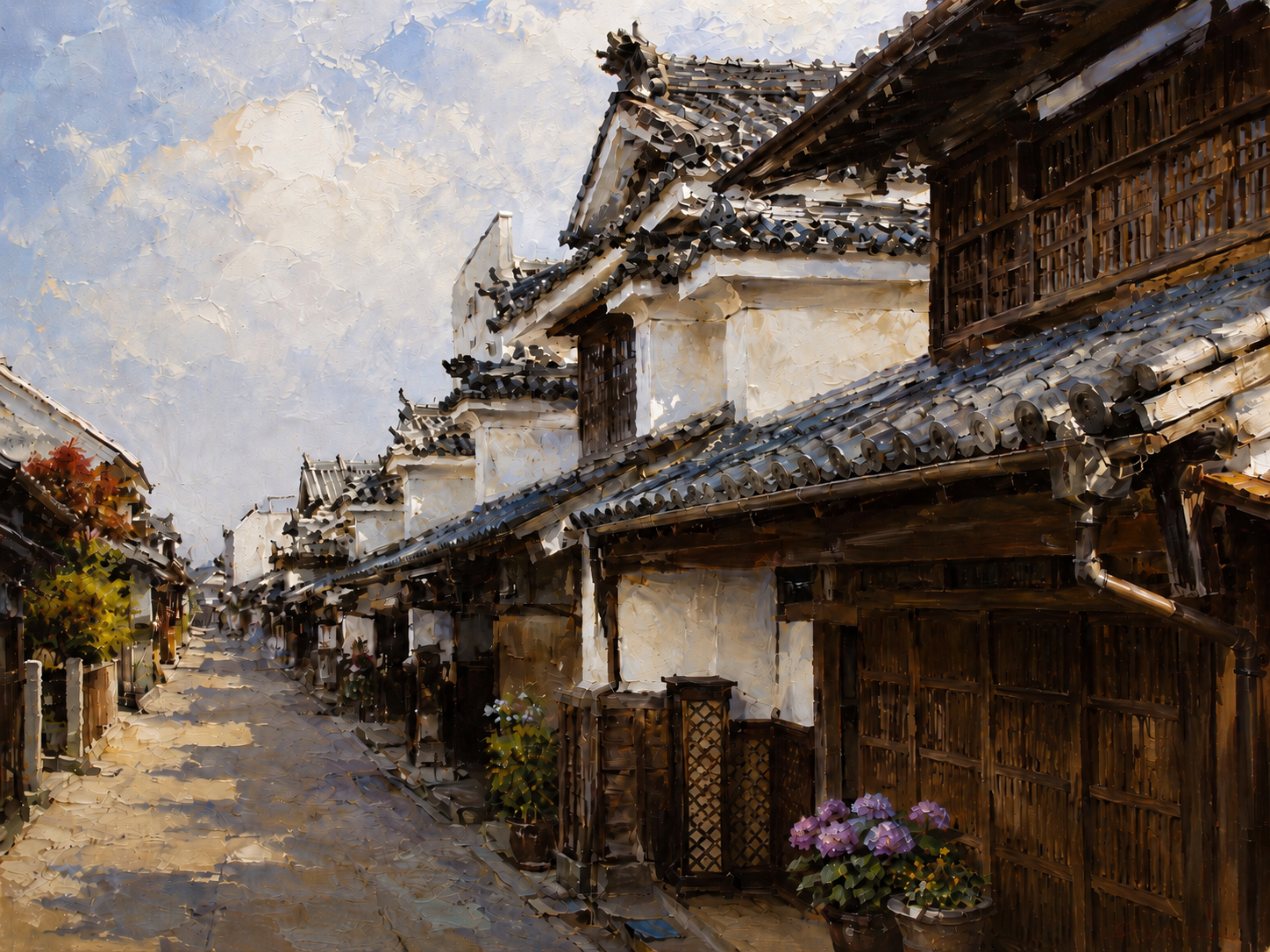
Hydrangeas in the Whispering Alley
Critique
1. Introduction This oil painting depicts a historic Japanese street, showcasing the enduring beauty of traditional merchant-style architecture. The artist employs a robust, textural approach to bring this scene to life, emphasizing the physical presence of the buildings. Through a careful study of form and light, the work captures a sense of timelessness and cultural heritage. 2. Description The composition focuses on a row of traditional houses featuring white plaster walls, dark wooden lattice-work, and intricately tiled roofs. In the immediate foreground on the right, a large wooden facade dominates, accompanied by potted purple hydrangeas. A sun-drenched, paved path stretches into the distance, flanked by similar historical structures under a pale, cloudy sky. 3. Analysis The most striking feature is the use of heavy brushstrokes and impasto techniques, which provide a tangible texture to the wood and plaster. A strong contrast between light and shadow defines the architectural details and creates a sense of depth along the narrow street. The artist uses a warm, earthy color palette, punctuated by the vibrant purple and green of the flowers. 4. Interpretation and Evaluation This work serves as a nostalgic tribute to Japanese craftsmanship and the aesthetic of wabi-sabi, finding beauty in the aged and weathered. The juxtaposition of the lively hydrangeas against the dark, seasoned wood suggests the continuity of life within a historic setting. The technical skill in rendering the complex roof tiles and wood grain through thick paint is commendable. 5. Conclusion By reinterpreting a classic subject with dynamic and modern brushwork, the artist has created a piece that feels both traditional and contemporary. The painting successfully conveys the quiet dignity of a preserved townscape, inviting the viewer to walk through its storied path. It remains a powerful exploration of light, texture, and the persistent charm of Japanese history.
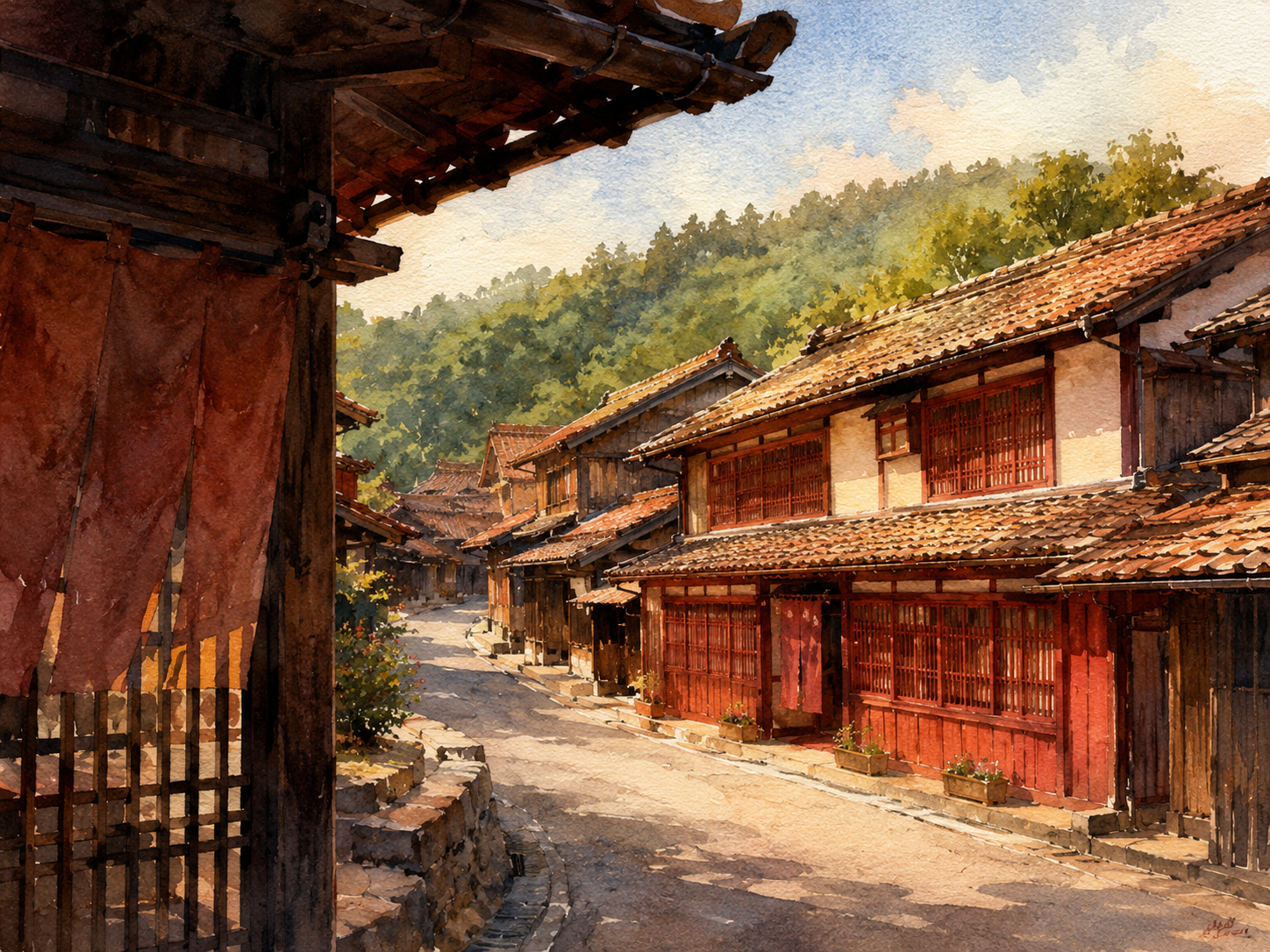 Whispers of the Old Post Town
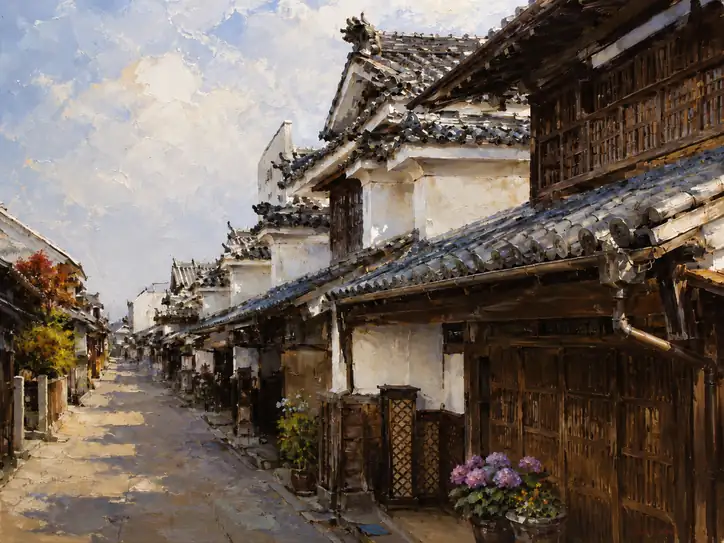 Pathway Through the White-Walled Silence
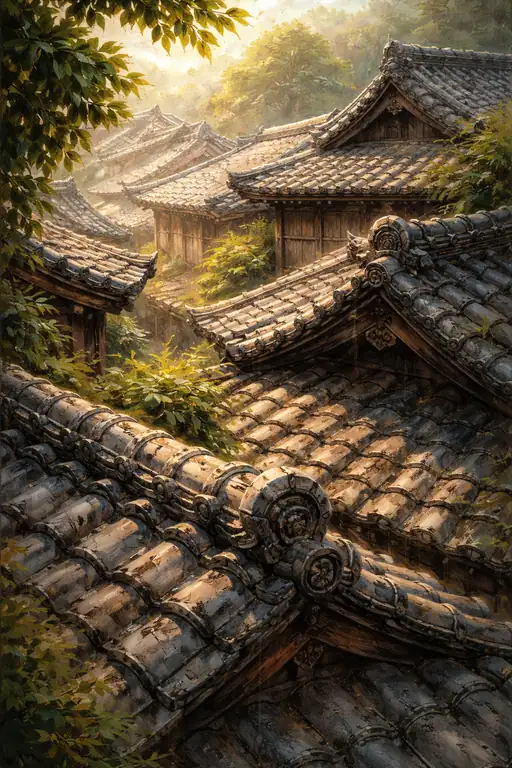 Gentle Time Woven by Tiled Roofs
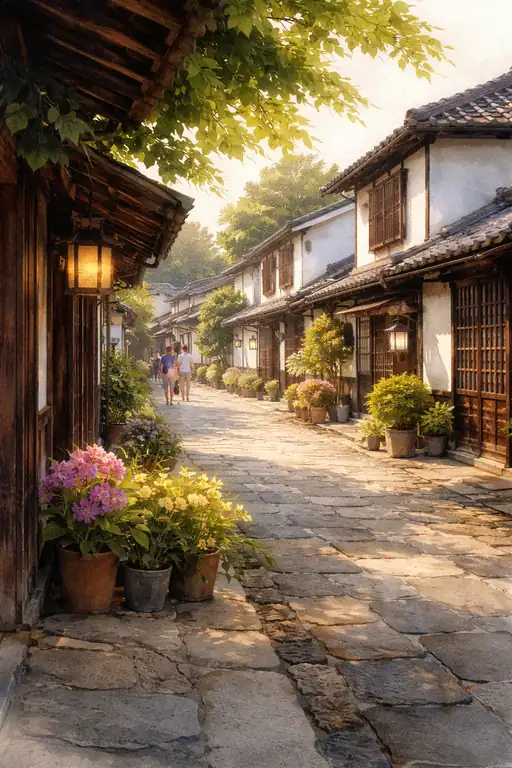 Echoes of a Forgotten Path
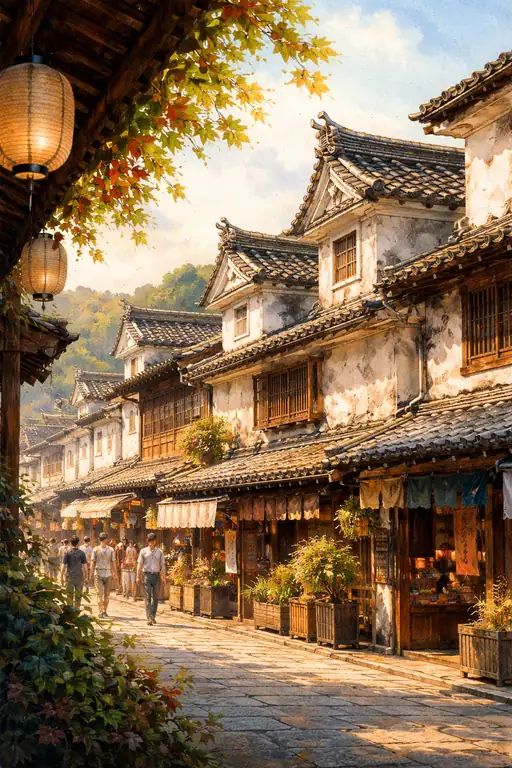 Sunset Glow on the Ancient Road
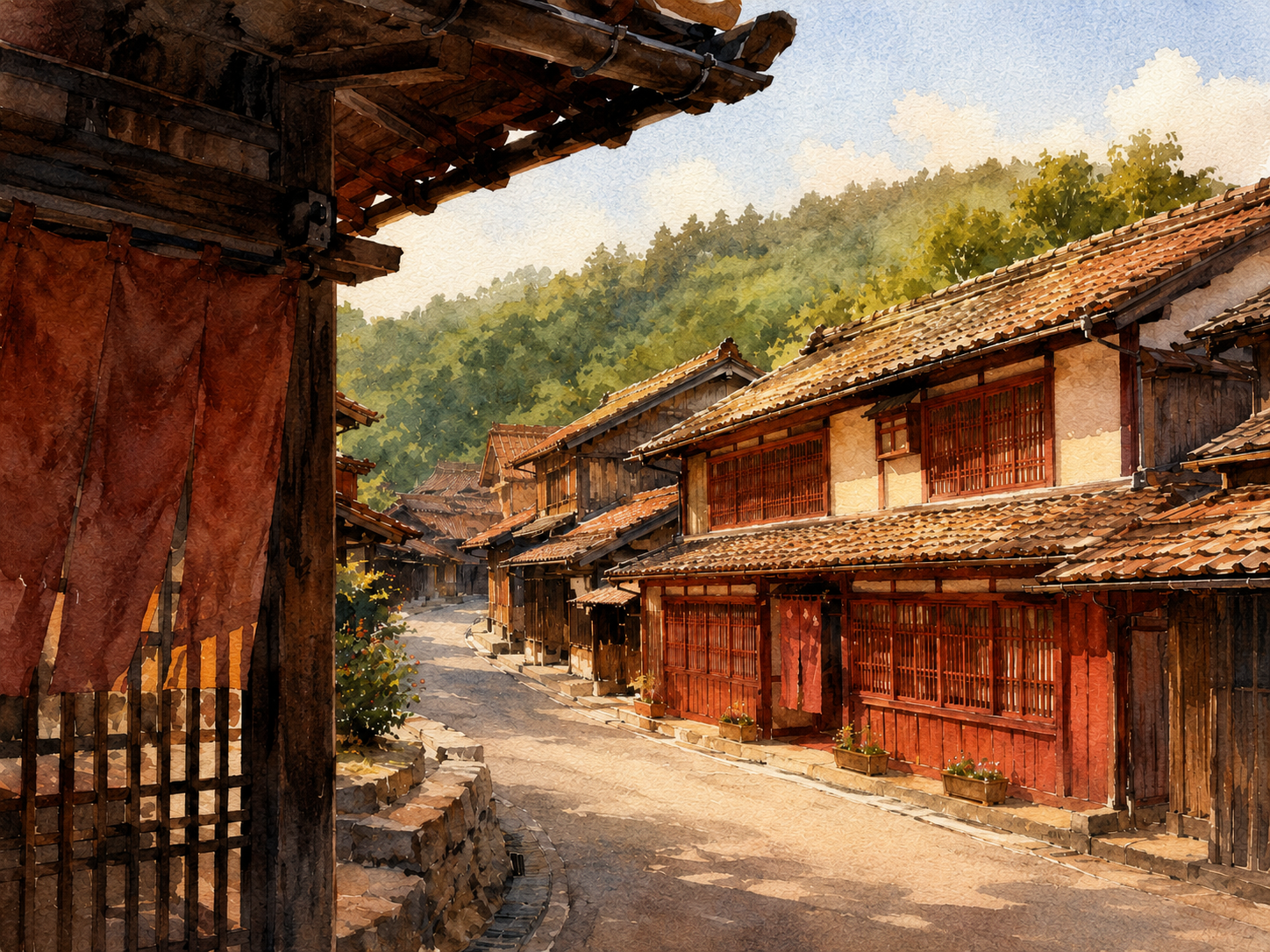 Golden Shadows on the Post Town
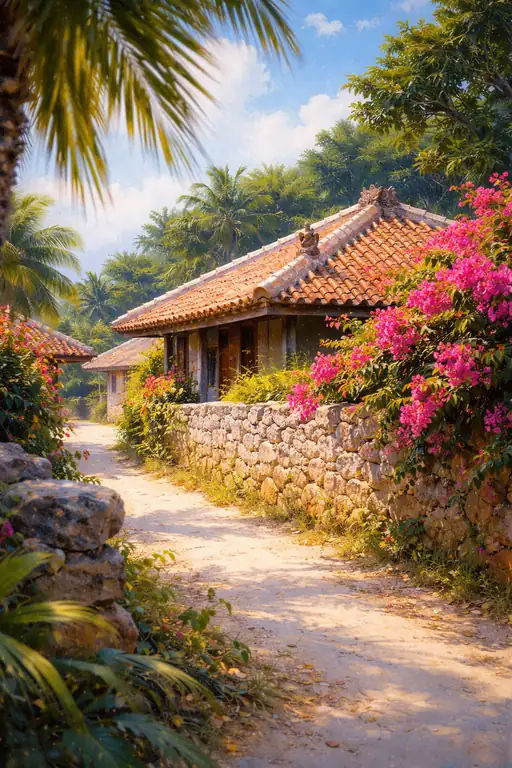 Bougainvillea by the Stone Wall
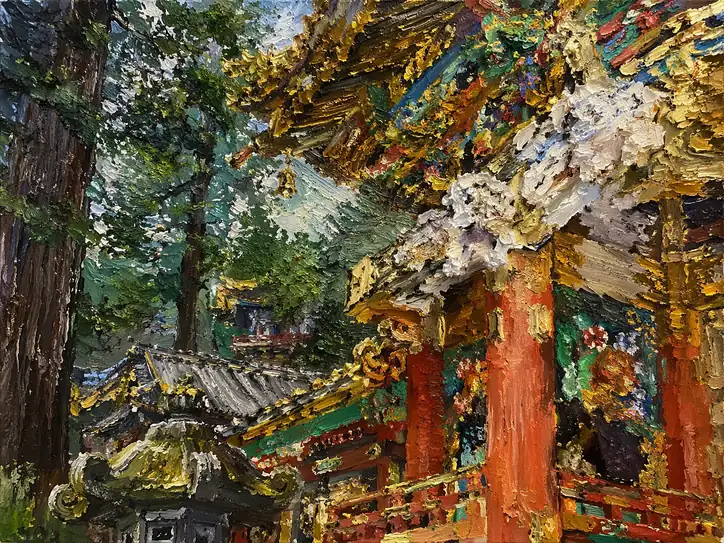 The Gilded Heart of the Forest
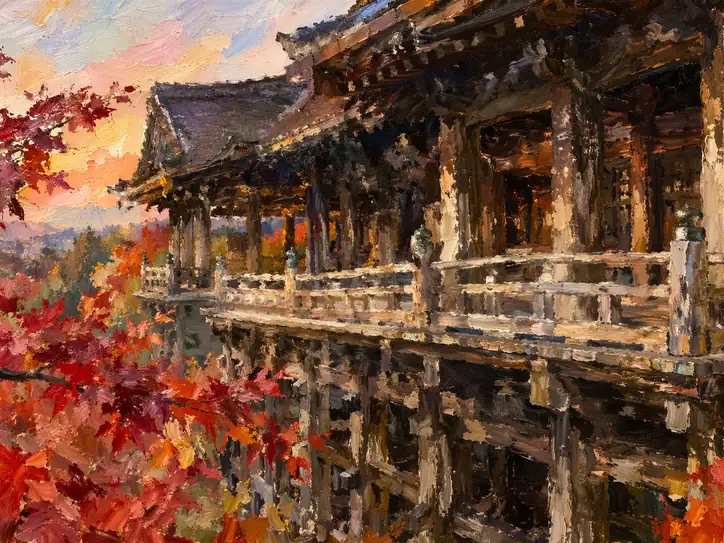 Autumn's Embrace
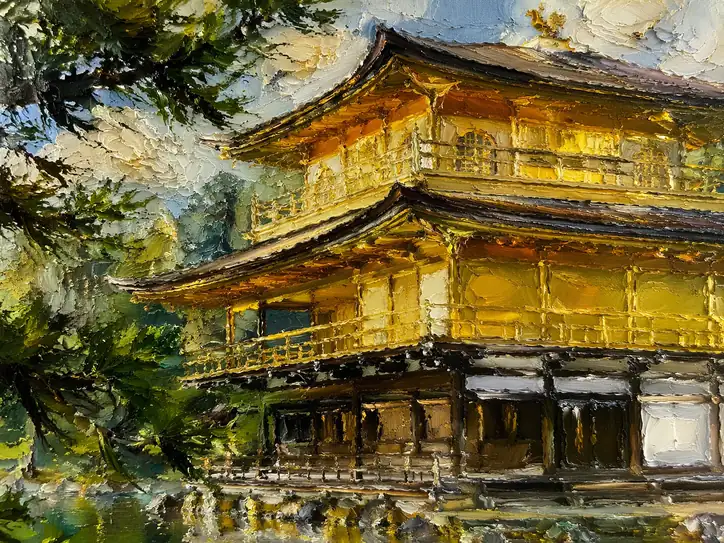 A Touch of Gold