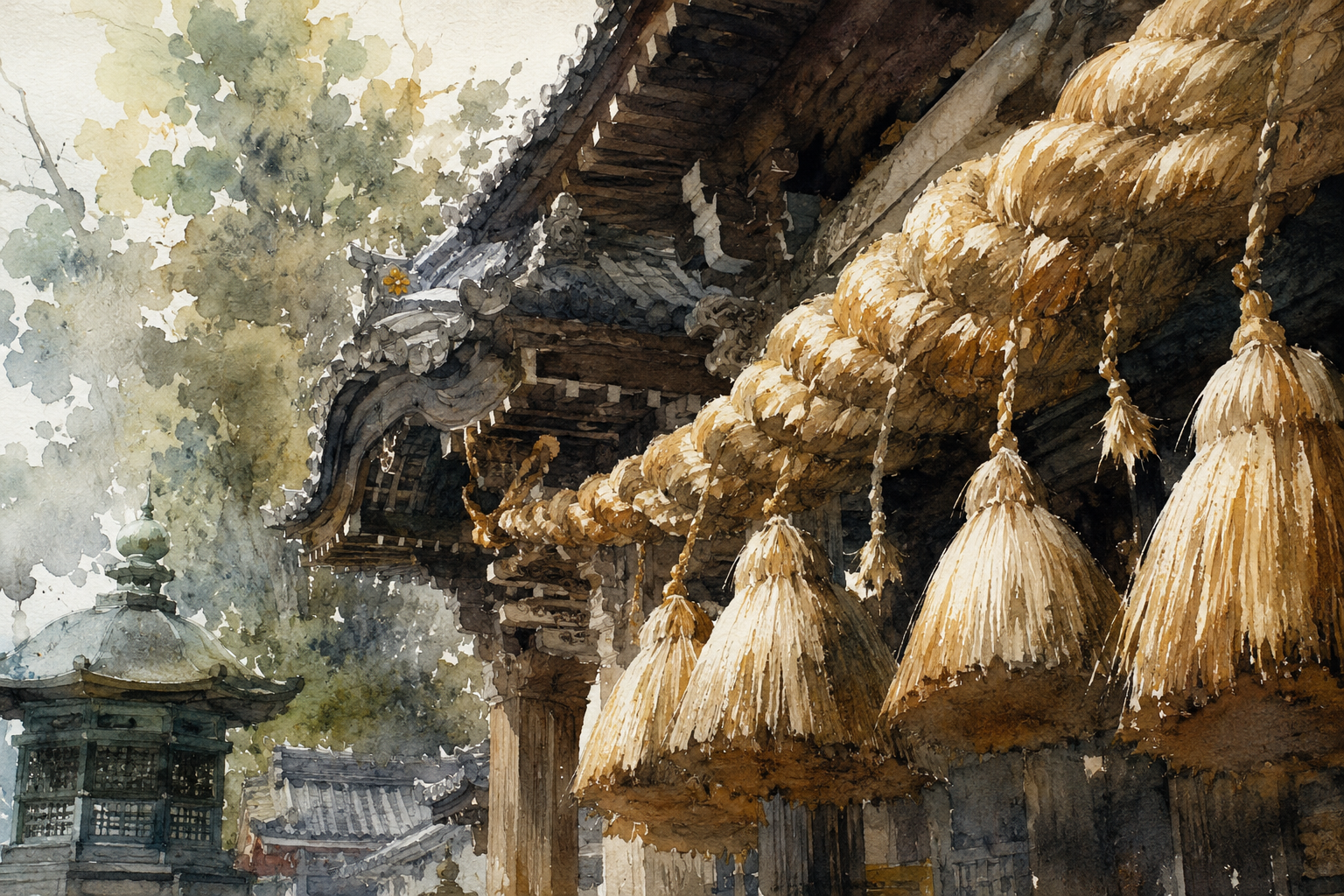
Whispers of the Sacred Boundary
Critique
1. Introduction This watercolor painting depicts a close-up view of traditional Japanese shrine architecture, specifically highlighting a massive shimenawa rope. The work captures the solemn atmosphere of a sacred space through delicate brushwork and a muted color palette. It presents a detailed study of the textures and structural elements found in Shinto sanctuaries. 2. Description The foreground is dominated by a thick, braided straw rope adorned with large, cone-shaped tassels hanging from the eaves. The architectural details of the wooden roof and supporting pillars are rendered with precise yet fluid strokes, showing the weathered texture of the material. In the mid-ground, a stone lantern sits to the left, while the background consists of soft, dappled foliage and hints of other shrine buildings. 3. Analysis The composition utilizes a strong diagonal arrangement, with the shimenawa and roofline cutting across the frame to create a sense of depth and focus. The watercolor medium is expertly handled, using wet-in-wet techniques to suggest the softness of the trees and the organic nature of the straw. Contrast is achieved through the play of light and shadow on the complex wooden carvings under the eaves. 4. Interpretation and Evaluation This piece successfully evokes a sense of timelessness and spiritual weight associated with Japanese tradition. The artist's skill is evident in the balance between architectural precision and the atmospheric looseness of the background. The portrayal of the shimenawa, a symbol of purification and sacred boundaries, serves as a powerful focal point that anchors the entire scene. 5. Conclusion Upon closer inspection, the initial impression of a simple architectural study reveals a profound appreciation for the intersection of nature and craftsmanship. The harmony between the man-made structures and the surrounding greenery reflects a core tenet of Shinto aesthetics. The work stands as a testament to the quiet dignity and enduring beauty of traditional sacred spaces.
Same Subcategory
Similar Artworks
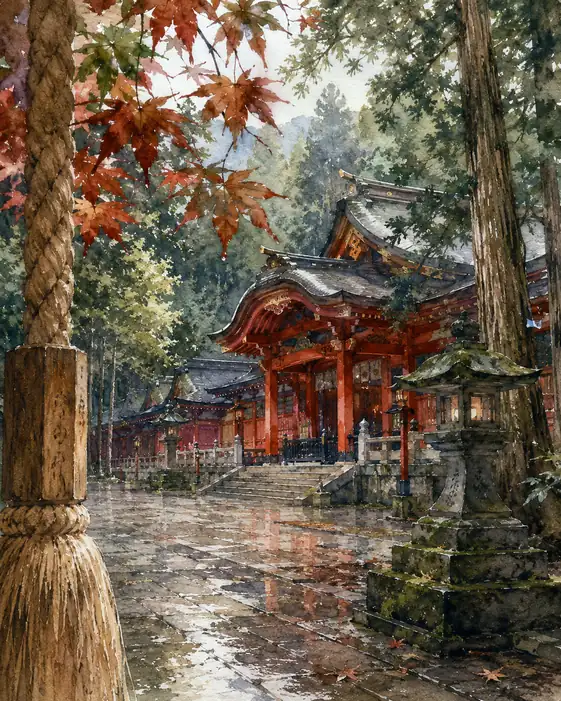 Serenity in the Autumn Rain
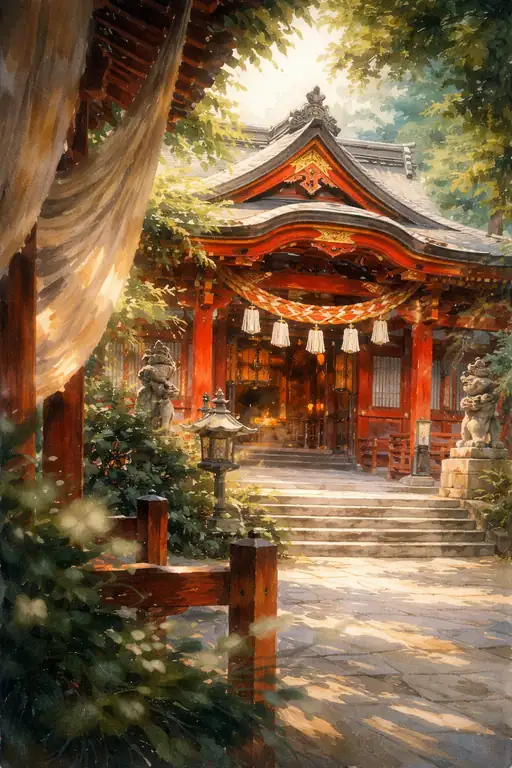 Sunlight Upon the Vermilion Pillars
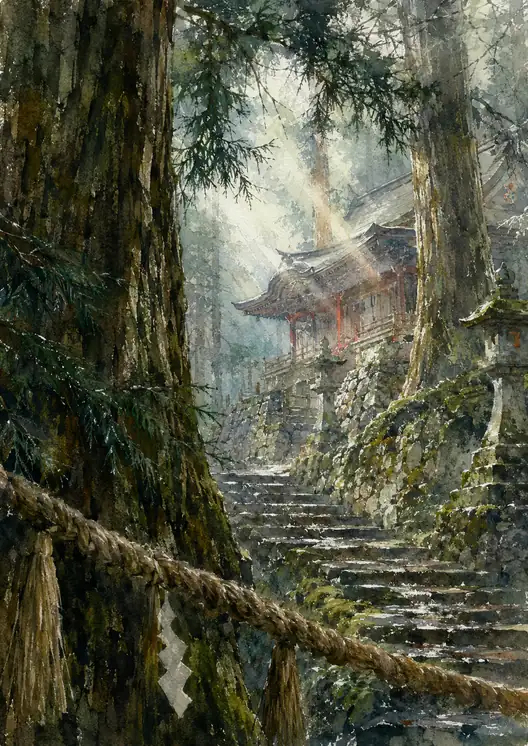 Sanctuary of the Piercing Light
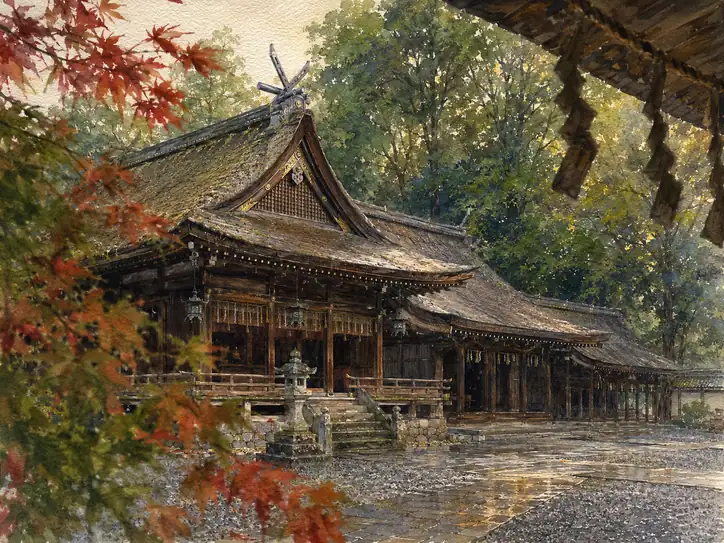 Sanctuary of the Whispering Leaves
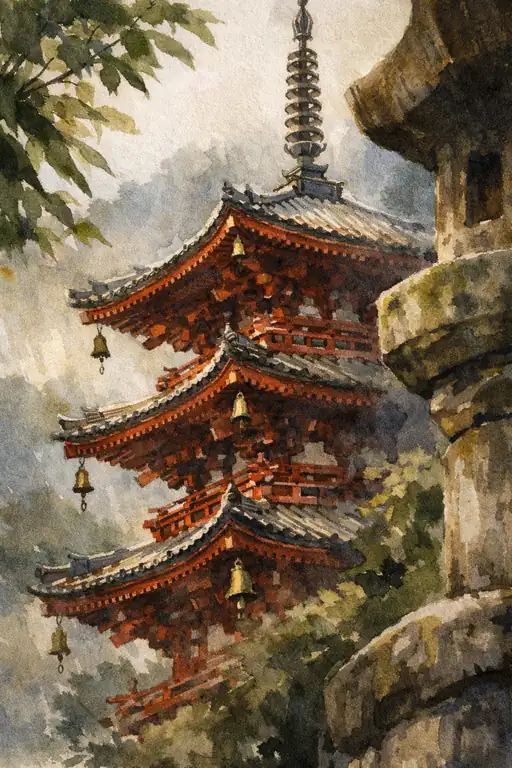 The Silent Watch of the Crimson Tier
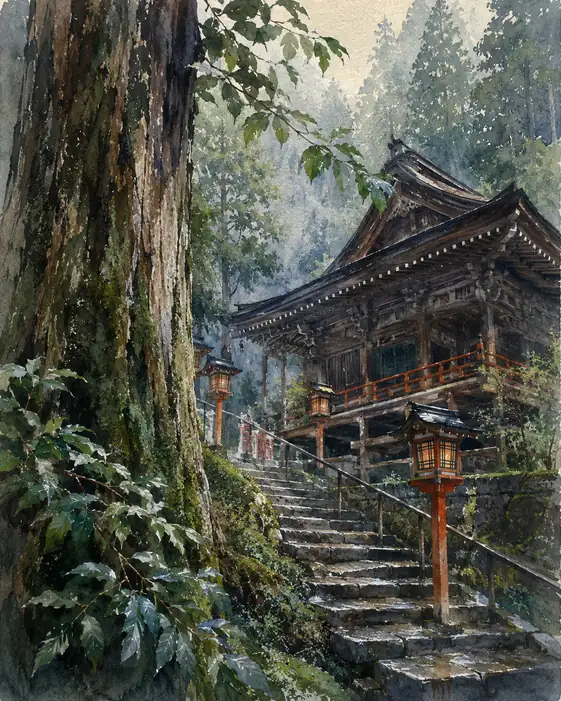 Guardian of the Ethereal Mist
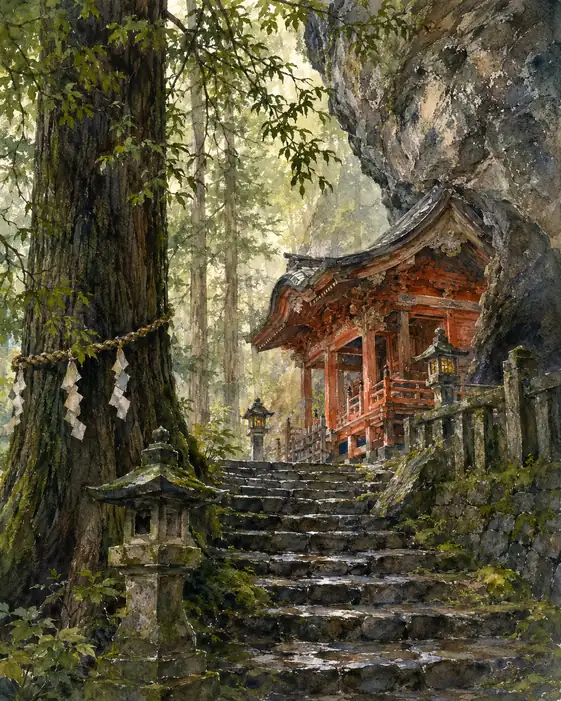 The Ancient Spirit’s Sanctuary
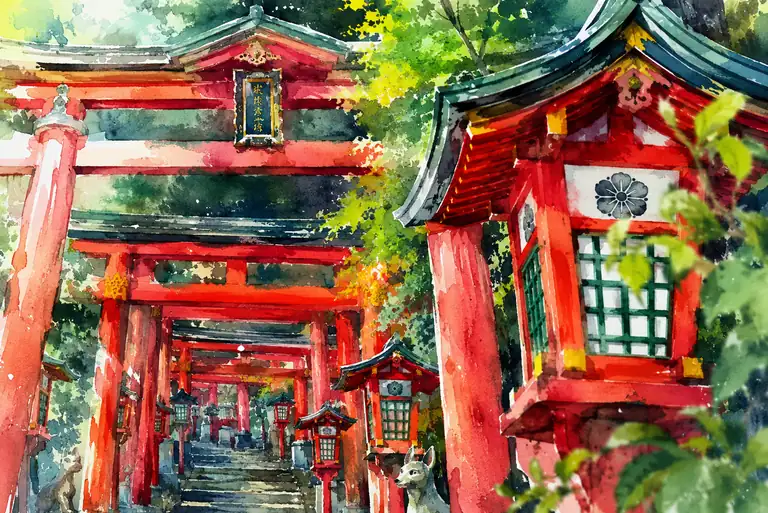 The Threshold Between Realms
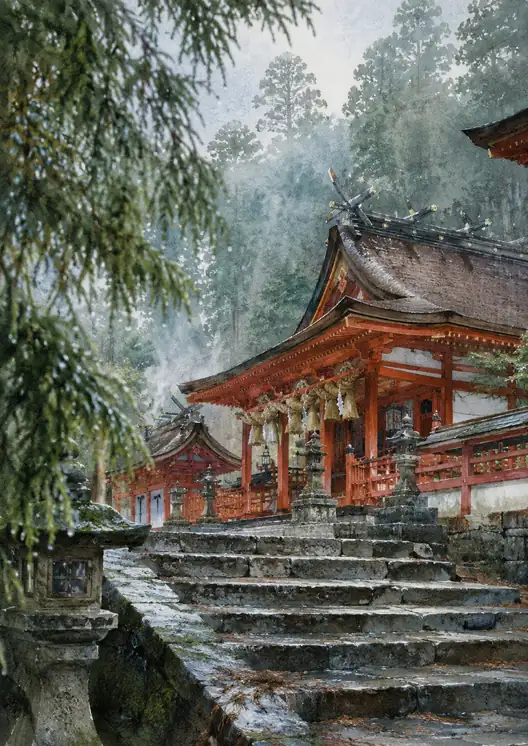 The Vermilion Silence of the Mist
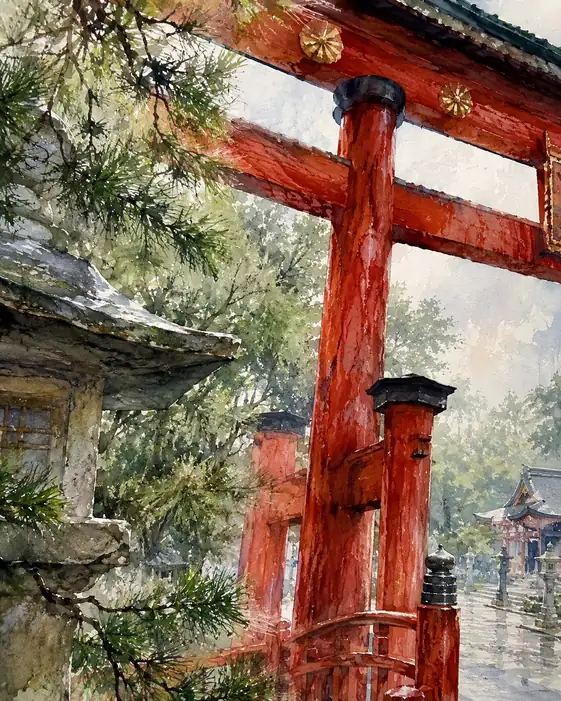 Eternal Silence of the Vermilion Gate