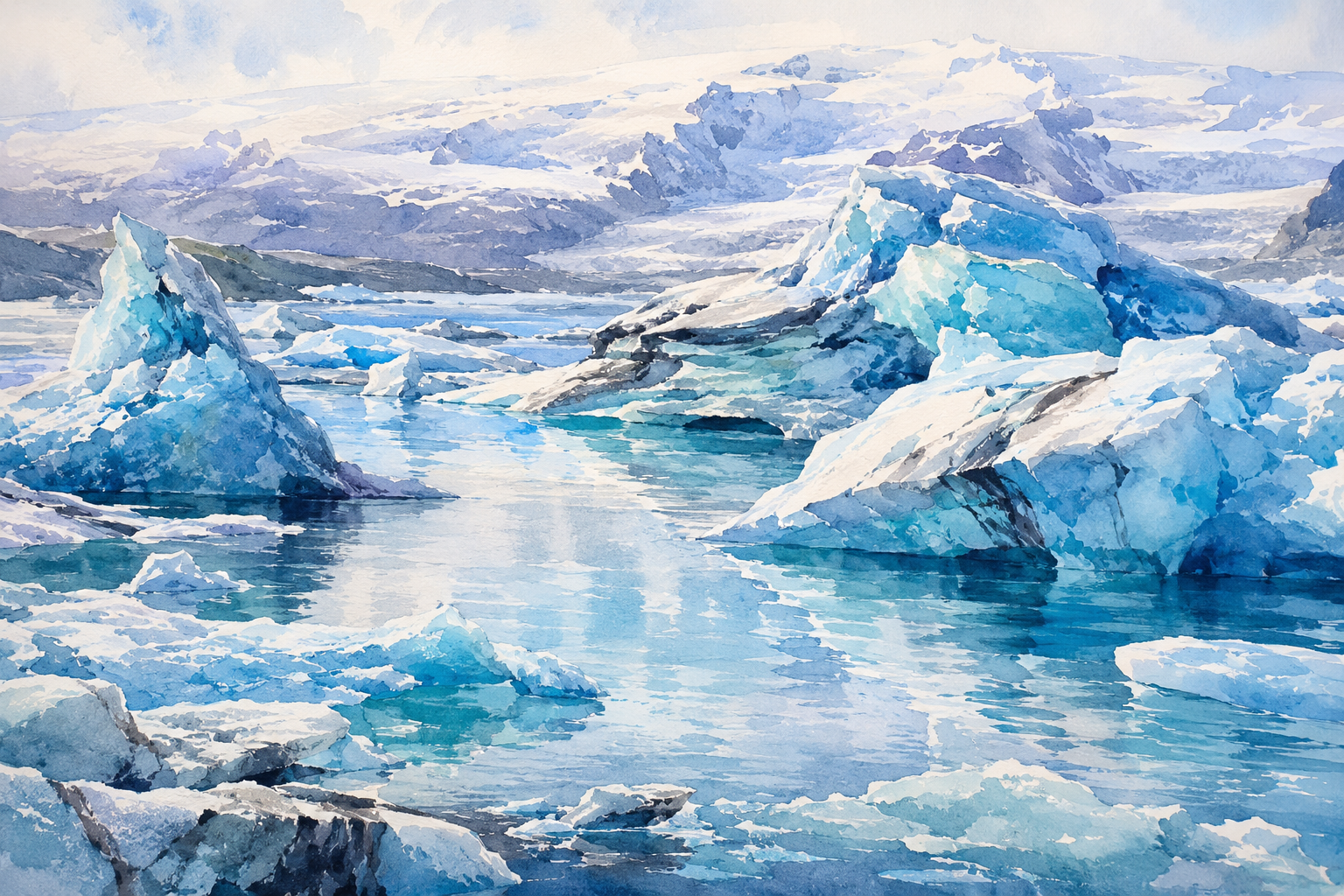
Whispers of the Crystalline Silence
Critique
1. Introduction This watercolor painting presents a breathtaking vision of a glacial lagoon, where the ethereal beauty of ice and water creates a scene of profound serenity. The work captures a vast, frozen landscape characterized by floating icebergs and a distant, ice-capped mountain range under a soft, diffused light. The artist's choice of medium and palette immediately establishes a cool, contemplative atmosphere that emphasizes the purity and monumental scale of the polar environment. 2. Description In the mid-ground, several prominent icebergs rise from the shimmering blue water, their jagged forms rendered with delicate washes of cerulean, turquoise, and deep ultramarine. The water itself reflects the luminous sky and the icy structures, with subtle ripples and tonal shifts that suggest a gentle current. In the background, a massive glacier stretches across the horizon, its peaks partially veiled by soft, atmospheric clouds. The color scheme is almost entirely monochromatic, relying on an extensive range of blues and the brilliant white of the paper to convey the crystalline quality of the ice. 3. Analysis The work demonstrates a masterful command of watercolor techniques, particularly in the use of transparency and wet-on-dry applications to create sharp, icy edges. The artist utilizes the natural flow of the pigment to simulate the irregular textures of the frozen surfaces and the fluid nature of the lagoon. Compositionally, the placement of the larger icebergs on either side of the frame creates a sense of depth, leading the viewer's eye through the central waterway toward the distant mountains. Light is handled with great sensitivity, with the brightest whites reserved for the crests of the ice, creating a powerful sense of luminosity and spatial volume. 4. Interpretation and Evaluation This painting can be interpreted as a poignant meditation on the fragile majesty of the natural world and the silent power of the cryosphere. The stillness of the scene and the absence of any living creatures highlight the ancient, self-contained nature of this environment. The delicate execution in watercolor serves as an appropriate metaphor for the vulnerability of these glacial landscapes in the face of global change. Technically, the artist's ability to evoke such a complex sense of temperature and light using a limited palette is exceptional, resulting in a work that feels both physically cold and emotionally resonant. 5. Conclusion Through its delicate handling of color and form, the painting successfully transports the viewer into a realm of quiet grandeur and crystalline clarity. The initial impression of a desolate, frozen waste gradually gives way to an appreciation for the intricate tonal variations and the dynamic interplay of light on water and ice. It is a masterful exploration of the expressive potential of watercolor to capture the most ephemeral qualities of the environment. Ultimately, the work leaves a lasting impression of the profound beauty found in the most remote and silent corners of our planet.
Same Subcategory
Similar Artworks
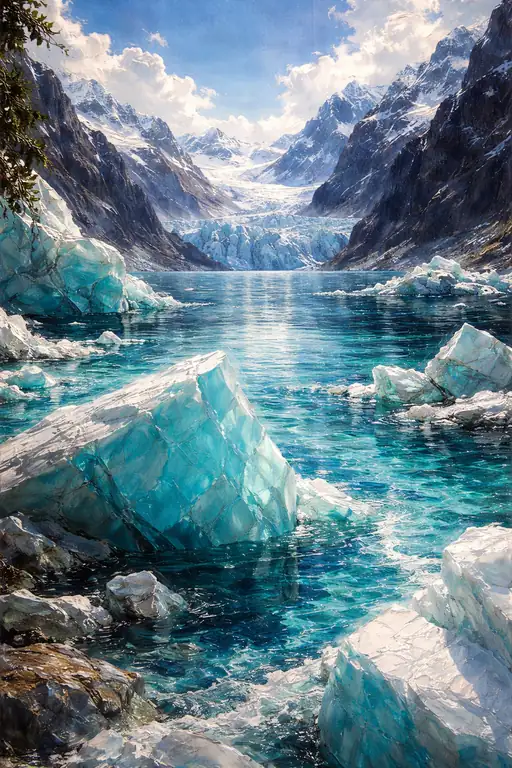 The Solitude of Frozen Wonders
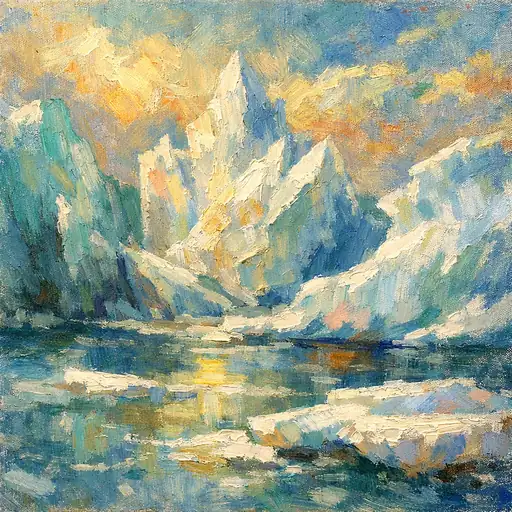 Echoes of the Glacier: The Golden Ice
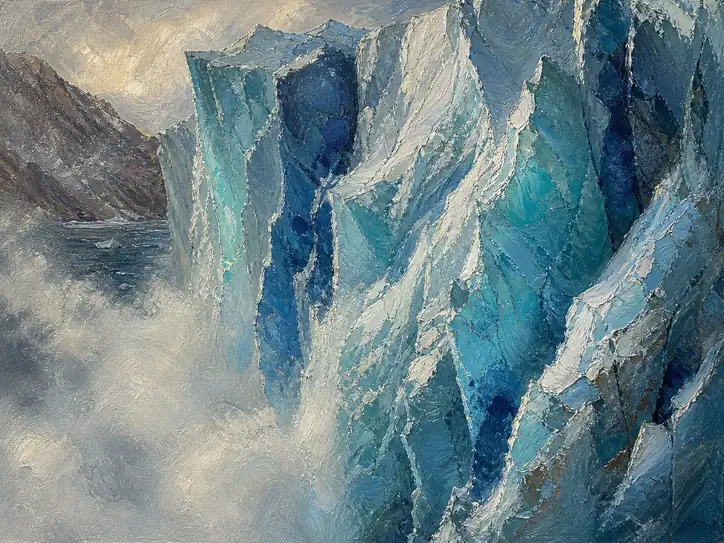 Whispers of the Ancient Frost
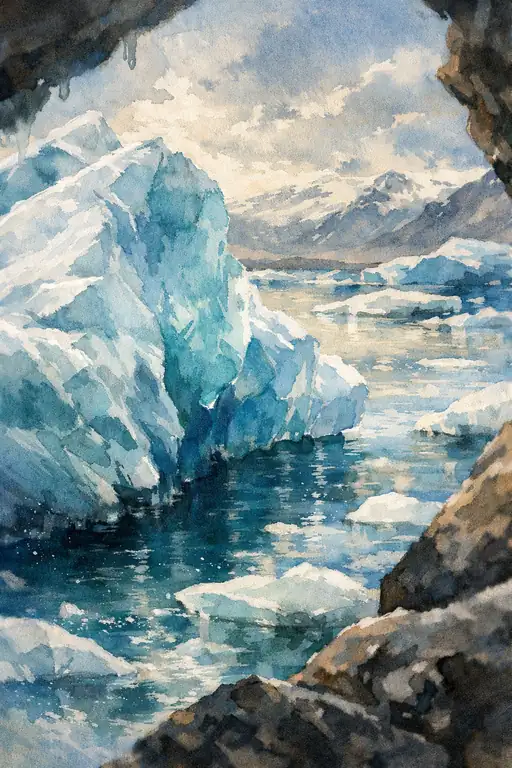 The Ice Giant's Silence
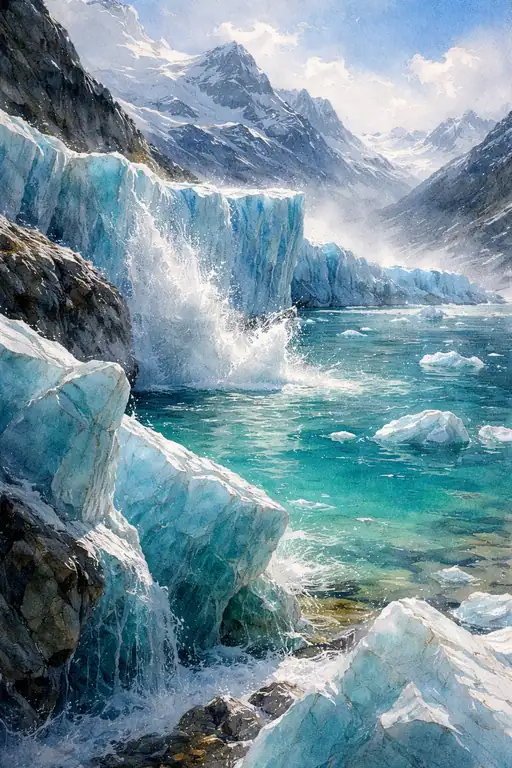 The Great Release: Echoes of the Blue Giant
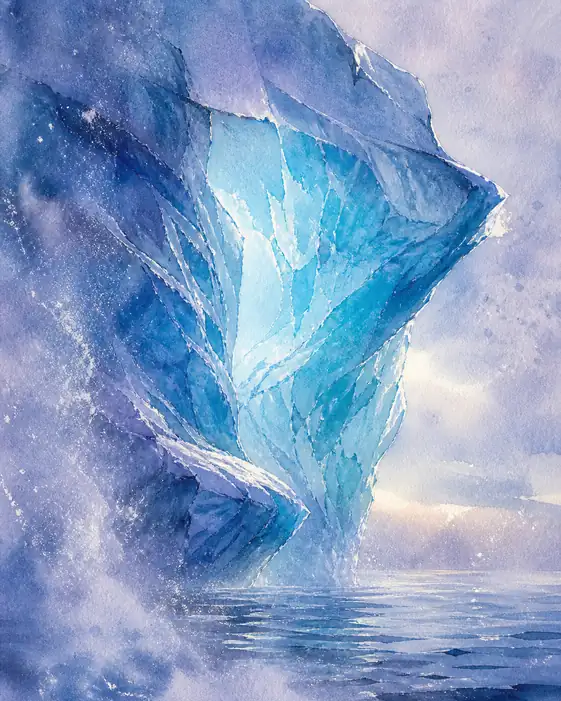 The Sacred Core of Eternal Blue
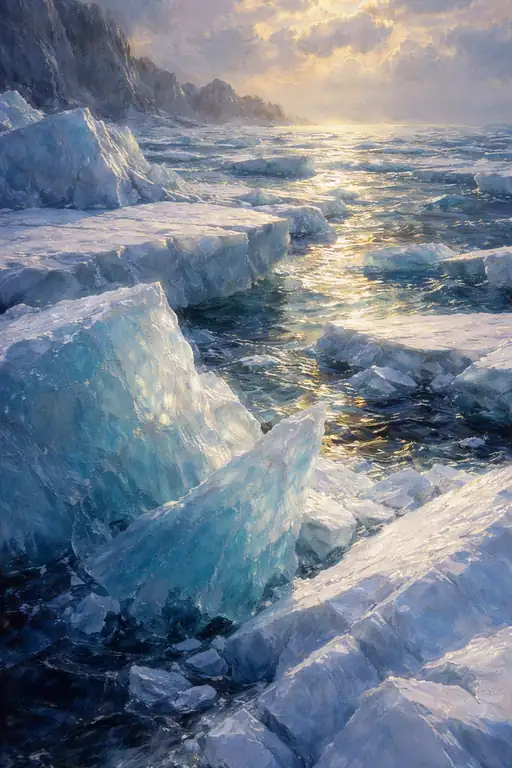 The Last Light of the Polar Kingdom
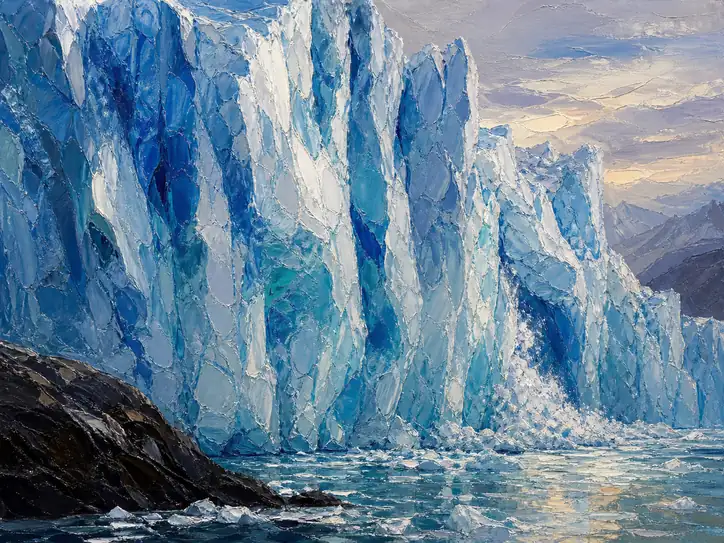 The Awakening of the Ancient Blue
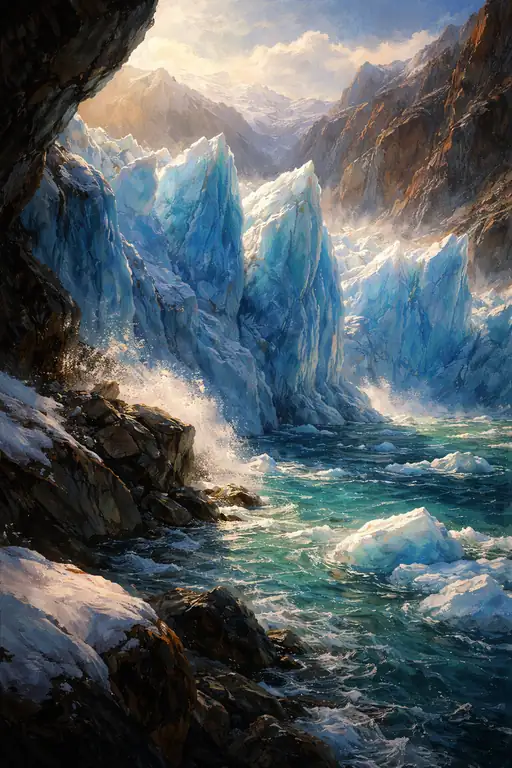 Dramatic Iceberg Waves
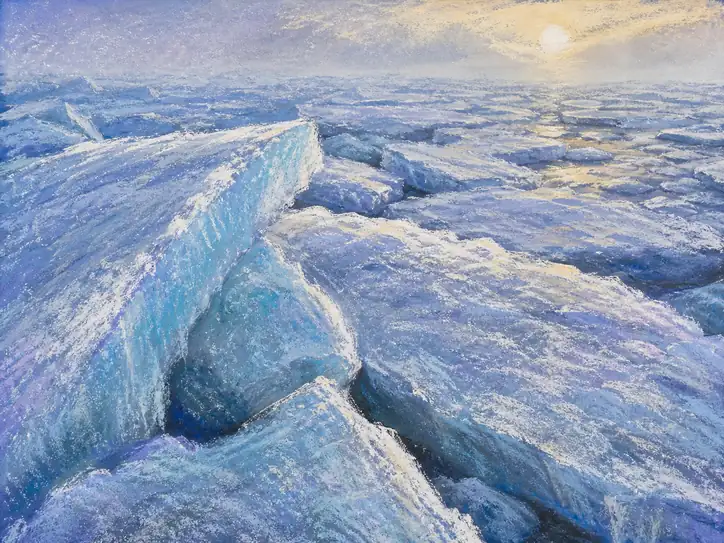 The Eternal Radiance of Frozen Frontiers