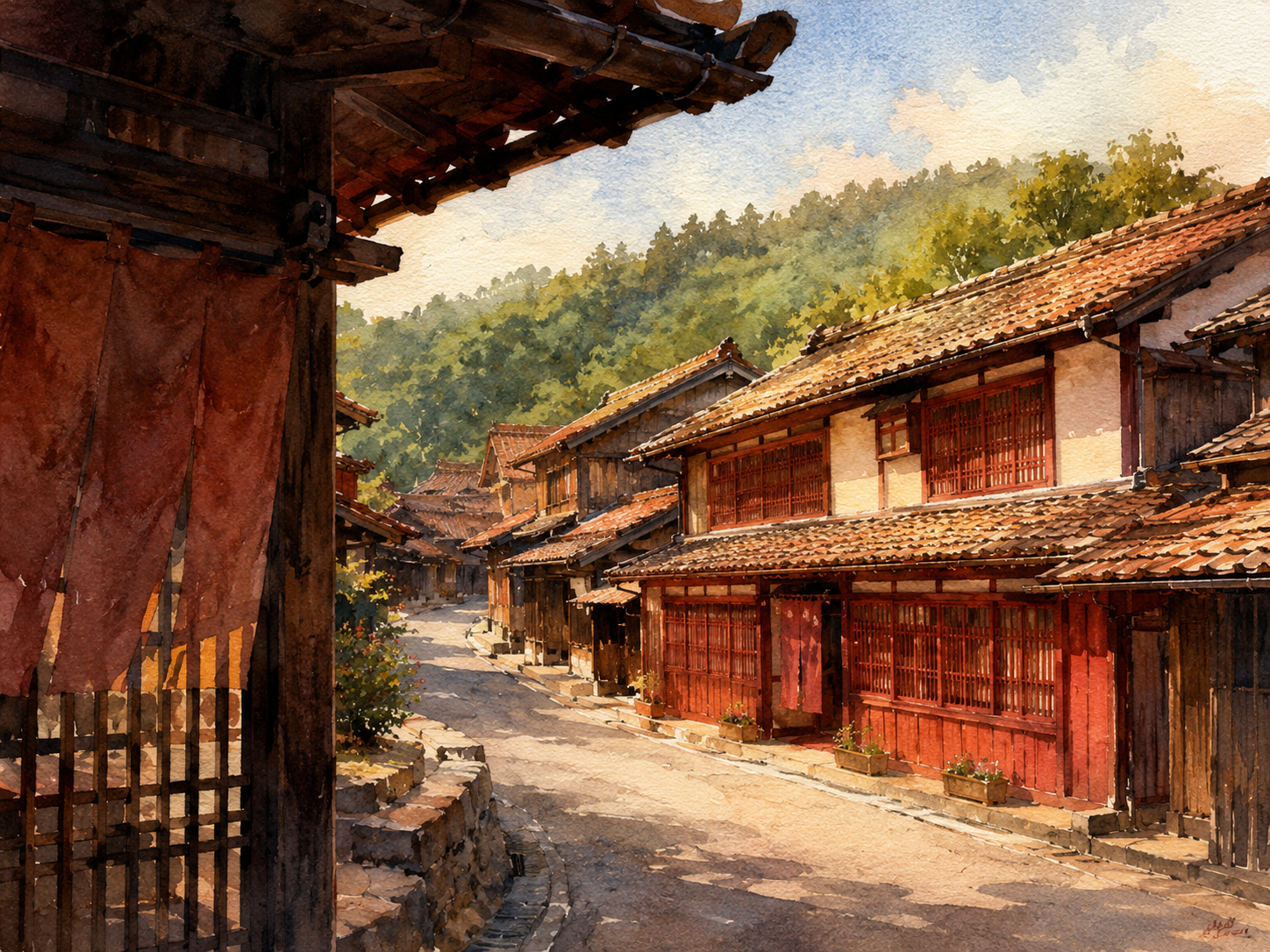
Whispers of the Old Post Town
Critique
1. Introduction This watercolor work portrays a picturesque street in a historical Japanese settlement, characterized by traditional wooden architecture. The piece emphasizes the timeless quality of these structures and their integration into a peaceful natural environment. It serves as a visual exploration of cultural preservation and the aesthetic harmony of the Edo-period townscape. 2. Description The viewpoint is partially obscured by a dark wooden gate on the left, which features a hanging noren curtain in a deep reddish-brown hue. Beyond this entrance, a sun-drenched road winds into the distance, flanked by two-story buildings with gray tiled roofs and detailed wooden lattices. A verdant, tree-covered mountain rises in the background under a pale, luminous sky. 3. Analysis The composition utilizes a framing technique to direct the viewer's attention through the gateway and down the receding path. The artist demonstrates a sophisticated use of watercolor, employing layered washes to represent the varied textures of wood, stone, and foliage. The distribution of light creates a vibrant contrast between the shadowed foreground and the brightly lit buildings further along the street. 4. Interpretation and Evaluation The painting captures the essence of "wa" or harmony, through the balanced relationship between the man-made street and the organic mountain backdrop. The meticulous rendering of the architectural elements reflect a deep respect for historical craftsmanship. The warm color scheme and soft lighting evoke a sense of tranquility and nostalgia, successfully transporting the viewer to a bygone era. 5. Conclusion In summary, the artwork is an excellent study of traditional Japanese urban design, rendered with both technical skill and emotional depth. The initial focus on the architectural details eventually leads to a broader appreciation for the serene atmosphere of the entire district. This work effectively communicates the enduring beauty and historical significance of Japan's rural heritage.
Same Subcategory
 Hydrangeas in the Whispering Alley
Similar Artworks
 Golden Shadows on the Post Town
 Sun-Drenched Memories of the Old Street
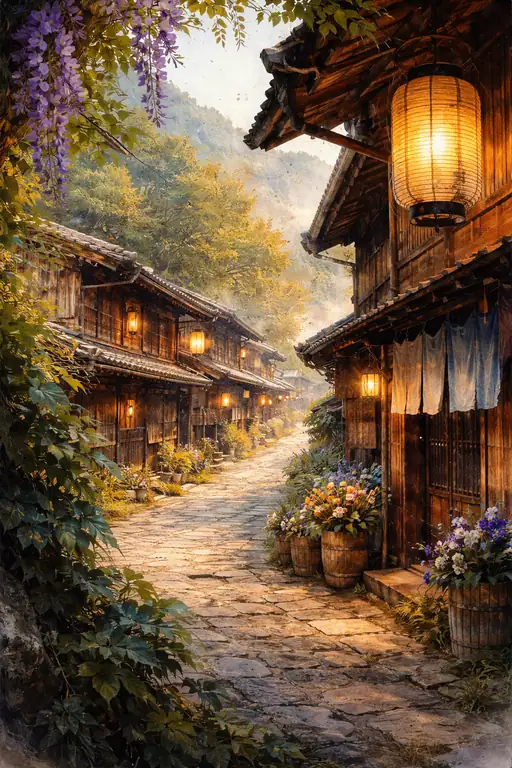 Wisteria Dreams in the Quiet Town
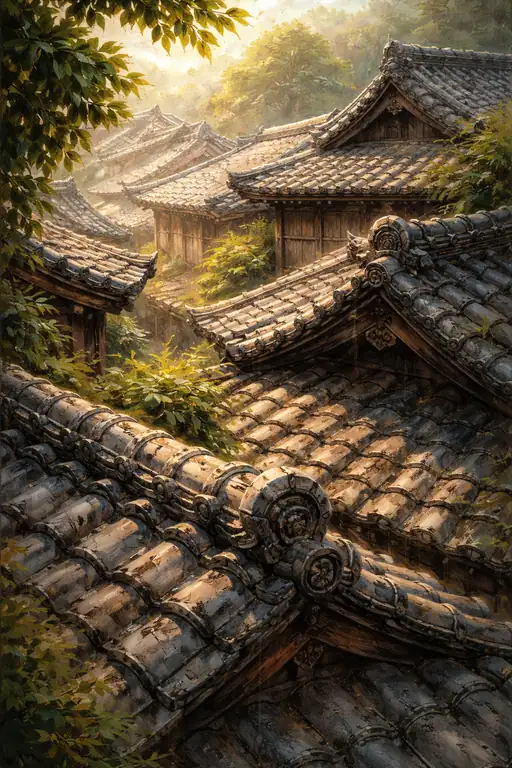 Gentle Time Woven by Tiled Roofs
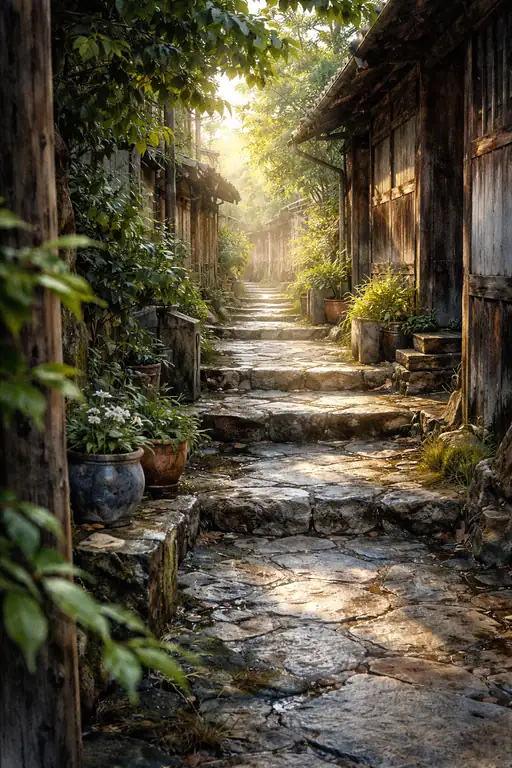 Morning Mist on the Stone Steps
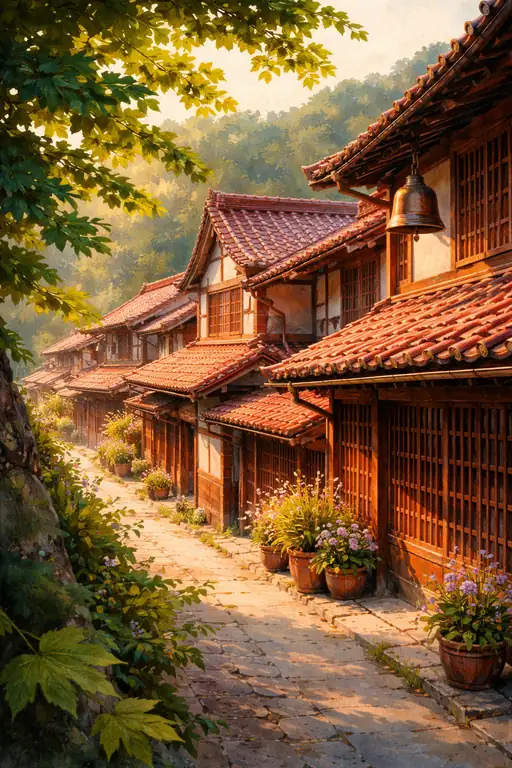 Nostalgia on the Stone Path
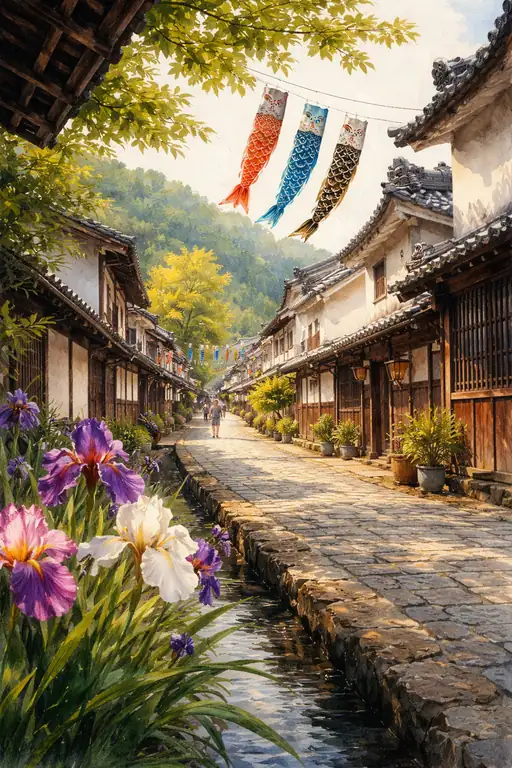 Dreams Soaring on the Vernal Wind
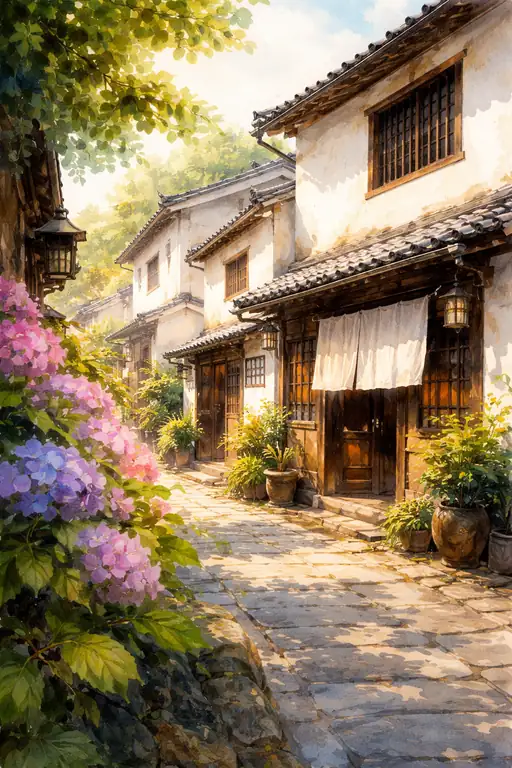 Tears of Hydrangeas in the Sunlit Alley
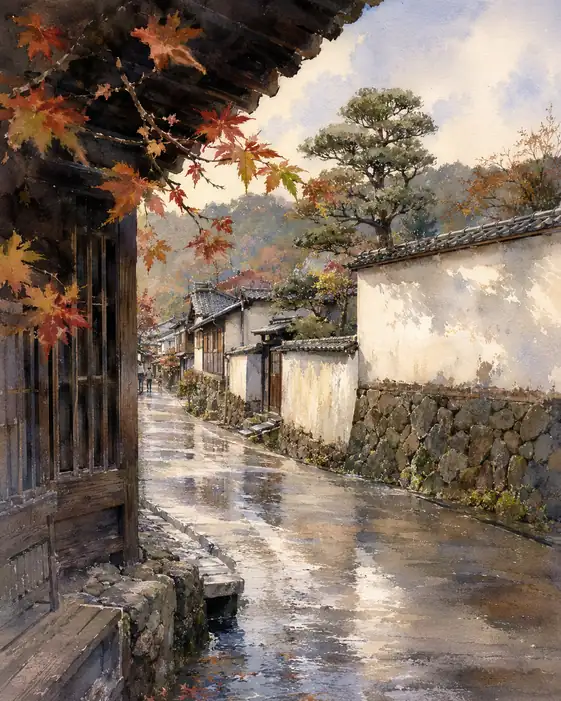 Reflections of a Fading Autumn
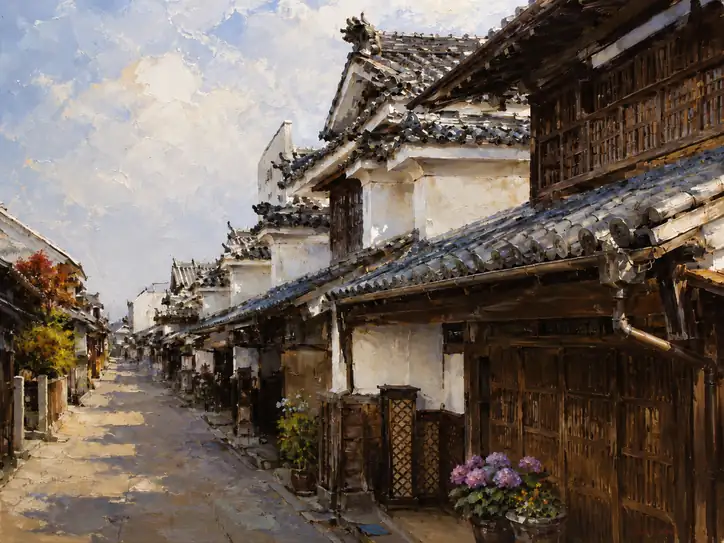 Pathway Through the White-Walled Silence