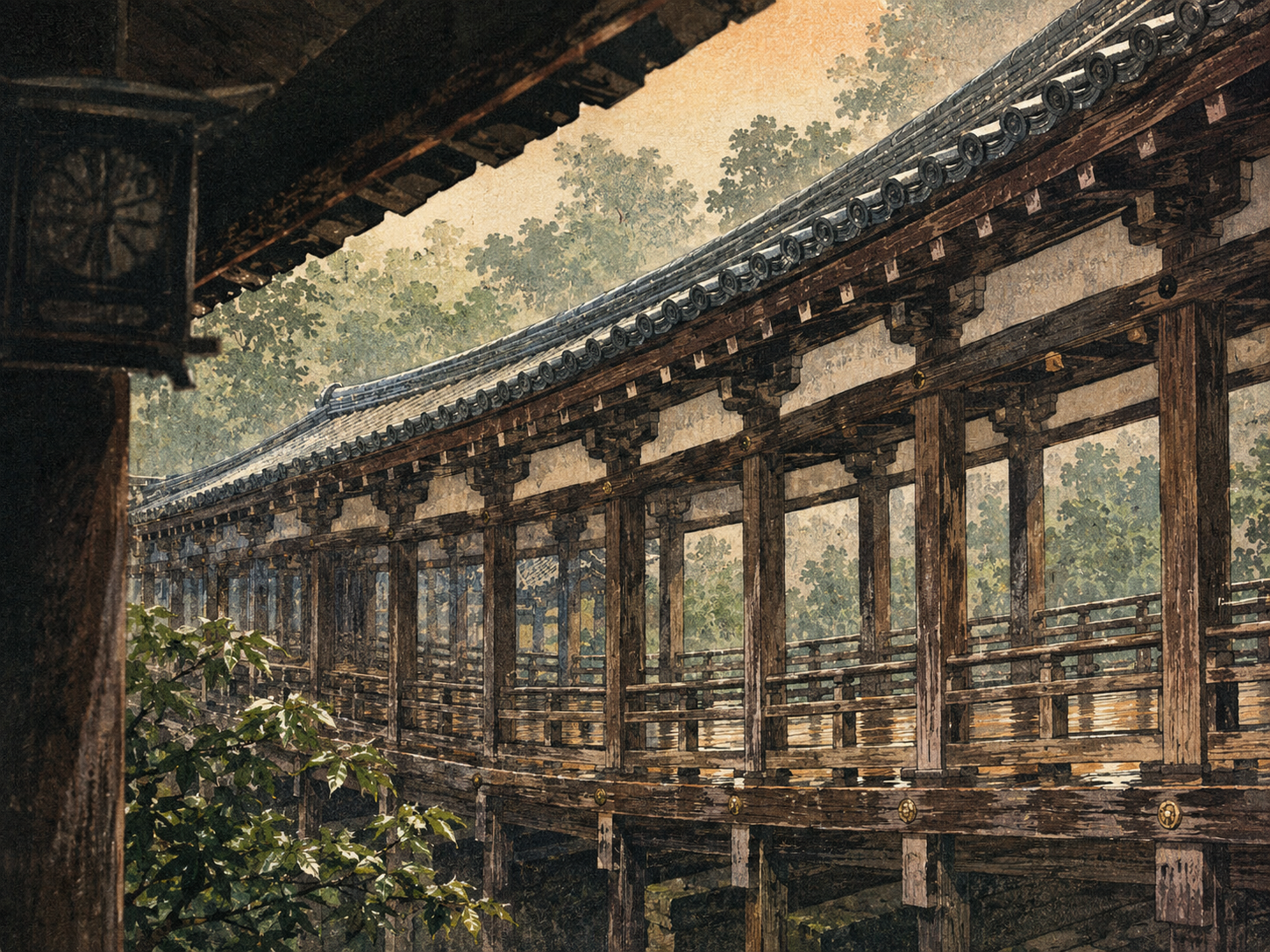
Whispers of the Ancient Corridor
Critique
1. Introduction This detailed watercolor painting depicts a long, curved wooden corridor characteristic of traditional Japanese temple architecture. The composition focuses on the rhythmic repetition of pillars and the elegant sweep of the tiled roof as it winds through a lush, forested environment. The artwork captures a sense of historical weight and spiritual quietude, inviting the viewer to contemplate the intersection of human craftsmanship and natural beauty. 2. Description The corridor, constructed from dark, aged wood, features a series of vertical posts that create a strong sense of perspective. A gray tiled roof with ornate end-tiles follows the gentle curve of the walkway, leading the eye toward the upper right of the frame. In the background and through the openings between the pillars, dense green foliage is visible, suggesting a mountainous or woodland setting. A decorative wooden lantern is partially visible in the shadowed foreground on the left. 3. Analysis The artist employs a refined watercolor technique, using subtle washes to convey the weathered texture of the wood and the matte finish of the clay tiles. The color palette is understated, dominated by earthy browns, muted greys, and varied shades of mossy green. Linear perspective is effectively used to create depth, while the organic curve of the corridor softens the structural rigidity of the architecture. The soft, diffused lighting enhances the atmospheric quality of the scene. 4. Interpretation and Evaluation This work successfully evokes the meditative experience of walking through a sacred space. The choice of a curved path rather than a straight line adds a sense of discovery and mystery to the composition. The technical execution is exceptional, particularly in the rendering of the complex joinery and the delicate interplay of light and shadow within the structure. It demonstrates a profound appreciation for the aesthetics of wabi-sabi. 5. Conclusion In summary, the painting is a masterful exploration of architectural form and atmospheric mood within a traditional cultural context. The initial focus on the repetitive structural elements evolves into a deeper appreciation for the overall harmony and serenity of the temple grounds. This piece stands as a sophisticated example of architectural landscape painting, effectively capturing the timeless essence of its subject through careful observation and skillful execution.
Same Subcategory
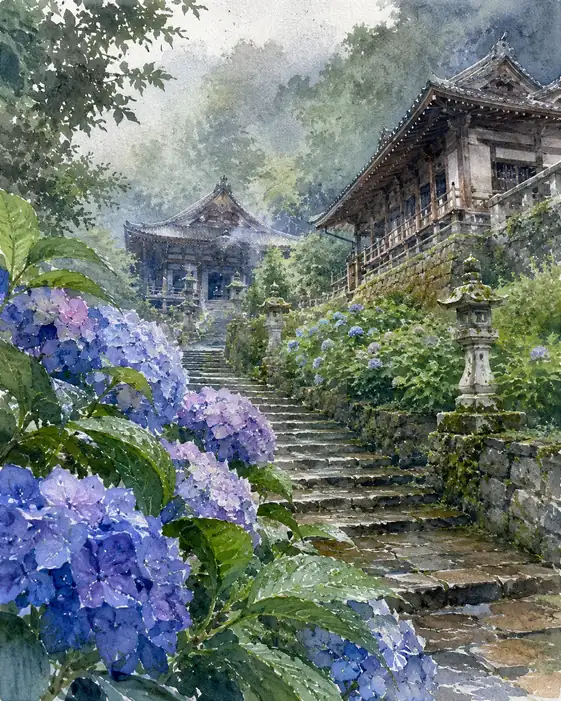 Lullaby in the Azure Rain
Similar Artworks
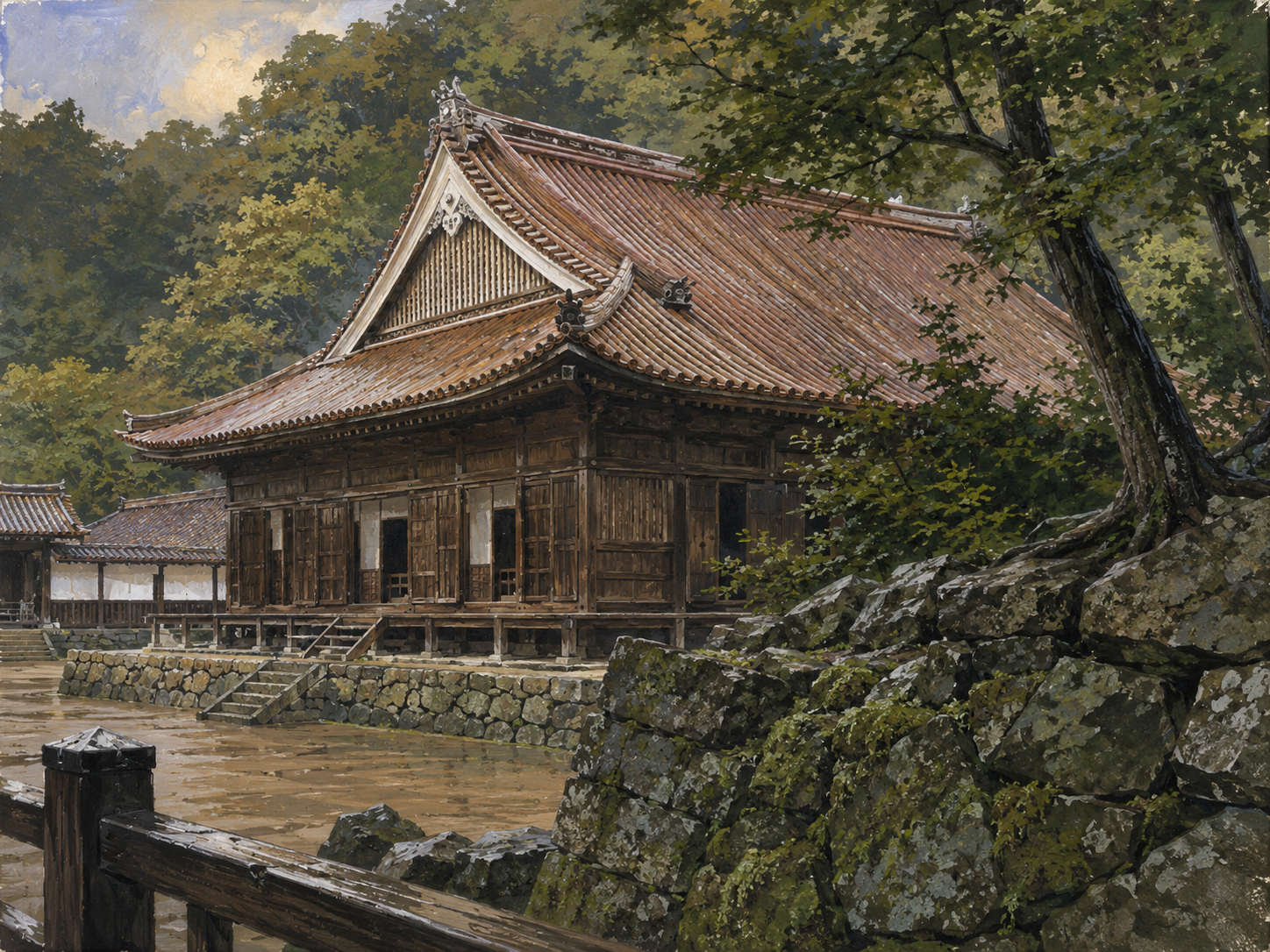 Eternity in the Moss-Covered Hall
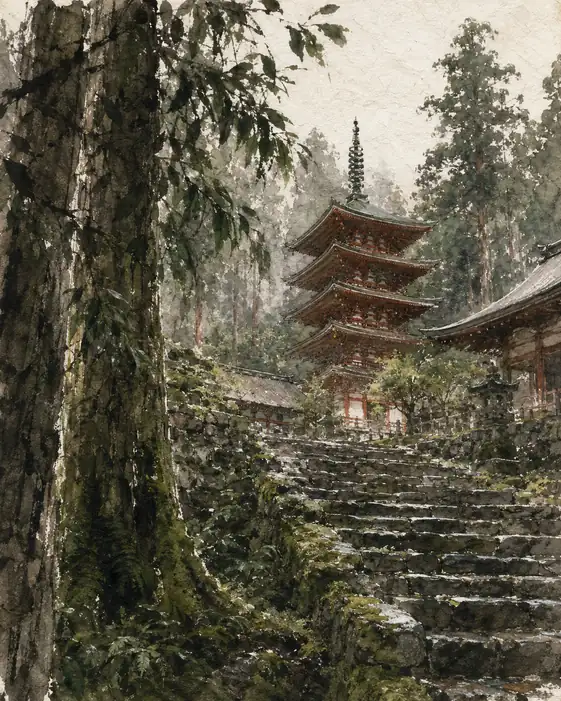 Echoes of Eternity in the Mossy Mist
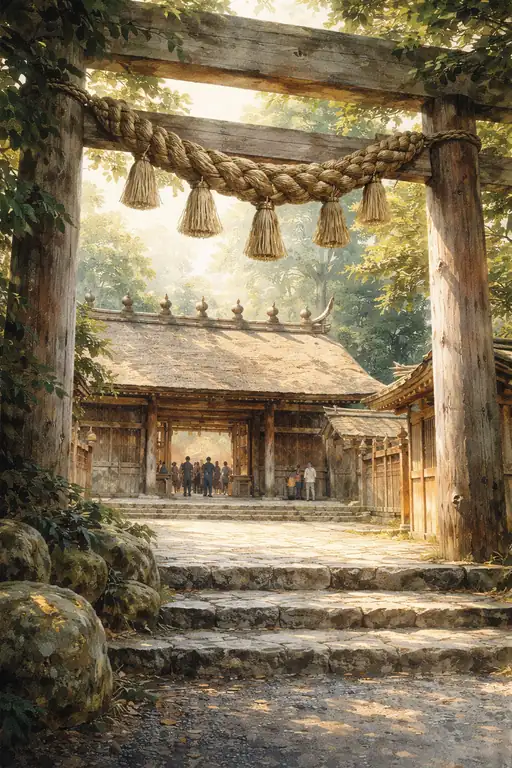 Awakening the Sacred Path
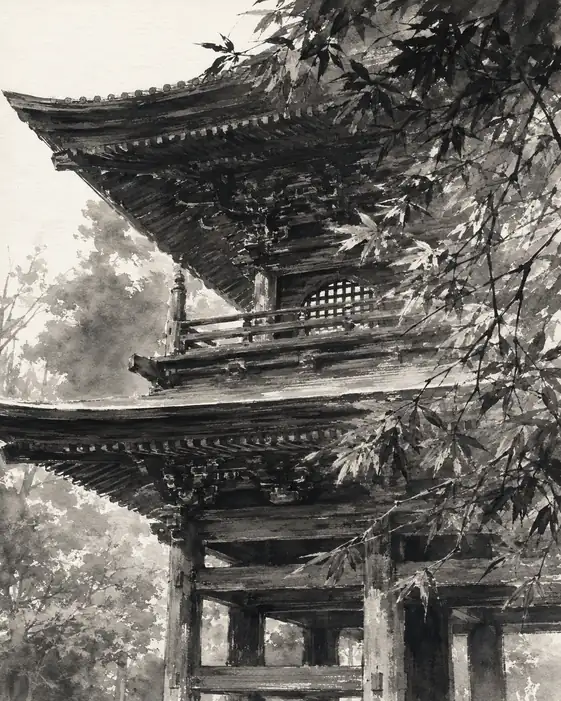 Echoes of Zen: Ancient Pagoda and the Dance of Shadowed Leaves
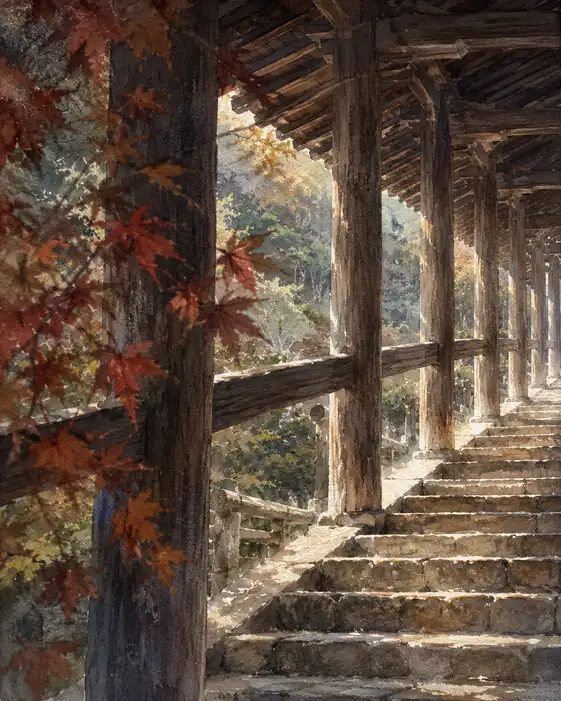 Echoes of Crimson Footsteps
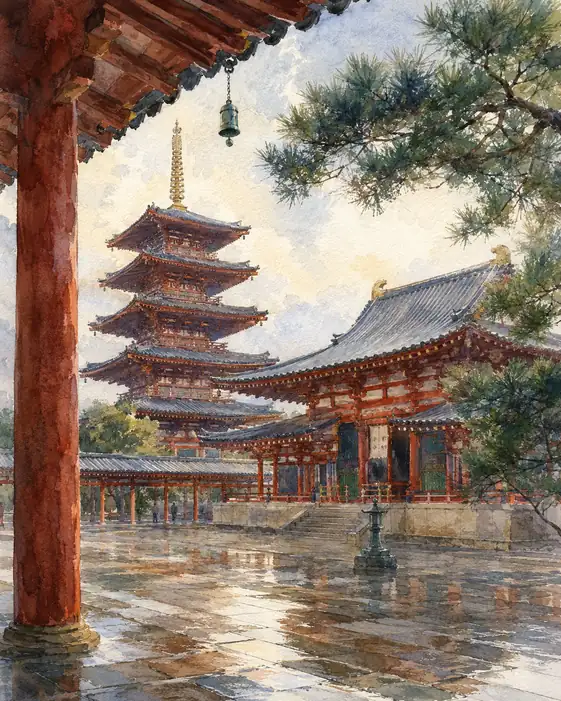 Mirror of the Eternal Tower
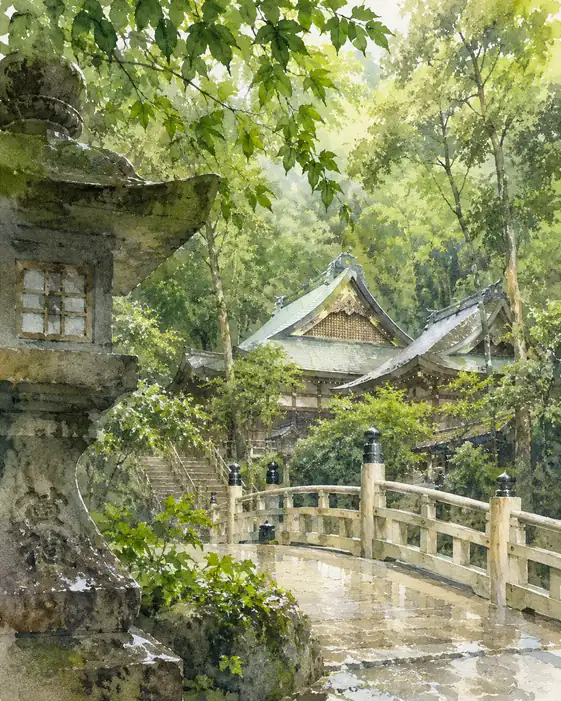 Stillness of the Hidden Sanctuary
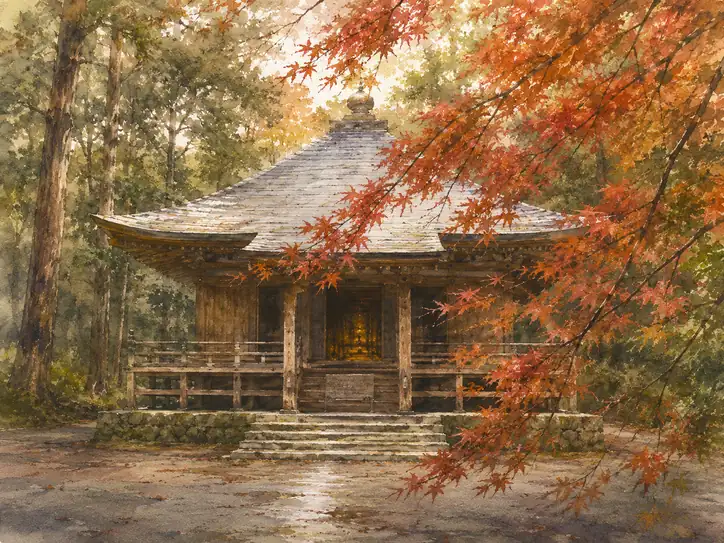 Golden Glow in the Maple Shadows
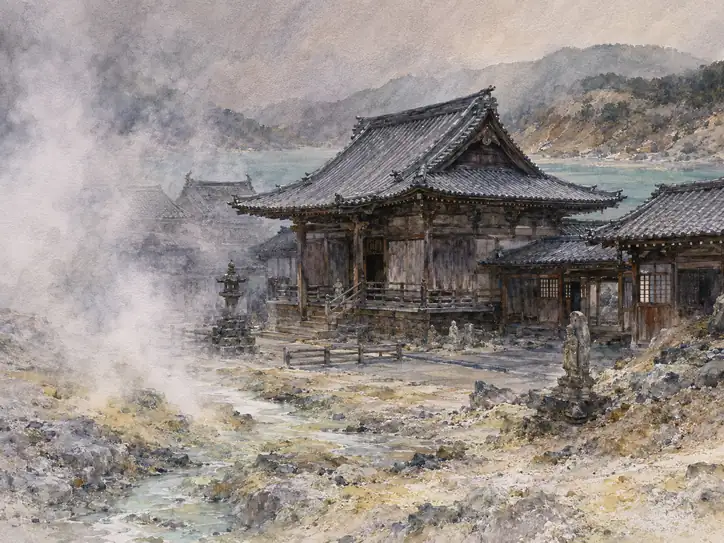 Sanctuary Amidst the Vapors
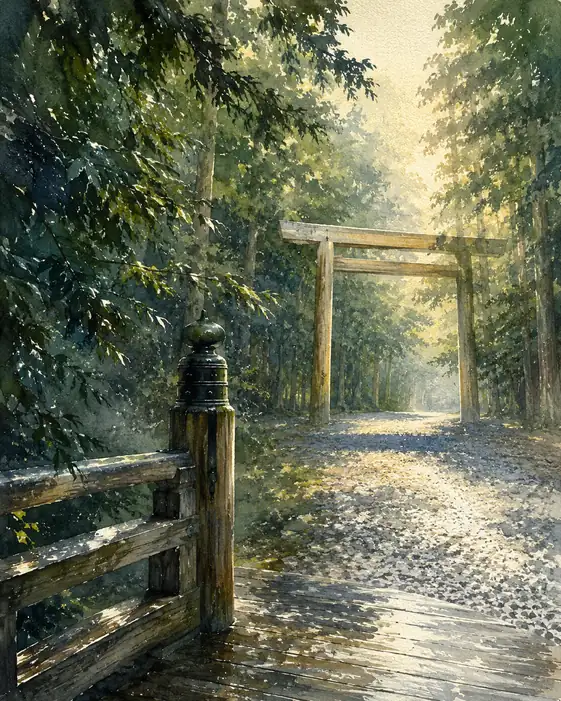 Invitation to the Divine Silence