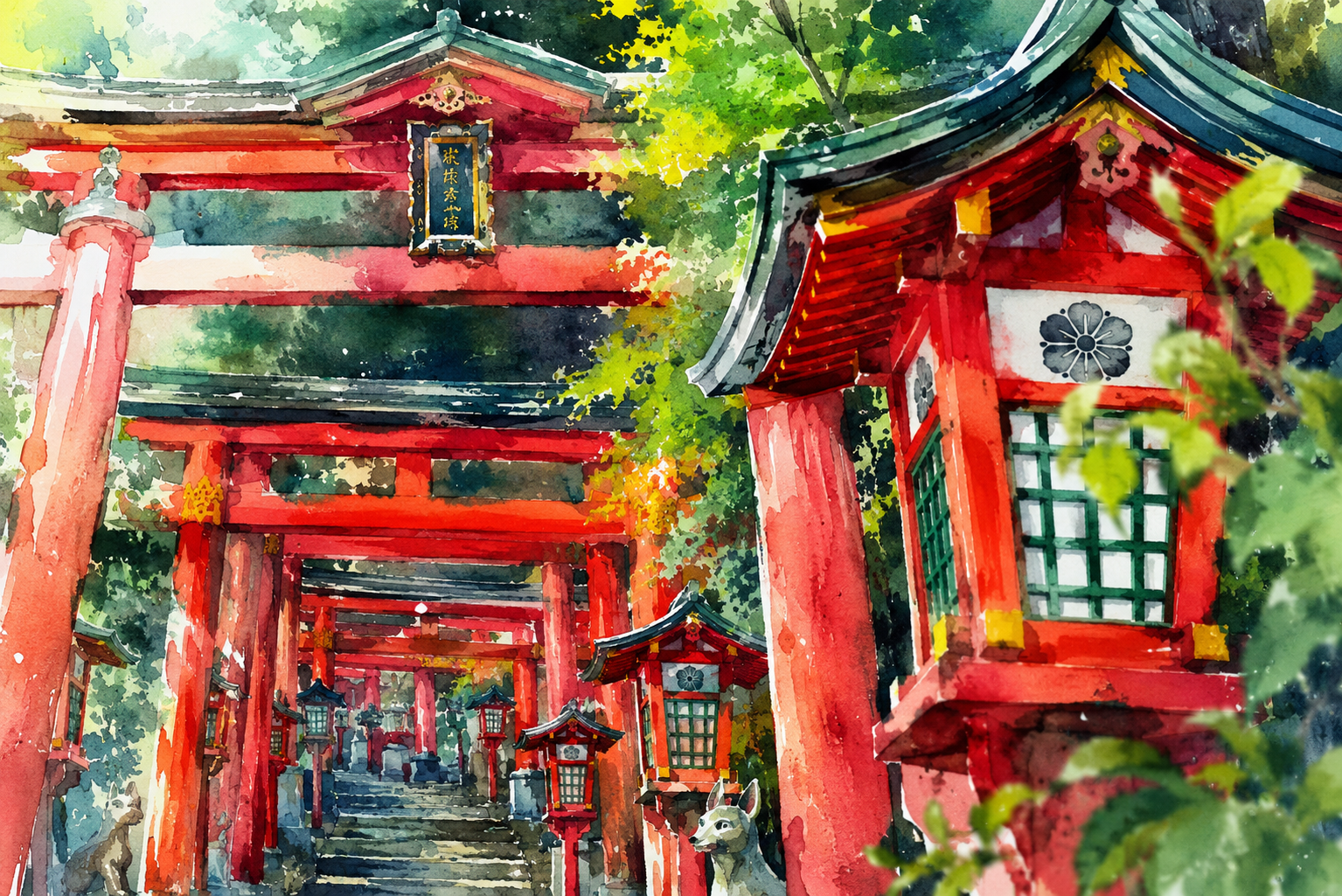
The Threshold Between Realms
Critique
1. Introduction This watercolor painting presents a vivid depiction of a traditional Japanese shrine entrance, characterized by its iconic vermilion architecture and lush natural surroundings. The work captures a serene yet spiritually charged moment at what appears to be an Inari shrine, famous for its rows of torii gates. Through the delicate medium of watercolor, the artist explores the harmony between man-made sacred structures and the organic growth of the forest. The perspective invites the viewer to step into the scene and follow the path upward. 2. Description The composition is dominated by several bright red torii gates that frame a stone staircase leading into the distance. In the foreground, a large, ornate red lantern with intricate carvings and a floral crest occupies the right side of the frame, its details rendered with careful precision. To the left and further down the path, several stone fox statues, or kitsune, guard the entrance, their forms partially shaded by the surrounding foliage. The background is a dense tapestry of green leaves and dappled sunlight, creating a sense of depth and mystery beyond the gates. 3. Analysis Technically, the painting utilizes the transparency and fluid nature of watercolor to create a dynamic interplay of light and color. The vibrant vermilion of the gates and lanterns provides a striking complementary contrast against the deep greens and yellows of the forest canopy. The artist employs a strong diagonal composition, with the lines of the torii gates and the stairs drawing the eye from the bottom left toward the upper center. Subtle paint bleeds and varied brushwork add texture to the wooden surfaces and the soft, organic shapes of the leaves. 4. Interpretation and Evaluation The work successfully conveys the atmosphere of a sacred space where the physical and spiritual worlds intersect. The use of bright, saturated colors suggests a celebratory or divine presence, while the deep shadows and secluded path hint at the introspection required in such a place. The execution demonstrates a high level of skill in managing the watercolor medium, particularly in the way the colors blend without becoming muddy. The composition is well-balanced, effectively using the foreground lantern to ground the viewer before leading them into the ethereal distance. 5. Conclusion In conclusion, this painting is a masterful representation of Japanese cultural heritage through a modern artistic lens. It captures not only the physical beauty of the shrine but also the intangible feeling of peace and reverence associated with such locations. The technical proficiency in color application and structural rendering makes it a compelling piece of art. The initial impression of a simple landscape transforms into a profound exploration of light, tradition, and the enduring connection between nature and faith.
Same Subcategory
 Whispers of the Sacred Boundary
Similar Artworks
 Guardian of the Ethereal Mist
 Sanctuary in the Emerald Mist
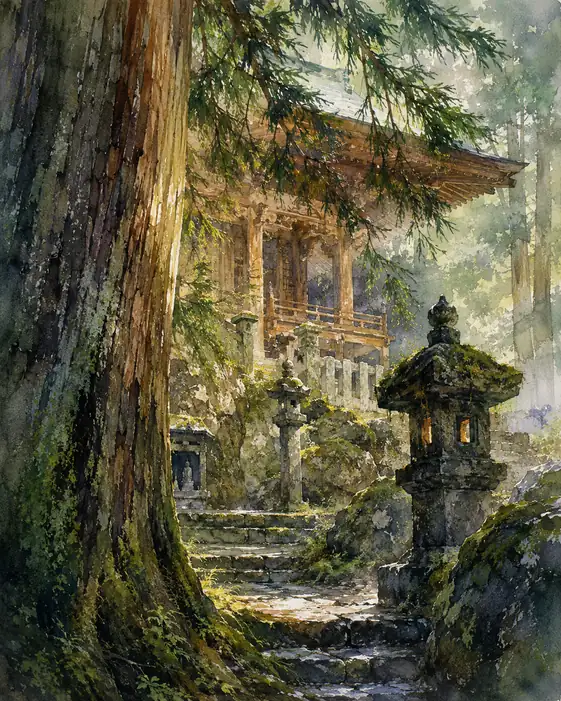 Sanctuary of the Ancient Cedars
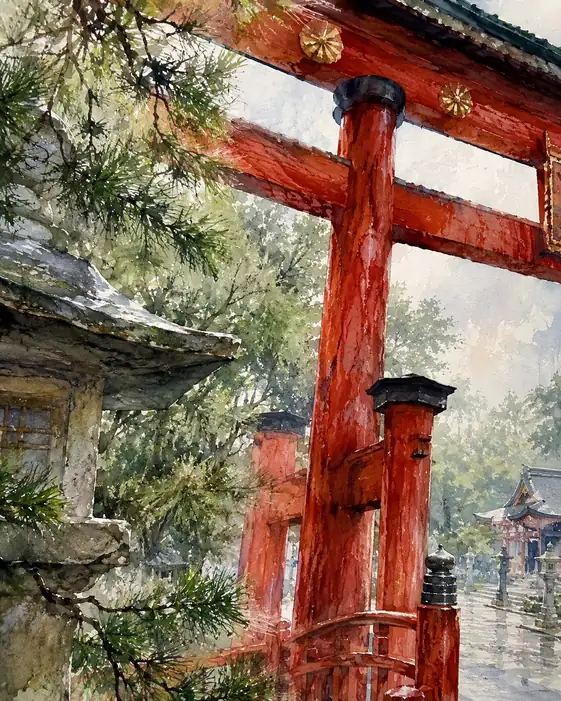 Eternal Silence of the Vermilion Gate
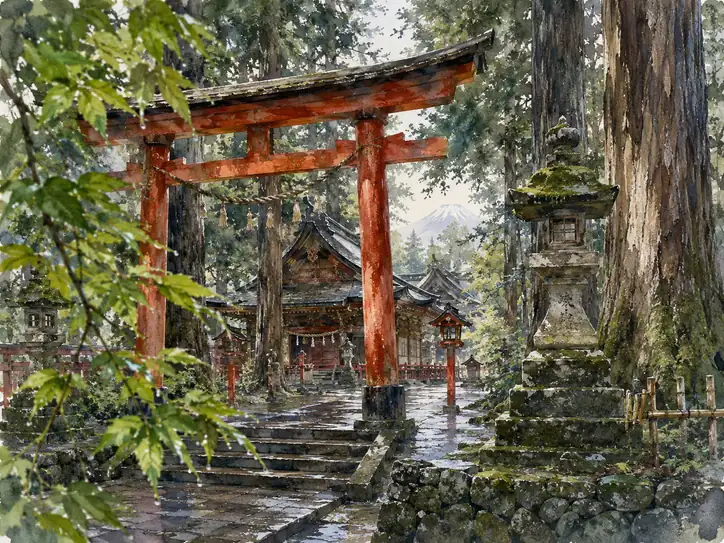 Sacred Breath in the Ancient Forest
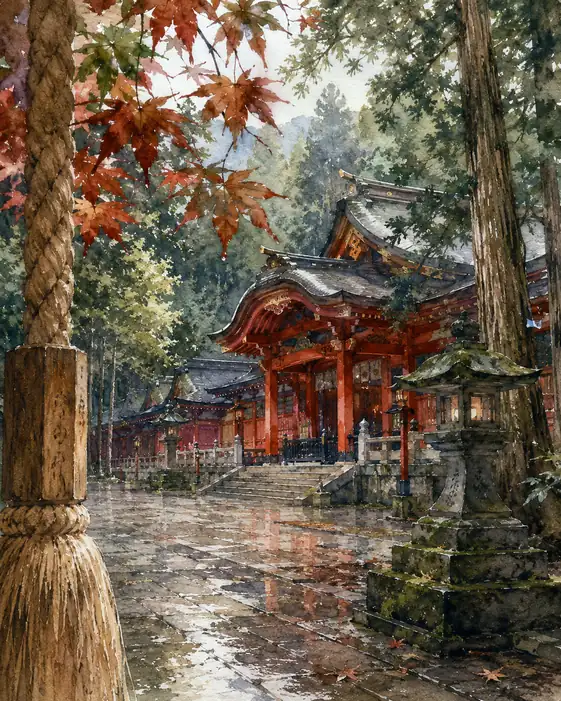 Serenity in the Autumn Rain
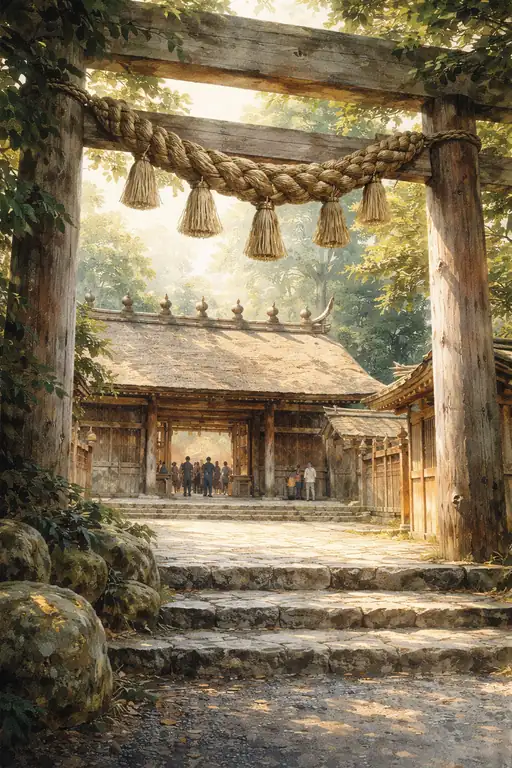 Awakening the Sacred Path
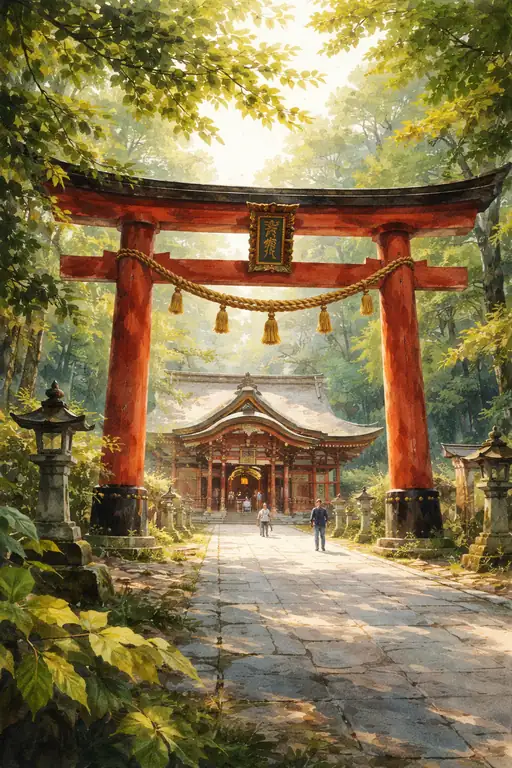 Threshold of the Sacred Sun
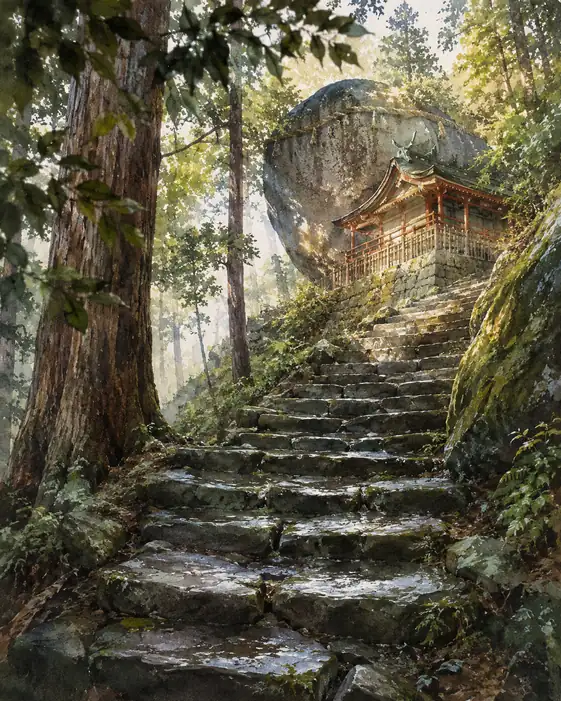 The Sacred Stillness of the Rock
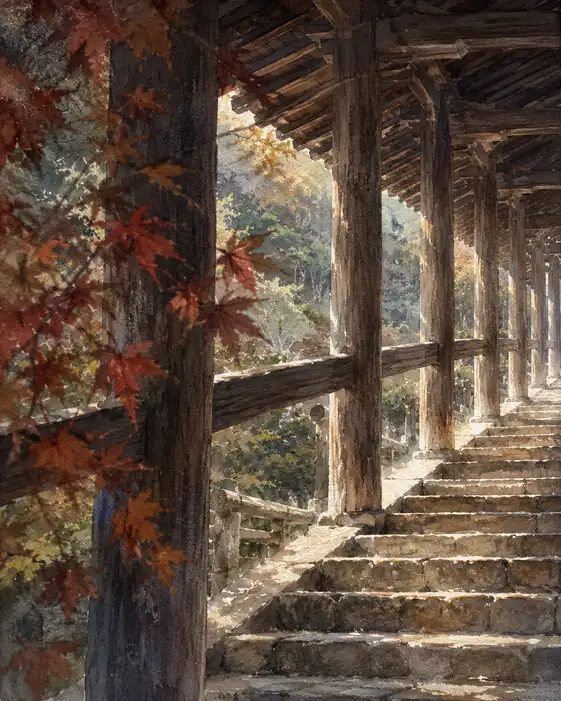 Echoes of Crimson Footsteps