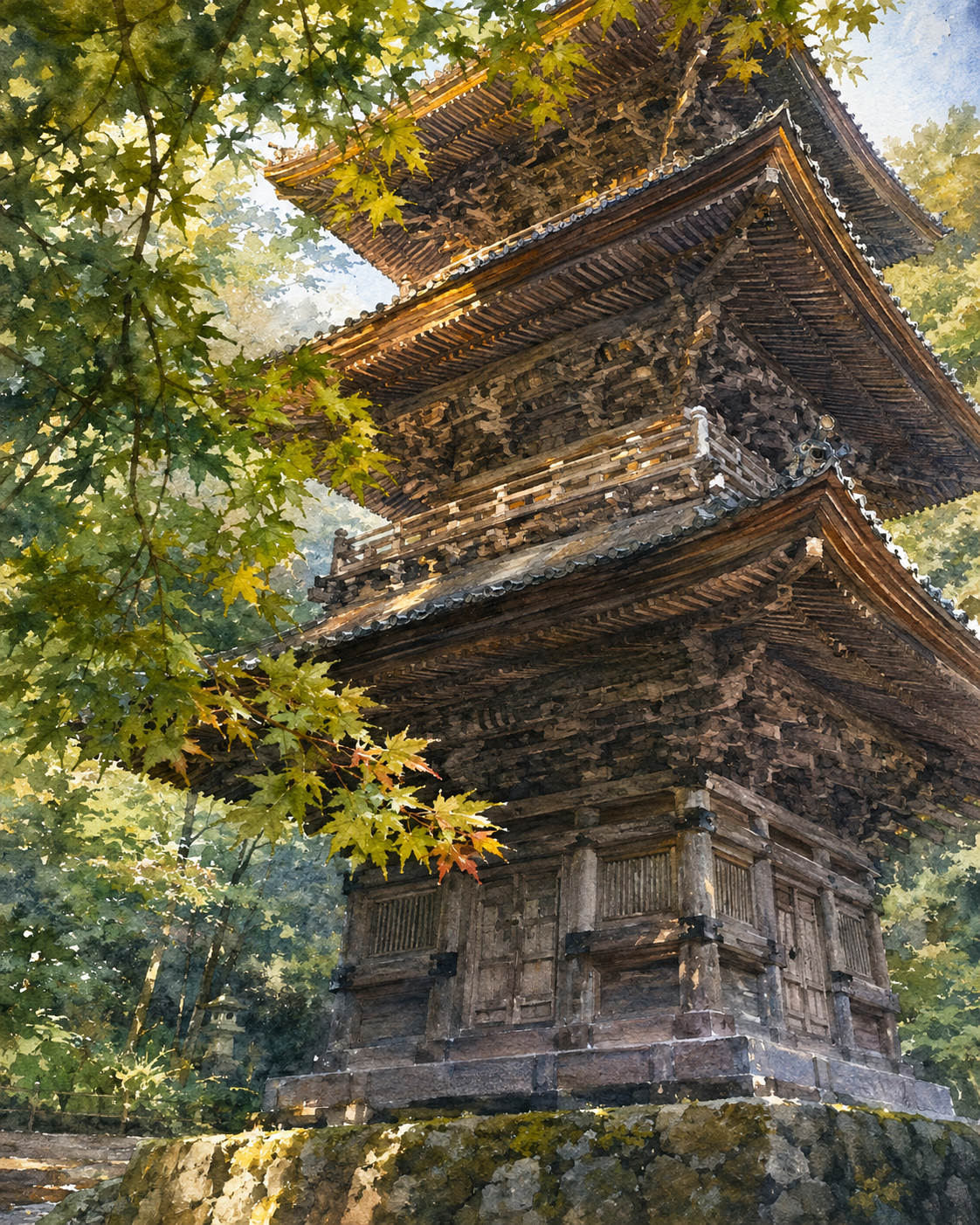
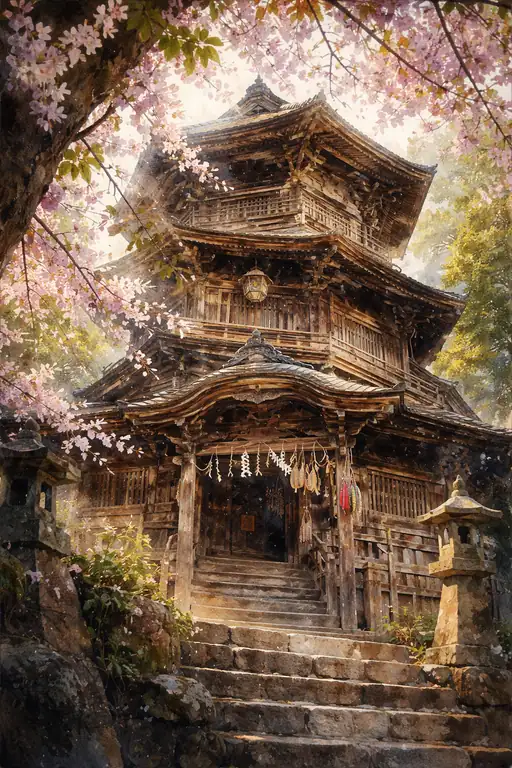
A Forest Three-Story Pagoda Through Maples
Critique
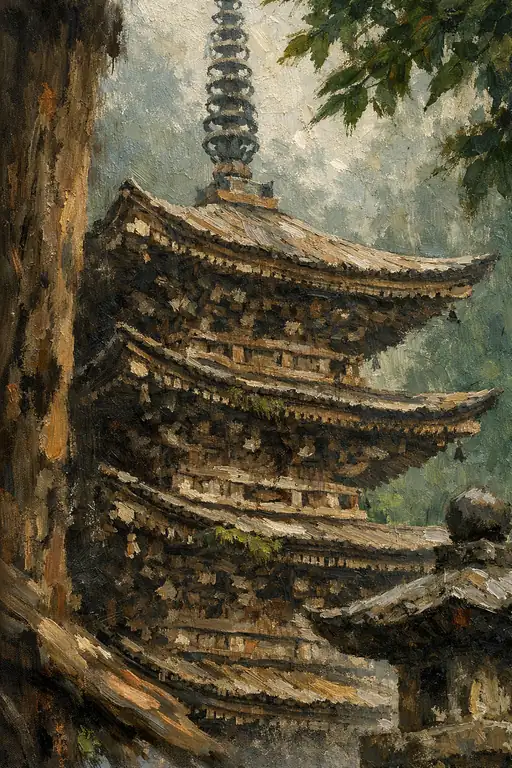
1. Introduction This painting features a three-story pagoda quietly nestled within a lush forest, viewed through a frame of early autumn maple leaves. The contrast between the intricate wooden architecture and the vibrant foliage surrounding it brings a refreshing atmosphere to the entire composition. Overall, it depicts the majesty of a historical structure that has merged with nature over centuries, alongside the brilliance of seasonal life within a harmonious and well-ordered space. 2. Description The pagoda, positioned slightly to the right of the center, emphasizes the texture of aged wood with its layered roofs and complex structural brackets rendered in relentless detail. A mossy stone base supports the structure, which is enveloped by a deep green forest in the background. From the top left, maple branches with leaves turning from bright green to slight yellow stretch across the foreground, partially veiling the pagoda and adding layers to the scene. 3. Analysis The color scheme revolves around the dark browns of the pagoda and the bright greens of the maples, with strong light-dark contrasts highlighting the three-dimensional forms of the building. Adopting a watercolor-style touch, the artist effectively portrays the flickering sunlight filtering through the canopy and the hazy texture of the distant forest. The low-angle perspective emphasizes the verticality of the structure, providing the viewer with a sense of awe and psychological elevation. 4. Interpretation and Evaluation The use of light and shadow is exceptionally effective; the dappled sunlight falling on the complex wooden frame further enhances its formative beauty and structural depth. The maple branches in the foreground serve as a "peek-through" framing device, creating spatial depth and a sense of discovery as if glimpsing a hidden sanctuary. This work represents a high-level fusion of deep insight into traditional architecture and a delicate sensitivity toward capturing the vitality of plants. 5. Conclusion Observers are initially captivated by the overwhelming detail of the architecture, but they will eventually find peace within the tranquil atmosphere that dominates the canvas. This painting is a masterful work that captures the harmony between Japanese traditional beauty and nature, preserving it as an eternal poem through solid formative techniques. This grand scene evokes a sense of reverence and an endless appreciation for beauty within the viewer's heart, providing a lasting impression of spiritual calm.
Same Subcategory
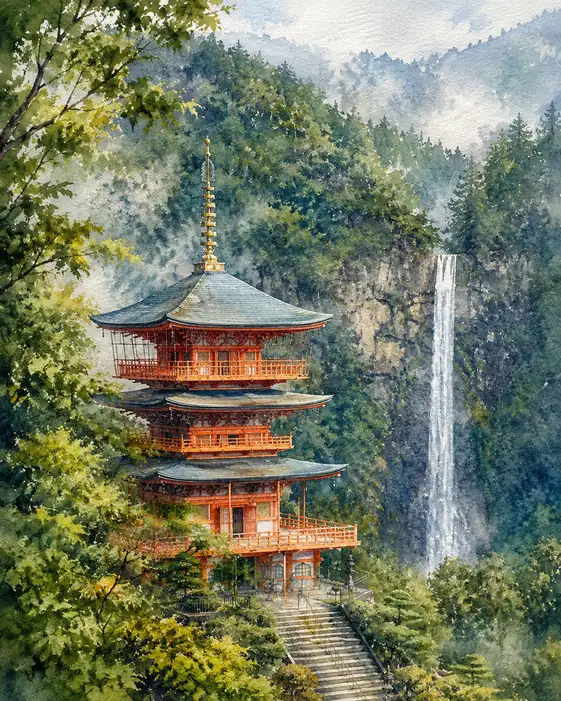 The Eternal Spire of the Silver Falls
Similar Artworks
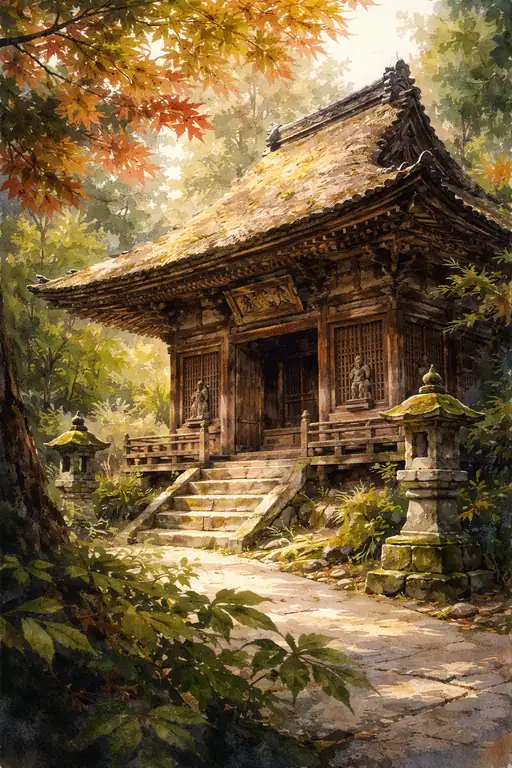 Sunlight Through the Crimson Gate
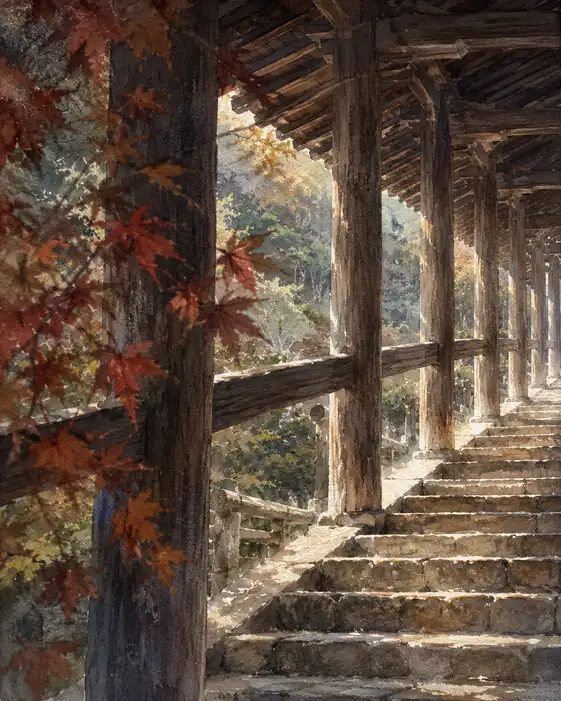 Echoes of Crimson Footsteps
 Whispers of Autumn: The Mossy Gate in the Mist
 Eternal Silence within the Sacred Grove
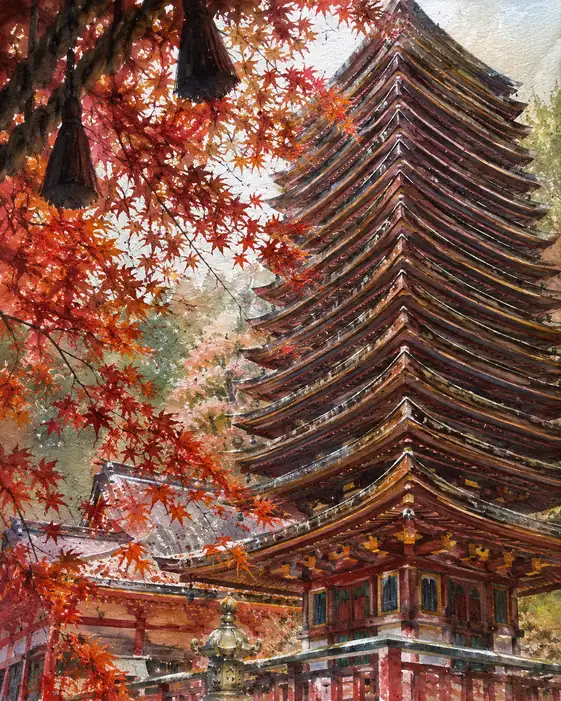 Vermilion Prayer in the Wind
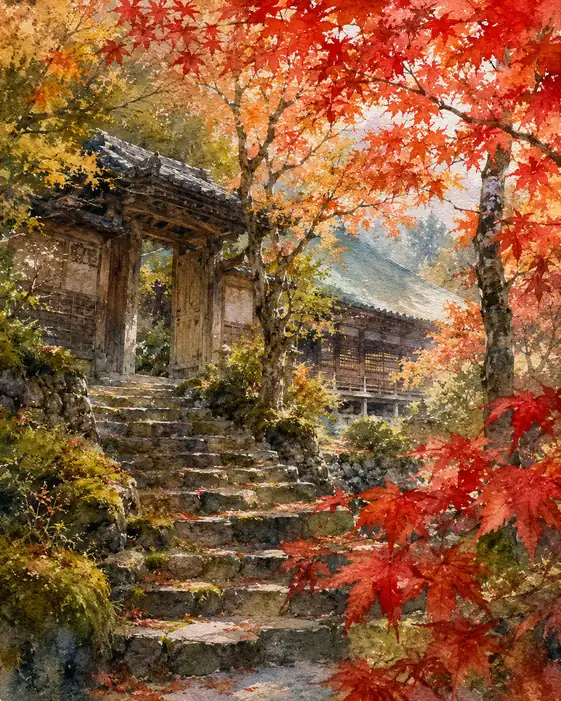 The Crimson Threshold of Silence
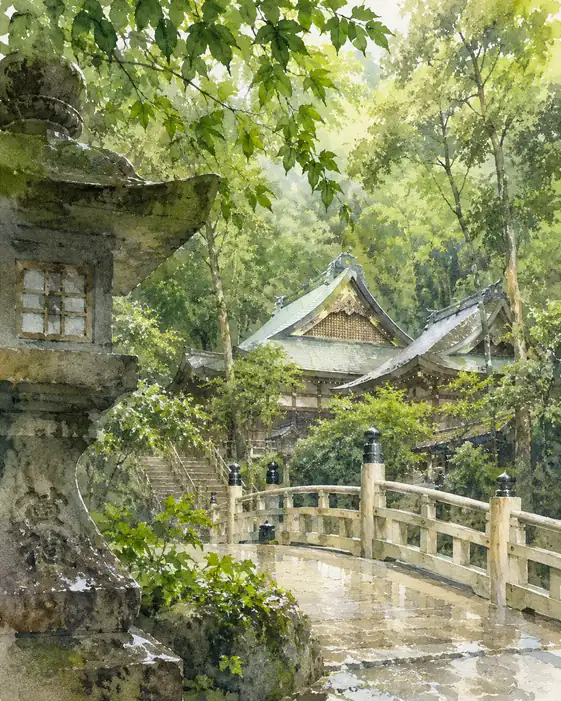 Stillness of the Hidden Sanctuary
 Autumn twilight, the Pagoda’s Silent Prayer
 The Silent Watch of the Crimson Tier
 Spring's Quiet Benediction