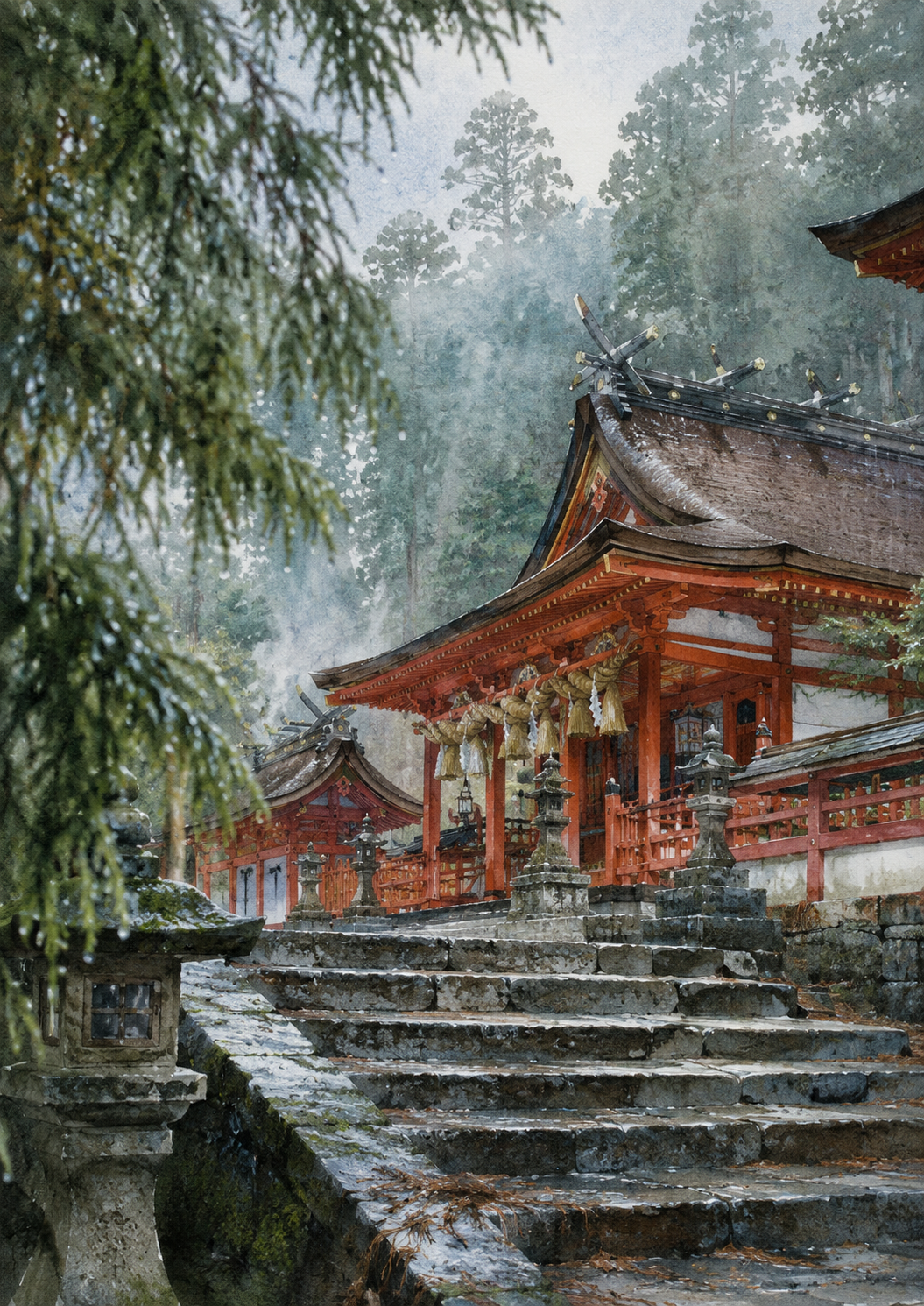
The Vermilion Silence of the Mist
Critique
1. Introduction This watercolor painting depicts a traditional Japanese shrine nestled within a misty, ancient forest. The artwork captures a moment of profound stillness and spiritual significance, inviting the viewer into a sacred space characterized by its humid atmosphere and architectural grandeur. It masterfully blends natural elements with man-made structures to evoke a sense of timelessness and reverence. 2. Description In the foreground, moss-covered stone steps ascend towards the center, guiding the viewer's eye upward. On the right stands a vibrant vermilion shrine building, adorned with sacred straw ropes and white paper streamers. A dense forest of tall cedar trees recedes into a thick white mist in the background, while a pine branch hangs over the left foreground. Details such as the intricate woodwork and weathered stone lanterns are rendered with remarkable precision. 3. Analysis The composition utilizes a low-angle perspective and diagonal lines to provide depth and emphasize the shrine's majesty. Coloristically, the contrast between the saturated orange-red of the architecture and the muted greens and grays is striking. The soft, diffused lighting accurately reflects the optical conditions of a rainy day, while watercolor techniques like bleeding effectively convey the weight of the moisture-laden air. 4. Interpretation and Evaluation The artist demonstrates exceptional draftsmanship in balancing linear architectural forms with organic complexity. The execution of textures—particularly the damp stone and soft pine needles—is superb. While the subject is traditional, the creative use of light and atmosphere elevates the scene. The combination of technical mastery and emotional depth results in an original and evocative piece of art. 5. Conclusion While the initial impression is one of visual beauty, further observation reveals a deep understanding of the spiritual harmony between nature and belief. The painting successfully communicates the unique spatiality of a Japanese sacred site where silence and power coexist. Ultimately, this work transcends simple representation to capture the very essence and memory of a place.
Same Subcategory
 Echoes from the Ancient Heights
Similar Artworks
 The Sacred Stillness of the Rock
 Sanctuary Veiled in Misty Rain
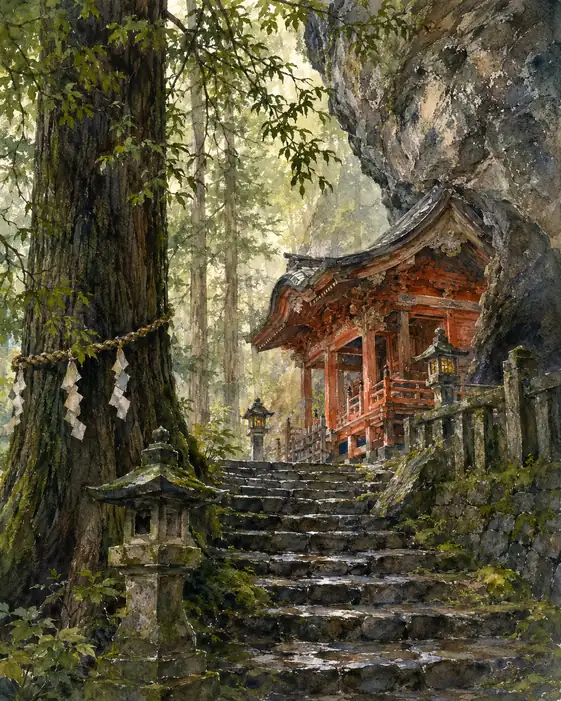 The Ancient Spirit’s Sanctuary
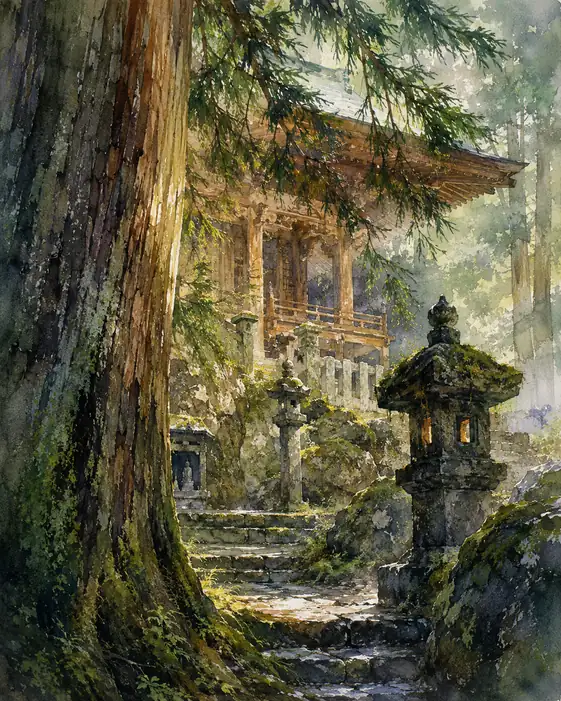 Sanctuary of the Ancient Cedars
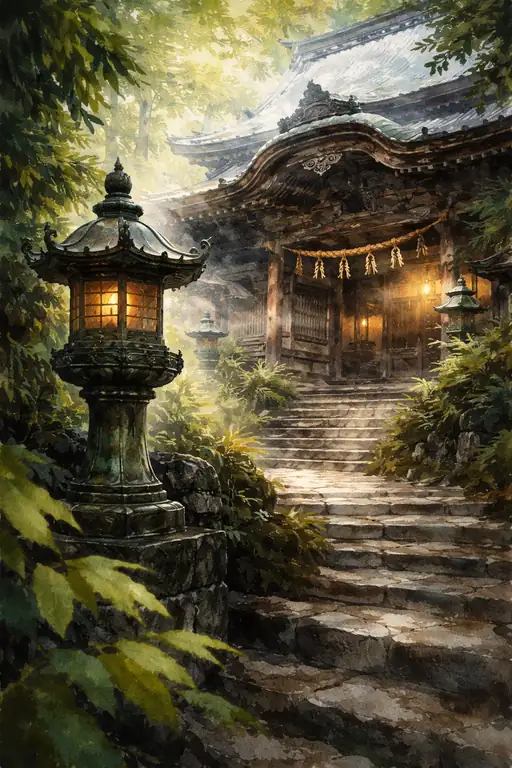 Sanctuary of the Silent Forest
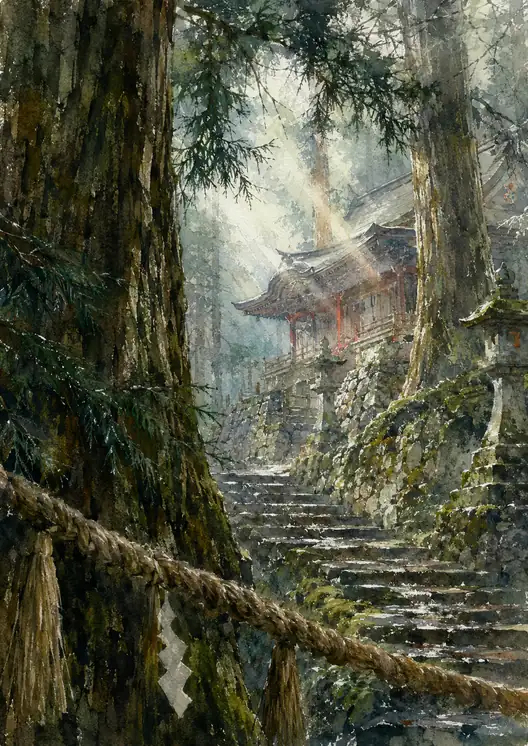 Sanctuary of the Piercing Light
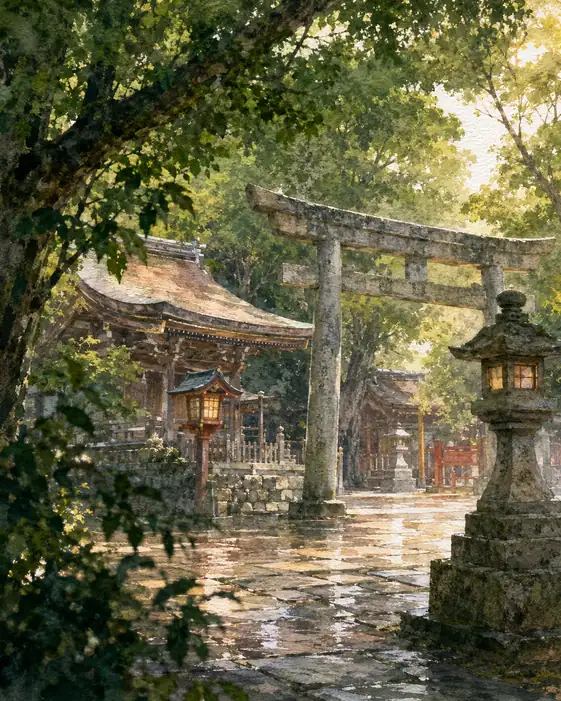 Sanctuary in the Emerald Mist
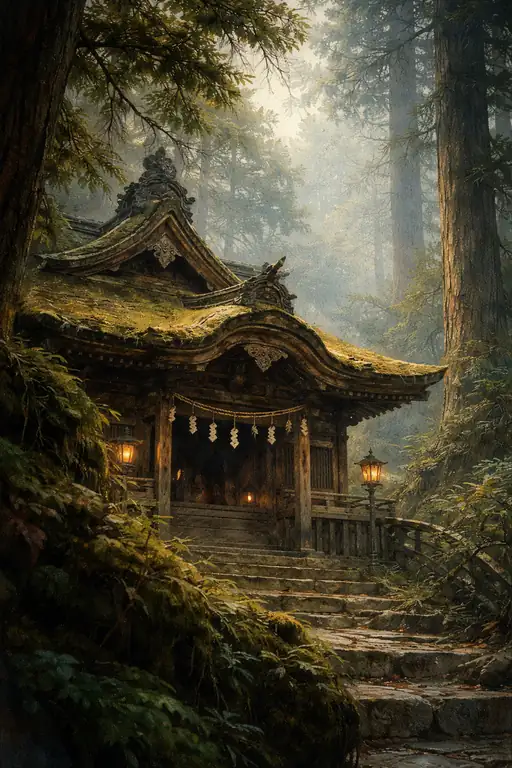 Sanctuary in the Shadows
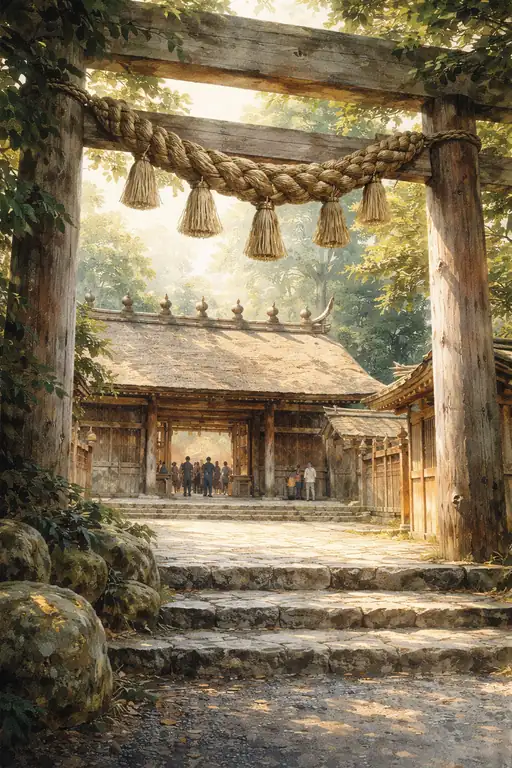 Awakening the Sacred Path
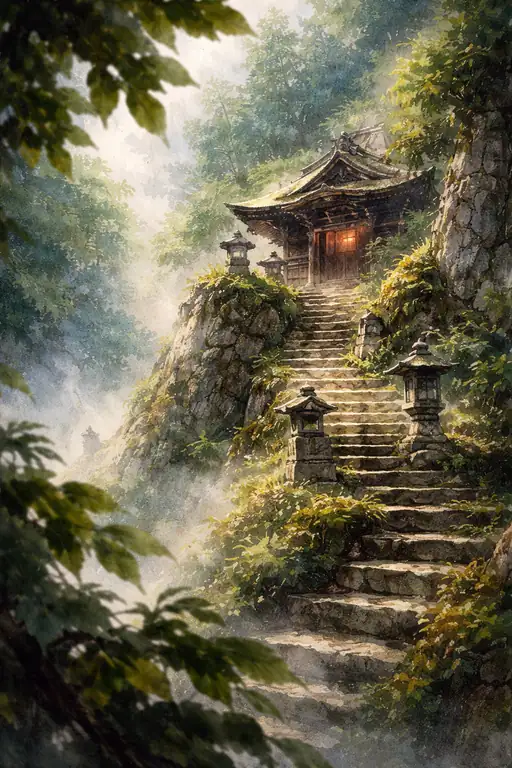 One Step Closer to the Divine