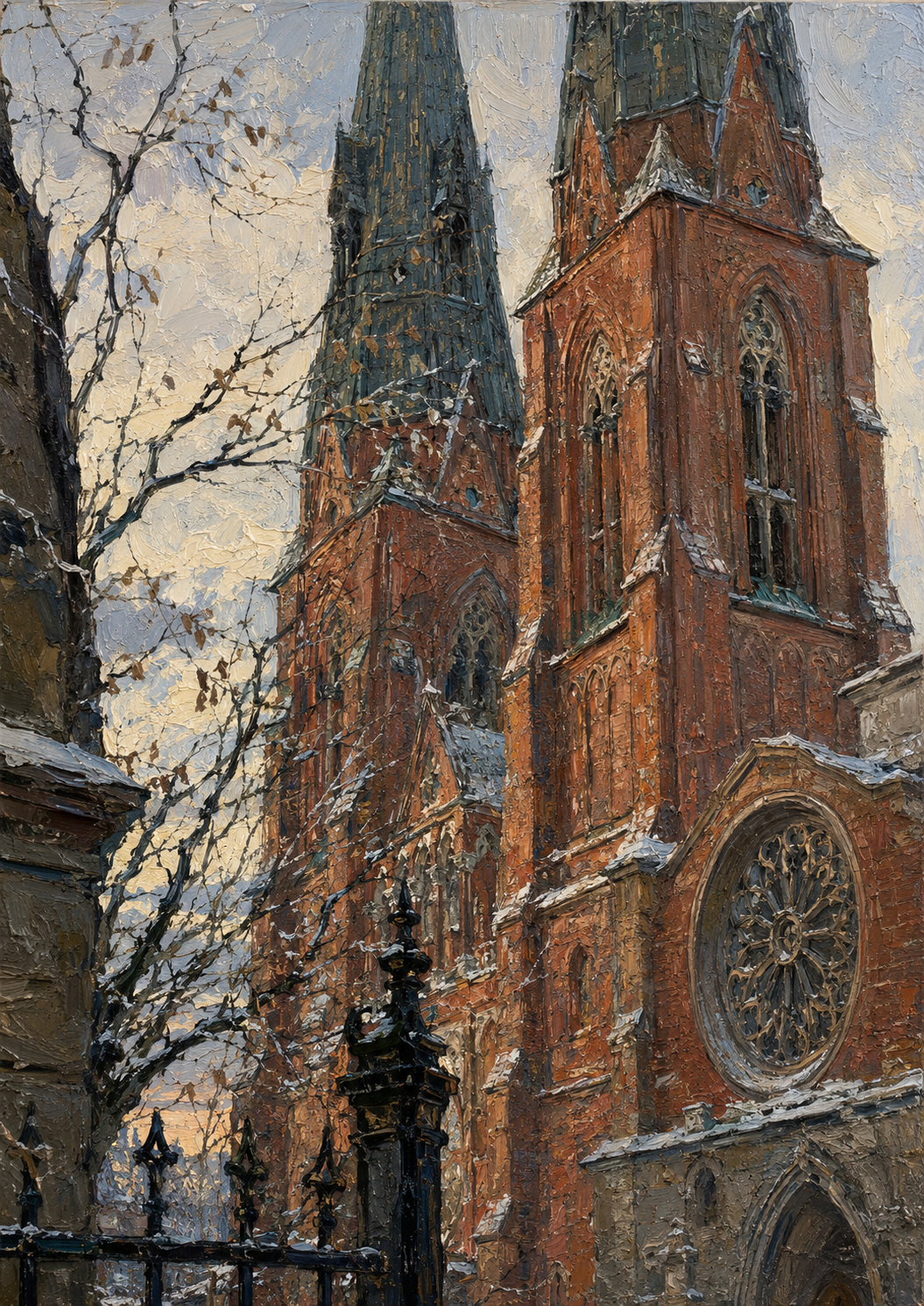
Spires of the Silent Winter
Critique
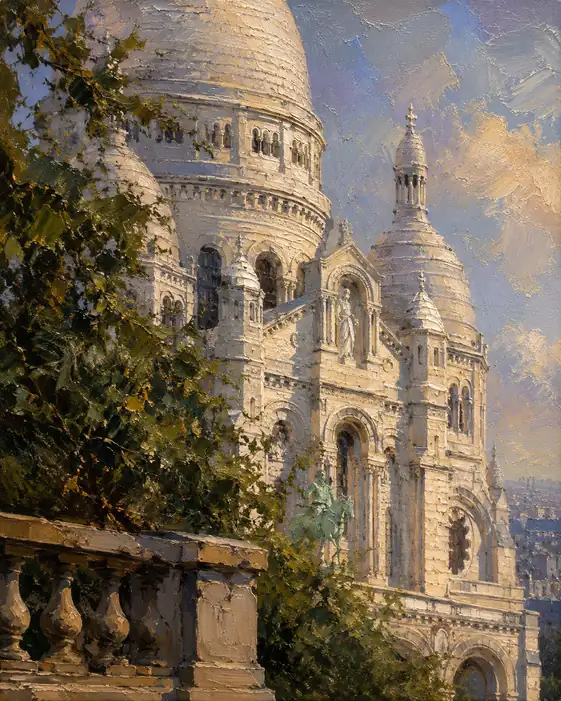
1. Introduction This oil painting presents a dramatic view of a grand Gothic cathedral, characterized by its twin spires and intricate brickwork. The composition captures the architectural majesty from a low-angle perspective, emphasizing the verticality and spiritual aspiration inherent in the structure. Set against a pale, wintry sky, the building appears as a silent monument to history and faith. 2. Description The scene depicts the upper portions of two massive towers constructed from reddish-brown brick, topped with dark, pointed steeples. A prominent rose window is visible on the right facade, its stone tracery highlighted by subtle touches of white snow resting on the ledges. In the foreground, a dark wrought-iron fence and bare, slender tree branches frame the view, adding a sense of depth and atmospheric coldness to the environment. 3. Analysis The artist employs a heavy impasto technique, with thick, expressive brushstrokes that create a rugged and tactile surface texture. This texture effectively mimics the weathered quality of the brick and the weight of the stone. The color palette is a sophisticated contrast between the warm, earthy tones of the cathedral and the cool, desaturated blues and greys of the background sky. Light appears to filter softly from the side, casting gentle shadows that define the architectural volumes. 4. Interpretation and Evaluation The work succeeds in conveying the solemnity and endurance of the cathedral through its bold execution and thoughtful framing. By positioning the viewer behind a fence and branches, the painting suggests a moment of quiet observation or a personal encounter with the monumental. The technical proficiency is evident in the balance between architectural precision and painterly abstraction, where the details are suggested through mass and color rather than fine lines. 5. Conclusion This painting offers a powerful meditation on architectural grandeur and the quiet beauty of a winter day. The interplay of texture and light elevates the subject beyond a mere architectural study into a resonant emotional experience. Initially appearing as a traditional cityscape, the work reveals itself to be a sophisticated exploration of light and substance upon closer inspection.
Same Subcategory
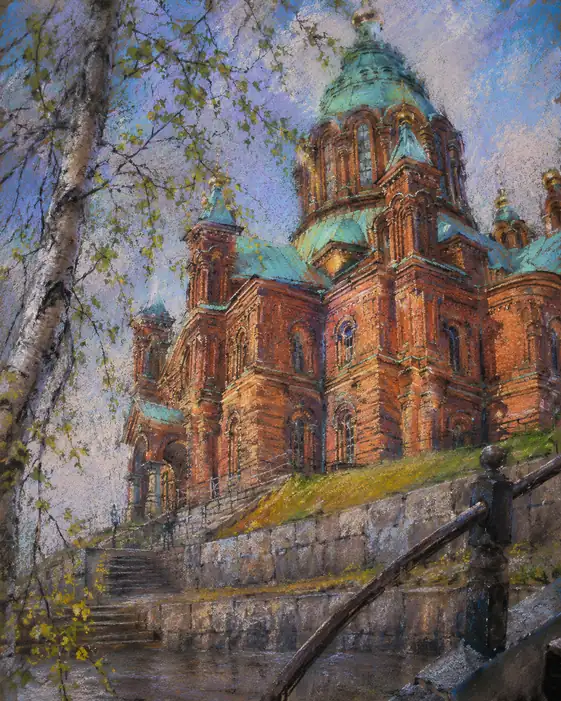 Whispers of the Eternal Dome
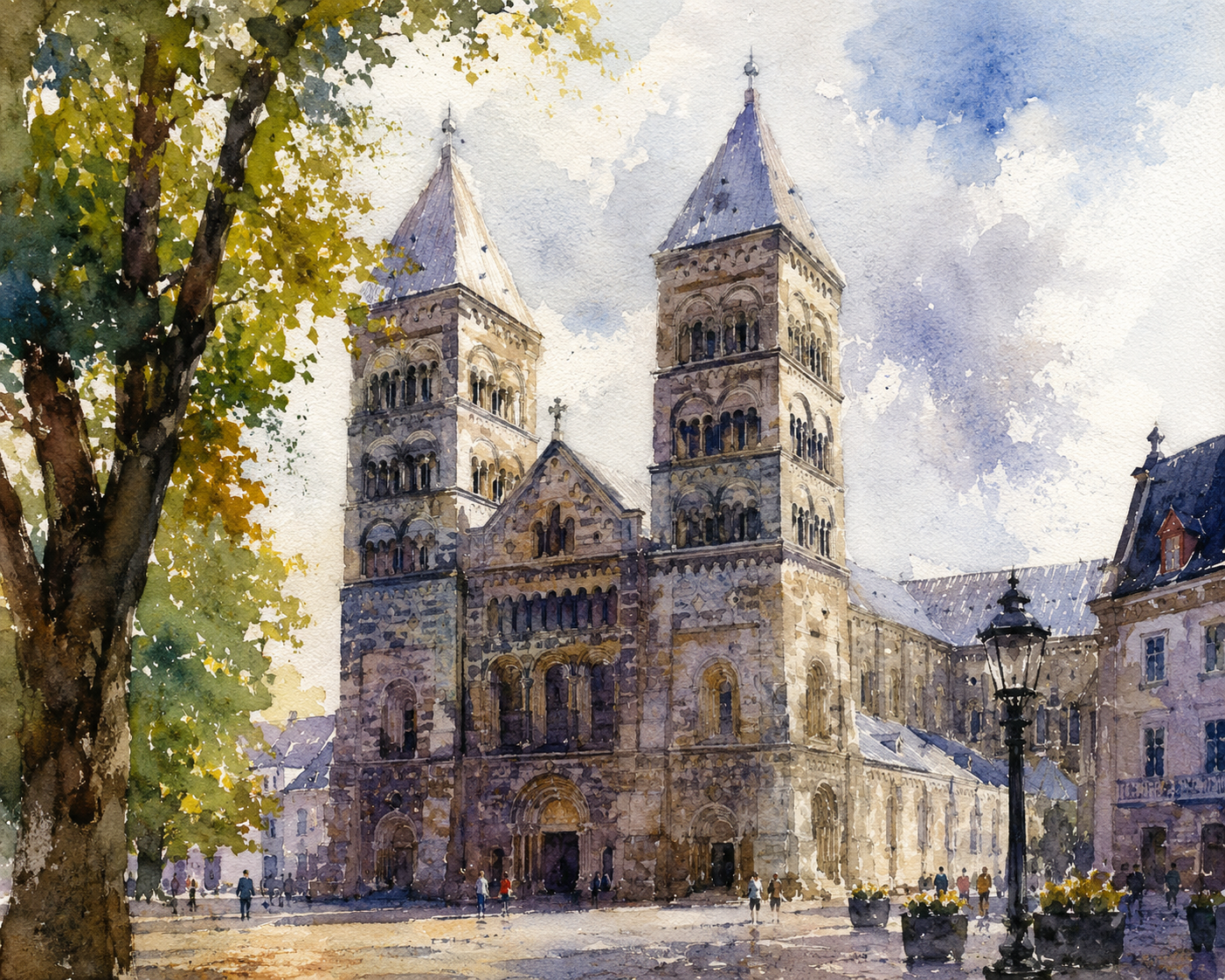 Whispers of History: Autumn Light at the Cathedral
Similar Artworks
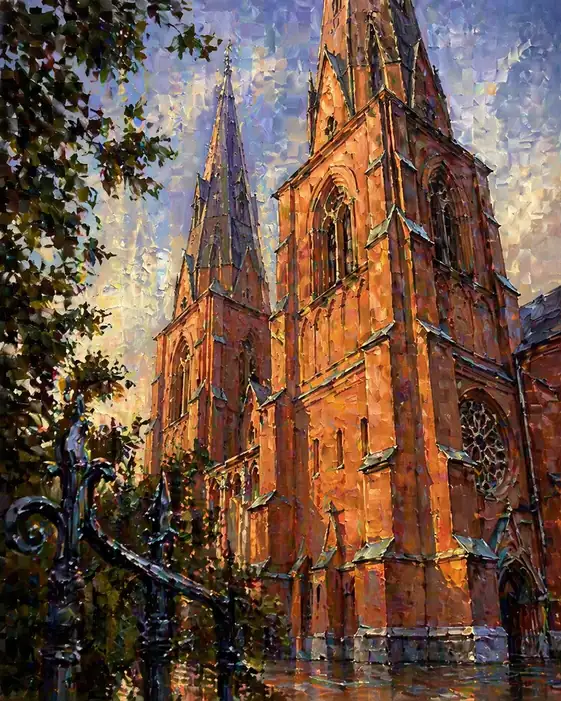 Dancing Bricks at Twilight
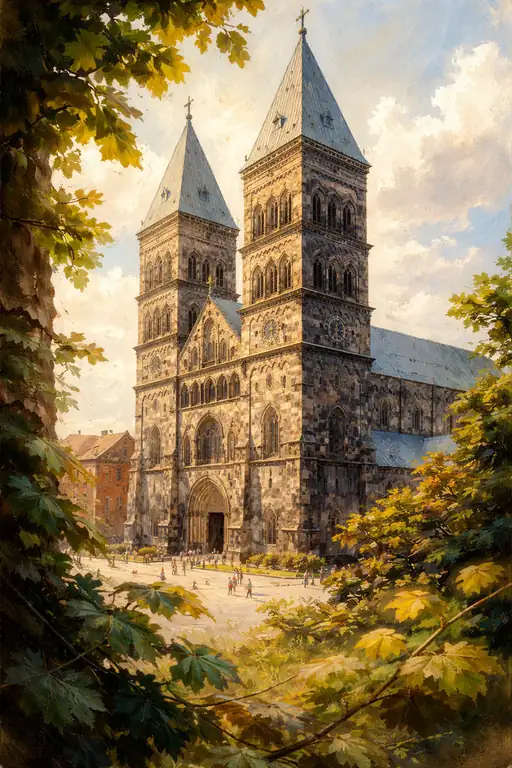 Shadows of Devotion Under the Canopy
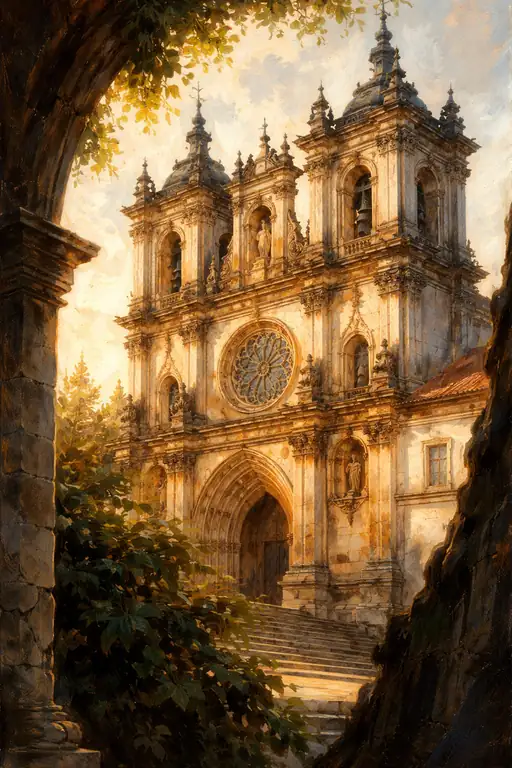 Ascent to the Sacred
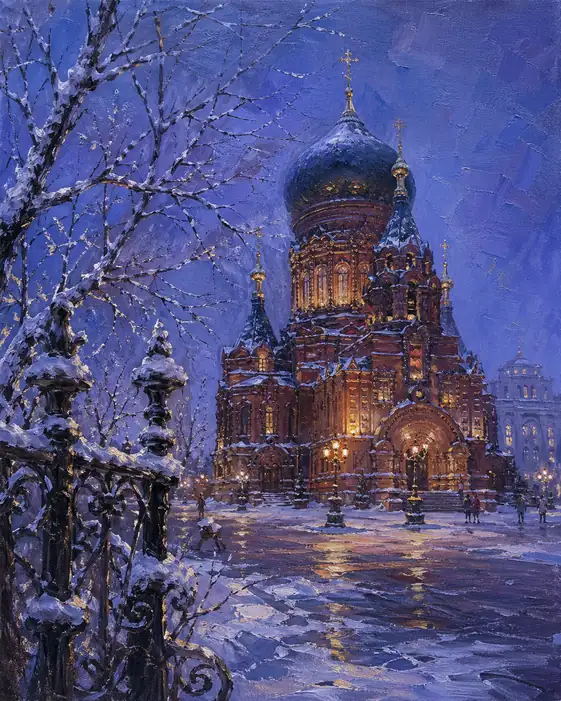 Sanctuary of Light in the Frozen Night
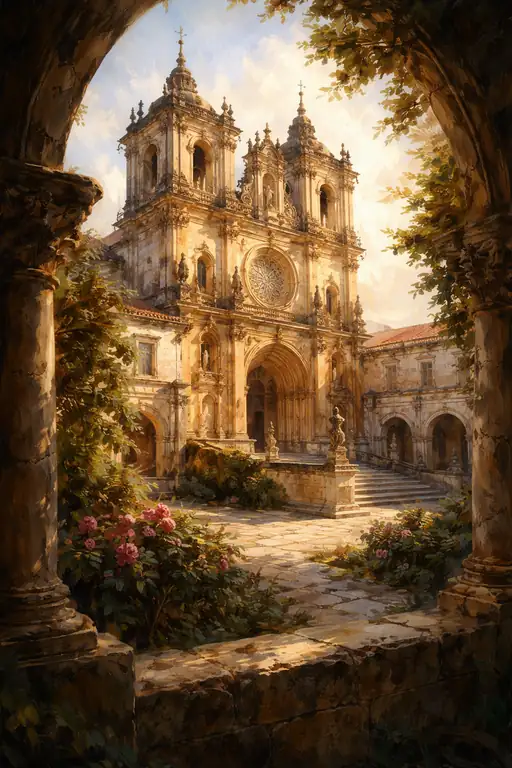 The Floral Portal to the Sacred Realm
 Luminous Splendor of the Gothic Facade
 The Silent Watch of Ages
 Resonance of the Gilded Silence
 The Cathedral's Luminous Soul
 Majesty on the Sunlit Terrace