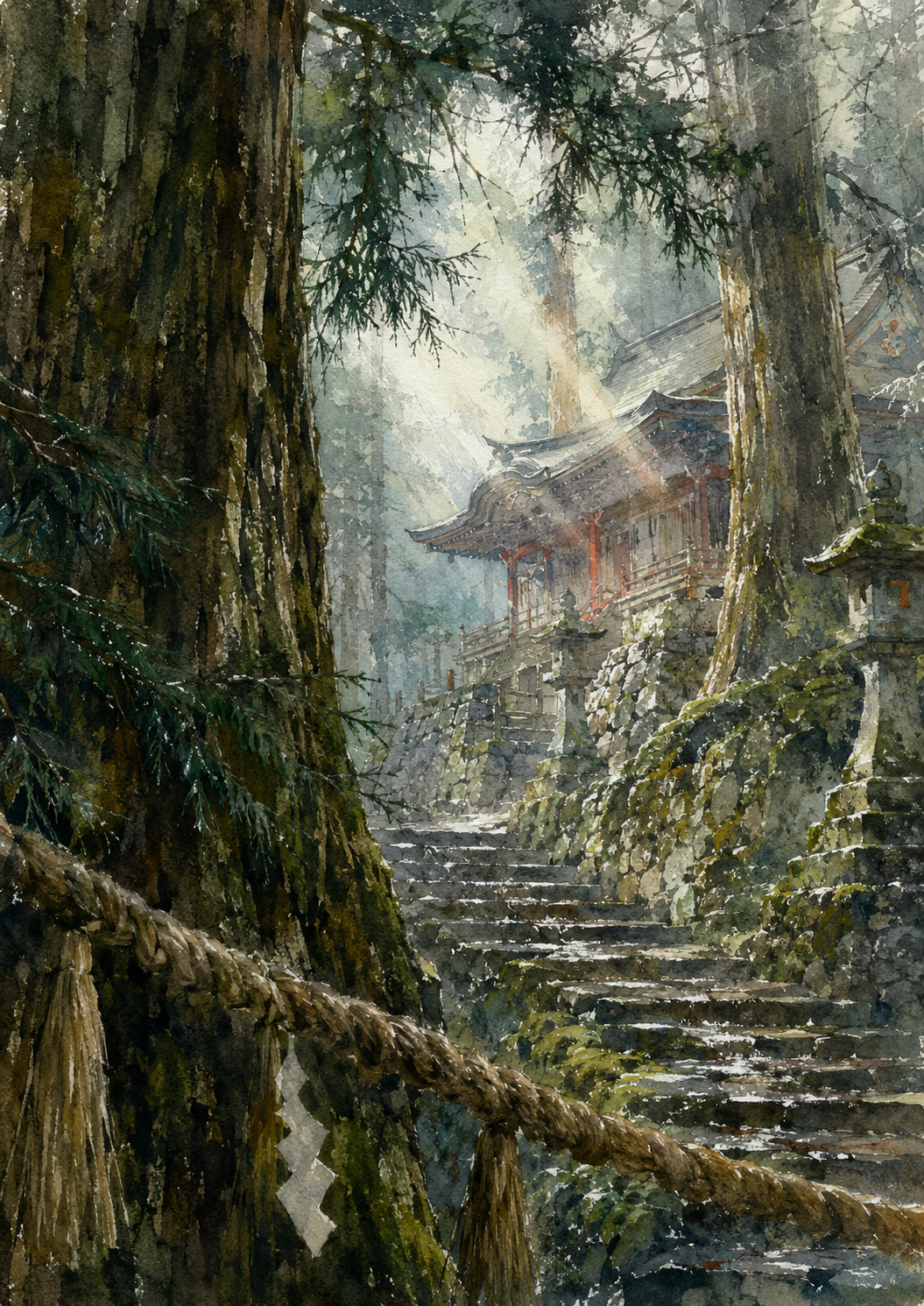
Sanctuary of the Piercing Light
Critique
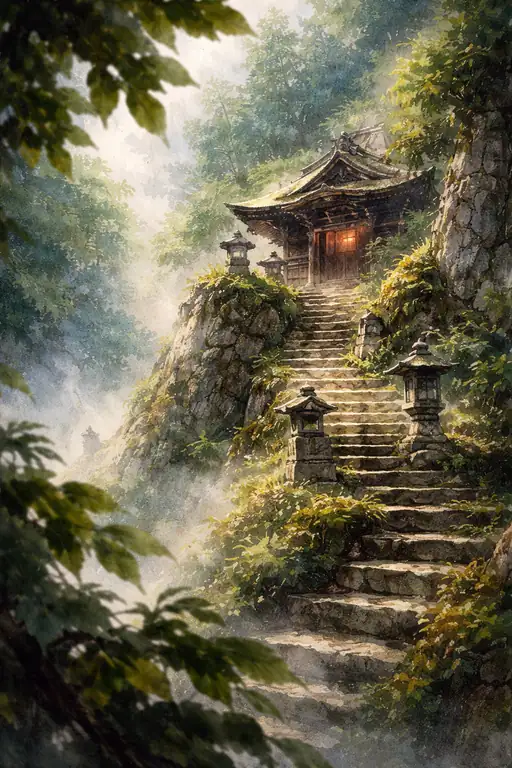
1. Introduction This evocative watercolor painting depicts a traditional Shinto shrine nestled deep within a dense forest of ancient cedar trees. The vertical composition emphasizes the towering height of the timber and the steep ascent of the stone steps that lead toward the sacred buildings. The work masterfully captures a moment of spiritual stillness, where beams of sunlight—known in Japanese as "komorebi"—filter through the canopy and mist to illuminate the moss-covered landscape, creating an atmosphere of profound tranquility and reverence. 2. Description In the immediate foreground, a heavy sacred rope known as a "shimenawa" with its distinctive white paper streamers is draped across the lower left, serving as a symbolic boundary. A massive, textured tree trunk rises along the left edge, its bark covered in moss and shadow. Centrally, a series of uneven stone steps leads upward to a shrine building with its characteristic tiled roof and vermilion accents. Two weathered stone lanterns stand as silent guardians along the path, while the background is filled with more ancient trees and a soft, ethereal mist. 3. Analysis The artist employs a sophisticated watercolor technique, utilizing delicate washes and layers of color to achieve a sense of depth and atmospheric perspective. The dramatic light beams are rendered with great sensitivity, appearing to cut through the damp, cool air of the forest and highlighting the verdant greens of the moss and foliage. The contrast between the dark, detailed elements in the foreground and the luminous, hazy quality of the background creates a powerful focal point around the shrine, drawing the viewer’s eye upward along the spiritual path. 4. Interpretation and Evaluation The painting can be interpreted as a meditation on the sacredness of nature and the enduring traditions of Shinto belief. The play of light and shadow suggests a world where the physical and the spiritual overlap, with the ancient forest serving as a natural cathedral. The technical execution is exceptional, particularly in the artist's ability to convey the specific textures of wet stone, rough bark, and the ephemeral quality of morning mist. The overall composition is perfectly balanced, successfully evoking a sense of awe and quiet contemplation. 5. Conclusion Upon first encounter, the image presents a beautiful forest scene, yet it quickly reveals itself as a profound exploration of sacred space and light. The artist’s skill in manipulating the medium to simulate the blinding brilliance of sunlight against the deep shadows of the forest is remarkable. Ultimately, the work stands as a powerful tribute to the spiritual resonance of the Japanese landscape, inviting the viewer to pause and experience the timeless, silent beauty of the forest shrine.
Same Subcategory
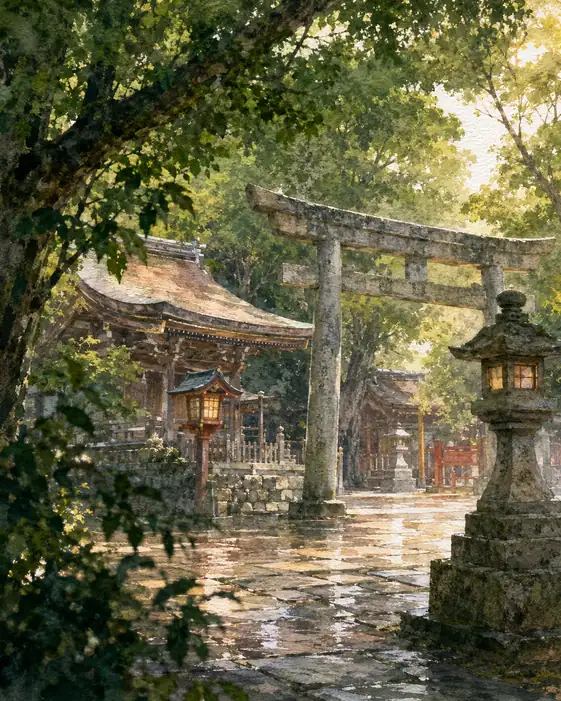 Sanctuary in the Emerald Mist
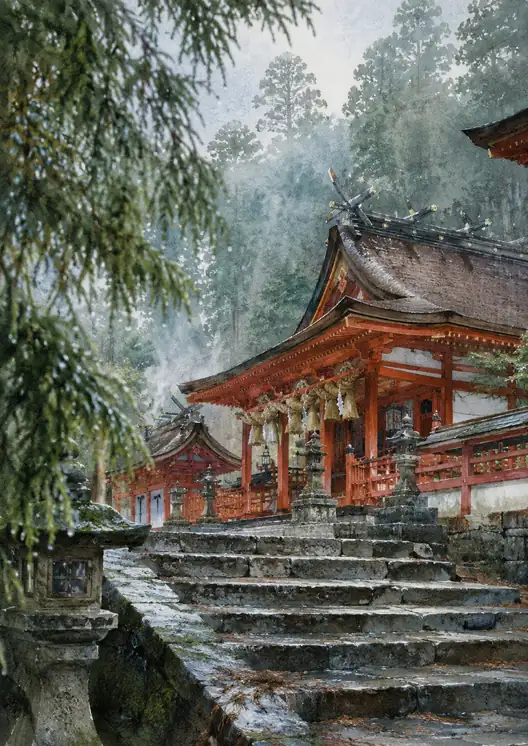 The Vermilion Silence of the Mist
Similar Artworks
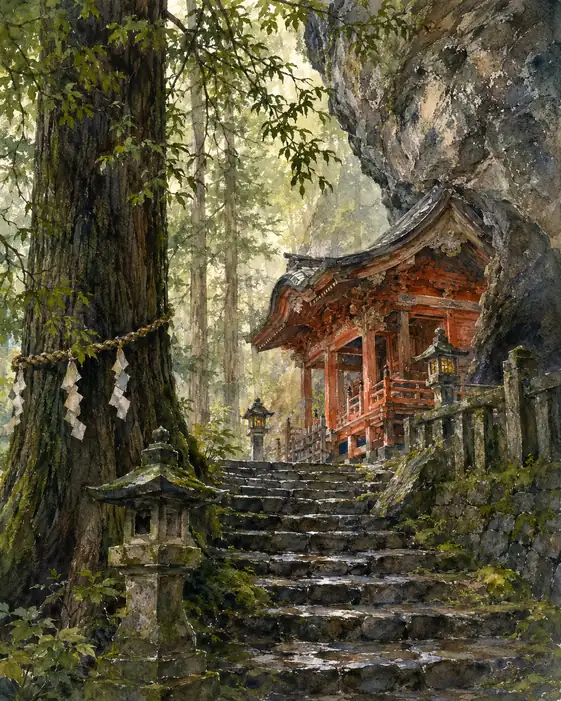 The Ancient Spirit’s Sanctuary
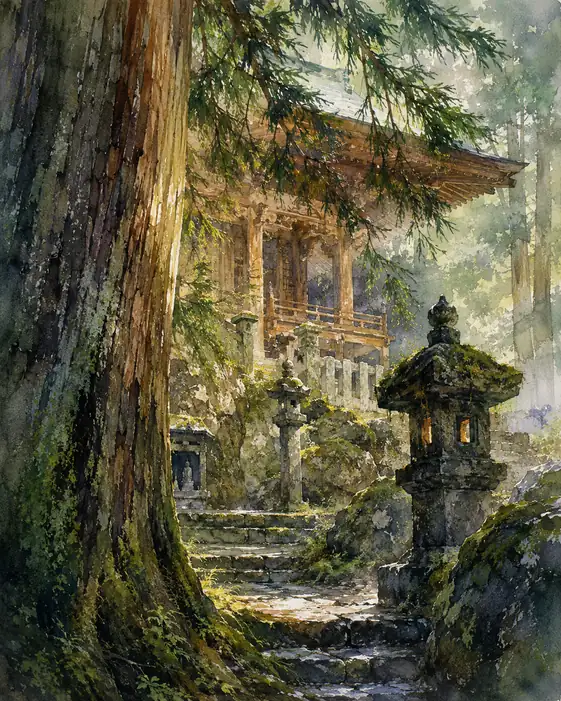 Sanctuary of the Ancient Cedars
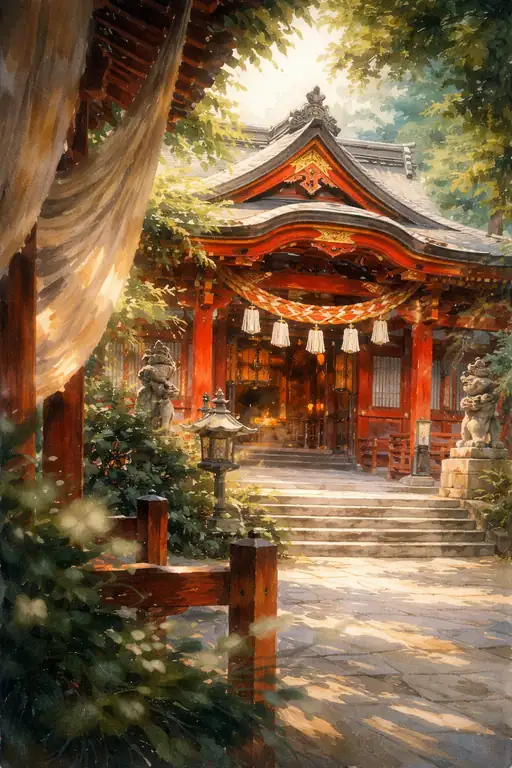 Sunlight Upon the Vermilion Pillars
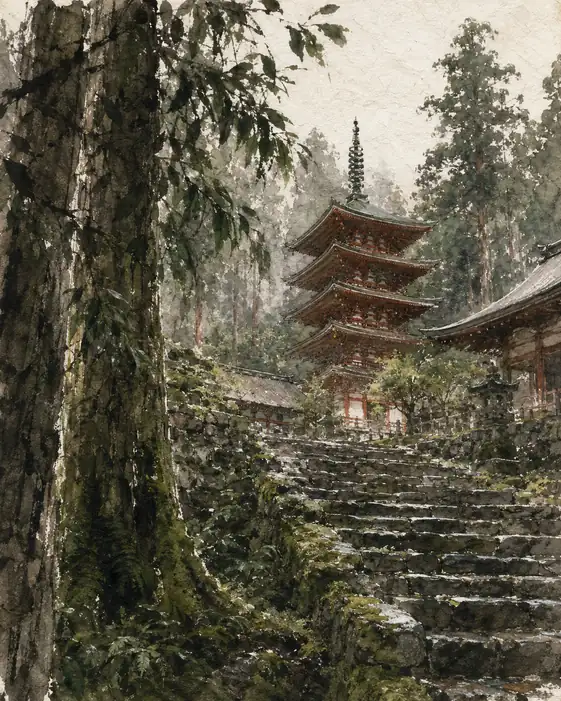 Echoes of Eternity in the Mossy Mist
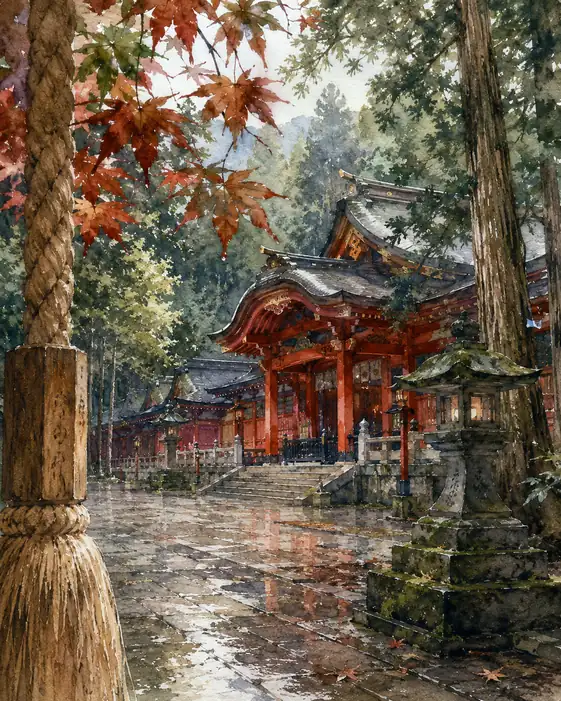 Serenity in the Autumn Rain
 Awakening the Sacred Path
 Sanctuary of the Silent Forest
 Whispers of the Sacred Boundary
 Threshold of the Sacred Sun
 One Step Closer to the Divine