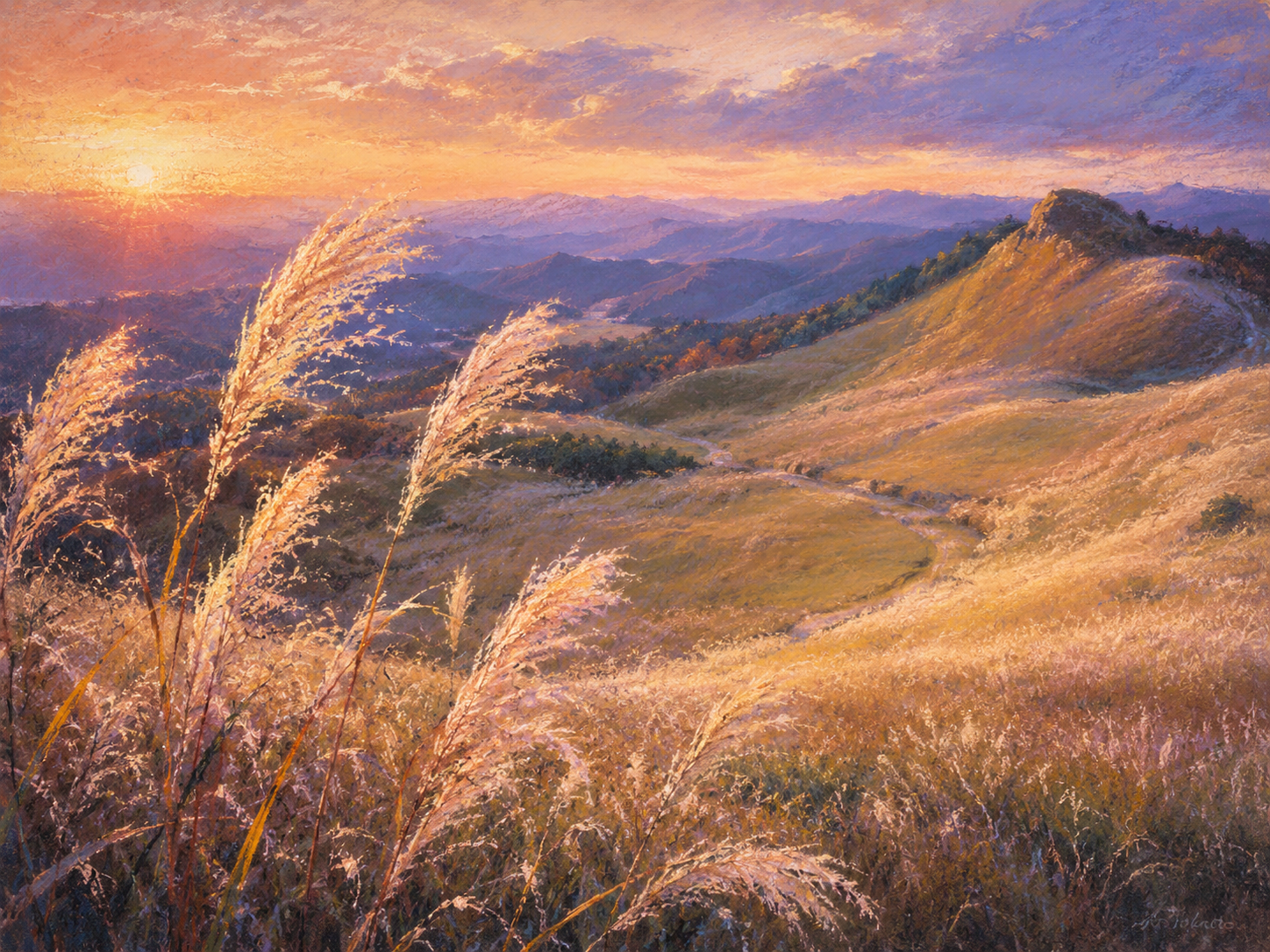
The Golden Breath of Autumn
Critique
1. Introduction This oil painting depicts an expansive mountain landscape bathed in the warm, golden glow of a setting sun. The composition prominently features a cluster of pampas grass in the immediate foreground, which serves as a delicate, luminous frame for the vast scenery beyond. The work captures a specific moment in the transition from day to evening, evoking a sense of seasonal change and tranquil introspection. 2. Description The foreground is dominated by stalks of pampas grass, their feathery plumes catching the low-angled sunlight and glowing with brilliant shades of white and pale yellow. Beyond the grass, a series of rolling hills and valleys stretches toward the horizon, punctuated by a small winding path that meanders through the grassy slopes. In the distance, layers of mountains are rendered in cooler tones of violet and deep blue, contrasting sharply with the fiery orange and soft purple hues of the cloud-filled sky. 3. Analysis The artist employs a vibrant palette and expressive brushwork to create a rich, tactile surface that enhances the atmospheric quality of the scene. The intense warmth of the sun on the left side of the canvas creates a strong directional light, resulting in long shadows and bright highlights that define the topography of the land. The use of complementary colors—oranges and blues—provides a dynamic visual tension that guides the eye from the intricate details of the foreground to the hazy depths of the distant peaks. 4. Interpretation and Evaluation The painting can be interpreted as a celebration of the ephemeral beauty of nature, specifically the quiet dignity of an autumn evening. The choice of pampas grass as a focal point suggests a focus on the fragile and the transient, while the massive scale of the mountains provides a sense of enduring stability. The technical execution is highly effective, as the artist successfully balances realistic observation with a more subjective, emotive application of color and texture to convey a profound sense of place. 5. Conclusion Upon initial viewing, the scene appears as a conventional landscape, yet closer inspection reveals a complex interplay of light and texture that elevates the work. The artist’s ability to manipulate the medium to simulate the blinding brilliance of the sun and the soft texture of the grass is remarkable. Ultimately, the painting stands as a powerful testament to the evocative power of light in defining both physical form and emotional resonance.
Same Subcategory
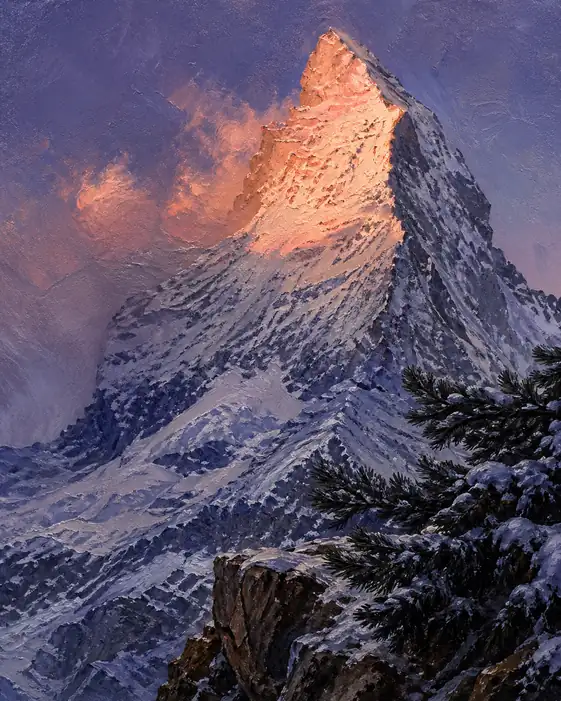 Dawn's Fiery Crown
Similar Artworks
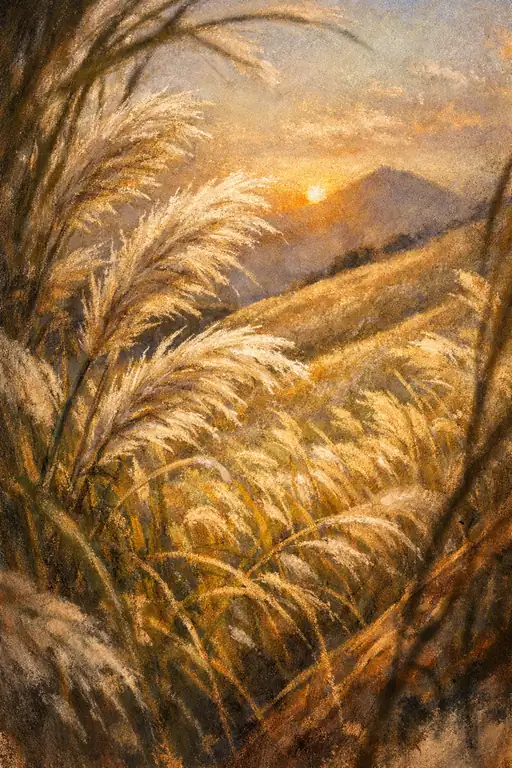 Whispers of the Golden Grass
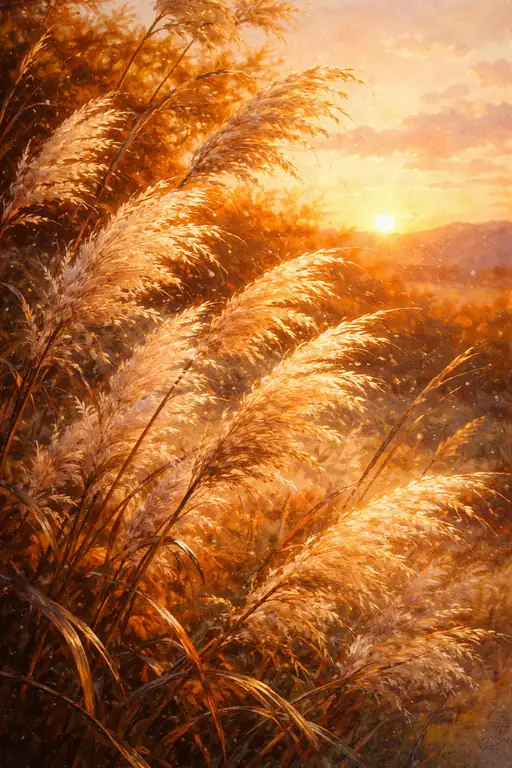 Golden Whispers in the Autumn Breeze
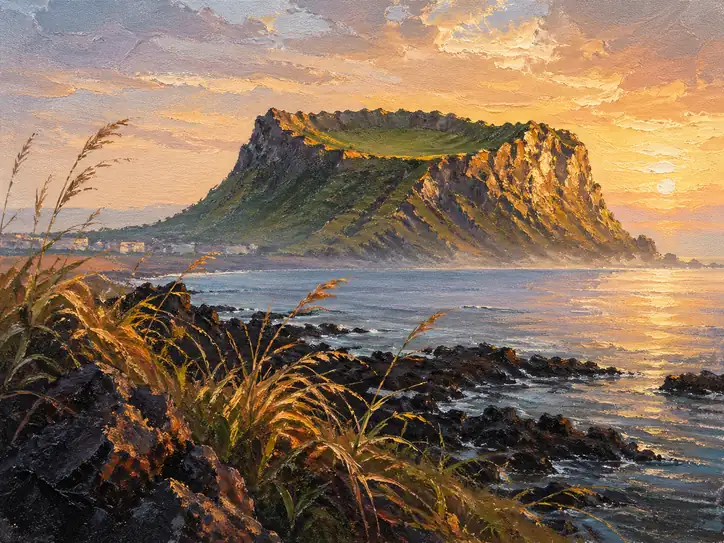 Golden Dawn on the Crater's Edge
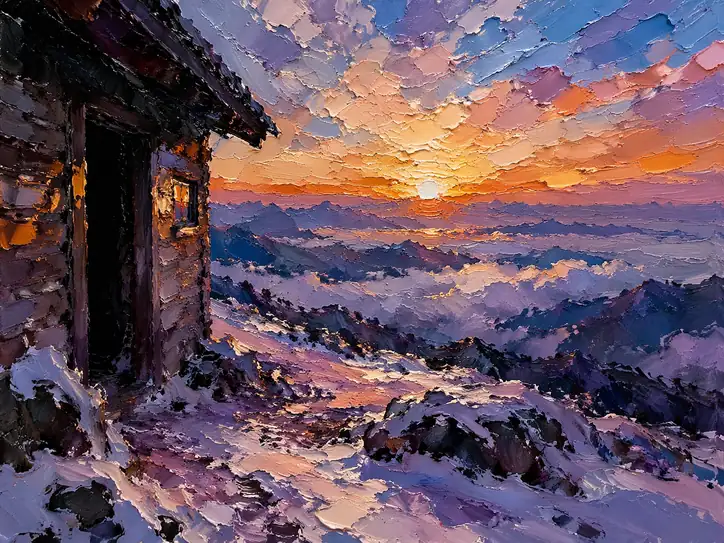 Sanctuary Above the Clouds
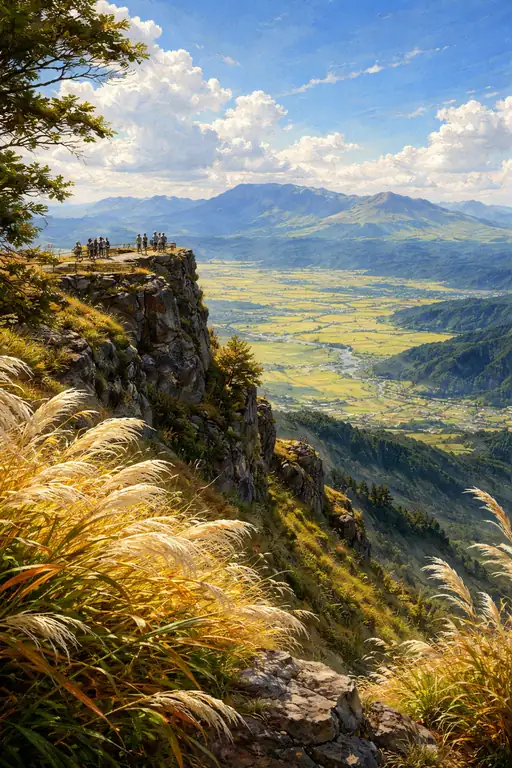 Infinite Horizon: Whispering Pampas and the Grand Valley
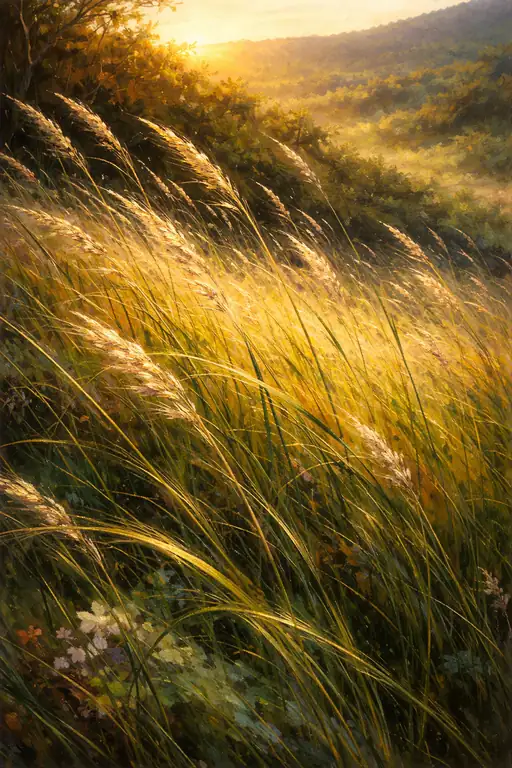 Eternal Walls of Verona
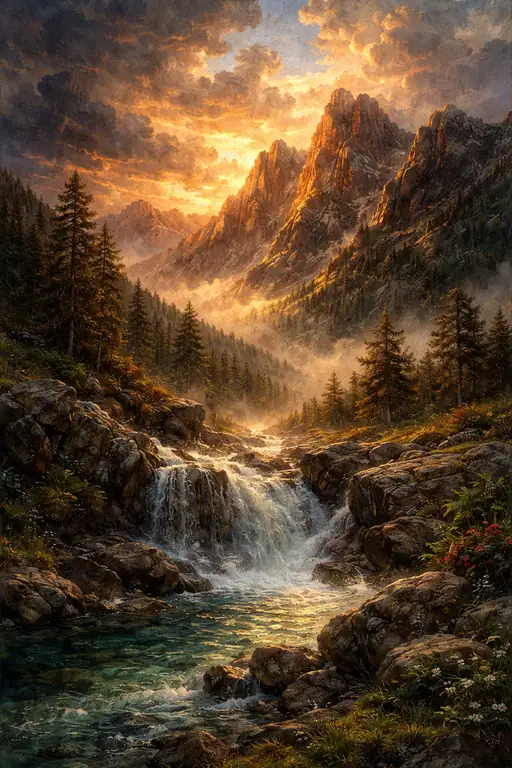 Whispers of the Golden Cascade
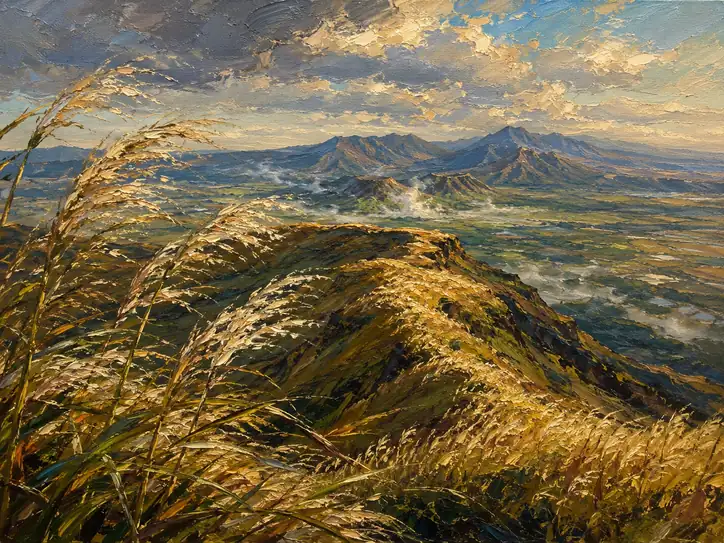 Golden Ridges and the Silent Basin
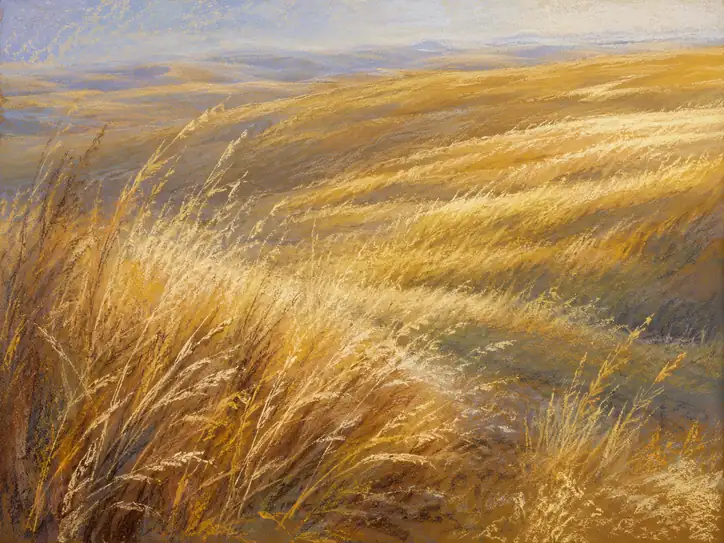 Where the Earth Breathes Gold
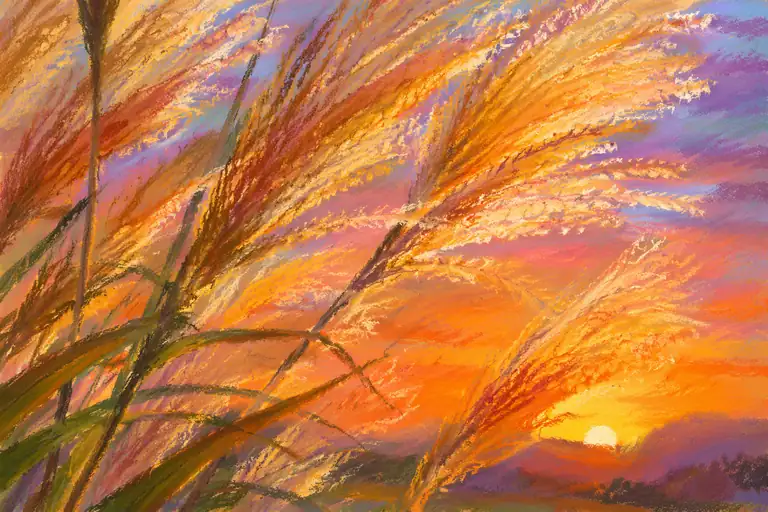 Whispers of the Golden Dusk: Pampas Grass in Autumn