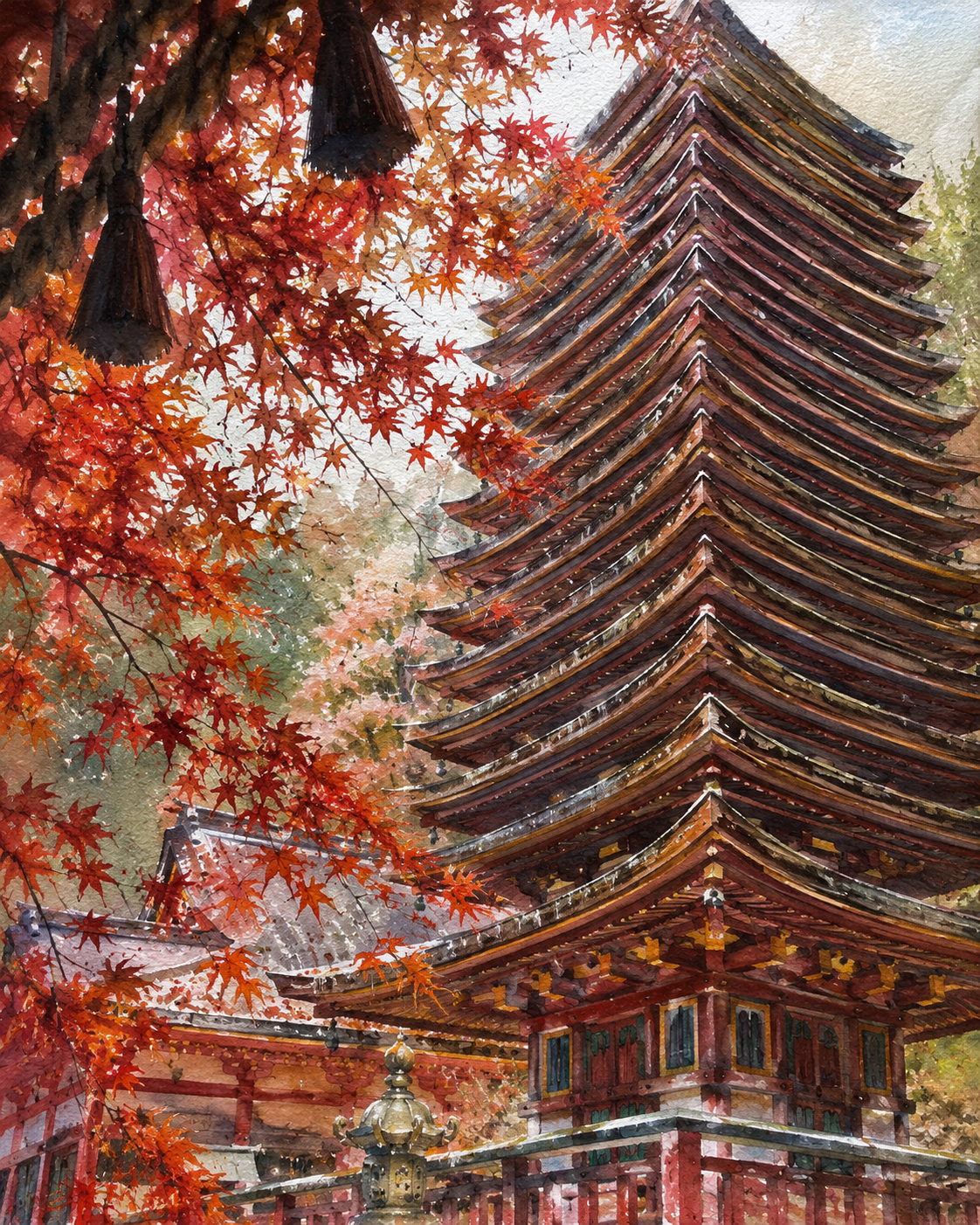
Vermilion Prayer in the Wind
Critique
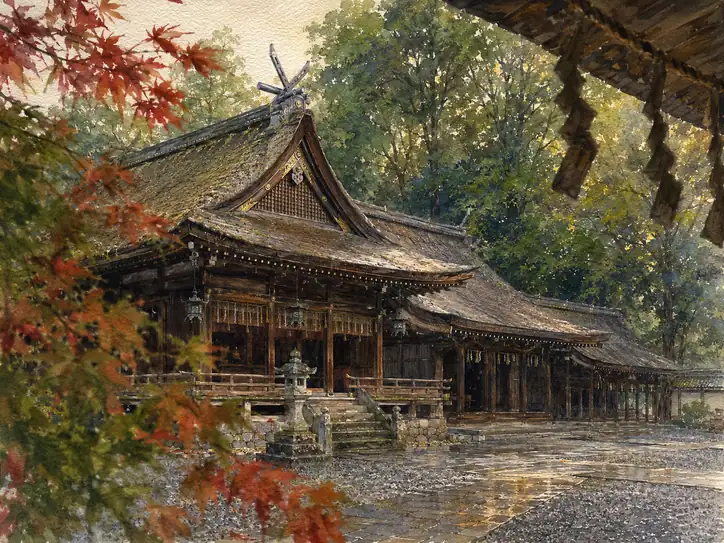
1. Introduction This watercolor painting captures the essence of Japanese autumn through the depiction of a traditional pagoda surrounded by vibrant maple leaves. The work reflects a deep appreciation for classical architecture and the ephemeral beauty of the seasons. It utilizes the fluid characteristics of the medium to evoke a sense of nostalgia and serenity. The composition successfully transports the viewer to a tranquil temple setting, emphasizing the harmony between man-made structures and nature. 2. Description The central subject is a tall, multi-tiered wooden pagoda that rises prominently on the right side of the canvas. Its complex rooflines and intricate wooden joinery are rendered with careful attention to structural detail. Framing the structure from the left and upper edges are the brilliant red and orange leaves of a maple tree, their shapes delicately defined against the light sky. In the lower-left foreground, a smaller temple building and a weathered stone lantern provide additional depth and context to the architectural ensemble. 3. Analysis The artist employs a warm color palette dominated by autumnal reds, siennas, and earthy browns, which contrast effectively with subtle patches of mossy green in the background. The watercolor technique is evident in the soft washes of color and the strategic use of splatters to represent falling light or distant foliage. Line work is used judiciously to define the edges of the pagoda while allowing the leaves to remain organic and soft. The verticality of the pagoda is balanced by the diagonal sweep of the maple branches, creating a stable yet dynamic visual field. 4. Interpretation and Evaluation The painting serves as a celebration of the Japanese aesthetic concept of seasonal transition. The contrast between the permanent, sturdy wooden structure and the fleeting, brilliant colors of the autumn leaves invites reflection on the nature of time and endurance. The technical execution is impressive, particularly in the handling of the complex perspective of the pagoda’s roofs and the translucent quality of the watercolor washes. This work is a successful example of traditional landscape painting that communicates a profound sense of cultural identity and natural beauty. 5. Conclusion Ultimately, the artwork provides a window into a world of quiet contemplation and seasonal splendor. It masterfully uses the watercolor medium to balance architectural precision with the spontaneous beauty of nature. The piece resonates with a sense of peace and enduring tradition that is characteristic of classic Japanese vistas. Through this evocative depiction, the viewer is reminded of the timeless appeal of the intersection between human craftsmanship and the natural environment.
Same Subcategory
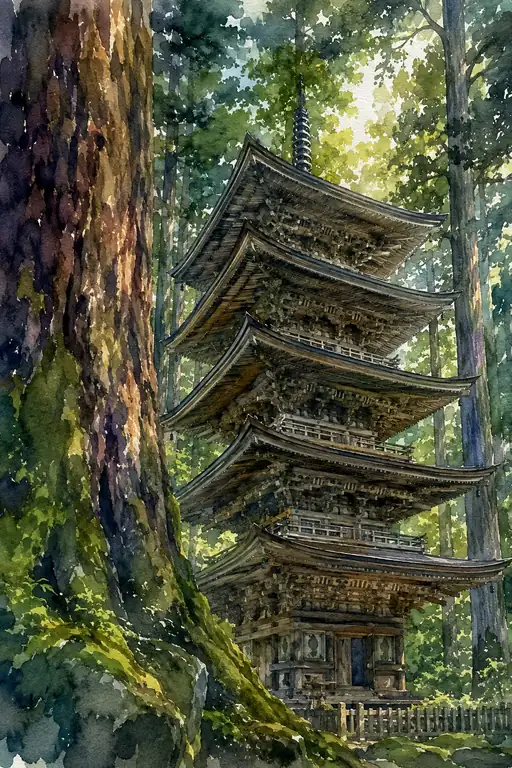 Sacred Rhythm of the Cedar Forest
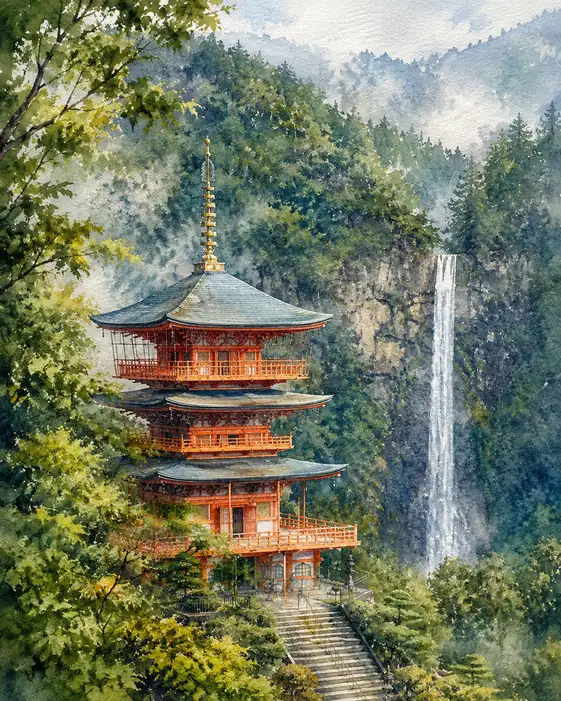 The Eternal Spire of the Silver Falls
Similar Artworks
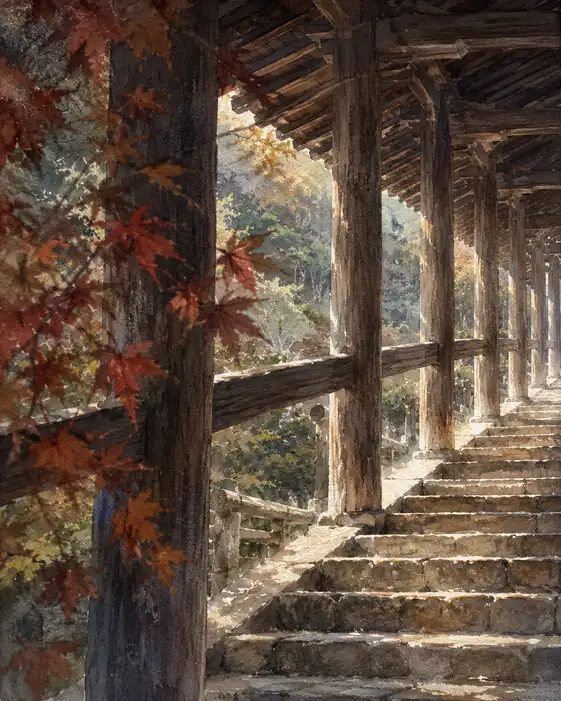 Echoes of Crimson Footsteps
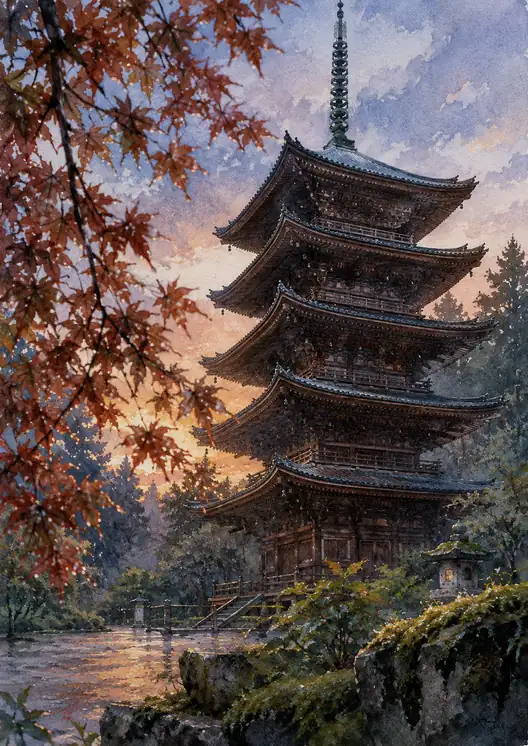 Autumn twilight, the Pagoda’s Silent Prayer
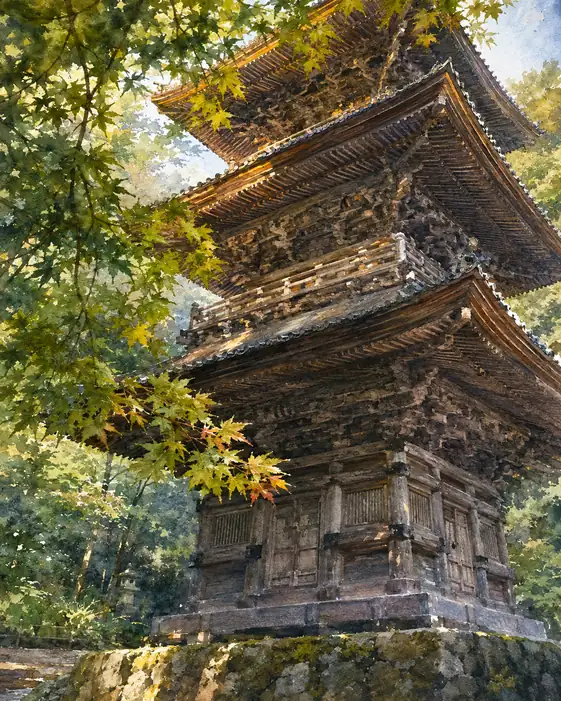 A Forest Three-Story Pagoda Through Maples
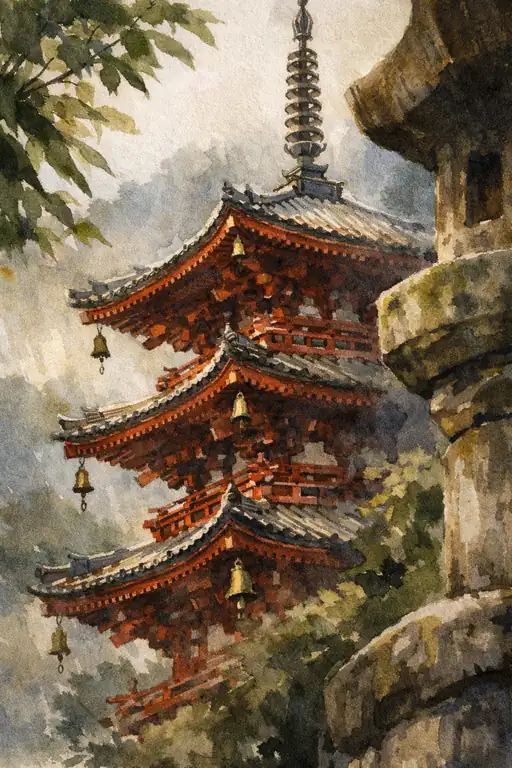 The Silent Watch of the Crimson Tier
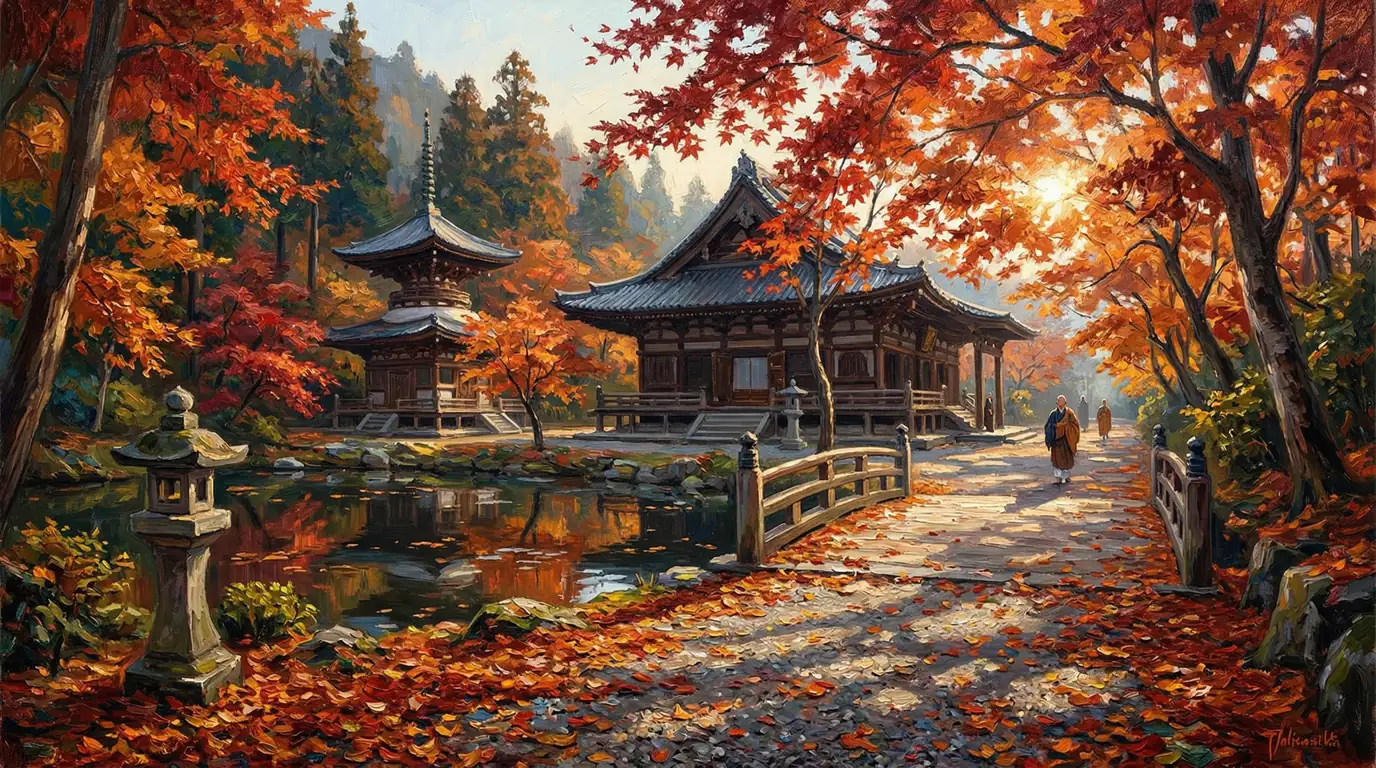 Spiritual Autumn at the Pagoda
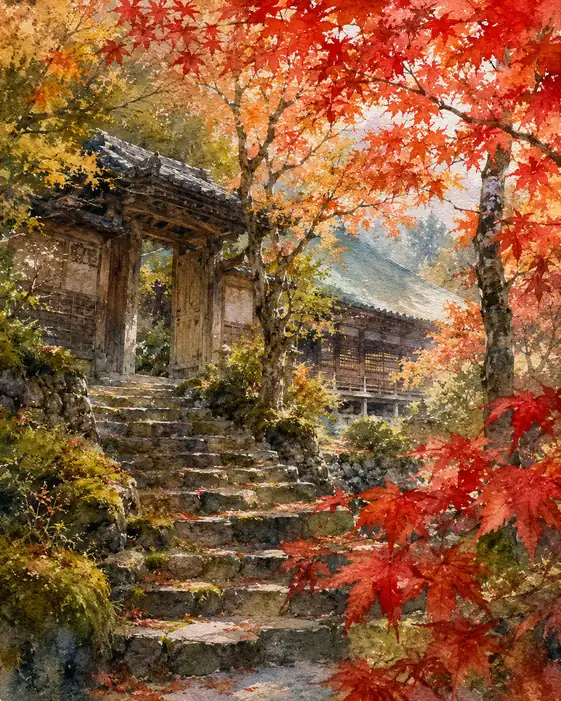 The Crimson Threshold of Silence
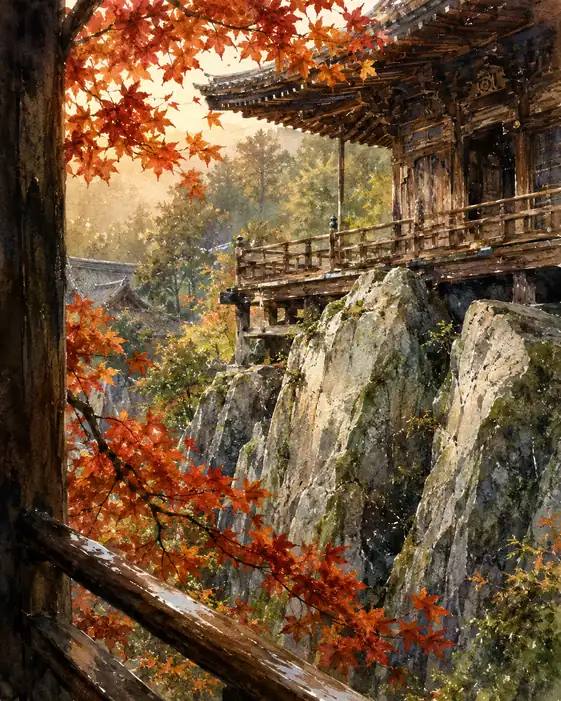 Crimson Reverie on the Temple Veranda
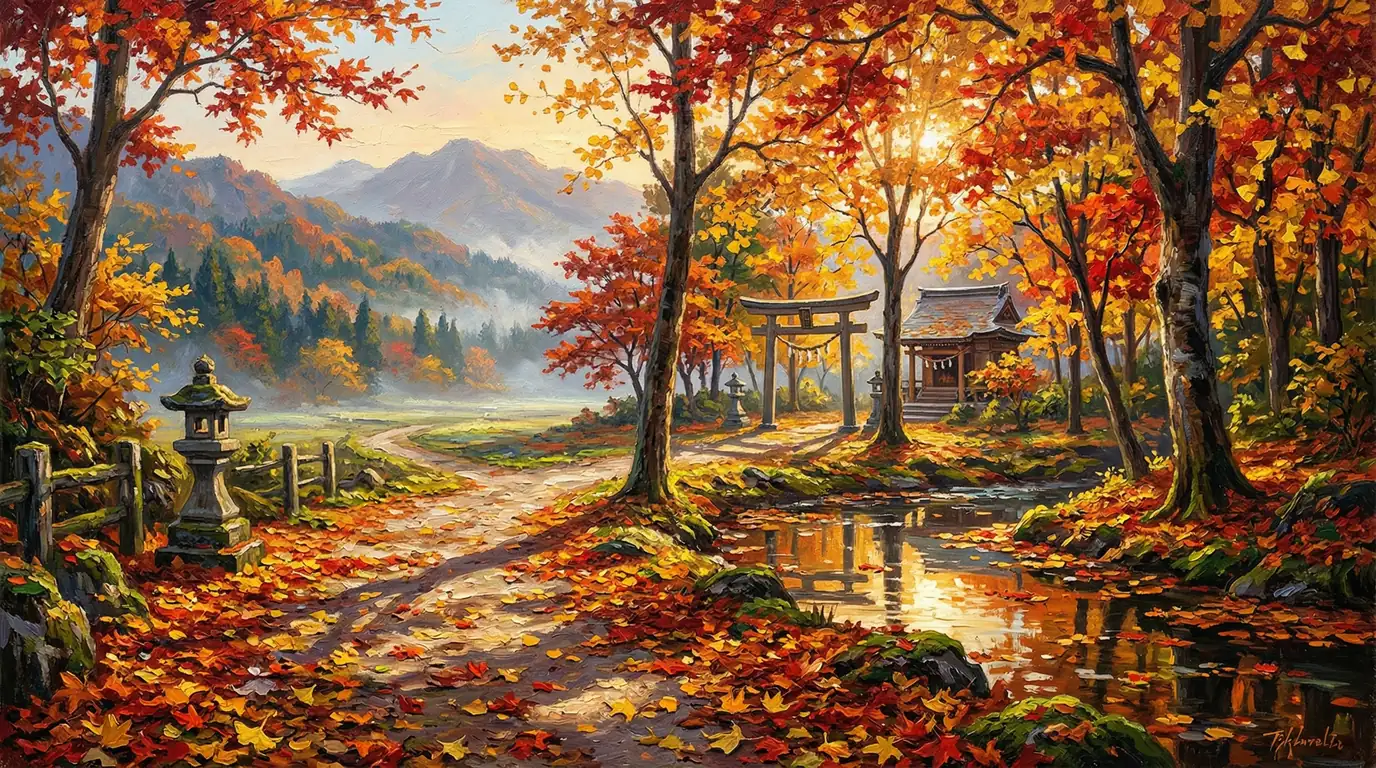 Sanctuary of the Misty Mountains
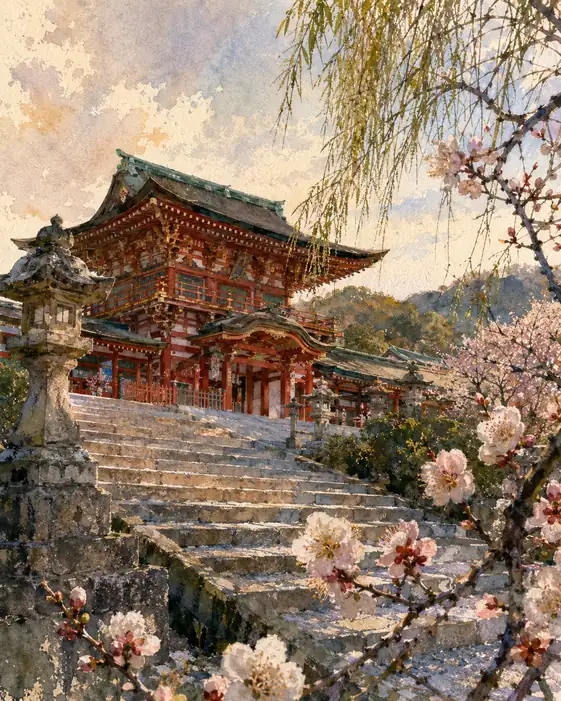 Eternal Glow of the Sacred Spring
 Sanctuary of the Whispering Leaves