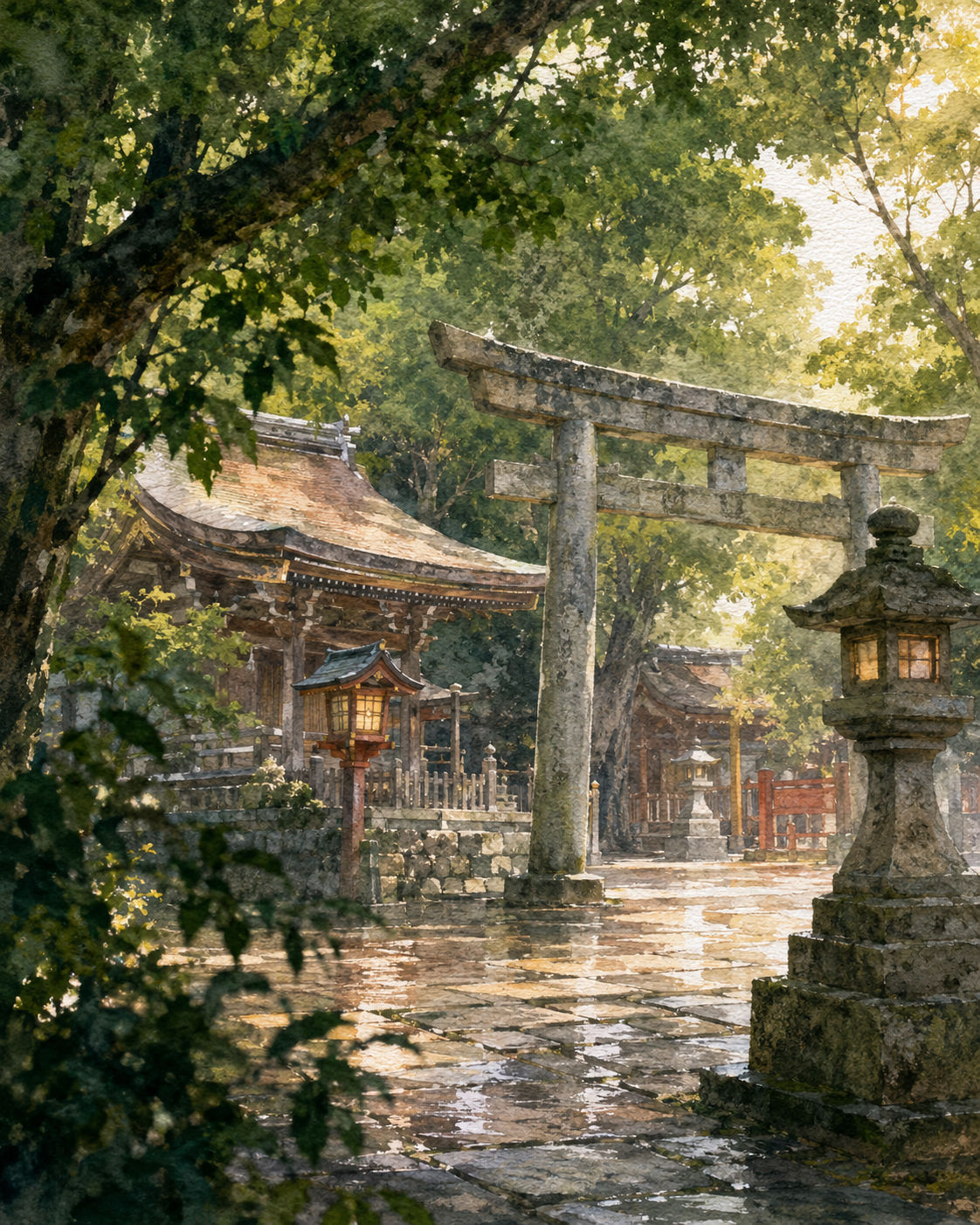
Sanctuary in the Emerald Mist
Critique
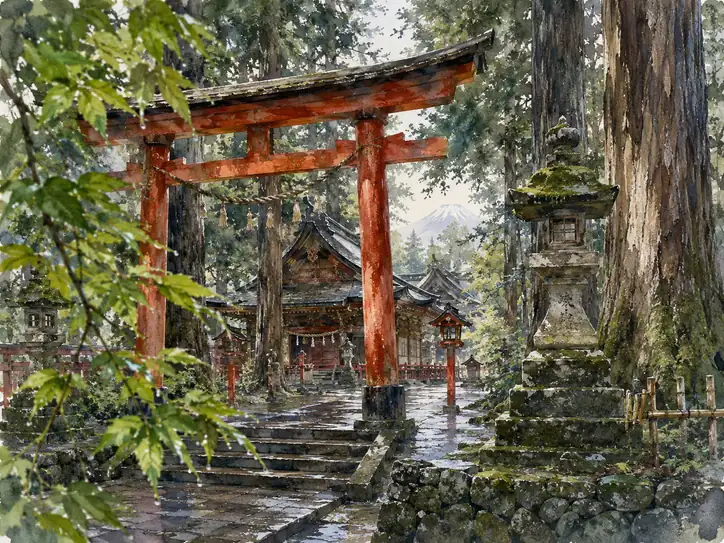
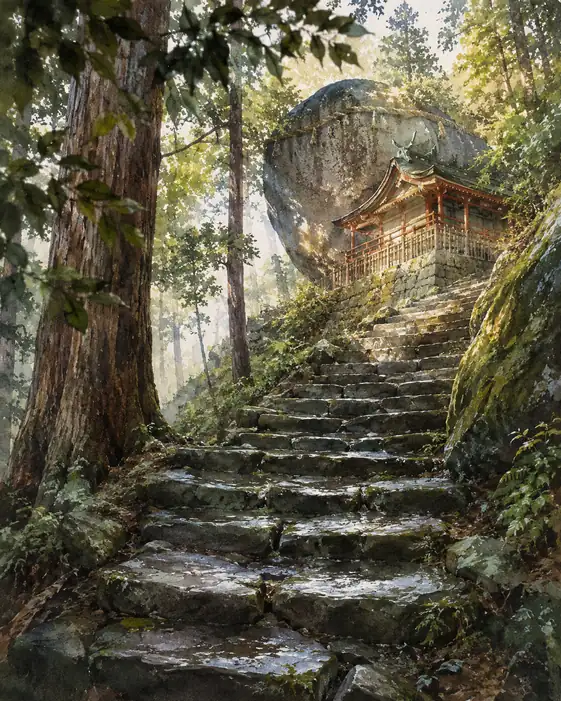
1. Introduction This evocative watercolor painting captures the serene majesty of a traditional Japanese shrine nestled deep within a misty forest. The composition is centered on a weathered stone torii gate, which stands as a spiritual threshold between the viewer and the ancient wooden structures beyond. Through its delicate washes and masterful depiction of light filtering through the trees, the artwork evokes a profound sense of tranquility and the sacred atmosphere of a Shinto sanctuary. 2. Description The foreground features a wet, moss-covered stone path that leads the eye toward a large stone torii gate. To the right, a weathered stone lantern (toro) glows softly, its internal light contrasting with the cool, damp shadows of the forest. In the mid-ground, several traditional wooden shrine buildings with intricate roofs are visible among the dense foliage of towering trees. The entire scene is enveloped in a soft, ethereal mist, with shafts of gentle sunlight breaking through the leafy canopy to illuminate the rain-darkened surfaces of the stone and wood. 3. Analysis The artist demonstrates exceptional skill in the watercolor medium, using the transparency of the paint to capture the moist, atmospheric quality of a Japanese forest. The color palette is dominated by lush greens, deep greys, and warm wood tones, with the glowing light of the lantern providing a focal point of warmth. The varied brushwork—from the precise details of the shrine's eaves to the broad, fluid strokes of the misty background—creates a rich and engaging visual texture. The interplay of light and shadow on the wet pavement is particularly effective in establishing a sense of place. 4. Interpretation and Evaluation This work successfully captures the essence of "Shinrin-yoku" or forest bathing, combined with the spiritual gravity of a sacred site. The contrast between the solid permanence of the stone elements and the ephemeral quality of the mist and light suggests a narrative of timelessness and the quiet presence of the divine in nature. Technically, the artist's ability to balance the complex architectural details with the soft, expansive nature of the environment is remarkable. It is a highly original and technically accomplished piece that resonates with a deep sense of calm. 5. Conclusion In conclusion, the painting is a stunning tribute to the beauty of Japan's spiritual landscapes. The harmonious balance between the man-made shrine structures and the untamed forest creates a compelling narrative of co-existence and peace. By focusing on the interplay of moisture, light, and tradition, the artist has captured an ephemeral moment of beauty that feels both grounded in reality and elevated by poetic interpretation. It serves as a window into a quiet, contemplative world, leaving the viewer with a lasting sense of serenity.
Same Subcategory
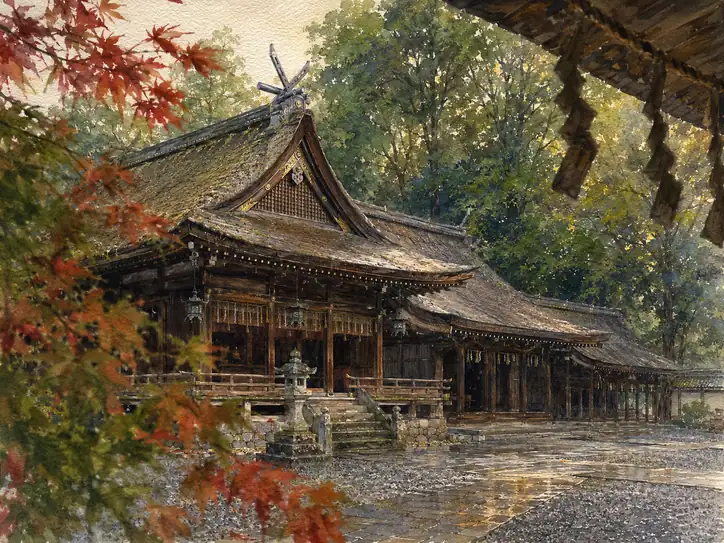 Sanctuary of the Whispering Leaves
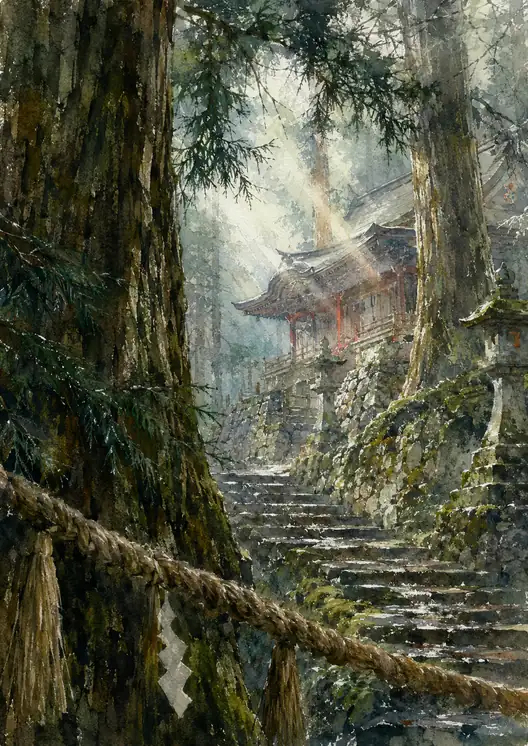 Sanctuary of the Piercing Light
Similar Artworks
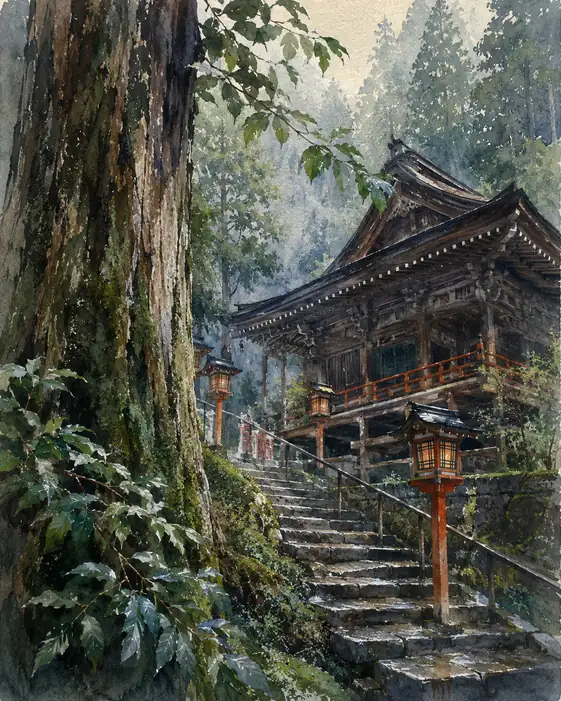 Guardian of the Ethereal Mist
 Sacred Breath in the Ancient Forest
 Sanctuary of the Ancient Cedars
 The Threshold Between Realms
 Eternal Silence of the Vermilion Gate
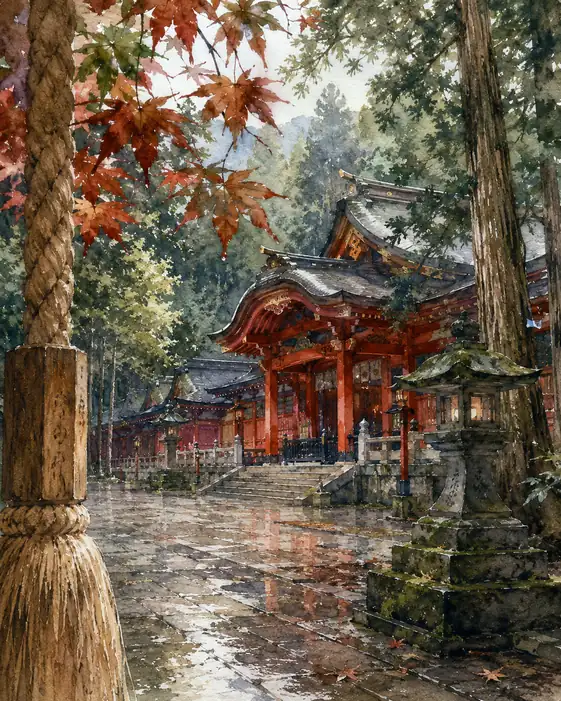 Serenity in the Autumn Rain
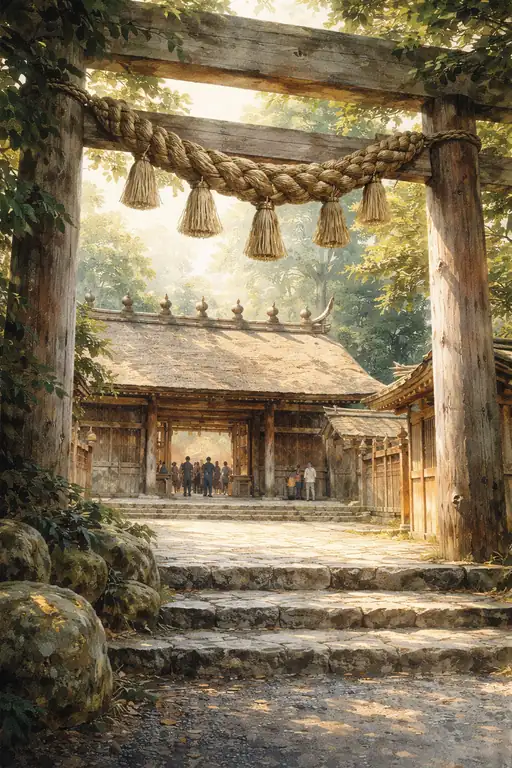 Awakening the Sacred Path
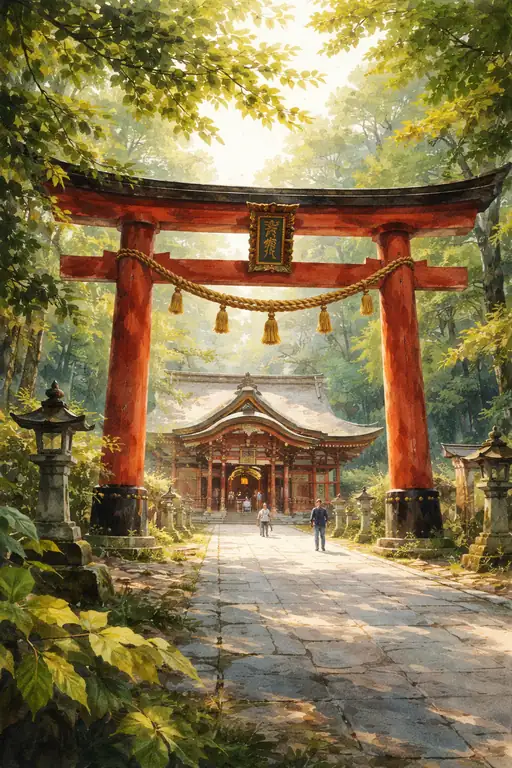 Threshold of the Sacred Sun
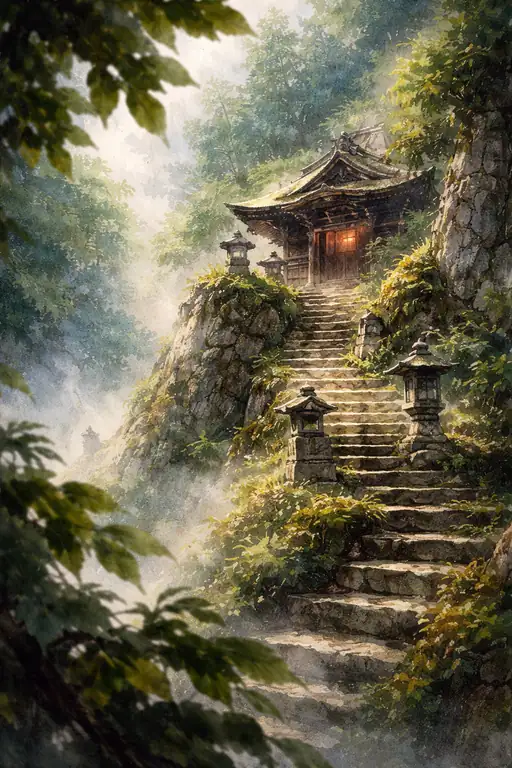 One Step Closer to the Divine
 The Sacred Stillness of the Rock