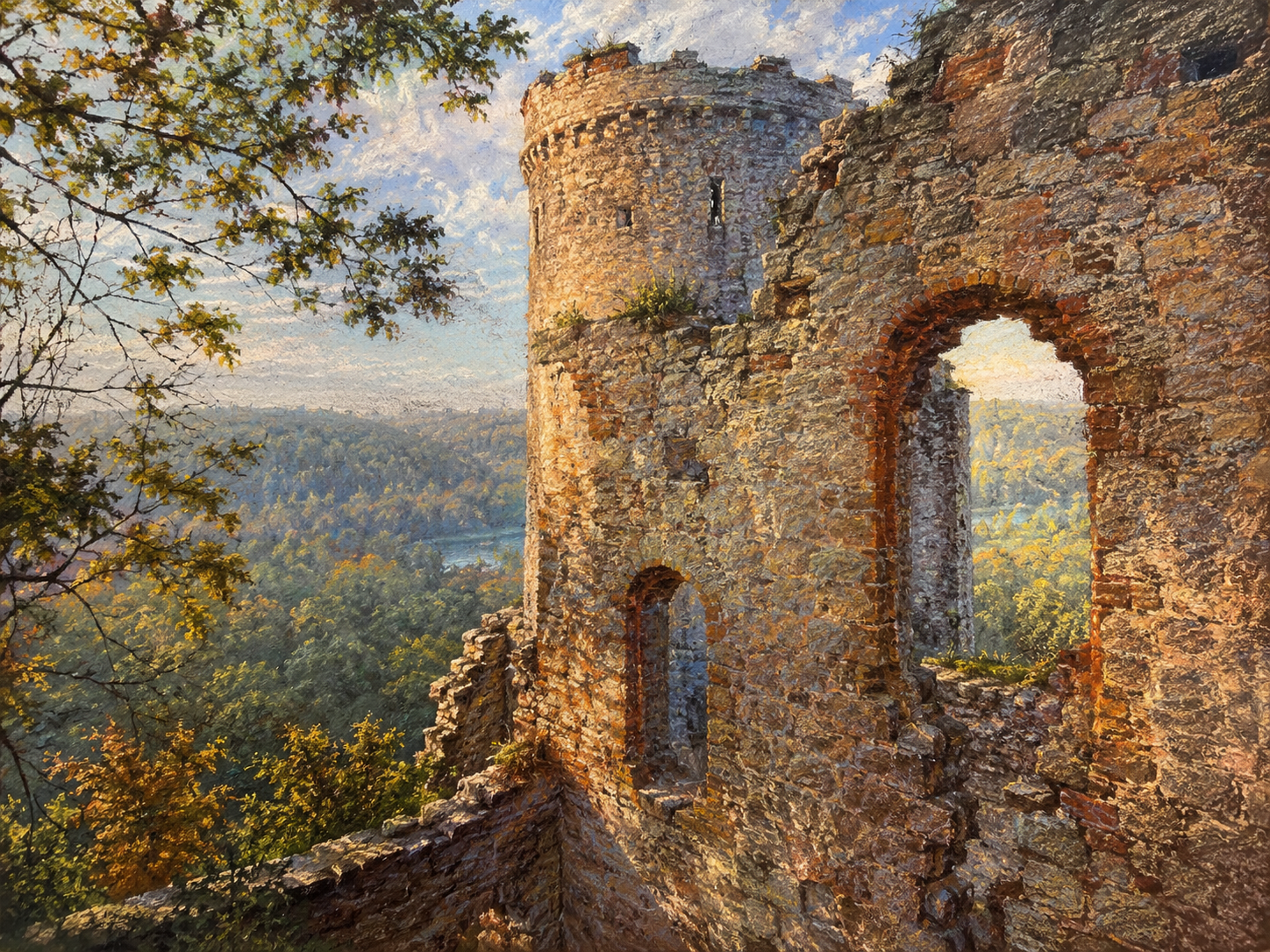
Sentinels of the Golden Hour
Critique
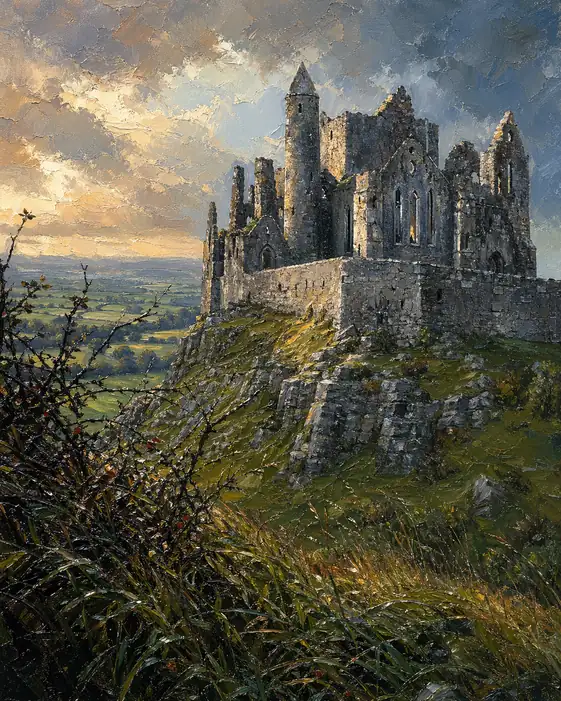
1. Introduction This oil painting depicts the rugged remains of a medieval stone fortress perched high above a sprawling river valley. The composition is centered on a stout cylindrical tower and a crumbling wall, through which an arched window offers a glimpse of the sunlit landscape beyond. The work is characterized by its heavy, expressive texture and a vibrant interplay of light and shadow that breathes life into the cold stone. By capturing the ruins at a moment of peak luminosity, the artist creates a scene that feels both historically grounded and poetically charged, emphasizing the enduring beauty of architectural decay. 2. Description The artwork features a foreground dominated by the irregular surfaces of weathered masonry, rendered with thick, tactile brushstrokes that mimic the texture of stone. The central tower shows various signs of age, including small slits for defense and patches of vegetation growing from its cracks. To the right, a large arched opening in a broken wall serves as a frame for the distant view of a lush, forested valley and a winding river. On the left, the branches of a tree with golden-yellow leaves reach into the frame, providing a natural contrast to the man-made structures. The sky is a bright, clear blue filled with soft, white clouds. 3. Analysis The artist employs a post-impressionist style, using a rich impasto technique to create a physical depth on the canvas. The color palette is dominated by warm earth tones—ochre, sienna, and terracotta—which are used to describe the sunlit stones, contrasting with the cool greens and blues of the background. Lighting is handled with dramatic flair; the low-angled sun casts long, deep shadows while highlighting the rough edges of the masonry with brilliant white and gold. The composition uses the ruins as a powerful silhouette against the more delicately rendered valley, creating a strong sense of scale and spatial depth. 4. Interpretation and Evaluation This work successfully transforms a site of ruin into a vibrant celebration of light and texture. The choice to emphasize the materiality of the paint mirrors the physical weight of the stones, creating a sensory experience that goes beyond simple visual representation. The "window within a window" effect created by the arched opening adds a layer of conceptual depth, inviting reflections on the nature of seeing and the passage of time. The artist’s technical skill in balancing such a heavy application of paint with a clear sense of atmosphere and distance is remarkable. It is an original take on a classical romantic subject. 5. Conclusion In conclusion, the painting is a powerful example of how texture and light can redefine a traditional landscape subject. The harmony between the solid, weathered ruins and the soft, expansive nature in the background creates a compelling visual dialogue about permanence and change. Through its bold execution and sensitive observation, the artwork invites the viewer to appreciate the quiet dignity of historical remains. Ultimately, it serves as a testament to the evocative power of the medium, leaving a lasting impression of a sun-drenched moment of historical contemplation.
Same Subcategory
Similar Artworks
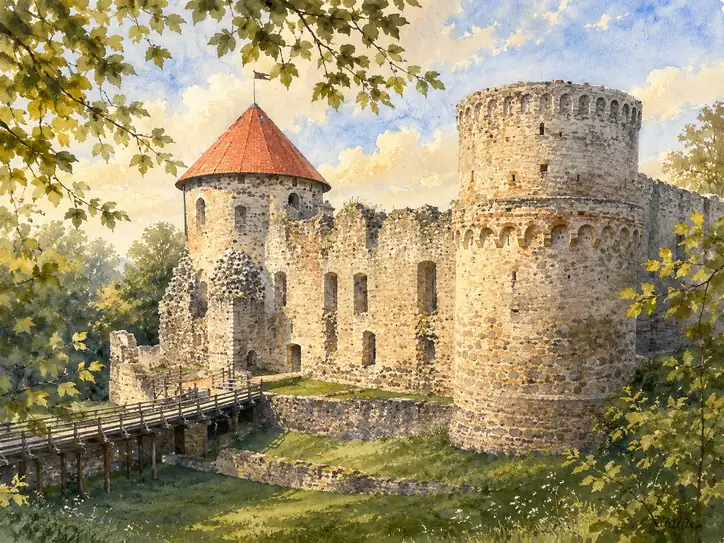 Legacy of the Sun-Drenched Stone
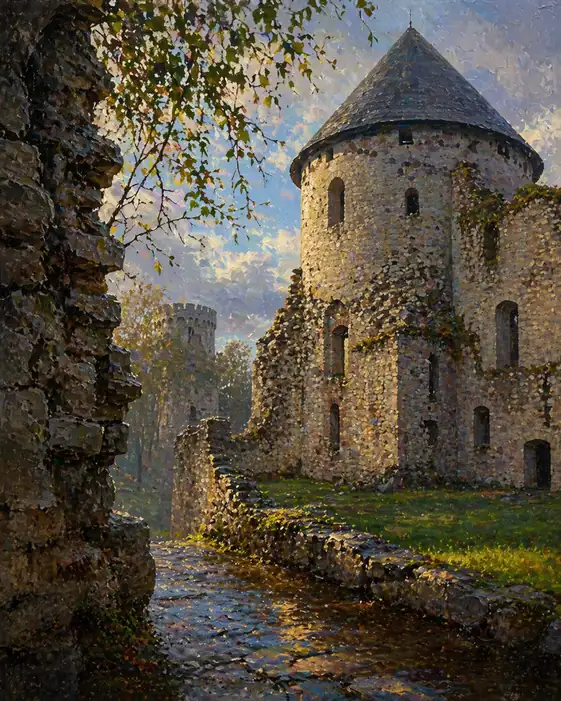 Autumn Light on Forgotten Stones
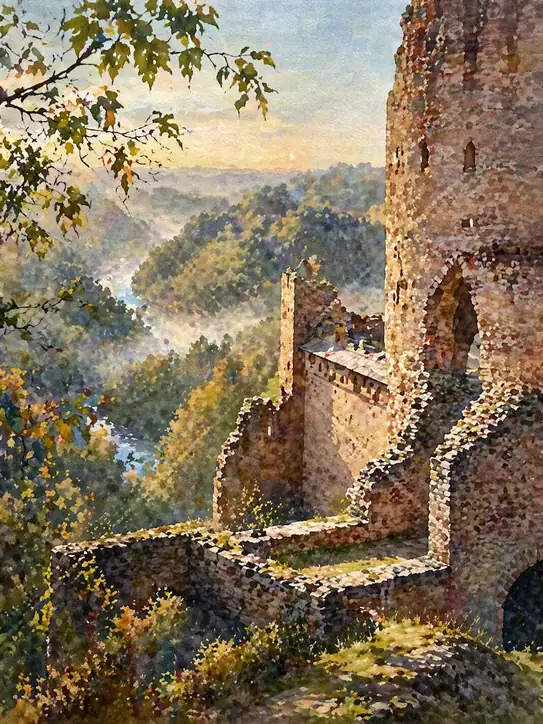 Fortress in the Mists
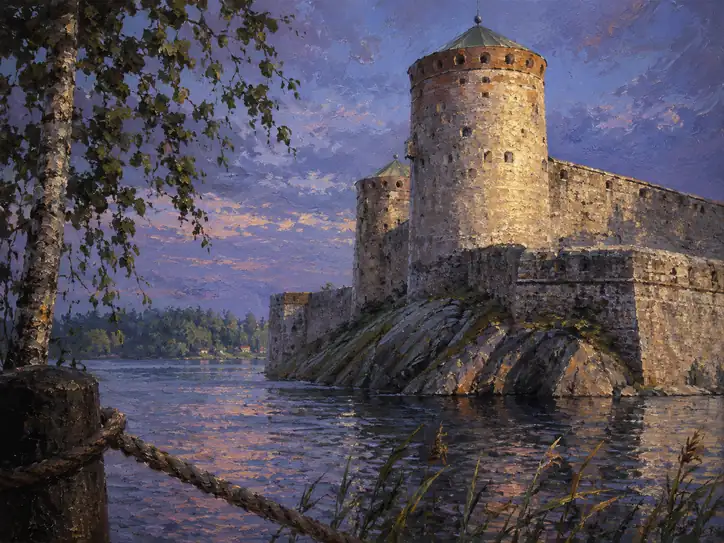 Sentinel of the Eternal Afterglow
 A Golden Lullaby for the Old Fortress
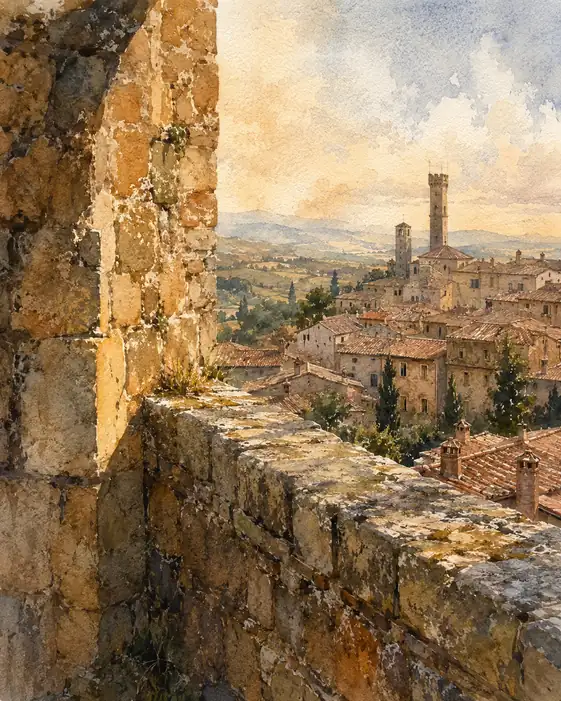 The Whisper of Ancient Stones
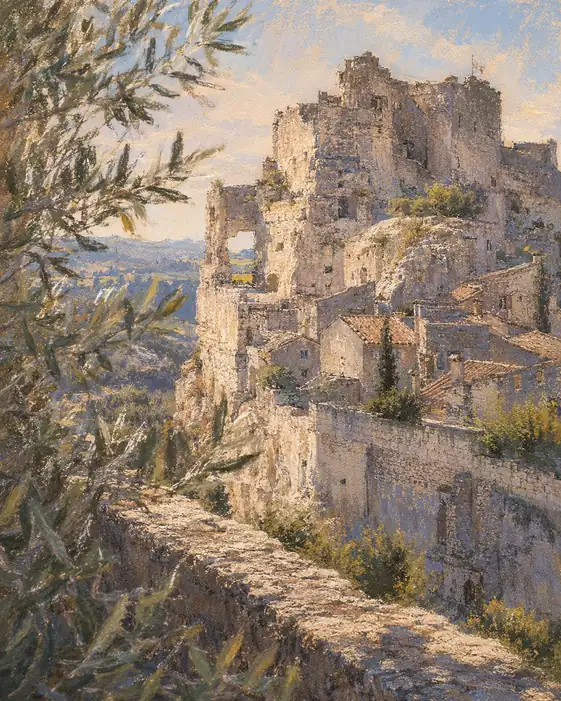 Memories in Stone: The Sunlit Citadel
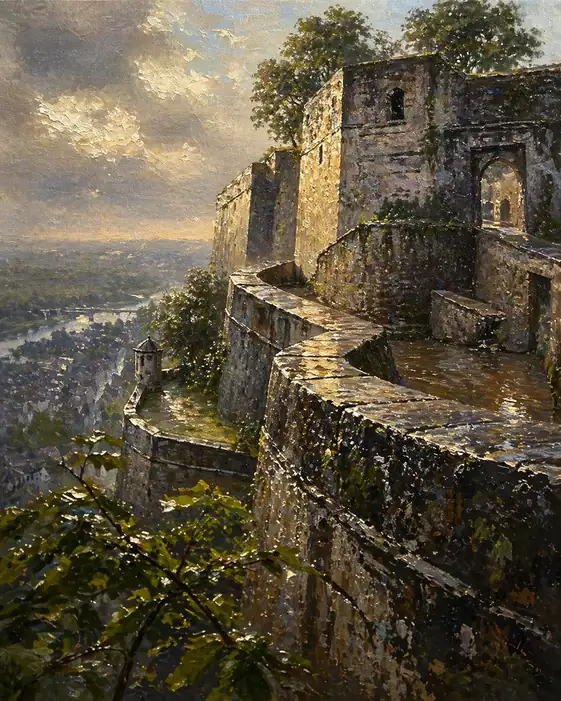 Citadel of Eternal Shadows
 The Silent Watcher: A Castle in the Sky
 The Silent Sentinel of the Ages