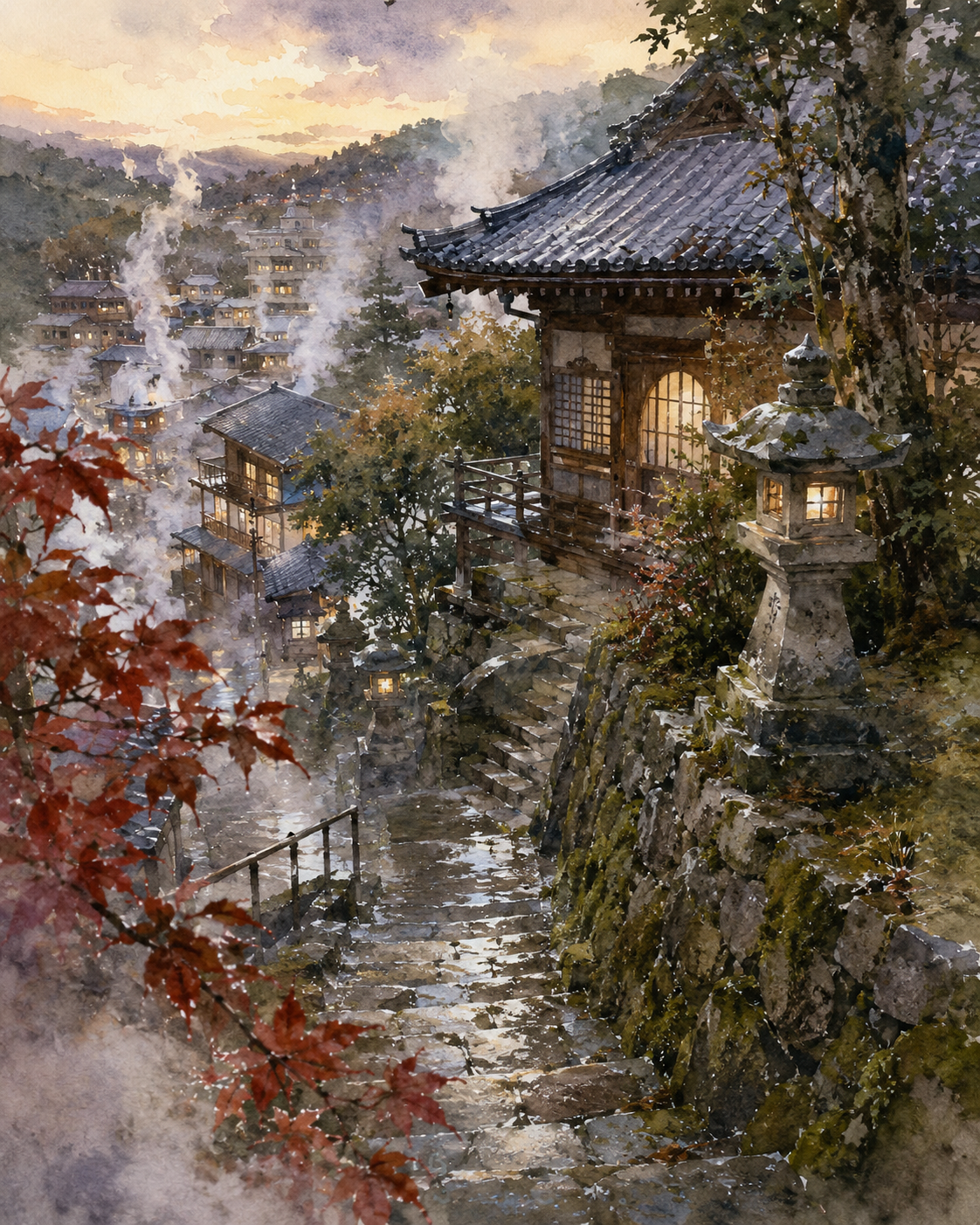
The Warmth We Left Behind
Critique
1. Introduction This evocative watercolor painting captures the serene atmosphere of a traditional Japanese hot spring village at dusk. The composition is built around a descending stone staircase that leads the viewer’s eye from a mossy foreground into a valley filled with steam and historical architecture. On the right, a weathered stone lantern glows with a warm, internal light, standing near a classic wooden structure with a tiled roof. The inclusion of vibrant red maple leaves in the foreground suggests the season of autumn, adding a layer of seasonal poignancy to the scene. The overall mood is one of profound tranquility and cultural depth. 2. Description The artwork features a foreground dominated by wet stone steps and a rugged stone wall covered in moss and small plants. To the right, a traditional building with intricate wooden latticework and a heavy, grey-tiled roof is nestled against a large tree. In the distance, a cluster of multi-storied wooden buildings spreads across the valley floor, with thick plumes of white steam rising into the cool evening air. The sky above the distant mountains is a soft blend of pale yellow and lavender, reflecting the last light of the sun. Every element is rendered with fluid watercolor washes that emphasize the moist, misty environment. 3. Analysis The artist uses a sophisticated color palette, contrasting the cool, damp greys and greens of the stones with the warm, glowing yellows of the lanterns and windows. The vibrant red of the maple leaves provides a focal point and a splash of complementary color against the more muted tones of the landscape. Lighting is key to the painting’s success; the reflections on the wet stairs and the soft diffusion of light through the steam create a tangible sense of atmosphere. The varied brushwork, from the precise details of the roof tiles to the broad, watery strokes in the distance, creates a rich and engaging visual texture. 4. Interpretation and Evaluation This work is a masterful exploration of light, moisture, and cultural heritage, successfully conveying the unique sensory experience of a mountain onsen town. The choice of perspective, looking down from a high point, creates a sense of discovery and invites the viewer to enter this hidden world. The technical skill displayed in capturing the transparency of the steam and the reflective quality of the wet surfaces is exceptional. The artist’s ability to evoke the specific chill of an autumn evening combined with the promised warmth of the hot springs shows a deep understanding of atmospheric storytelling. It is a highly original and technically accomplished piece. 5. Conclusion In conclusion, the painting is a stunning tribute to the beauty of the Japanese landscape and its enduring traditions. The harmonious balance between nature and human-made structures creates a compelling narrative of co-existence and peace. By focusing on the interplay of light and mist, the artist has captured an ephemeral moment of beauty that feels both grounded in reality and elevated by poetic interpretation. This work serves as a window into a quiet, contemplative world, leaving the viewer with a lasting sense of calm and a renewed appreciation for the seasonal shifts of the natural environment.
Same Subcategory
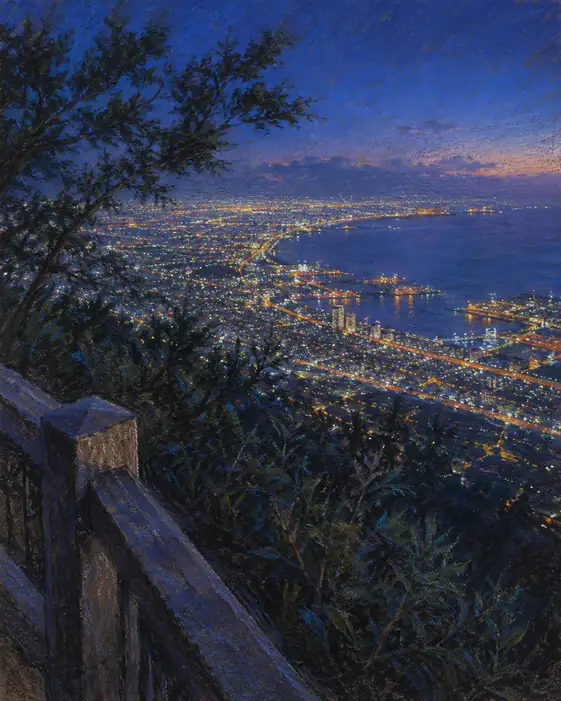 The Breath of a Million Dreams
Similar Artworks
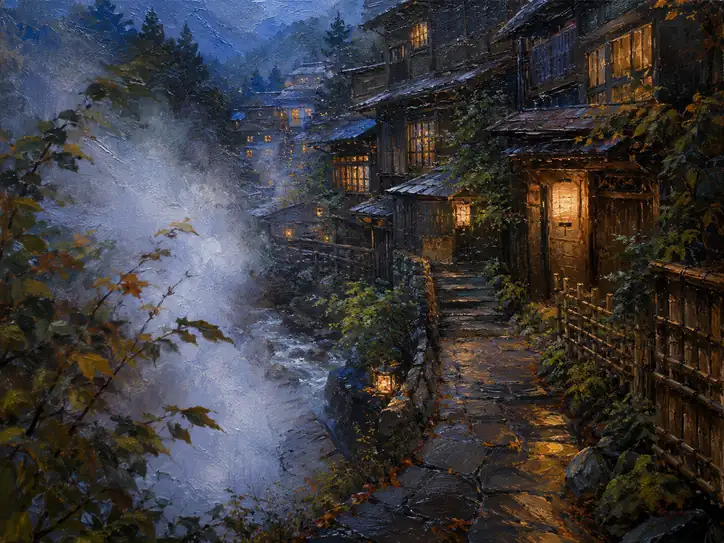 Golden Echoes in the Ravine
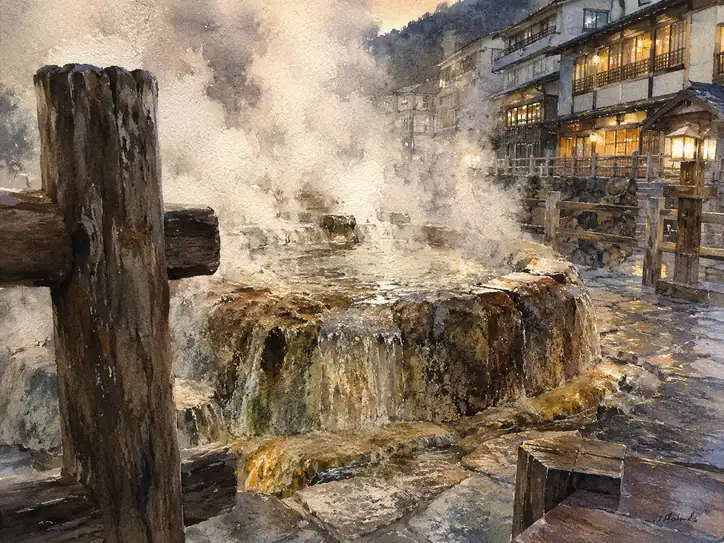 A Warm Whisper in the Twilight Mist
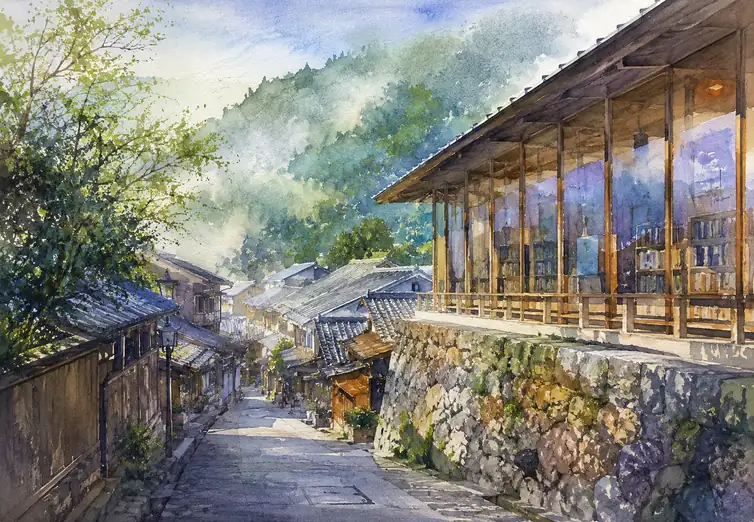 A Dialogue Between Stone and Glass
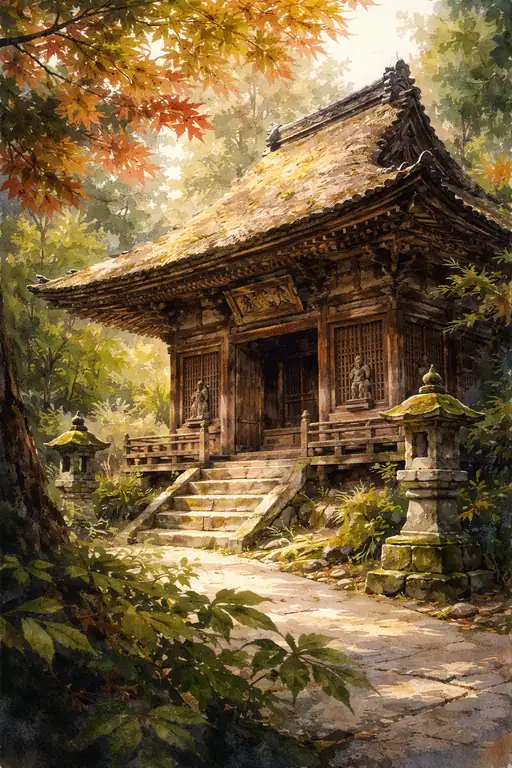 Sunlight Through the Crimson Gate
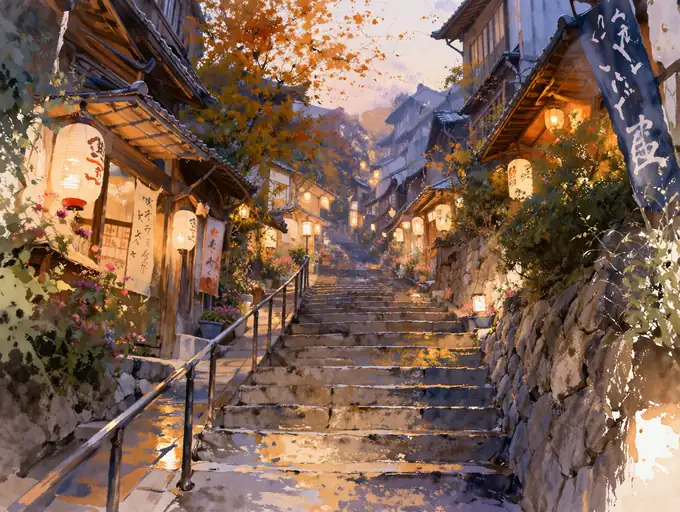 Nostalgic Dusk on the Stone Steps
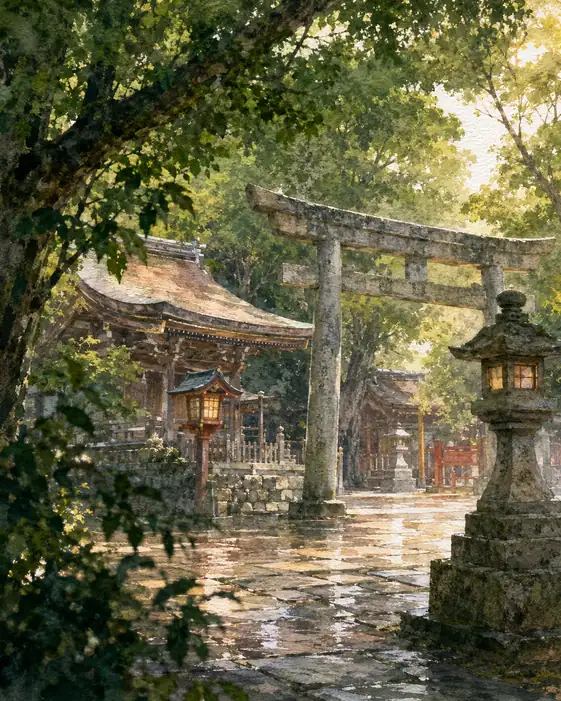 Sanctuary in the Emerald Mist
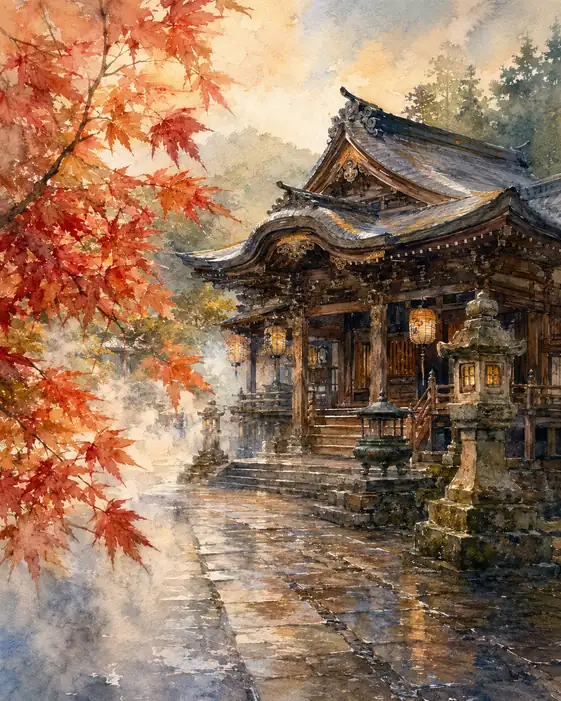 Fleeting Crimson, Eternal Prayer
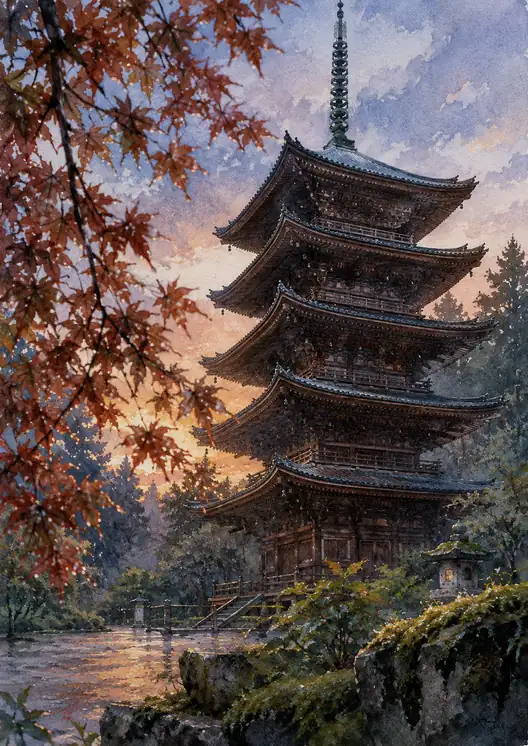 Autumn twilight, the Pagoda’s Silent Prayer
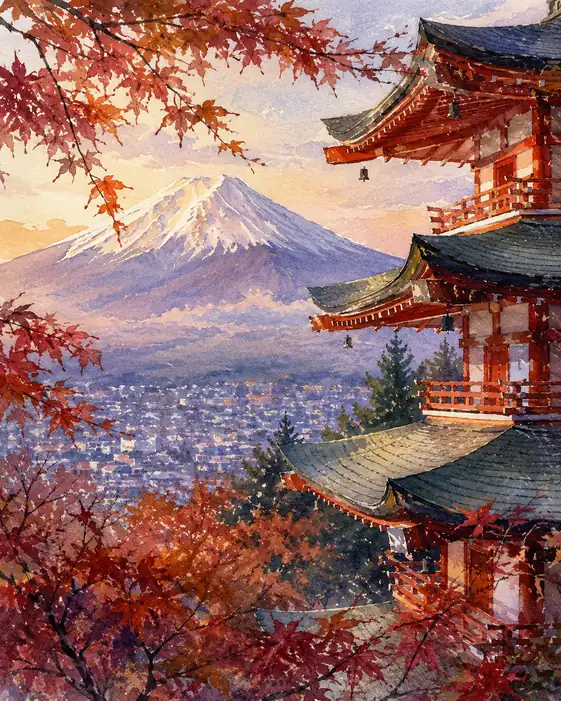 Fleeting Crimson, Eternal Silence
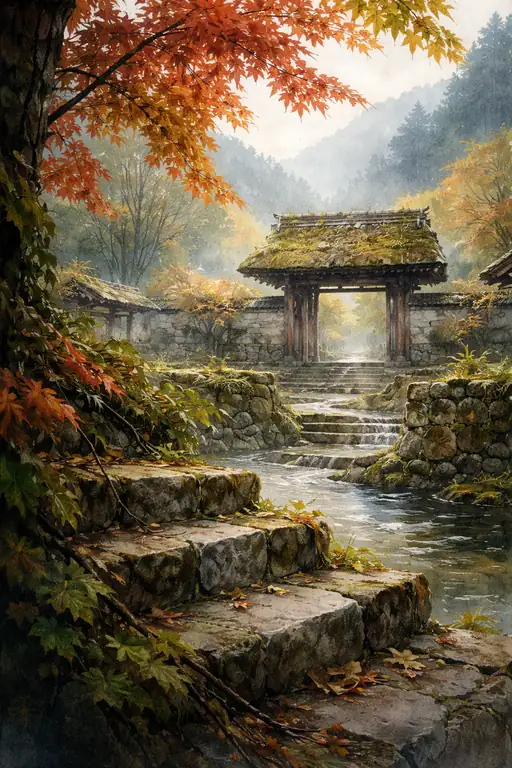 Whispers of Autumn: The Mossy Gate in the Mist