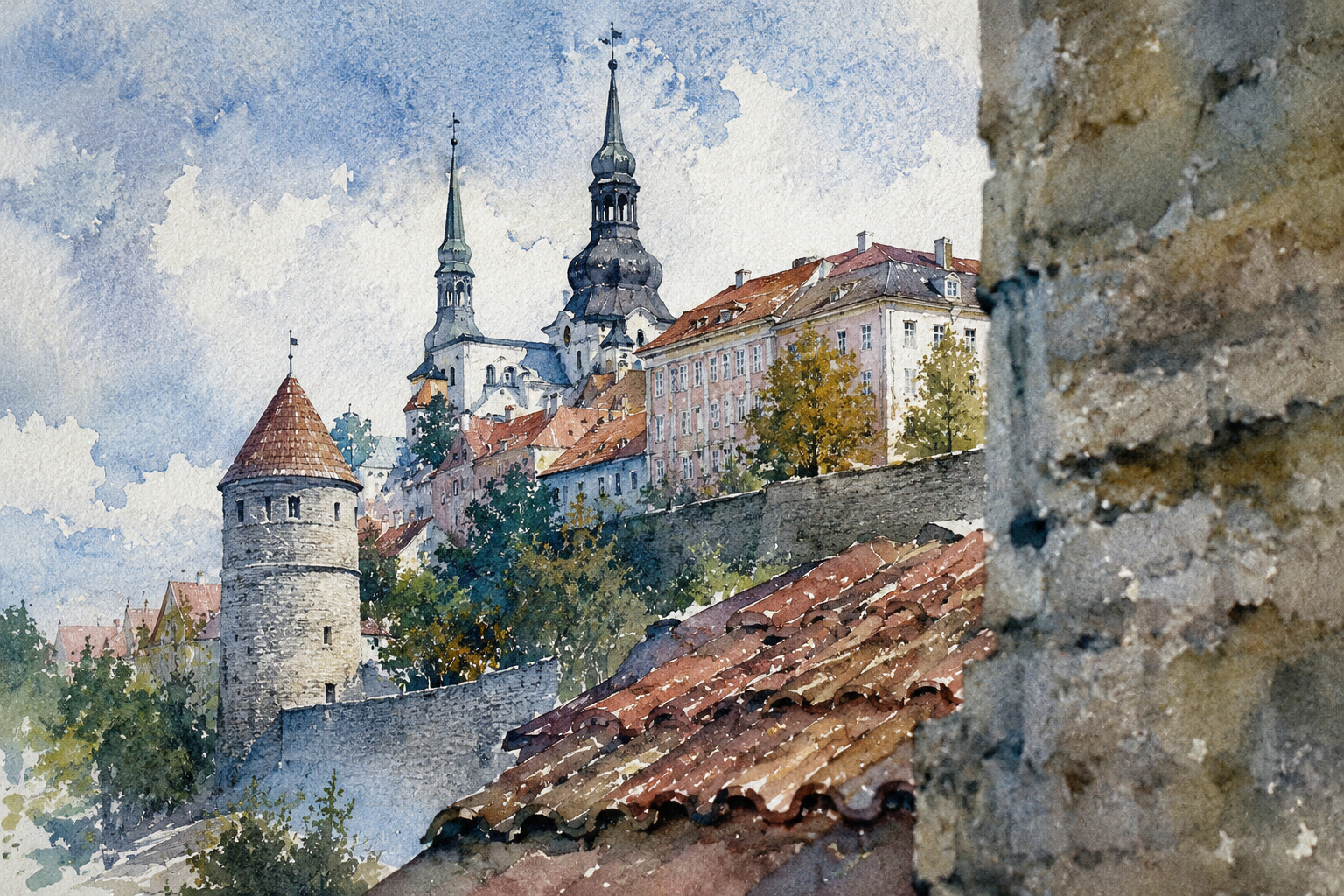
Breath of the Ancient City
Critique
Introduction This watercolor painting captures the timeless beauty of a medieval European city, characterized by its historic stone towers and terracotta-roofed buildings. The artist masterfully combines the transparency of the medium with textured washes to evoke a sense of architectural grandeur. The composition balances the solid, enduring nature of the stone structures with the airy, light-filled quality of a clear day. Description In the immediate foreground on the right, a large, weathered stone wall is depicted in close-up, serving as a framing element for the entire scene. To the middle left stands a formidable cylindrical stone tower, while multiple church spires with intricate domes rise into the sky behind it. The cityscape unfolds across a gentle slope, featuring a series of red-tiled roofs that ripple toward the viewer. The sky is a bright, clear blue, punctuated by soft white clouds that enhance the overall sense of depth. Analysis The composition utilizes a "frame-within-a-frame" technique, using the massive stone block on the right to focus the viewer's attention on the central architectural landmarks. The color palette is centered on a harmonious contrast between the warm ochres and reds of the rooftops and the cool grays and blues of the stone and sky. The use of granulation and splattered paint effects successfully mimics the rough texture of ancient masonry, adding tactile interest to the visual elements. Interpretation and Evaluation This work demonstrates an exceptional command of watercolor techniques and a keen eye for architectural form. The artist's ability to render the varied textures of stone and tile through subtle layering is highly impressive. By capturing the unique character of the city's skyline, the piece transcends mere documentation and becomes a poetic interpretation of historical space. Conclusion What begins as a study of historical architecture evolves into a sophisticated exploration of light, texture, and spatial organization. The painting successfully captures the serene atmosphere of the ancient city, inviting the viewer to contemplate the layers of history embedded in its walls. The integration of fine detail and spontaneous technical effects results in a cohesive and engaging visual experience.
Same Subcategory
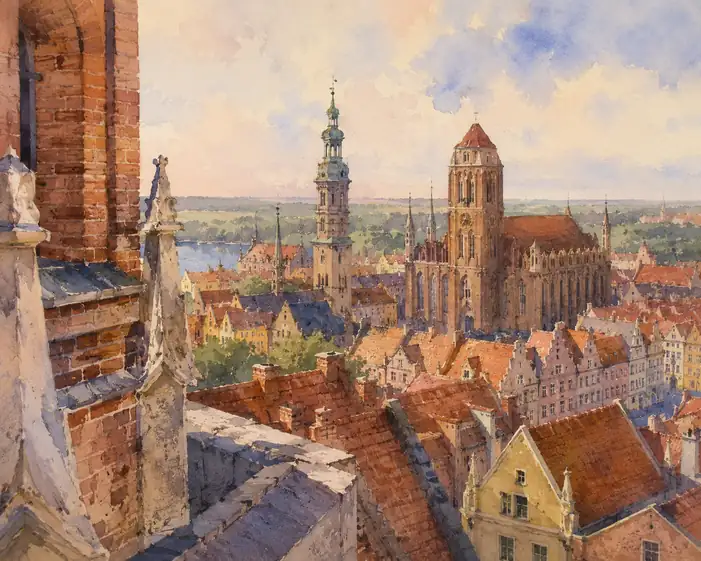 A timeless gaze over the brick-red roofs and Gothic spires of an ancient city!!!
 Echoes of Serenity in the Water Mirror
Similar Artworks
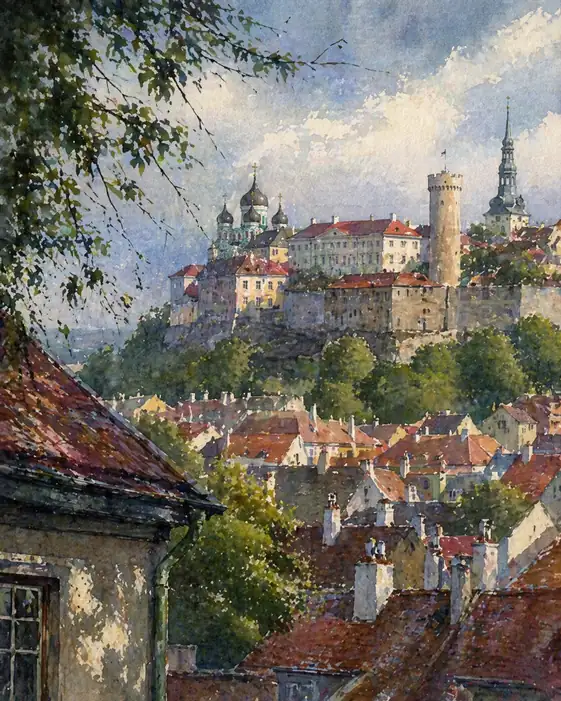 Whispers of the Stone Domes
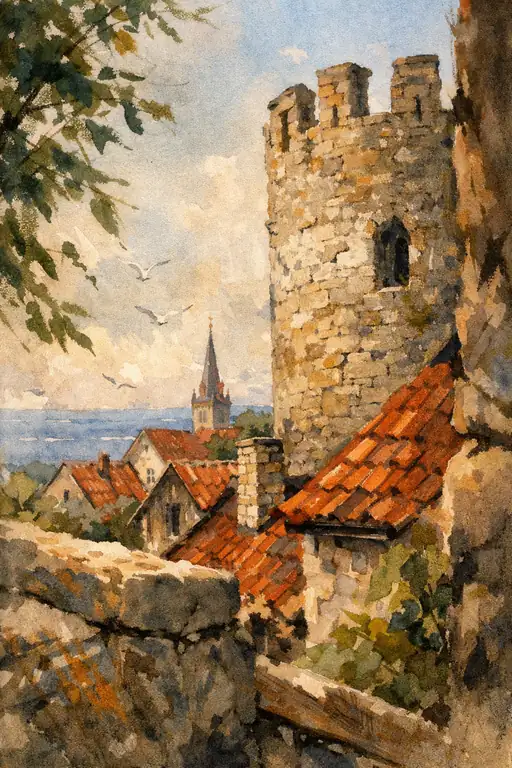 Sentinels of Time: A Memory of Stone and Sky
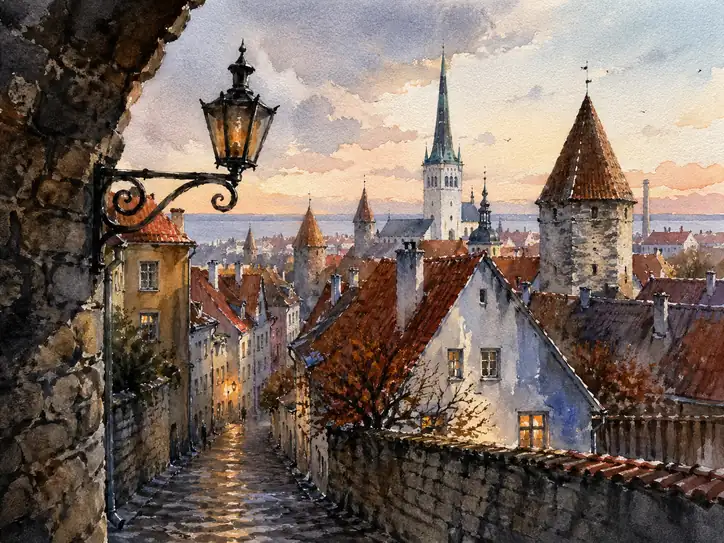 Rainy Stroll in the Old Town
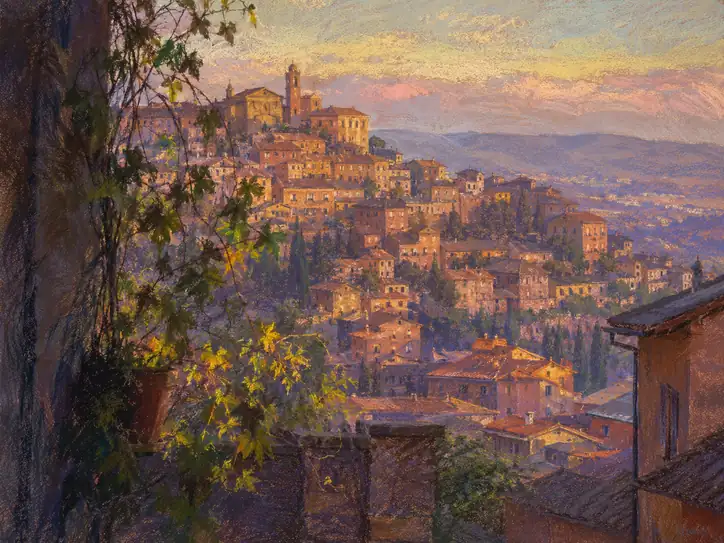 Resonance of the Golden Hillside
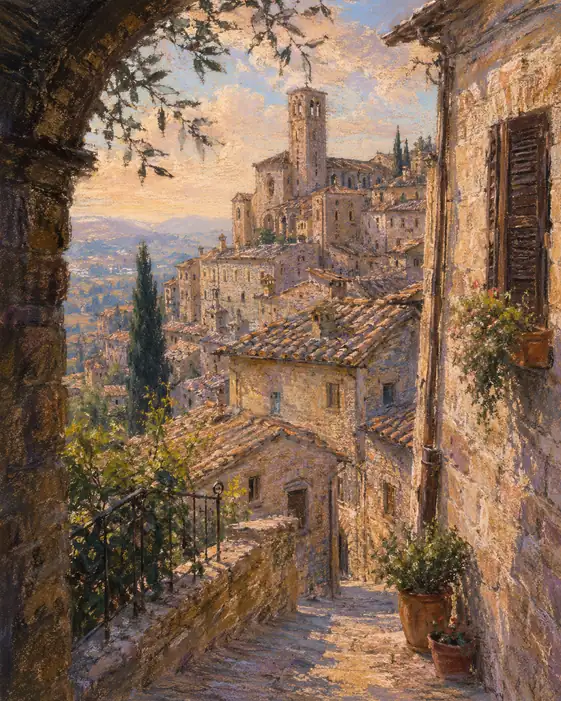 The Golden Gate to Assisi
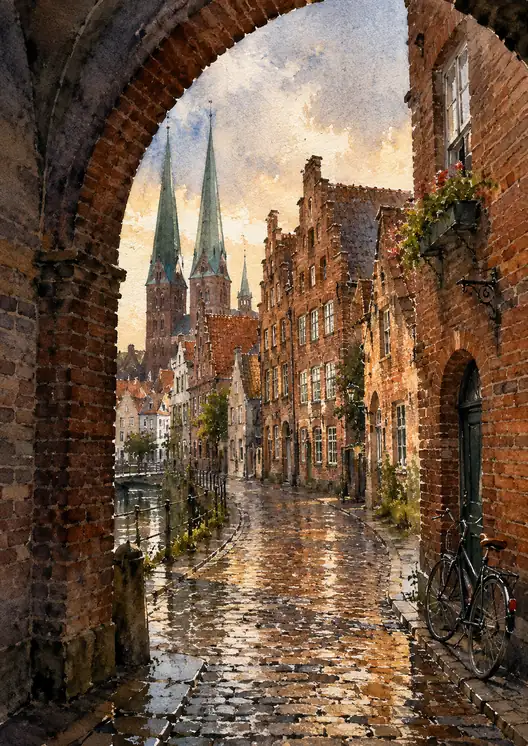 The Arch's Glimpse into Time
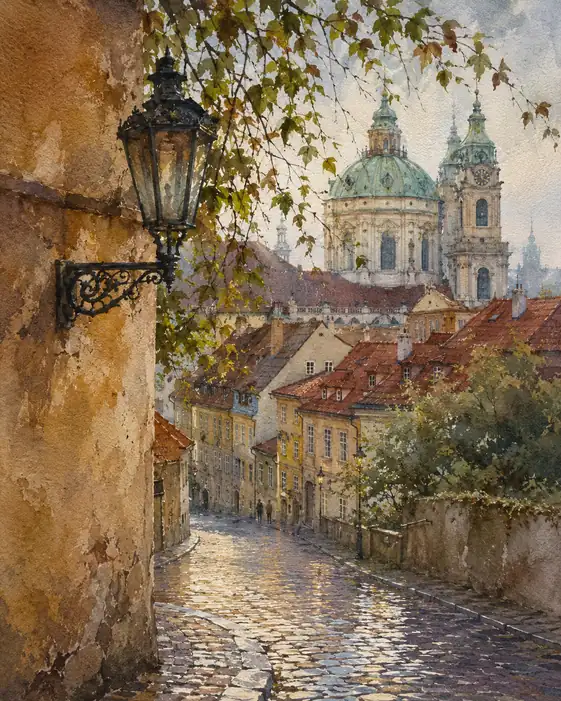 The Silent Guardian of the Misty City
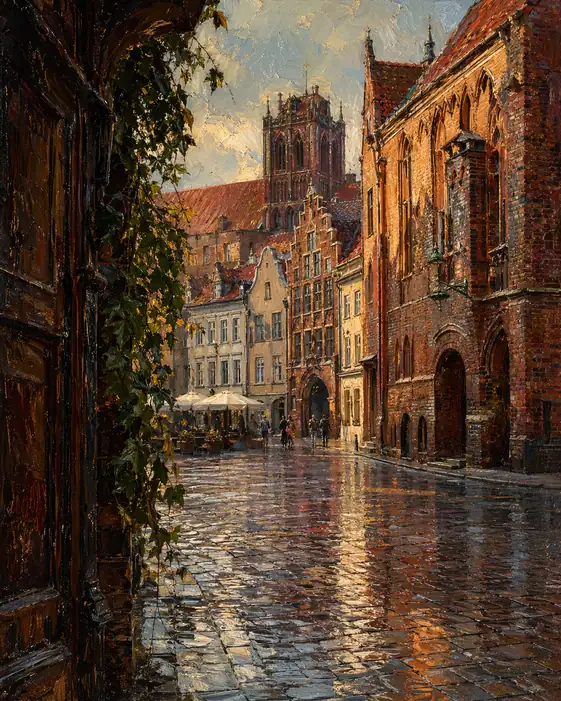 Echoes of the City: Rain and Brick
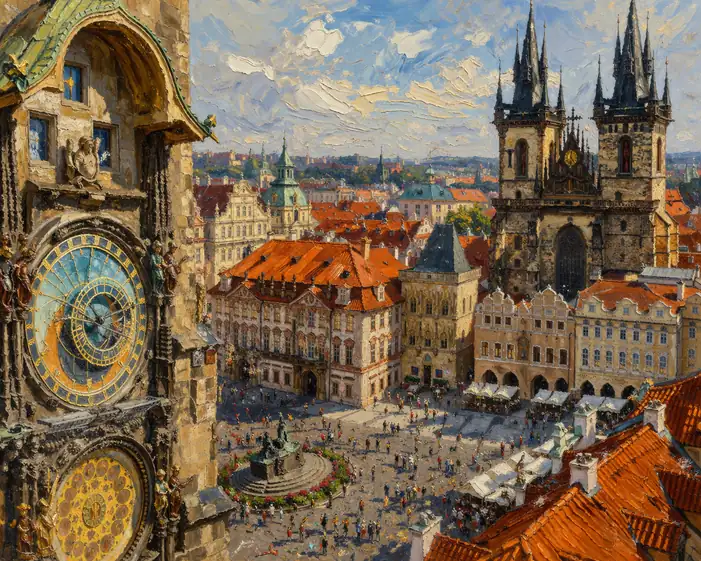 Heartbeat of Old Prague
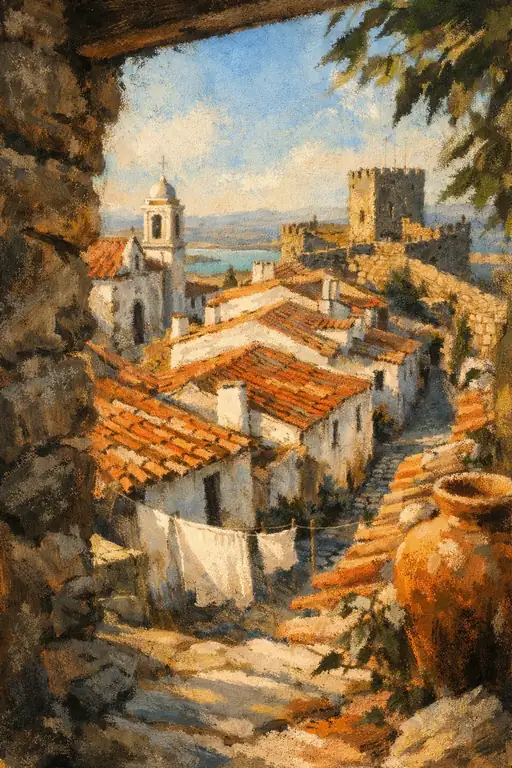 The Timeless Village