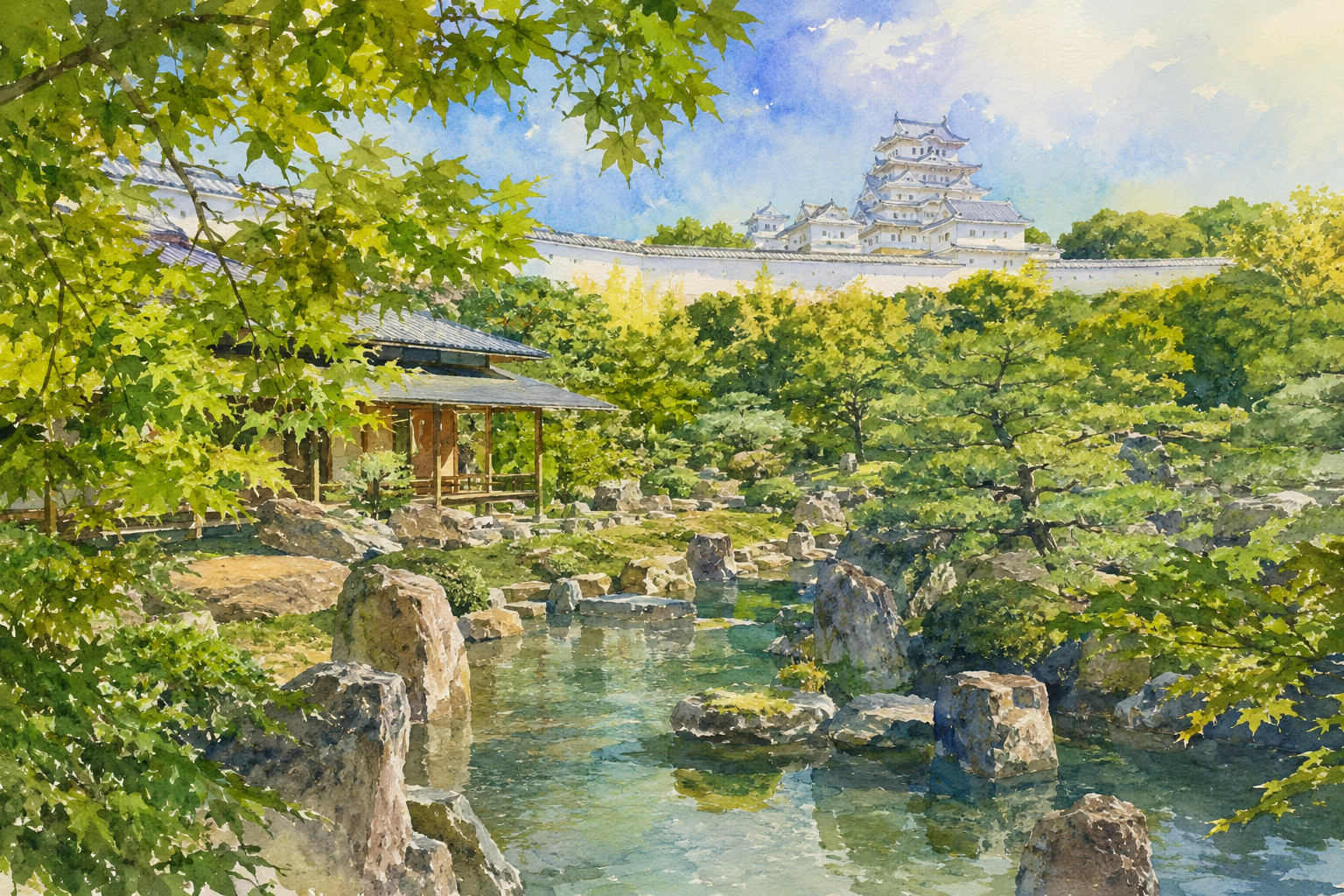
Whispers of the White Heron Castle
Critique
1. Introduction This watercolor painting masterfully depicts a traditional Japanese garden with the iconic Himeji Castle, known as the White Heron Castle, rising in the background. The work juxtaposes the vibrant green maple leaves in the foreground with the pristine white architecture of the distant keep, capturing a harmonious balance between nature and history. The transparent quality inherent in the watercolor medium effectively evokes the cool and refreshing atmosphere of early summer in Japan. 2. Description In the left foreground, maple leaves translucent with sunlight are rendered in fine detail, framing the upper and side portions of the composition. The middle ground features a tranquil pond dotted with large, textured rocks, alongside a traditional wooden pavilion with an open veranda. The surface of the water reflects the surrounding greenery and the sky, suggesting a gentle flow. In the far distance, the white-walled castle stands majestically against a bright blue sky filled with soft white clouds, with its intricate rooflines and surrounding stone walls clearly defined. 3. Analysis The color palette relies on a diverse range of green gradients to express the richness of the garden, which in turn highlights the brilliant white of the castle. The sky, created with delicate watercolor washes and blending, adds a sense of lightness and spatial depth to the scene. The composition uses the foreground foliage as a natural frame, guiding the viewer's eye toward the architectural centerpiece in the background. Additionally, the rhythmic placement of rocks in the pond introduces a dynamic element into an otherwise still and peaceful landscape. 4. Interpretation and Evaluation The painting successfully embodies the Japanese aesthetic of merging nature with architecture through sophisticated technical execution. The artist's observation is particularly keen in the depiction of light passing through the leaves and the complex reflections on the water's surface. By rendering the heavy, historic structure in a light watercolor style, the artist makes the castle feel approachable and integral to the environment rather than imposing. The overall chromatic balance provides the viewer with a profound sense of tranquility and aesthetic satisfaction. 5. Conclusion While the initial focus is drawn to the stark white of the castle, further engagement reveals the incredible detail within the garden and the subtle shifts in light. This work serves as an exceptional example of a watercolor landscape that reinterprets a classic motif with a fresh, contemporary sensitivity.
Same Subcategory
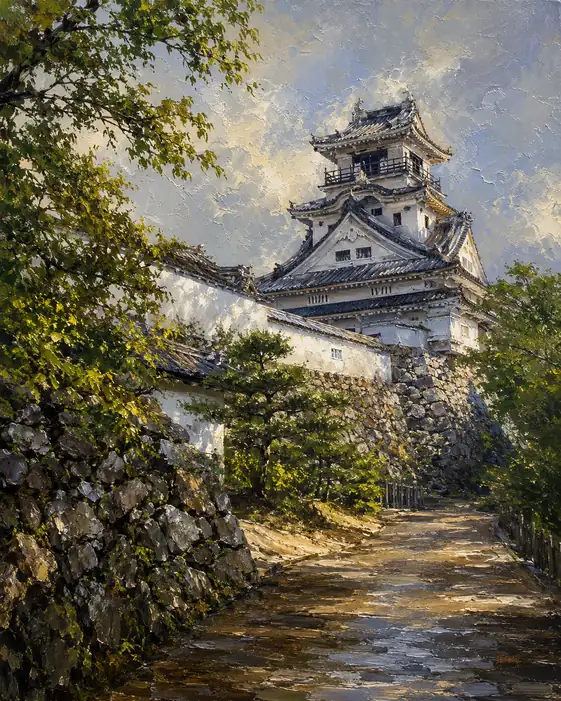 Eternal Fortress of the White Tower
Similar Artworks
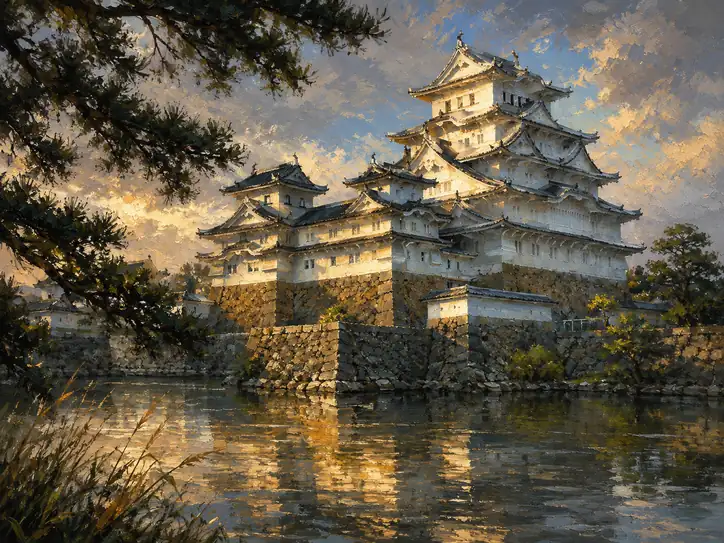 Eternal Gaze in the Amber Sunset
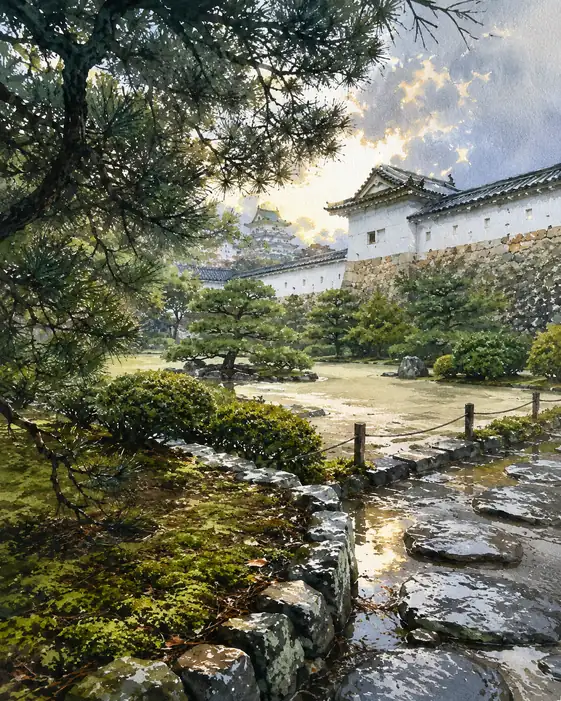 Echoes of the Rain on Castle Stones
 1778778592447
 The Serenity of a Changing Season
 The Heart of the City's Memory
 Eternal Stones, Dancing Petals
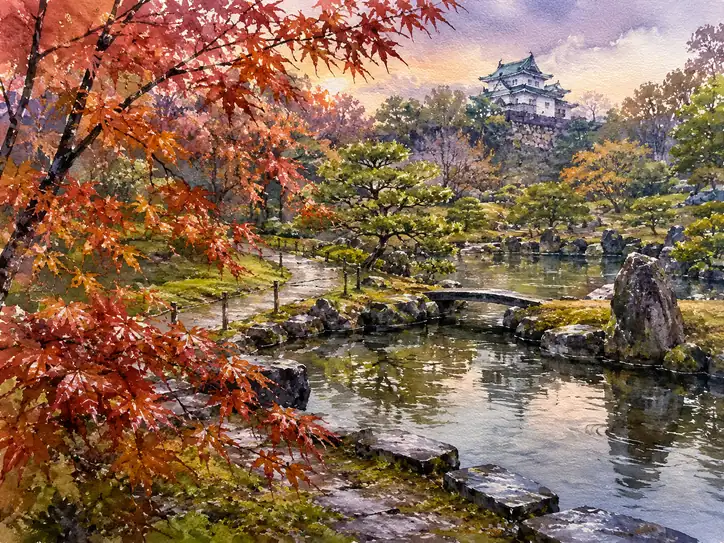 Ephemeral Fire of the Autumn Court
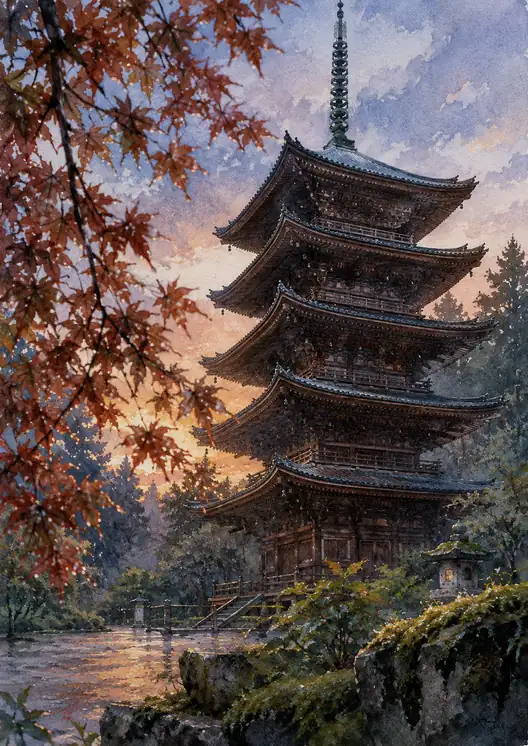 Autumn twilight, the Pagoda’s Silent Prayer
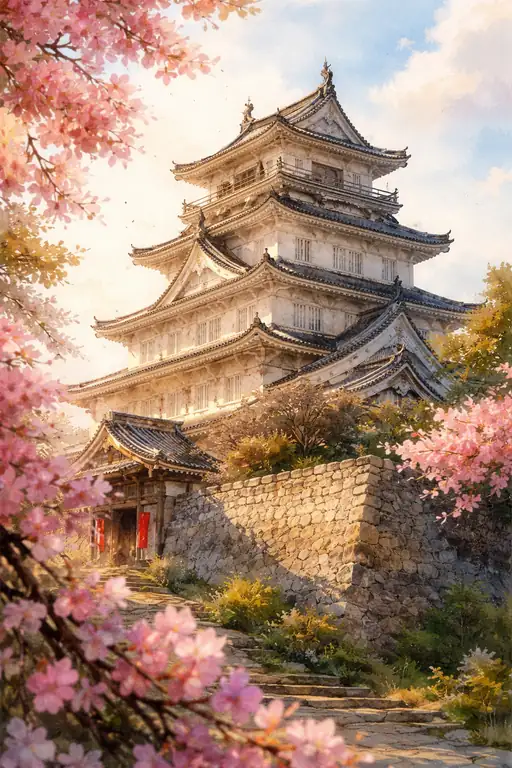 A Fortress of Petals: Harmony in Stone and Bloom
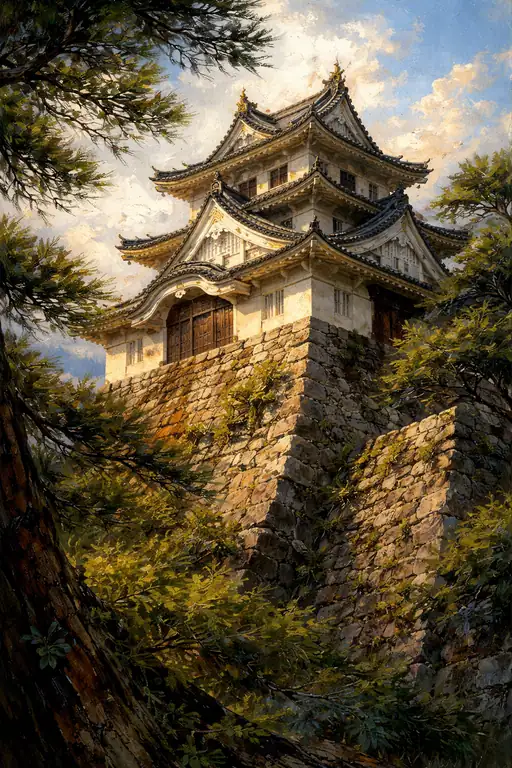 The Silent Sentinel of the Ages