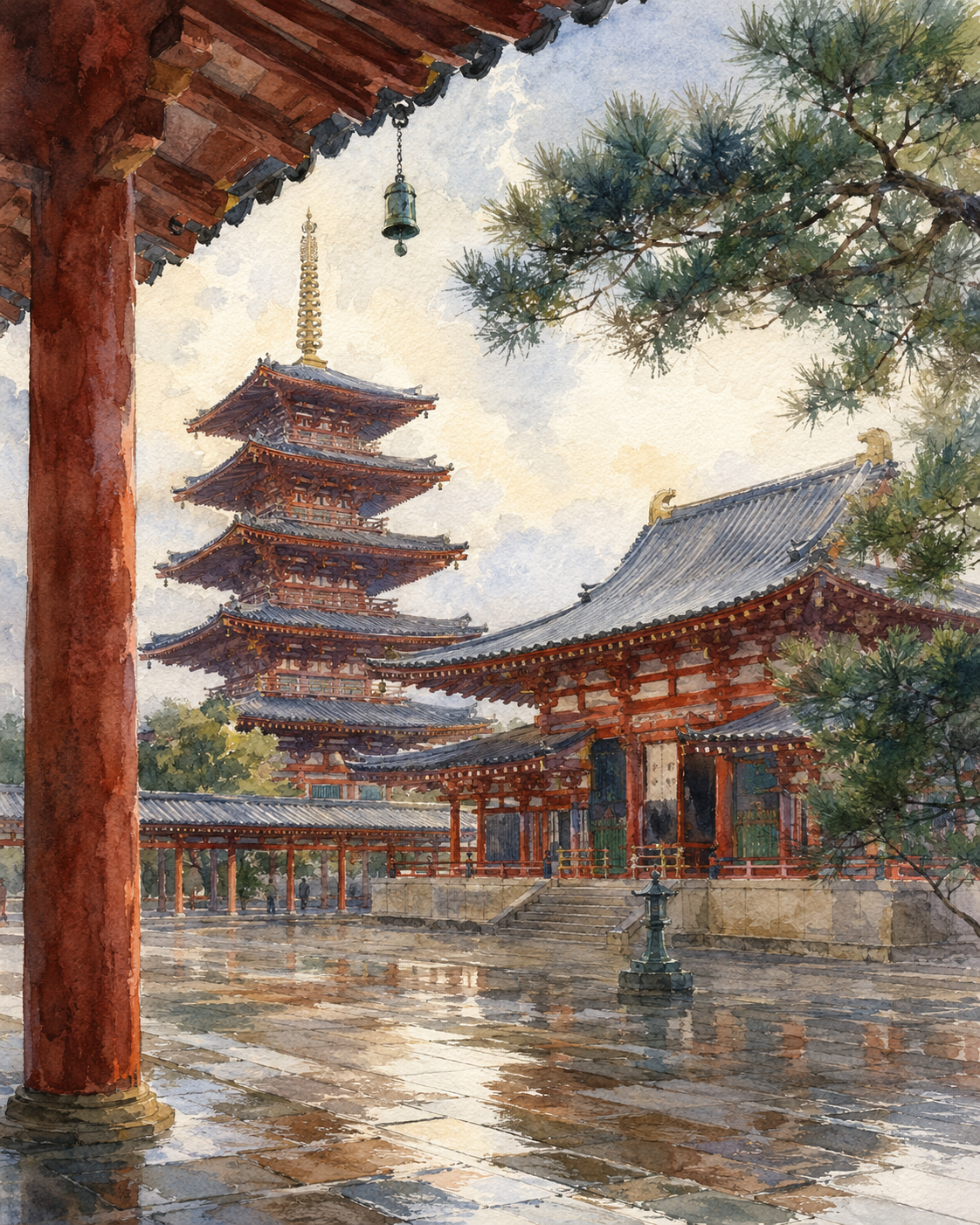
Mirror of the Eternal Tower
Critique
1. Introduction This watercolor painting depicts a grand Japanese temple complex, centered around a majestic five-story pagoda and a traditional main hall. The work captures the dignified atmosphere of a sacred site after a rainfall, emphasizing the reflective qualities of the stone pavement and the detailed architectural elements. The artist utilizes the fluid nature of the watercolor medium to create a sense of depth and atmospheric humidity. This critique focuses on the structural composition and the technical execution of the complex light effects. 2. Description The composition is framed on the left by a massive, weathered red wooden pillar, which establishes a strong vertical anchor and a sense of scale. In the center, the multi-tiered pagoda rises into a soft, cloudy sky, its intricate woodwork rendered with precision. To the right, a large temple building with a dark tiled roof and golden ornaments faces the viewer. The foreground consists of a wide, wet stone plaza that reflects the buildings and the sky, while pine branches on the right add a touch of natural green to the urbanized sanctuary. 3. Analysis Technically, the painting demonstrates a masterful control of washes to depict the wet ground, using horizontal strokes and soft color gradients to mimic reflections. The contrast between the saturated reds of the temple structures and the muted, cool tones of the grey roof tiles and stone floor creates a balanced color harmony. The use of atmospheric perspective is evident in the way the pagoda becomes slightly softer in tone as it ascends. Precise dry-brush techniques are employed to capture the fine details of the roof ornaments and the texture of the wooden pillars. 4. Interpretation and Evaluation The reflection on the wet pavement serves as a visual metaphor for the connection between the earthly realm and the spiritual heights of the pagoda. The choice to frame the scene with the massive pillar invites the viewer to enter the space, creating an immersive experience of being within the temple grounds. The work is highly successful in its rendering of light and texture, effectively conveying the quiet, solemn mood following a storm. While the architectural detail is extensive, the overall scene maintains a painterly quality that avoids being overly clinical. 5. Conclusion The initial focus on the towering pagoda gradually shifts to an appreciation for the subtle light play on the wet stones and the weathered texture of the foreground pillar. The artist successfully navigates the complexities of architectural rendering within the watercolor medium, producing a work that is both technically impressive and emotionally evocative. This piece stands as a sophisticated example of architectural landscape painting that respects classical Japanese design. Ultimately, the painting provides a tranquil and meditative window into the enduring beauty of traditional sacred spaces.
Same Subcategory
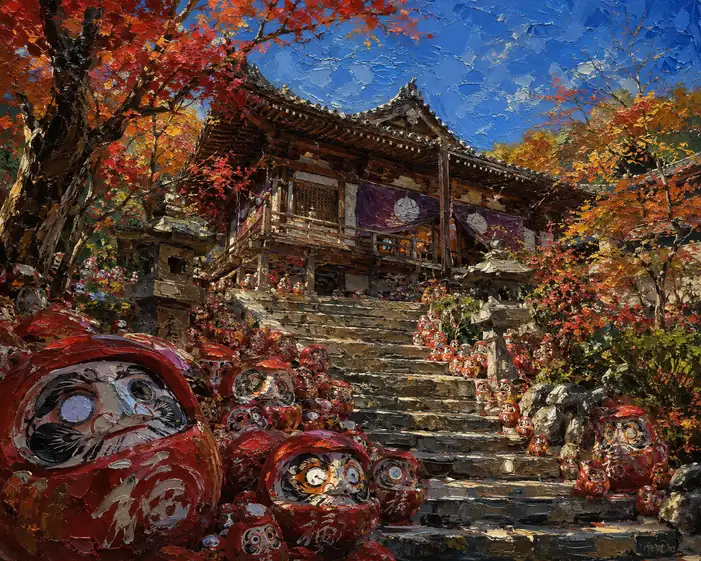 A Thousand Vows to the Autumn Sky
Similar Artworks
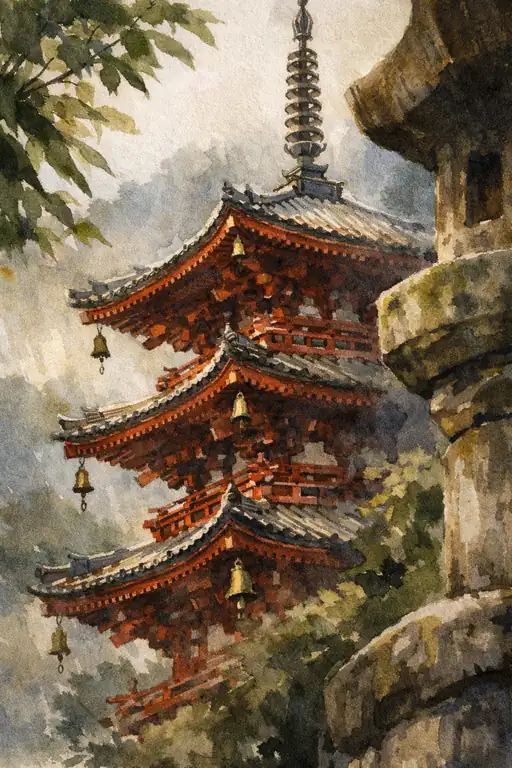 The Silent Watch of the Crimson Tier
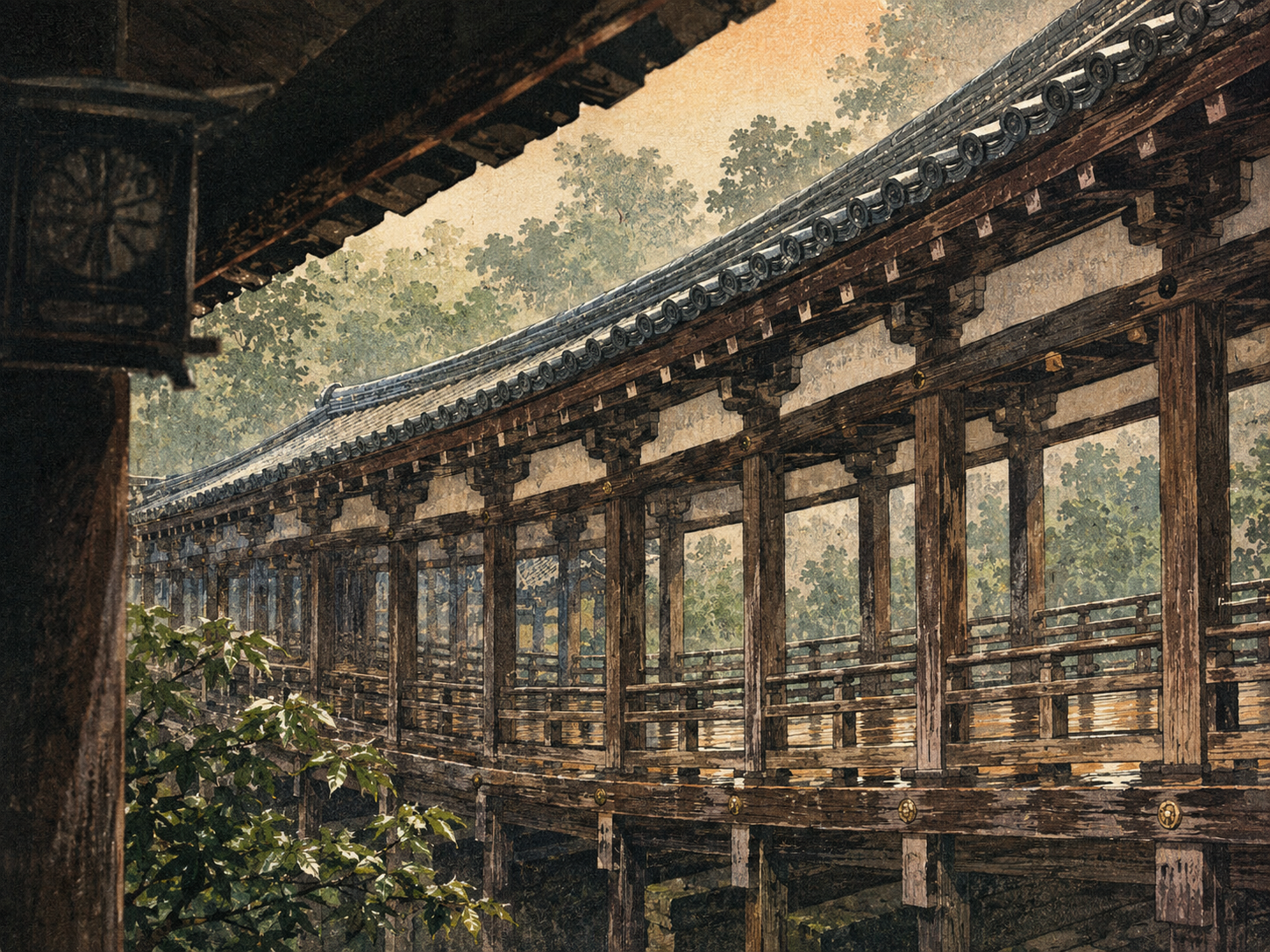 Whispers of the Ancient Corridor
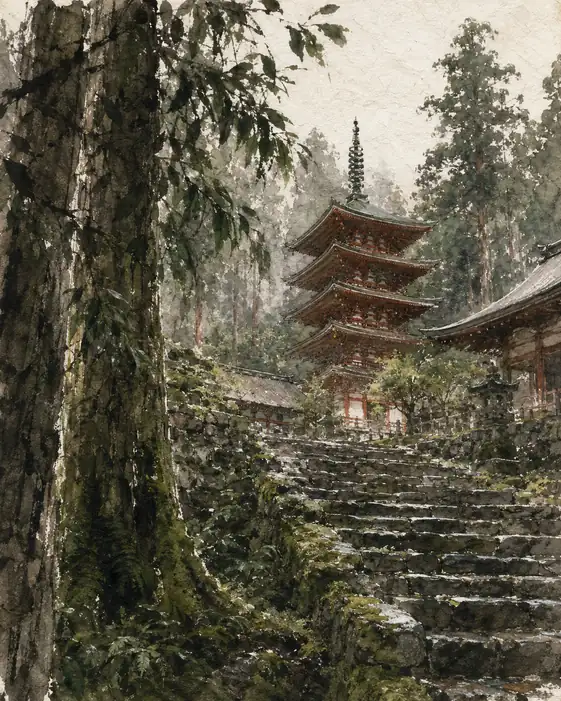 Echoes of Eternity in the Mossy Mist
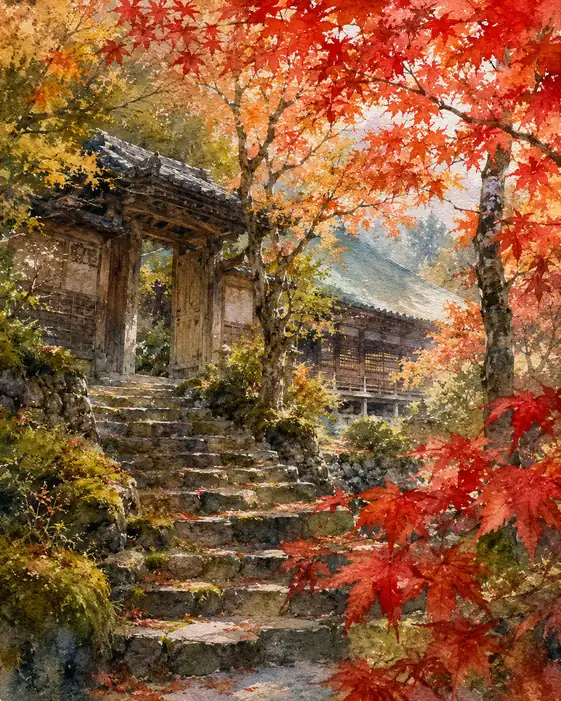 The Crimson Threshold of Silence
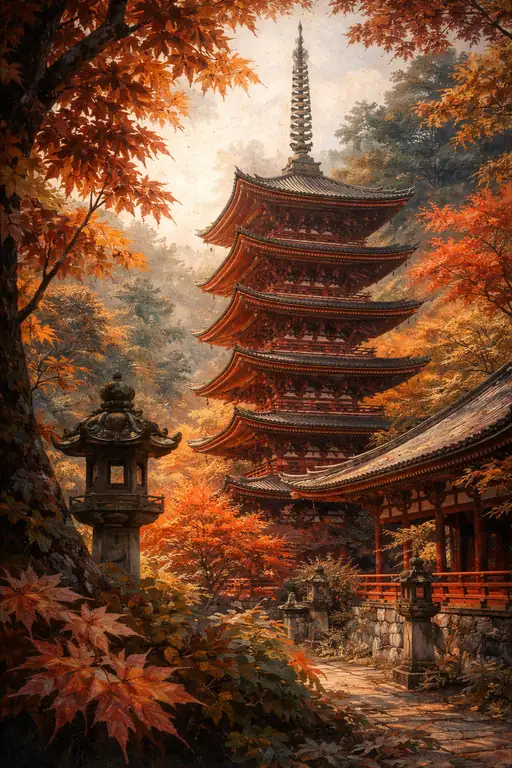 Autumn's Golden Reverie
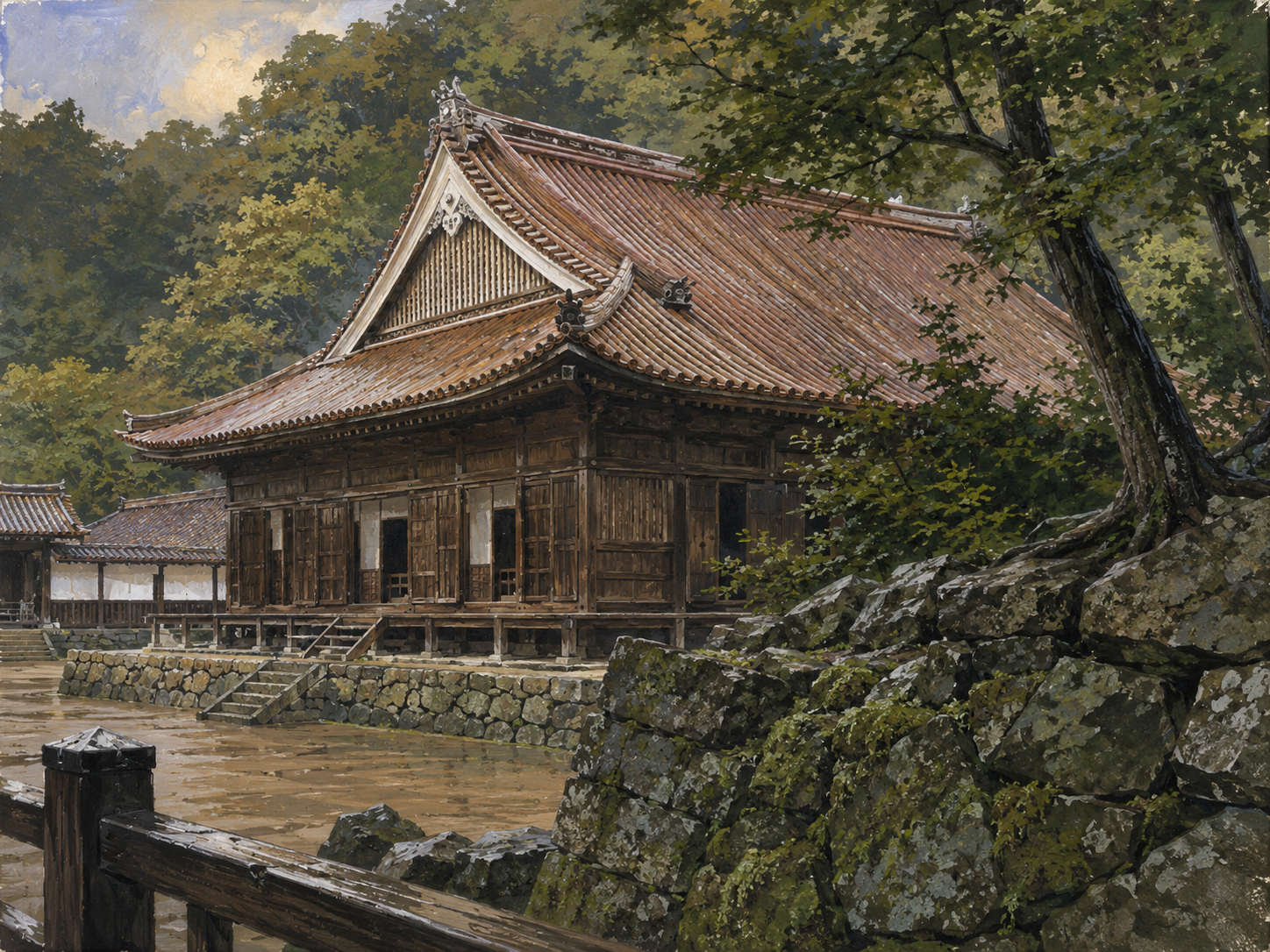 Eternity in the Moss-Covered Hall
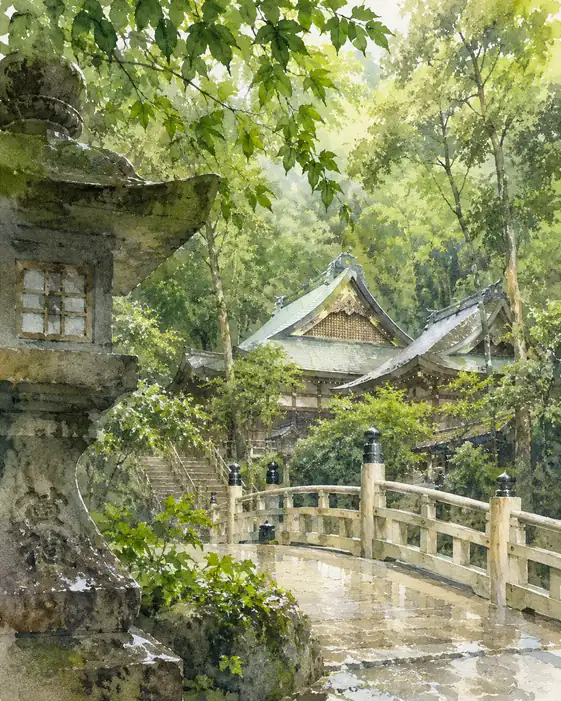 Stillness of the Hidden Sanctuary
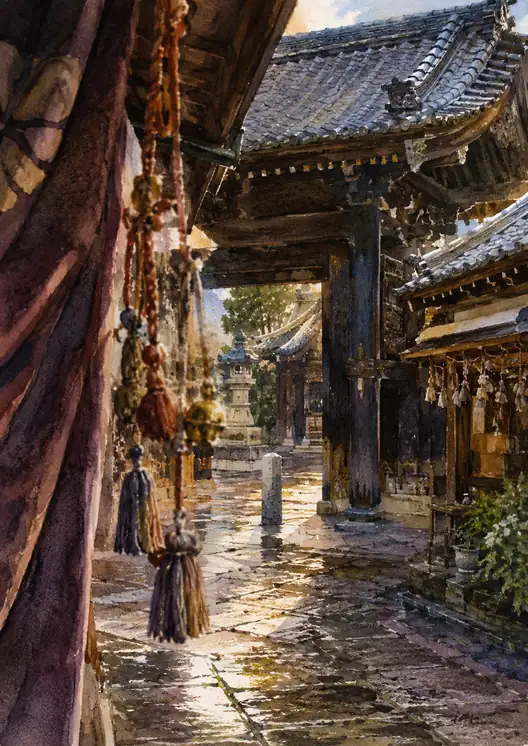 Shadows of the Sacred Path
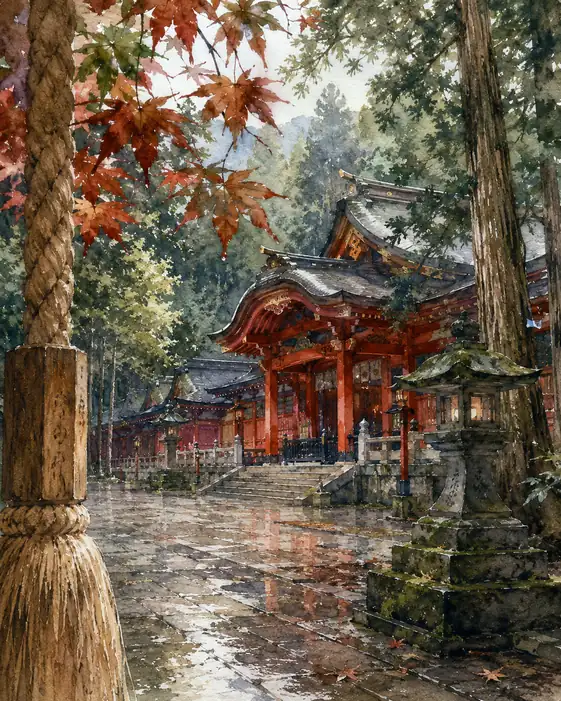 Serenity in the Autumn Rain
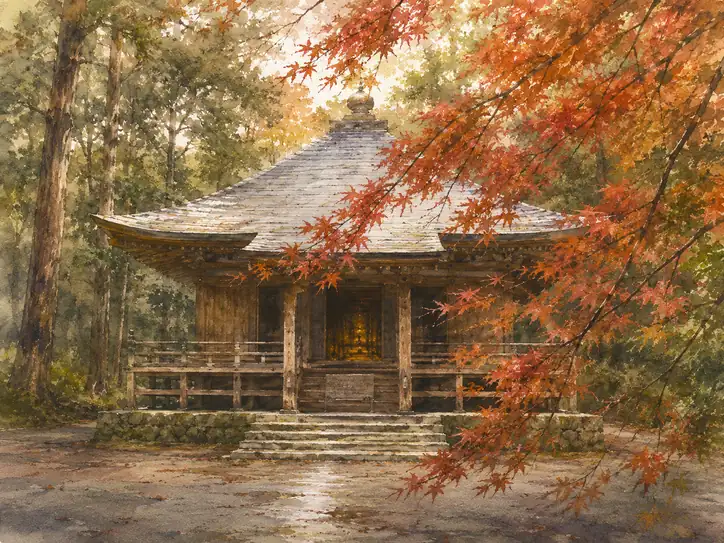 Golden Glow in the Maple Shadows