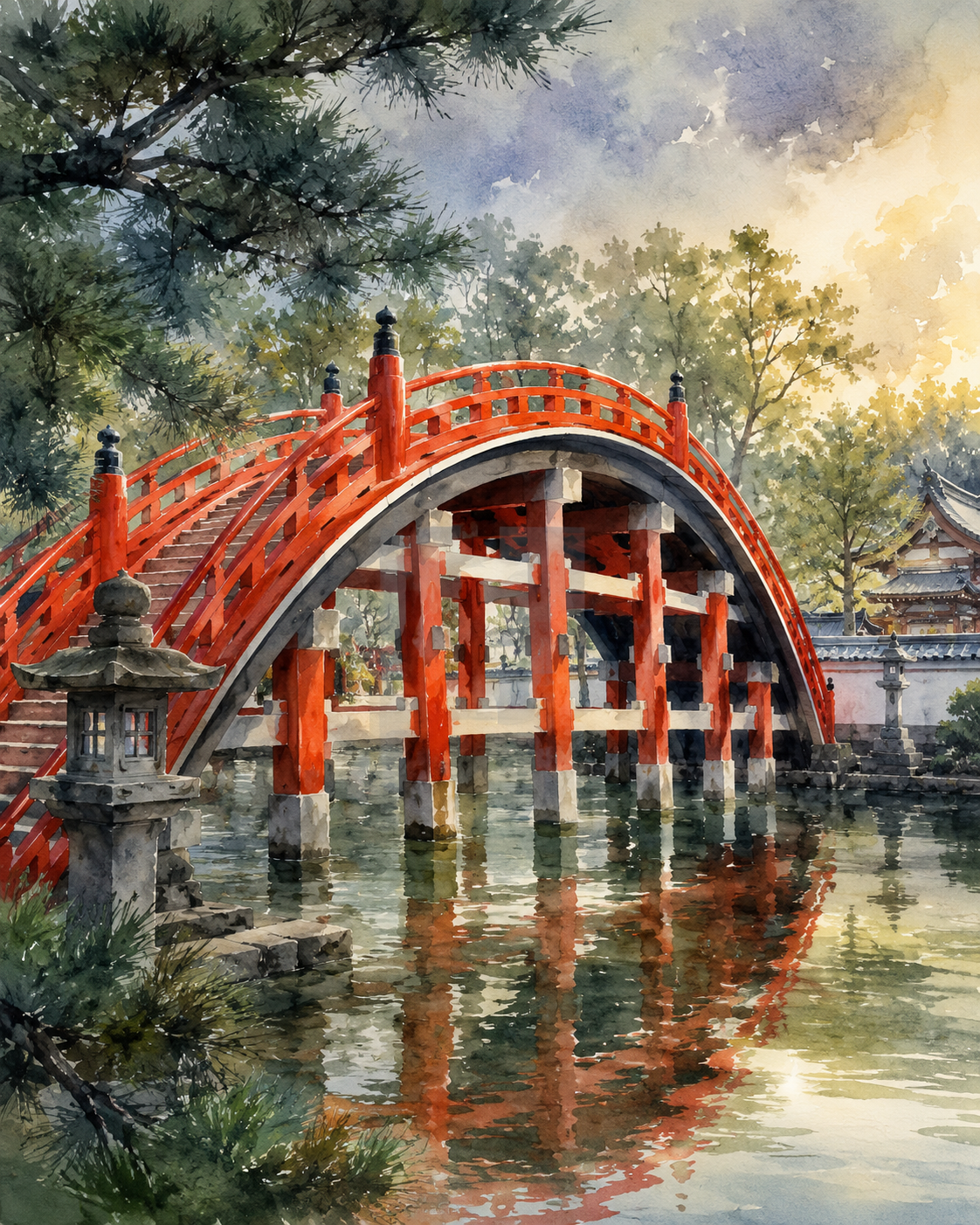
Arching Towards the Eternal
Critique
1. Introduction This watercolor painting presents a serene view of a traditional Japanese arched bridge, known as a soribashi, spanning a quiet pond. The work captures a moment of tranquil beauty, utilizing the delicate textures of the watercolor medium to depict the harmony between man-made structures and the natural environment. The composition focuses on the elegant curve of the crimson bridge, which serves as a vibrant focal point against the soft, atmospheric background. This critique examines the technical handling of light and reflection within the piece. 2. Description The central feature of the painting is a steep, red wooden bridge that arches over a reflective body of water. In the lower left foreground, a weathered stone lantern stands partially obscured by dark pine branches, adding depth to the scene. The background reveals a dense cluster of trees and a traditional roofline of a Japanese building, all rendered in muted, soft tones. The sky is filled with a gentle, warm light that suggests either sunrise or sunset, casting long, detailed reflections of the bridge's support structure onto the water's surface. 3. Analysis Technically, the artist demonstrates a sophisticated use of watercolor washes to create atmospheric perspective and a sense of depth. The red of the bridge is rendered with high saturation, contrasting effectively with the cool, desaturated greens and greys of the surrounding foliage and stone. The reflections in the water are particularly well-executed, using vertical strokes and soft edges to mimic the gentle ripples of the pond. The intricate lattice work of the bridge's undercarriage is captured with precise, thin lines that indicate a high level of draftsmanship. 4. Interpretation and Evaluation The arched bridge symbolizes a passage between the mundane and the sacred, a theme reinforced by the presence of the stone lantern and the traditional architecture. The choice of warm, golden light imbues the scene with a nostalgic and spiritual quality, inviting the viewer to contemplate the stillness of the moment. The painting is highly successful in its balance of detailed architectural rendering and expressive, fluid backgrounds. While the composition is somewhat traditional, the execution of the light and the water's surface elevates the work into a compelling visual narrative. 5. Conclusion The initial impact of the bold red arch leads to a gradual discovery of the subtle light effects and the complexity of the reflections below. The artist successfully manages the inherent challenges of the watercolor medium to produce a work that is both technically sound and emotionally resonant. This piece stands as a fine example of contemporary landscape painting that honors traditional Japanese aesthetics through a fresh, painterly approach. Ultimately, the painting offers a peaceful and immersive experience that celebrates the enduring beauty of classical garden design.
Same Subcategory
Similar Artworks
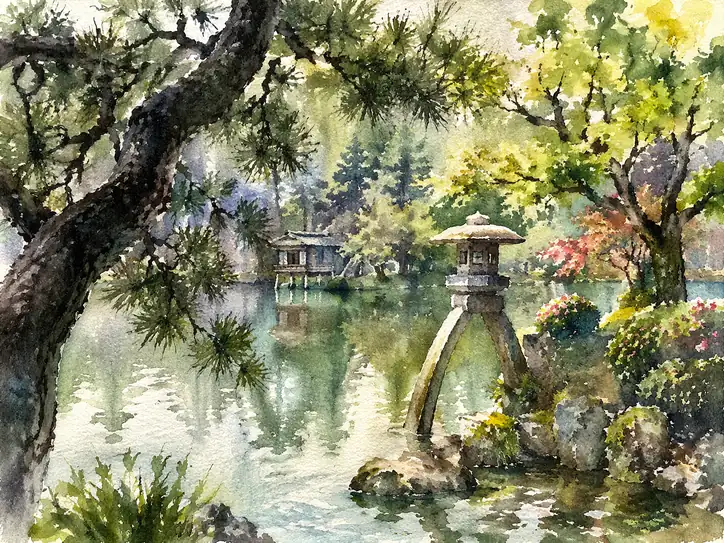 Quiet Reflections by the Stone Guardian
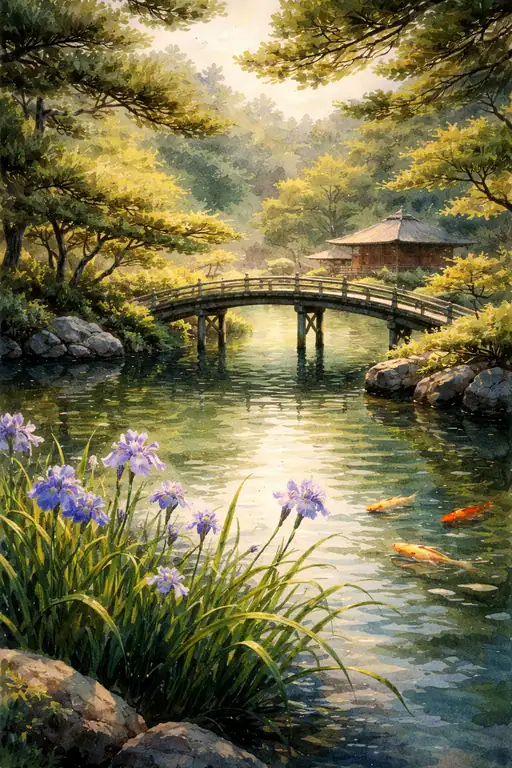 Whispers of the Golden Pond
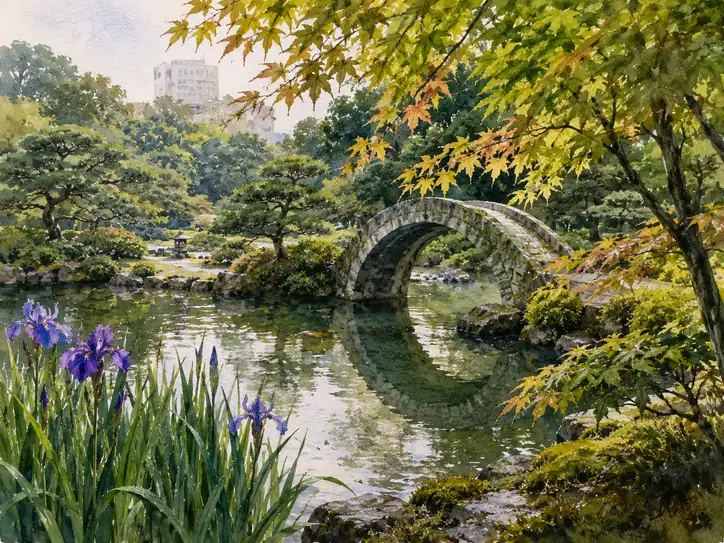 Where the Heart Finds Its Circle
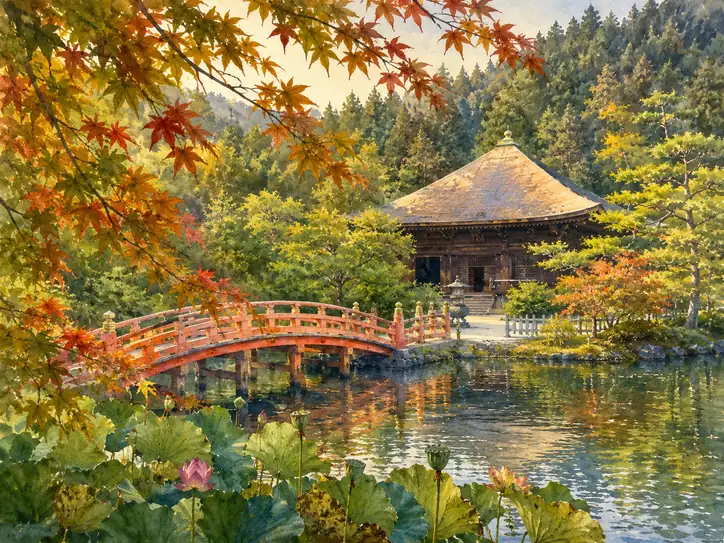 Whispers of the Crimson Autumn
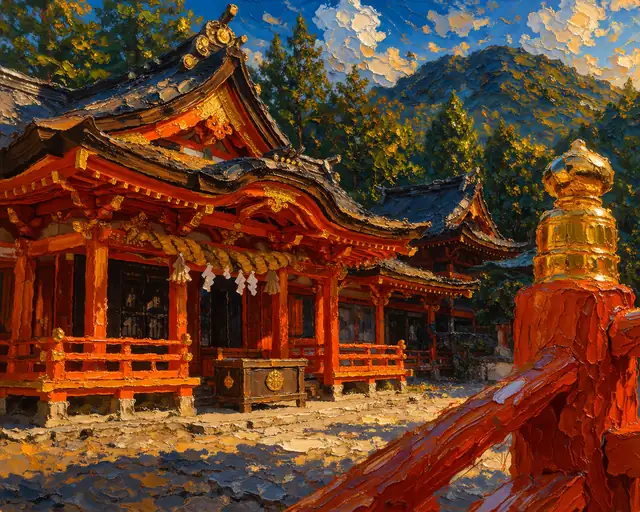 Vermilion Splendor in the Sacred Woods
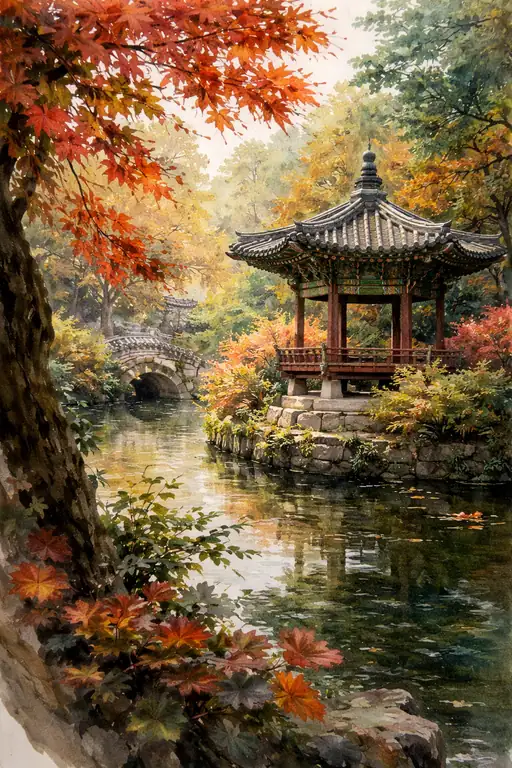 Crimson Leaves Reflected in Autumn's Mirror
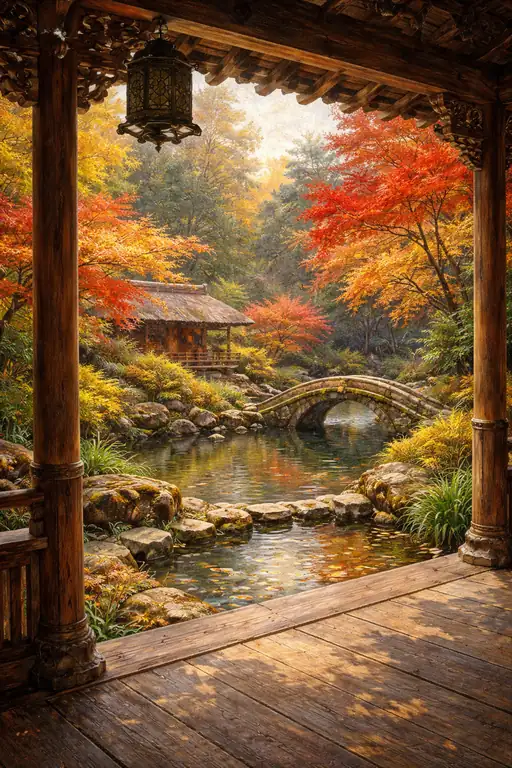 Crimson Reflections
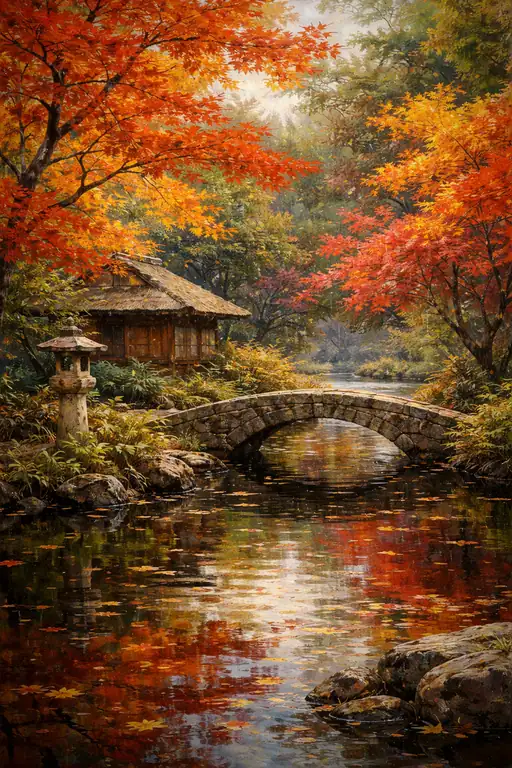 Serenity Reflected in the Fiery Autumn Waters
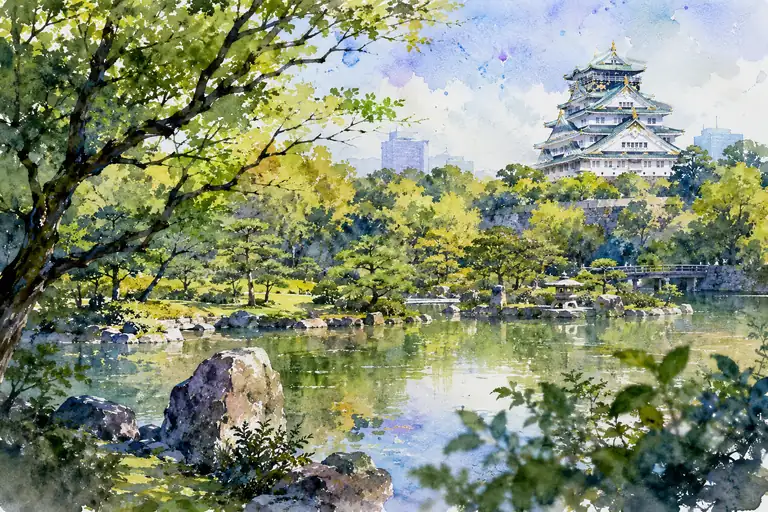 The Heart of the City's Memory
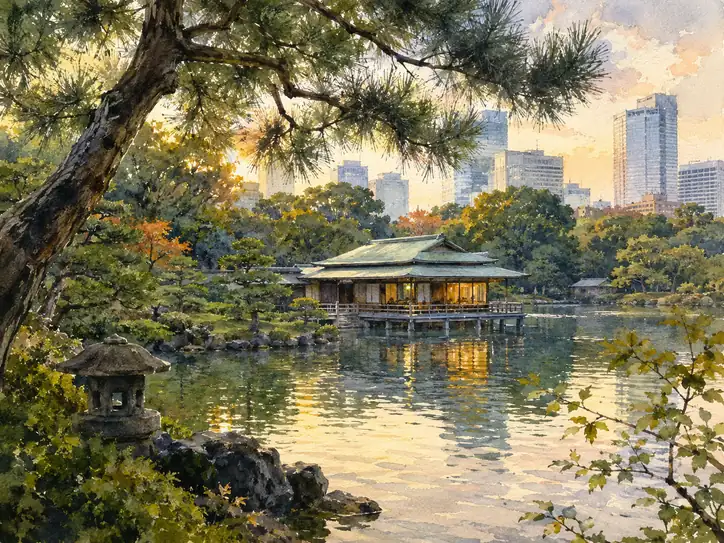 Twilight Sanctuary Between Eras