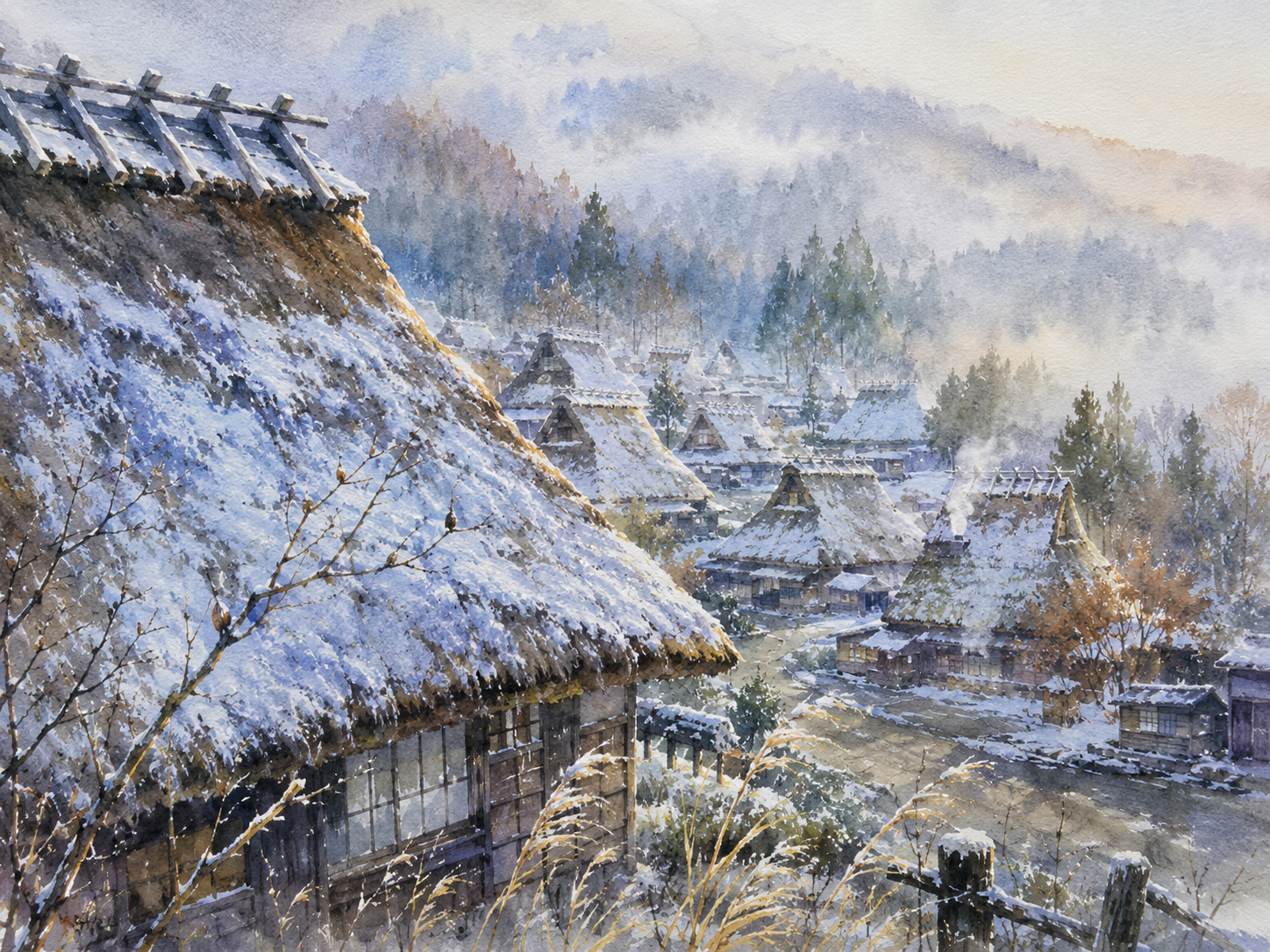
The Silence of White Dreams
Critique
1. Introduction This watercolor painting depicts a tranquil winter scene in a traditional Japanese village, featuring the iconic steeply pitched thatched roofs known as "gassho-zukuri." The artwork captures the quiet beauty of a remote mountain settlement blanketed in a heavy layer of fresh snow. Through a masterly use of soft washes and delicate textures, the piece evokes a sense of cold, crisp air and the profound silence that accompanies a winter landscape. 2. Description The composition is anchored by a large, snow-covered roof in the immediate left foreground, which leads the eye into a cluster of similar structures nestled in a valley. Smoke rises faintly from one of the chimneys, suggesting a cozy life within the frozen environment. The background is composed of soft, misty mountains and dense pine forests, partially obscured by low-hanging clouds and winter haze. The color palette is dominated by cool blues, soft purples, and the stark white of the snow, contrasted with the warm browns of the thatched roofs. 3. Analysis Technically, the painting excels in its representation of various snowy textures, from the thick, pillowy mounds on the roofs to the thin dusting on the foreground branches. The artist utilizes the transparency of watercolors to create a sense of depth and atmospheric perspective, particularly in the treatment of the distant mountains. The play of light is subtle, with a soft, diffused glow that suggests an overcast winter day, emphasizing the monochromatic harmony of the scene. 4. Interpretation and Evaluation This work successfully conveys the resilience and charm of traditional Japanese rural life. The repetitive forms of the roofs create a strong geometric foundation that is softened by the organic shapes of the snow and trees. The technical skill required to maintain such clarity while working with a limited, cool color scheme is impressive. The painting not only documents a specific architectural style but also captures the emotional essence of the winter season. 5. Conclusion In conclusion, the artwork is a poignant and beautifully executed tribute to the winter heritage of Japan's mountain regions. The initial impression of a cold, isolated world is balanced by the warmth suggested by the village structures and the rising smoke. This piece remains a testament to the artist's ability to transform a simple landscape into a deeply atmospheric and evocative experience, celebrating the quiet strength of nature and tradition.
Same Subcategory
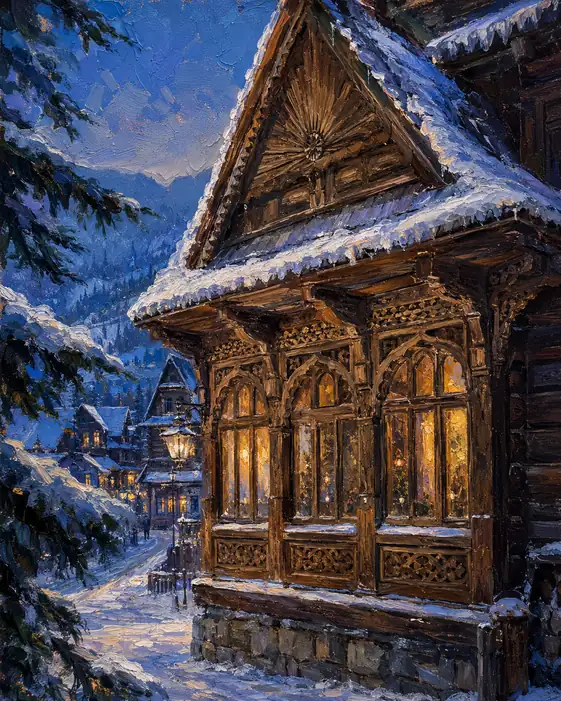 A Sanctuary in the Indigo Night
Similar Artworks
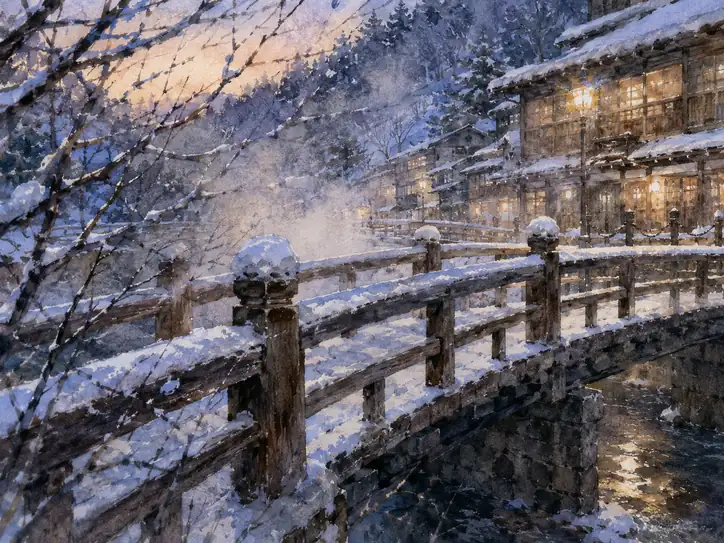 Twilight Serenity at the Snowy Inn
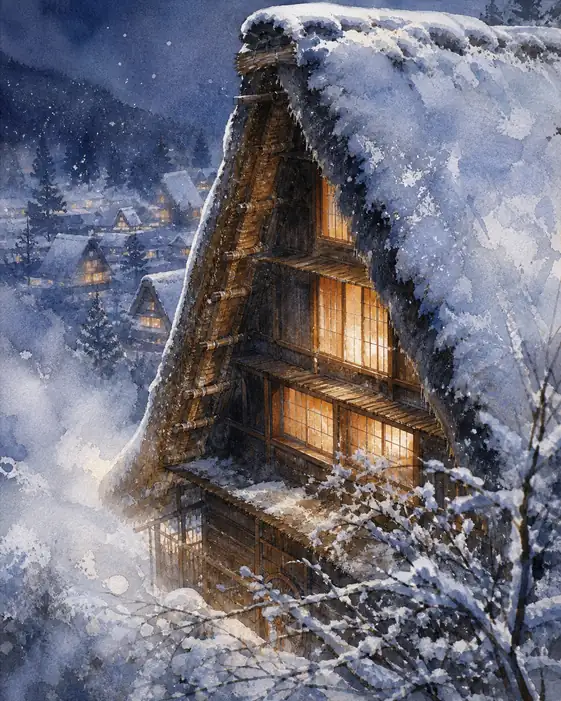 The Amber Vigil of the Snowy Hamlet
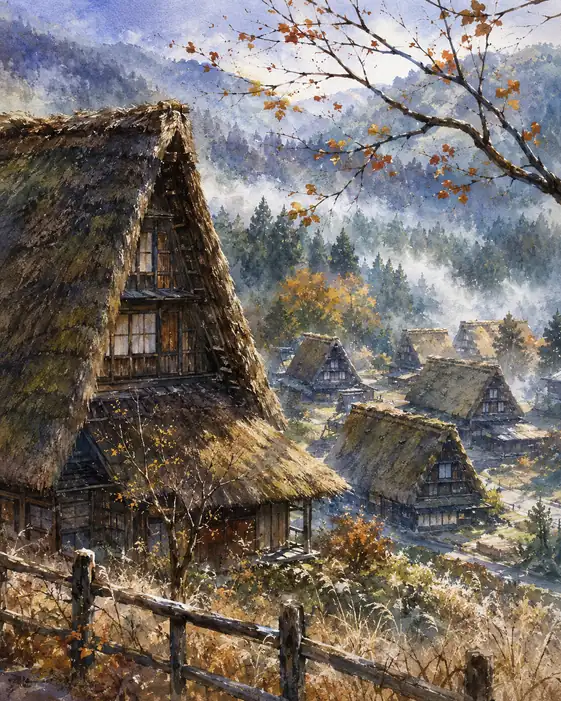 Echoes of the Thatch: A Misty Autumn Memory
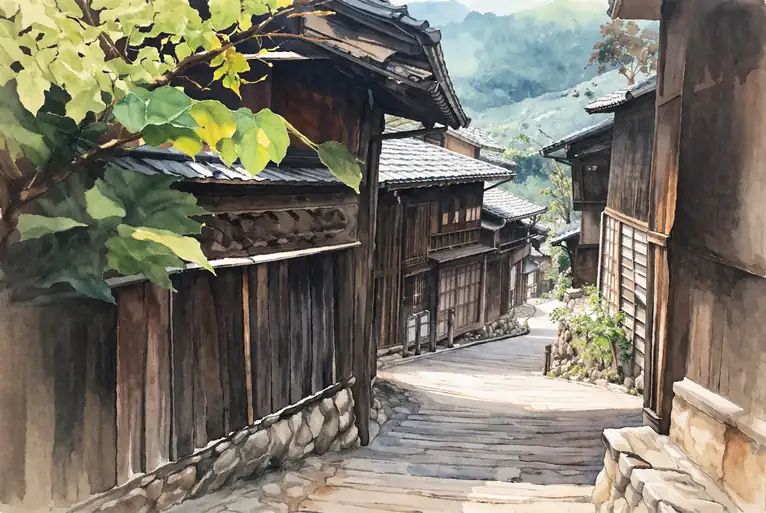 Echoes of the Sloping Town
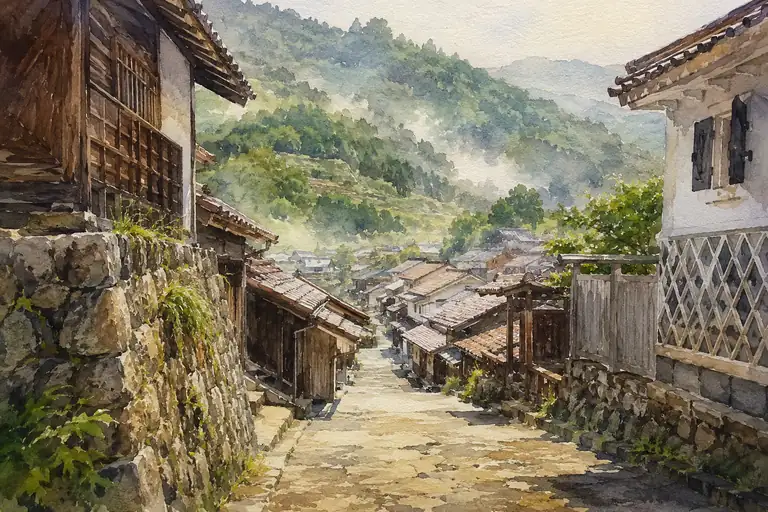 Echoes of the Ancient Path
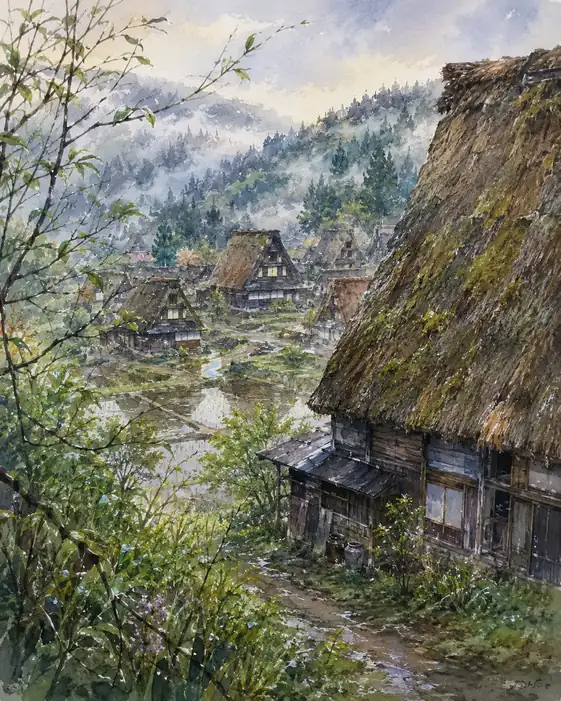 Mirror of the Verdant Heart: Morning at the Water's Edge
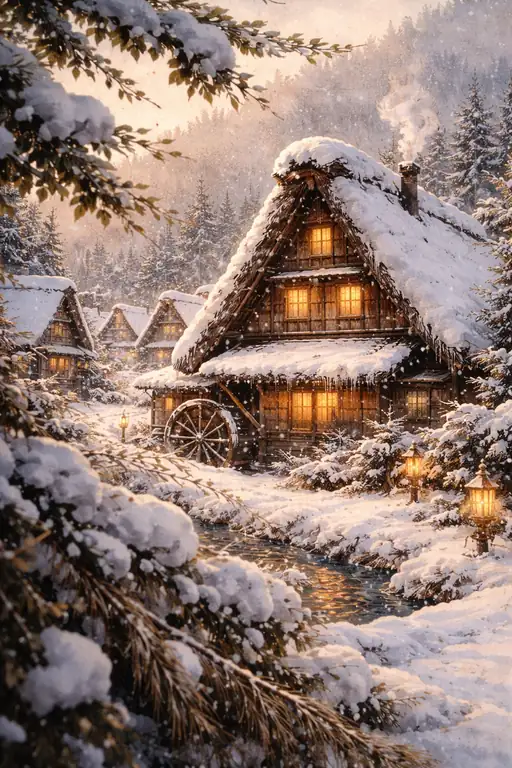 The Glowing Heart of the Frozen Valley
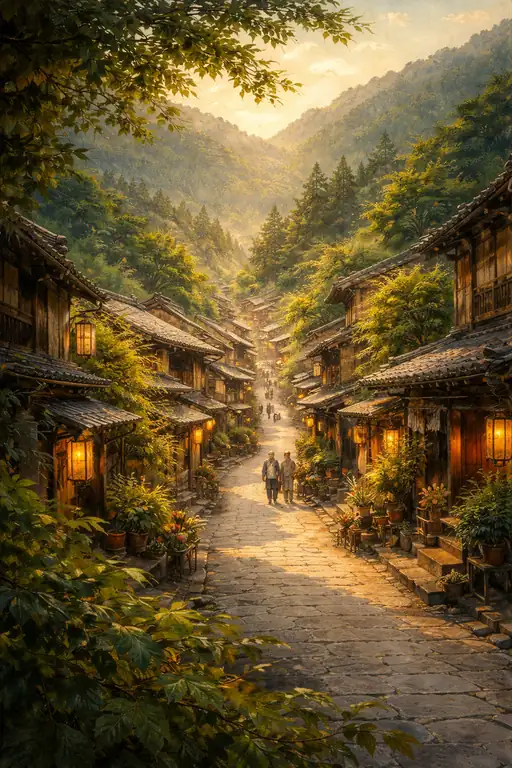 The Warm Embrace of Yesterday's Valley
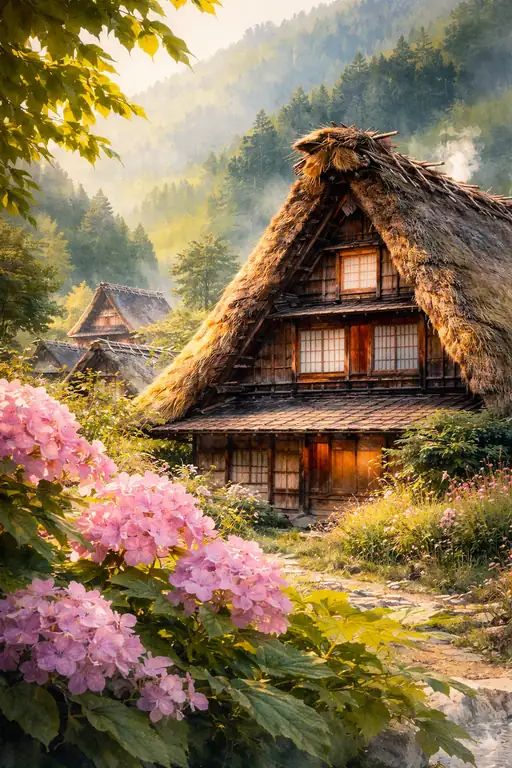 Summer Bloom Beneath the Thatched Eaves
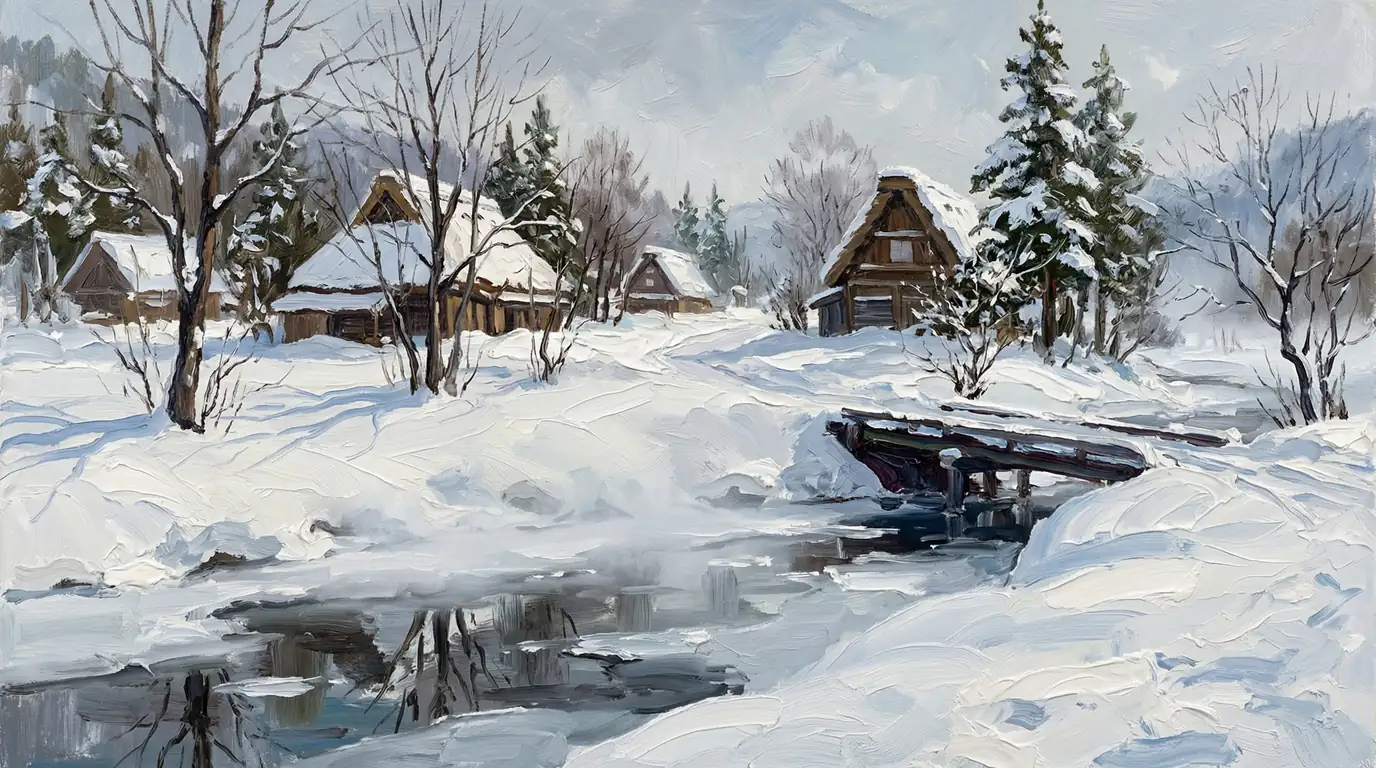 Nostalgic Slumber of the Snowy Hamlet