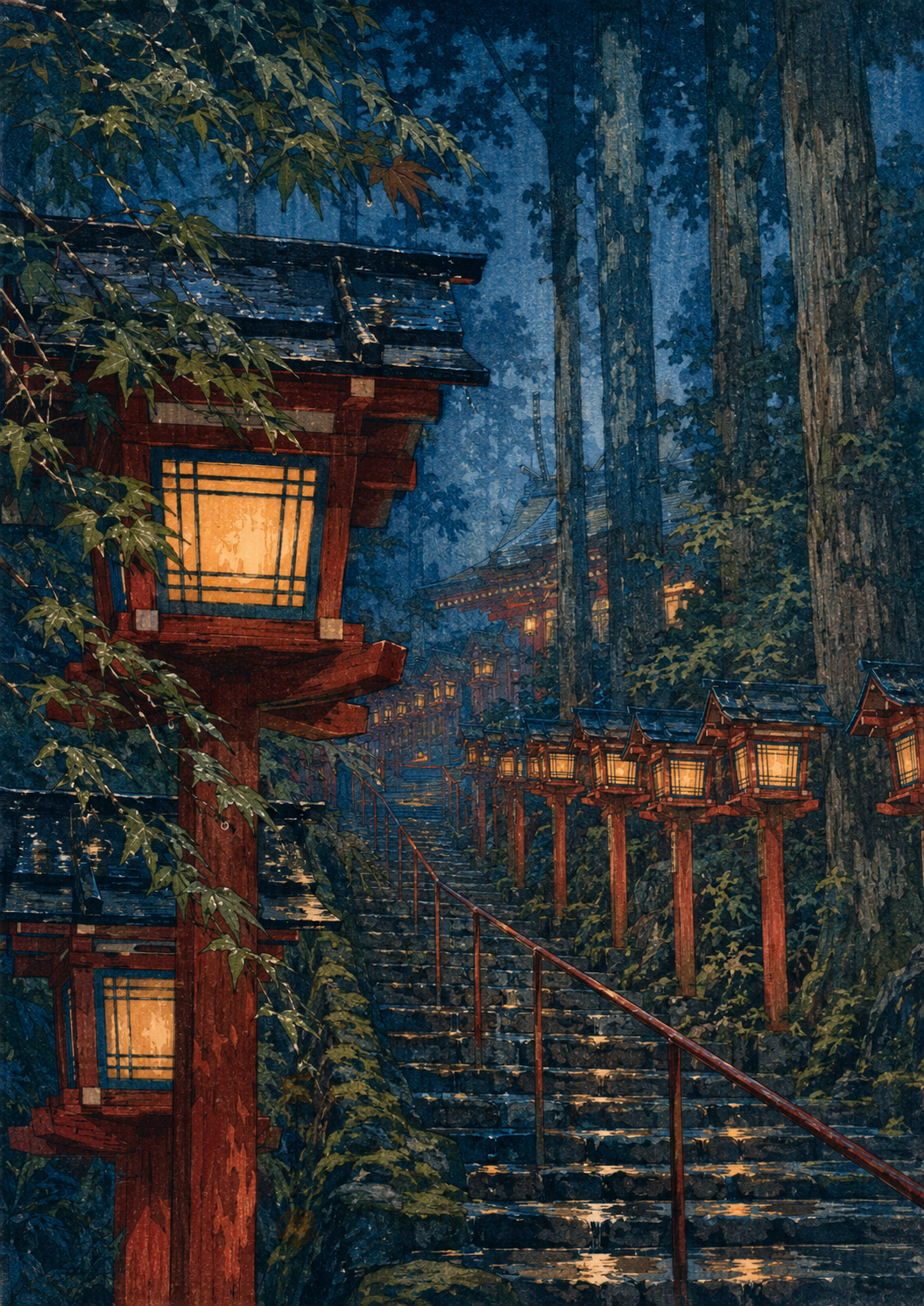
Lanterns Guiding the Sacred Night
Critique
Introduction This landscape painting beautifully captures the approach to a Shinto shrine or temple as night descends. The contrast between the warm glow of the standing lanterns and the deep blue of the mist-laden forest invites the viewer into a mystical, otherworldly space. Seeking the beauty of traditional Japanese nightscapes, this work revives the lyrical atmosphere found in classic shin-hanga prints. The canvas conveys the stillness after a rain and the solemn, tense air unique to sacred sites. Description Stone steps, wet and glistening, stretch upward through the center of the frame. On either side, vermillion wooden lanterns stand in orderly rows, their inner lights emitting a soft orange glow. In the background, towering cedar trees rise vertically, with the roofs of shrine buildings faintly emerging between them. In the left foreground, wet maple leaves overlap, shining glossily as they catch the light from the nearby lantern. The surfaces of the stone steps reflect the lamplight, bathing the entire pathway in a pale golden radiance. Analysis Regarding composition, the diagonal lines created by the stairs and the rows of lanterns provide the image with a strong sense of depth and upward movement. In terms of color, the contrast between the deep blue and the vibrant orange—nearly complementary colors—dramatically emphasizes the warmth of the lamps against the cold night air. The depiction of light is particularly exceptional, showing precise calculations of light diffusion from the lanterns, the texture of wet stone, and the falling shadows of the trees. The brushwork is precise yet maintains a unified lyrical tone throughout. Interpretation and Evaluation This work can be interpreted as an expression of spiritual tranquility within a place of prayer rather than a mere documentary landscape. The rows of lanterns serve both as symbols of hope illuminating the darkness and as markers connecting the mundane world to the sacred realm. The artist's descriptive power is outstanding, especially in capturing the texture of water and the interference of light, providing a reality that appeals to the senses. While handling a traditional theme, the modern sensibility in capturing light establishes a unique aesthetic. Conclusion As one continues to observe the piece, the perspective shifts from the simple beauty of the light to the solemn feeling of ascending the approach step by step. The contrast between the abyss of the night forest and the flickering lamps teaches us the beauty of the moment when human activity and natural mystery harmonize. Ultimately, this work is a highly artistic achievement resulting from exceptional light expression and respect for tradition. The transition from the vivid brilliance of the first impression to a deeper silence proves the multifaceted charm of the work.
Same Subcategory
 Sentinel of a Thousand Seasons
Similar Artworks
 Threshold of the Ancient Silence
 Sanctuary of the Ancient Cedars
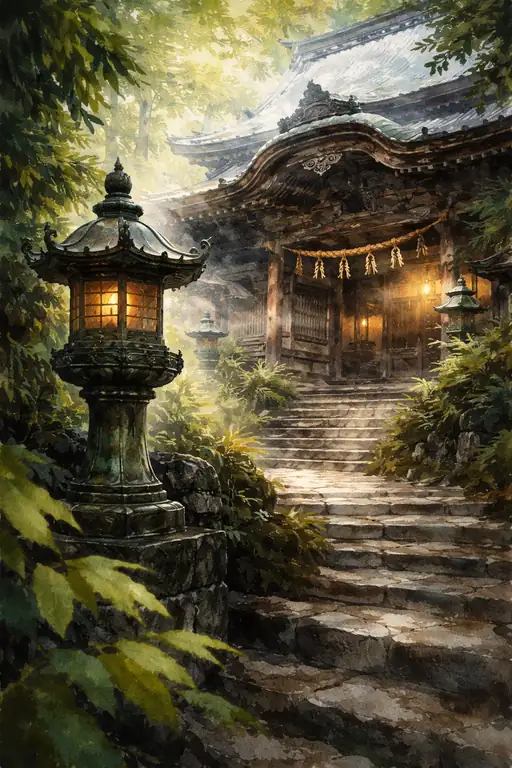 Sanctuary of the Silent Forest
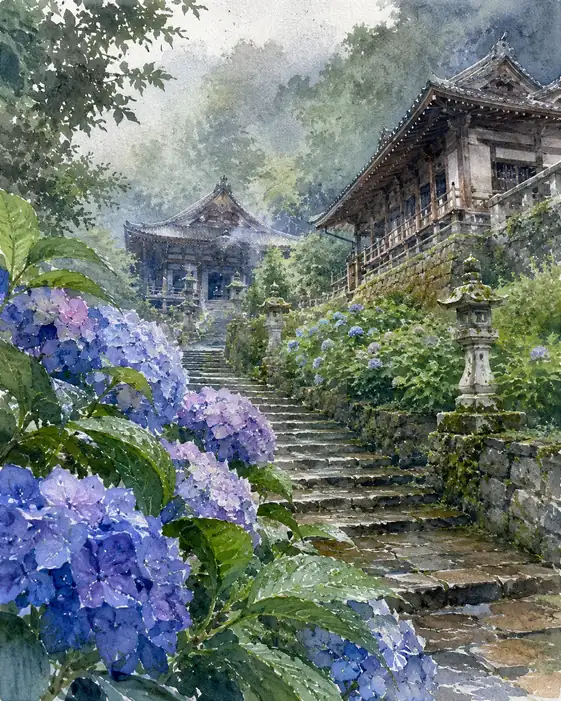 Lullaby in the Azure Rain
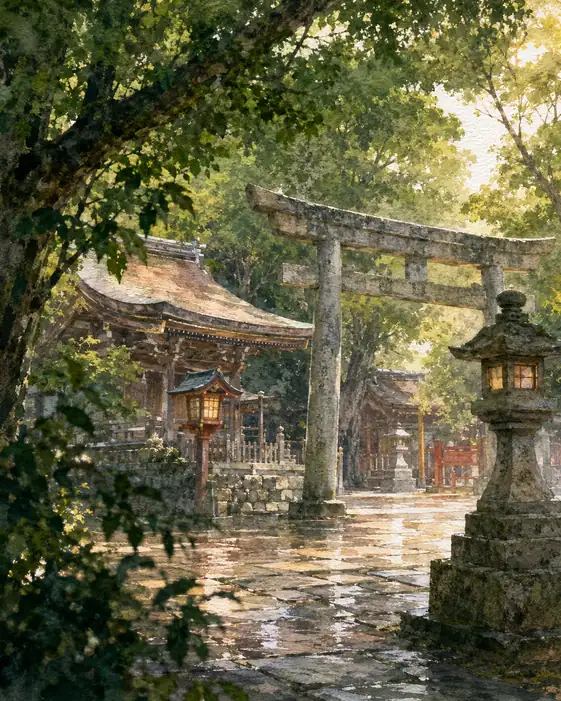 Sanctuary in the Emerald Mist
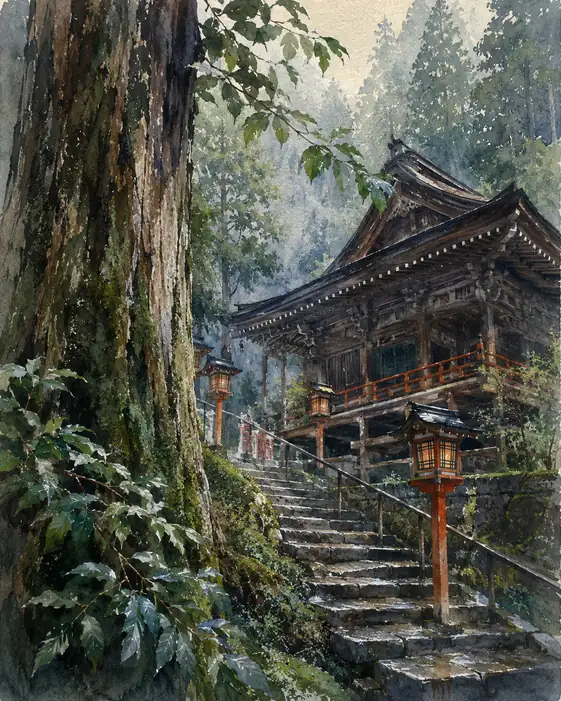 Guardian of the Ethereal Mist
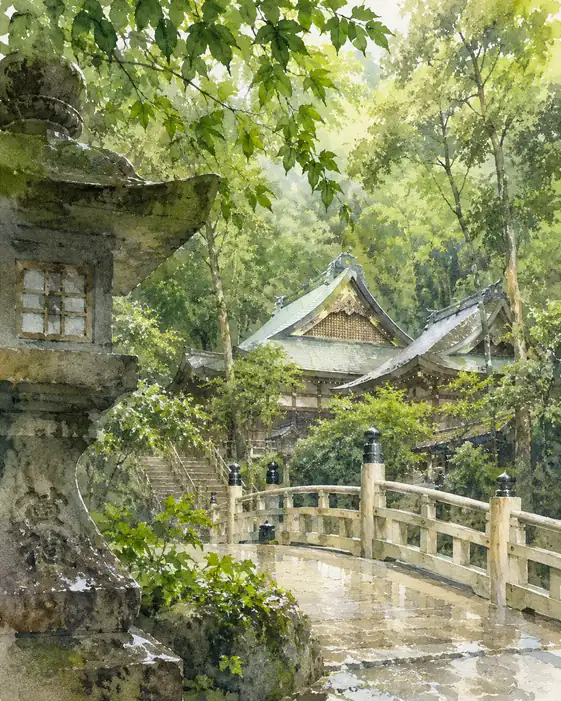 Stillness of the Hidden Sanctuary
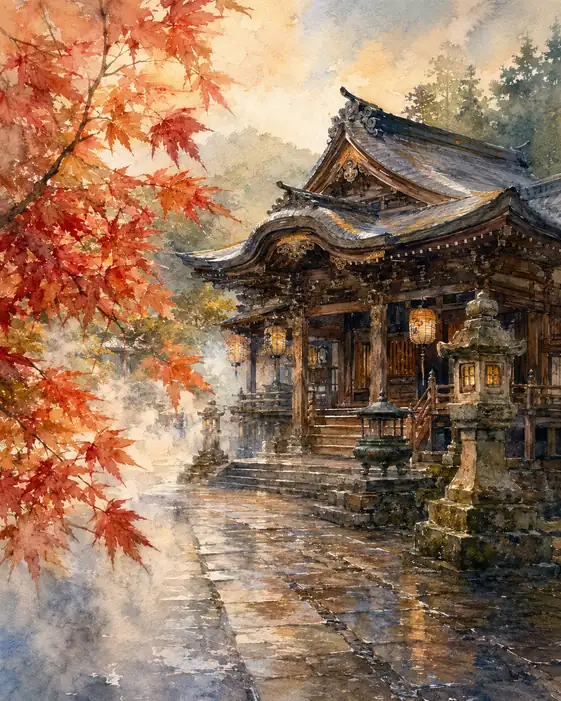 Fleeting Crimson, Eternal Prayer
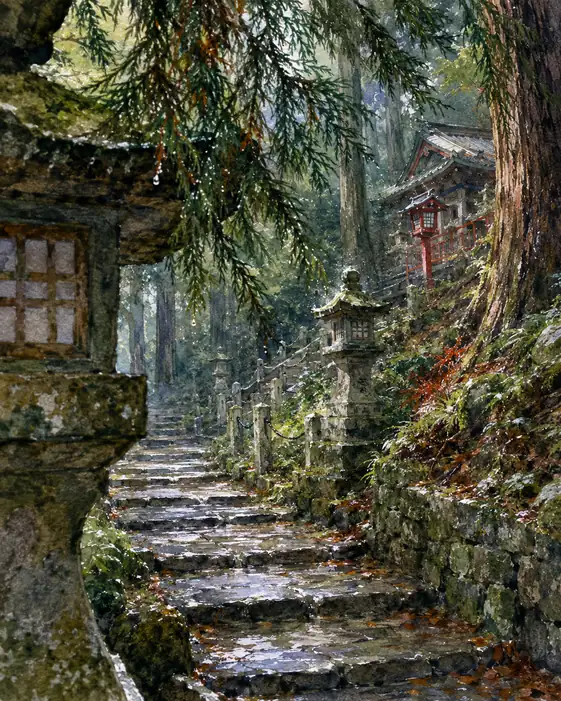 Purifying Whispers of the Sacred Rain
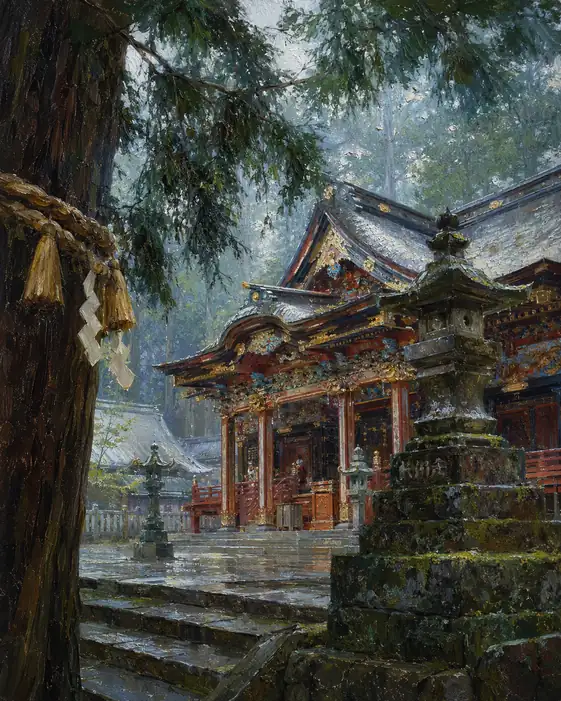 Whispers of the Misty Sanctuary