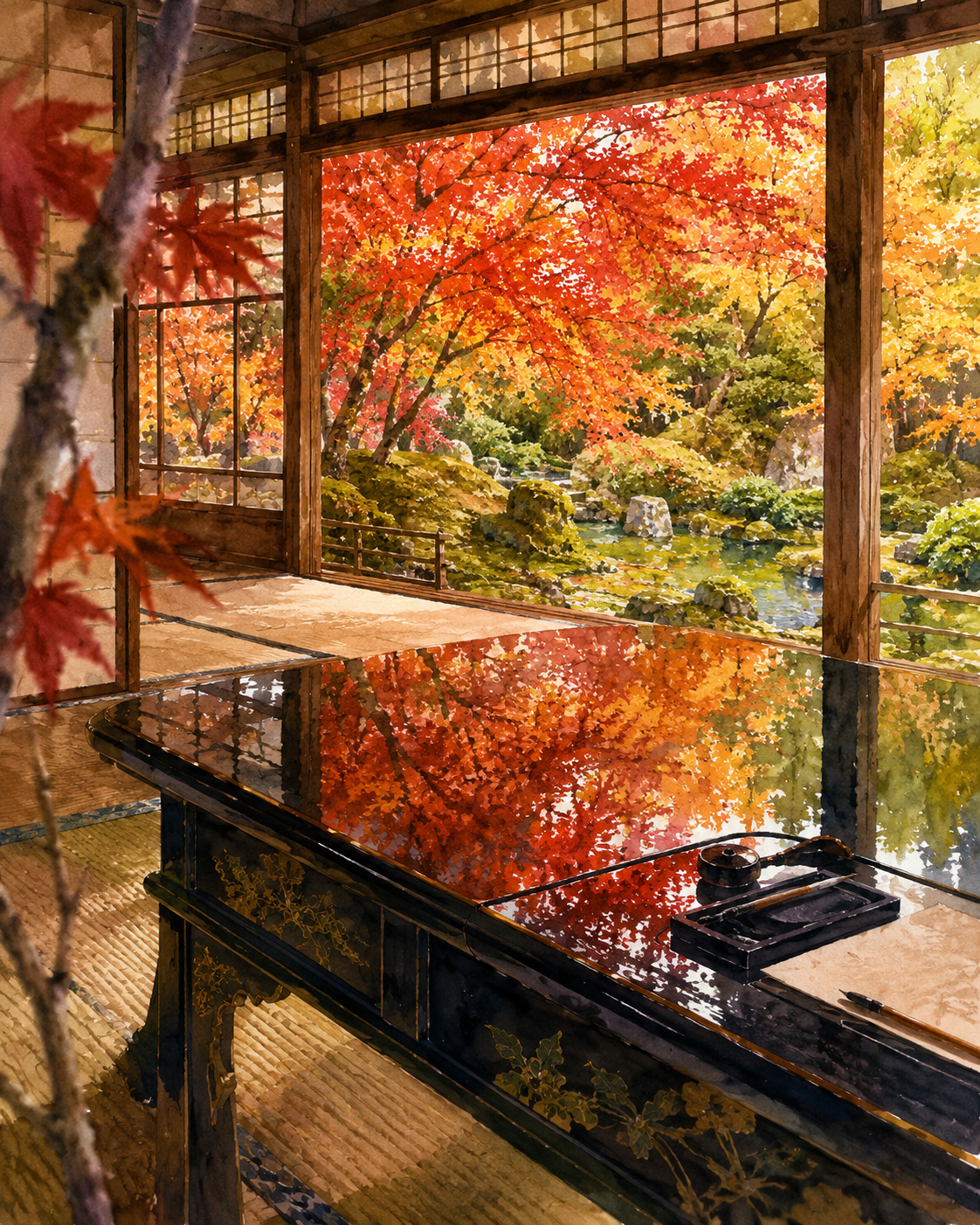
Mirror of the Silent Garden
Critique
1. Introduction This watercolor painting presents a serene scene of an autumnal garden viewed from within a traditional Japanese architectural space. The contrast between the quiet interior of the room and the vibrant natural world unfolding outside evokes a sense of profound stillness and the shifting of the seasons. Arranged with writing tools, the interior exudes an atmosphere of intellectual contemplation, effectively visualizing the Japanese aesthetic concept of "borrowed scenery" through a meticulous lens. 2. Description A meticulously maintained garden filled with maples in brilliant shades of red and gold extends from the center to the background. In the heart of the garden, a small stream flows between moss-covered stones, captured with fine, clear brushwork. In the foreground sits a beautiful black lacquered desk, its polished surface reflecting the outdoor foliage as clearly as a mirror. On the desk, an inkstone, a brush, and a sheet of paper lie silently, emphasizing the quietness of the space in the owner's absence. 3. Analysis In terms of composition, the linear framework of the pillars and beams serves as a frame that crops the organic forms of the garden. Regarding color, the sharp contrast between the dark tones of the interior and the high-saturation warm colors outside highlights the brilliance of the natural light. The reflection on the desk creates a layered spatial expansion, providing a mystical depth to the image by placing the real and reflected images in a symmetrical arrangement. The brushwork remains delicate, while the transparency inherent to watercolor gives the entire scene a sense of freshness. 4. Interpretation and Evaluation The work can be interpreted as an expression of the aesthetics of harmony where nature and humanity coexist. The reflection on the desk, reminiscent of the "floor maple" effect, symbolizes a uniquely Japanese sensibility that incorporates the infinite nature into a limited indoor space. The artist's descriptive power is evident in the uncompromising observation of textures, from the weight of the lacquer to the individual fibers of the tatami mats. The technique of manipulating light and shadow to convey the coolness of the air demonstrates a remarkable originality. 5. Conclusion As one observes the piece more deeply, the focus shifts from the initial splendor of the colors to the spiritual tranquility lying beneath. This scene, where the room and garden merge seamlessly, serves as a poignant reminder of the mental space required to appreciate nature in a busy modern world. Ultimately, this work is a high-quality artistic achievement that successfully fuses traditional Japanese motifs with exceptional realistic depiction techniques.
Same Subcategory
Similar Artworks
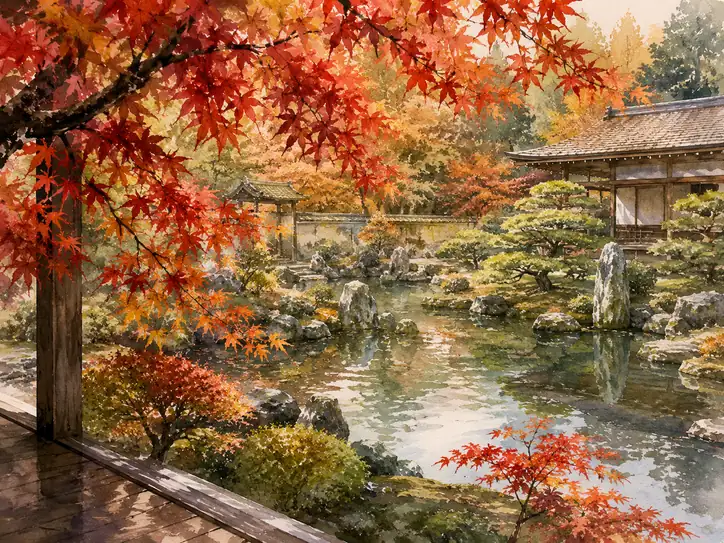 Autumn Whispers from the Veranda
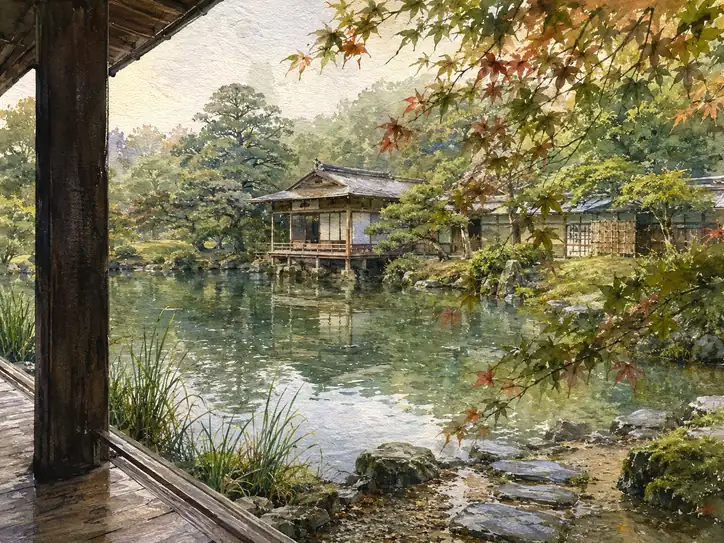 Autumn Whispers in the Water's Mirror
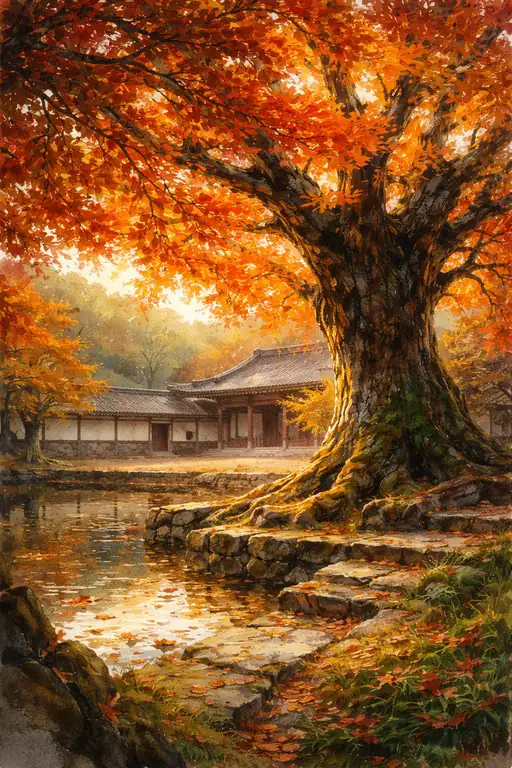 A Thousand Autumns Guarding the Ancient Temple
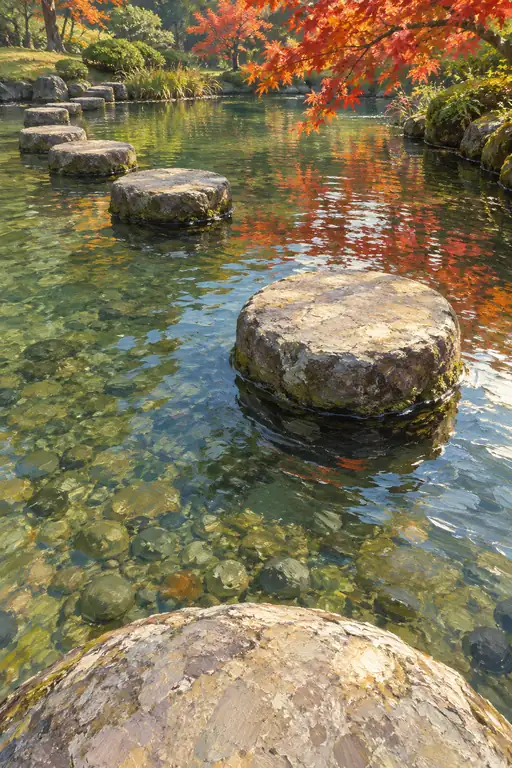 Steps Across the Amber Current
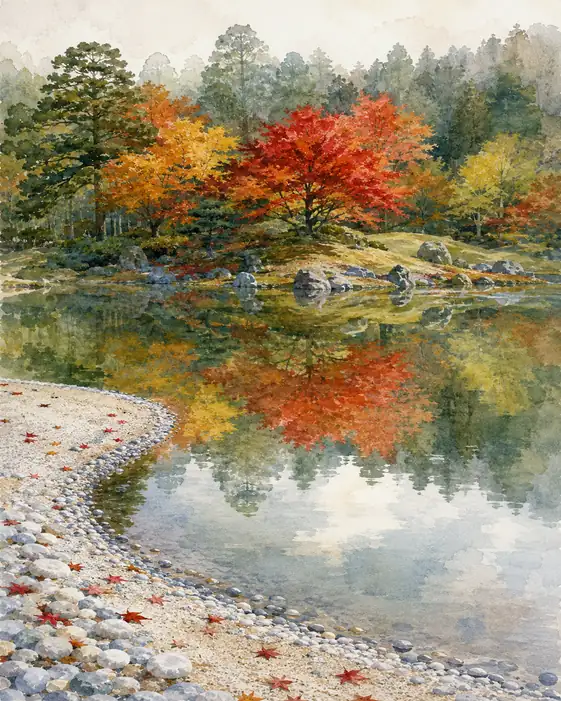 Autumn Rests on the Shore of Paradise
 Where Autumn Stands Still
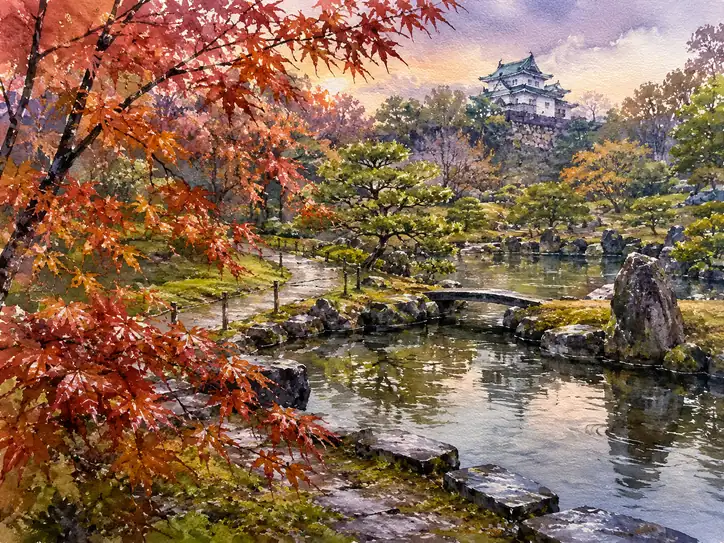 Ephemeral Fire of the Autumn Court
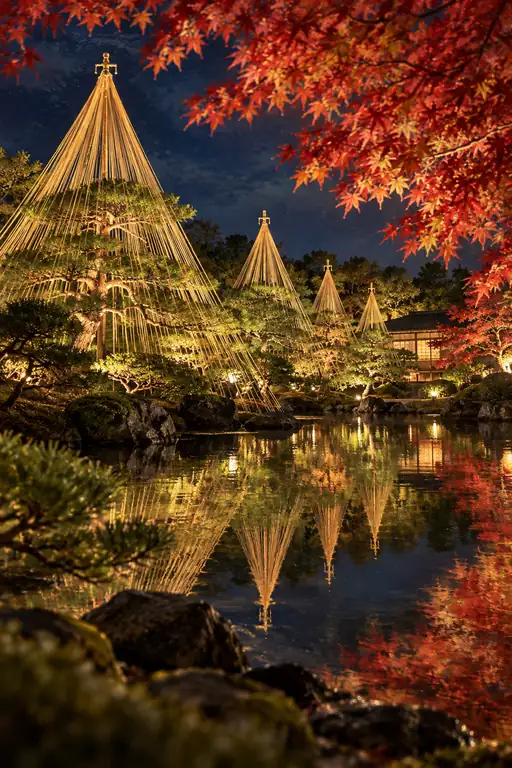 A Thousand Threads Against the Night
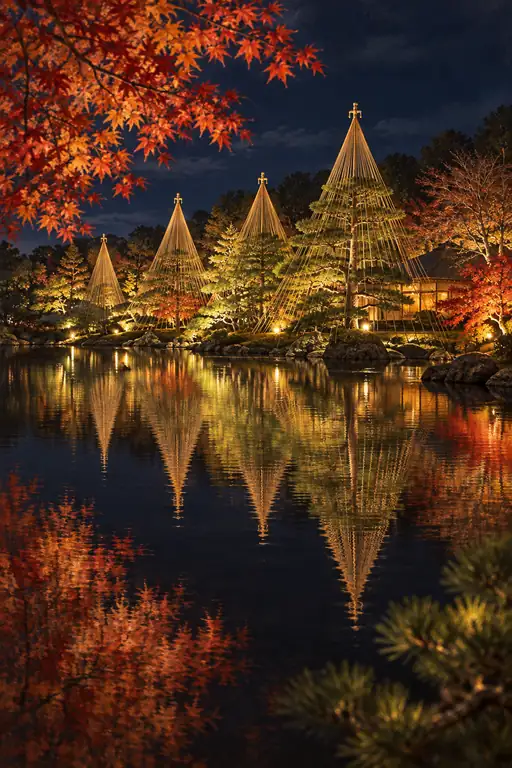 The Night Holds What We Protect
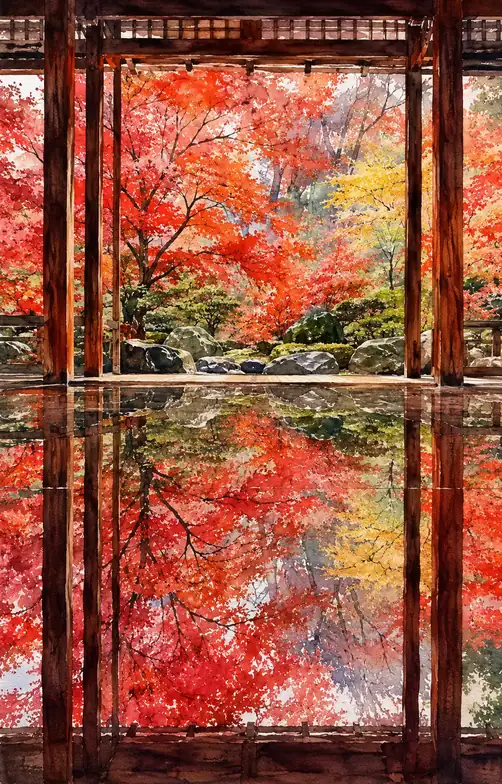 Autumn Paints a Second Garden