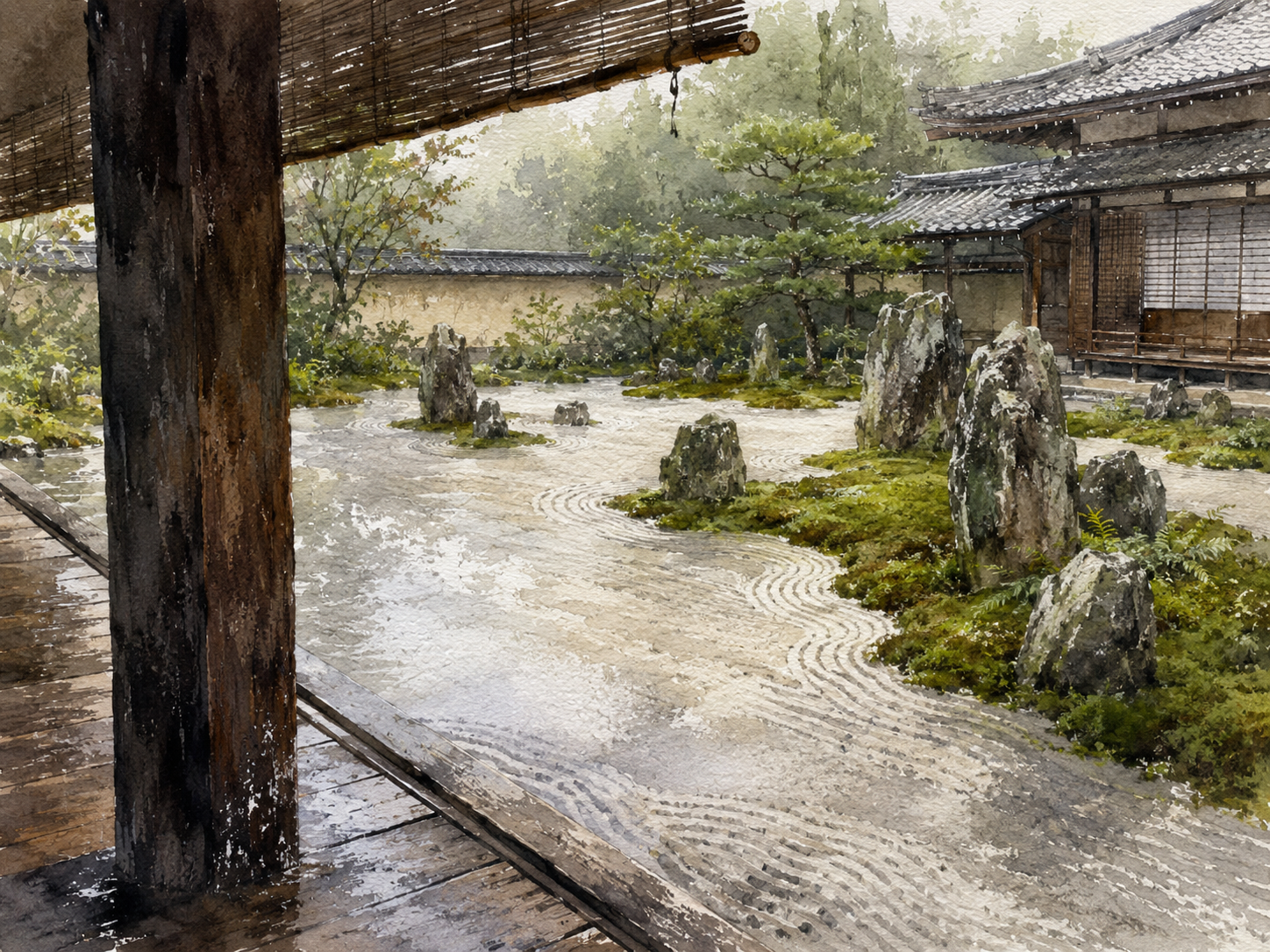
The Rhythms of Raked Silence
Critique
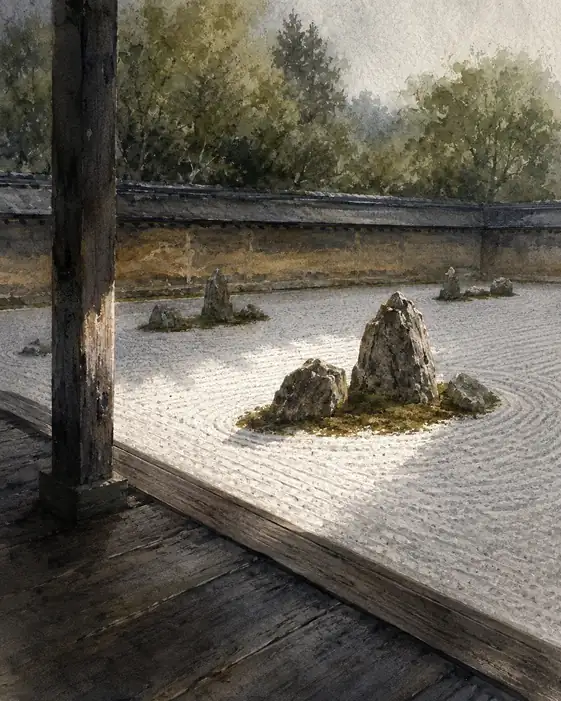
1. Introduction The painting depicts a classic Zen rock garden, or Karesansui, captured with a refined watercolor technique. This work explores the relationship between architectural space and a meticulously curated landscape designed for meditation. The artist focuses on the interplay of textures and the rhythmic patterns of the sand, creating a sense of profound stillness and intellectual clarity. 2. Description In the center of the composition, a sea of raked white sand is punctuated by carefully placed rocks of varying sizes, surrounded by patches of lush green moss. To the right, a traditional Japanese building with sliding doors and a tiled roof is partially visible. A massive, textured wooden pillar and a delicate reed screen frame the view from the left foreground, suggesting the perspective of someone seated on a veranda. 3. Analysis The artist utilizes a subtle watercolor palette, emphasizing the natural colors of wood, stone, and sand. The detail in the raked sand patterns is particularly striking, as it creates a visual rhythm that guides the viewer's eye through the garden. Lighting is diffused, consistent with an overcast day, which minimizes harsh shadows and enhances the overall sense of tranquility and cohesion across the disparate elements. 4. Interpretation and Evaluation This work serves as a meditation on the concept of void and the meticulous ordering of nature. The framing provided by the wooden pillar and the screen creates a clear distinction between the interior human space and the exterior symbolic landscape. The technical skill displayed in rendering the weathered wood and the individual grains of sand demonstrates a high degree of observation and artistic control. 5. Conclusion The painting successfully captures the essence of Zen aesthetics, where simplicity and precision lead to spiritual depth. The balanced composition and muted tones invite the viewer into a state of quiet reflection. Upon closer inspection, the initial impression of a static scene is replaced by an appreciation for the dynamic energy contained within the carefully arranged stones and sand.
Same Subcategory
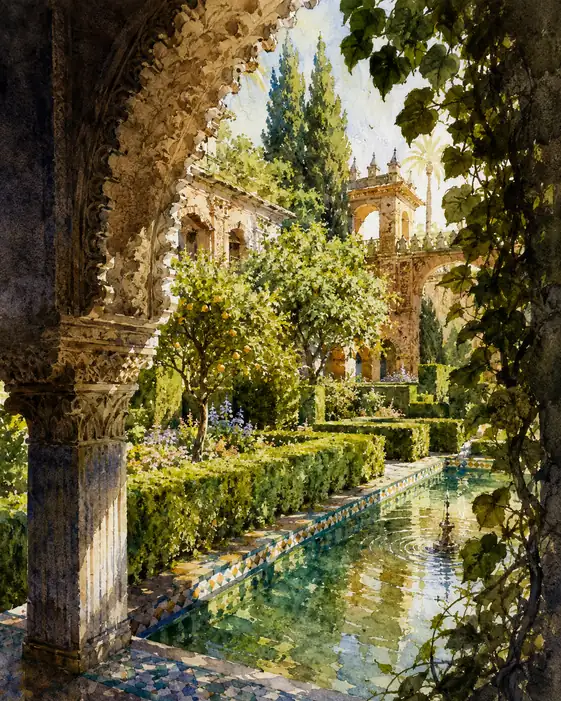 Symphony of Water and Greenery
 Gilded Waters of the Palace Gardens
Similar Artworks
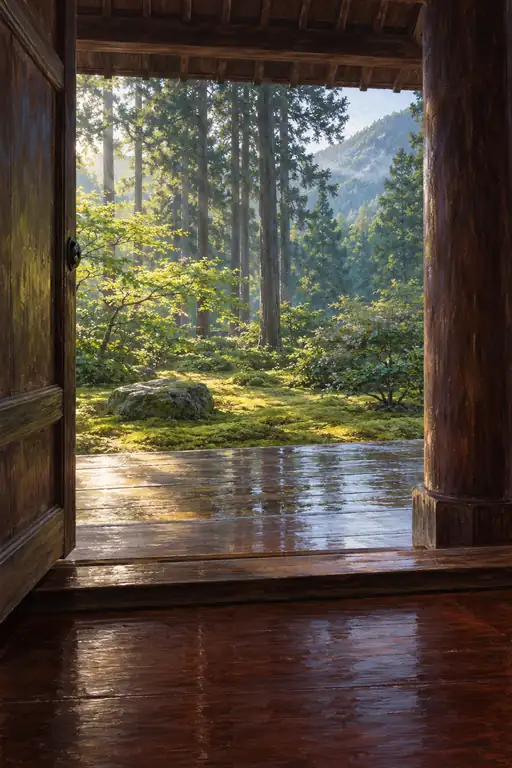 Green Shadows on Polished Wood
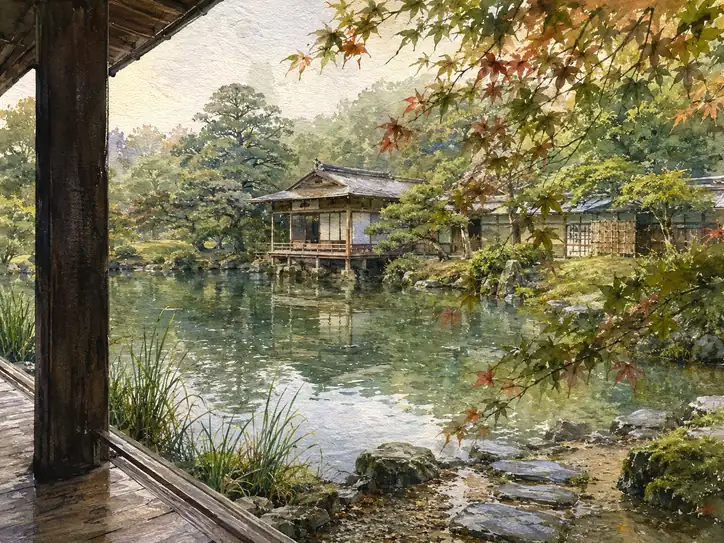 Autumn Whispers in the Water's Mirror
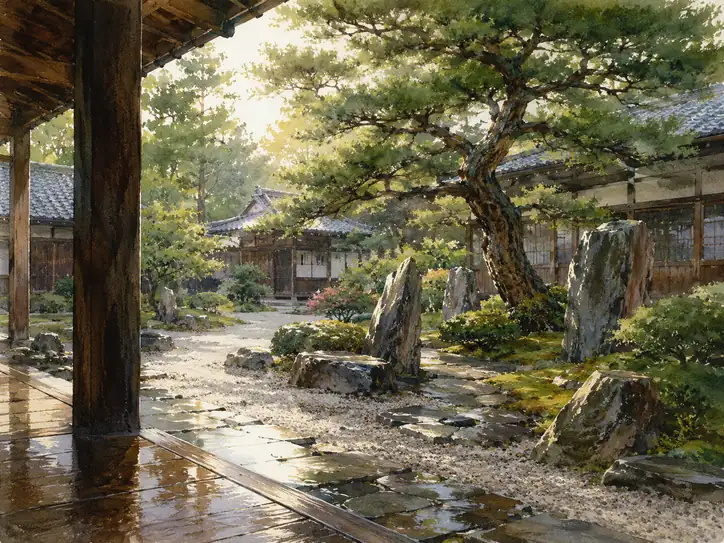 Reflections of Tranquility: Sunlight on the Wet Engawa
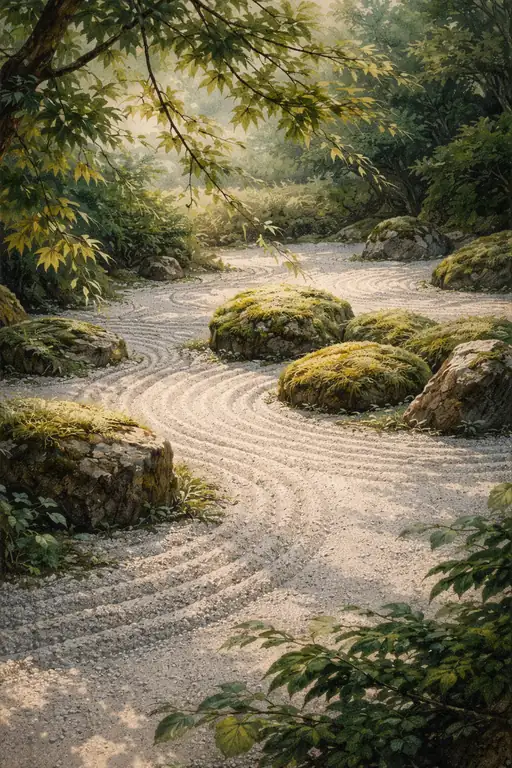 Rhythms of the Raked Sand
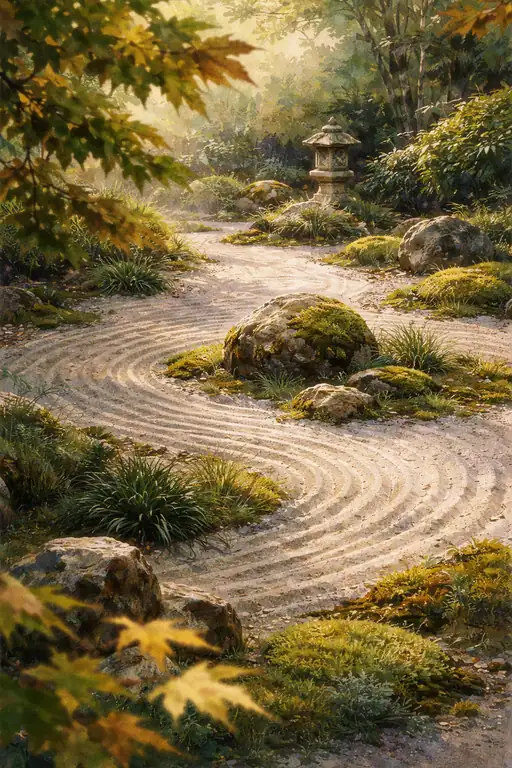 The Golden Harmony
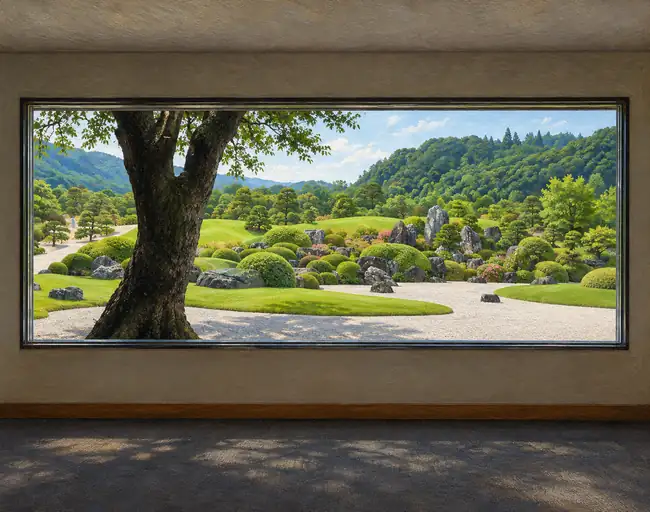 A Garden Held in Light
 Five Stones Listening to Silence
 Where Autumn Stands Still
 Whispers of the Summer Rain
 Sanctuary of the Ancient Cedars