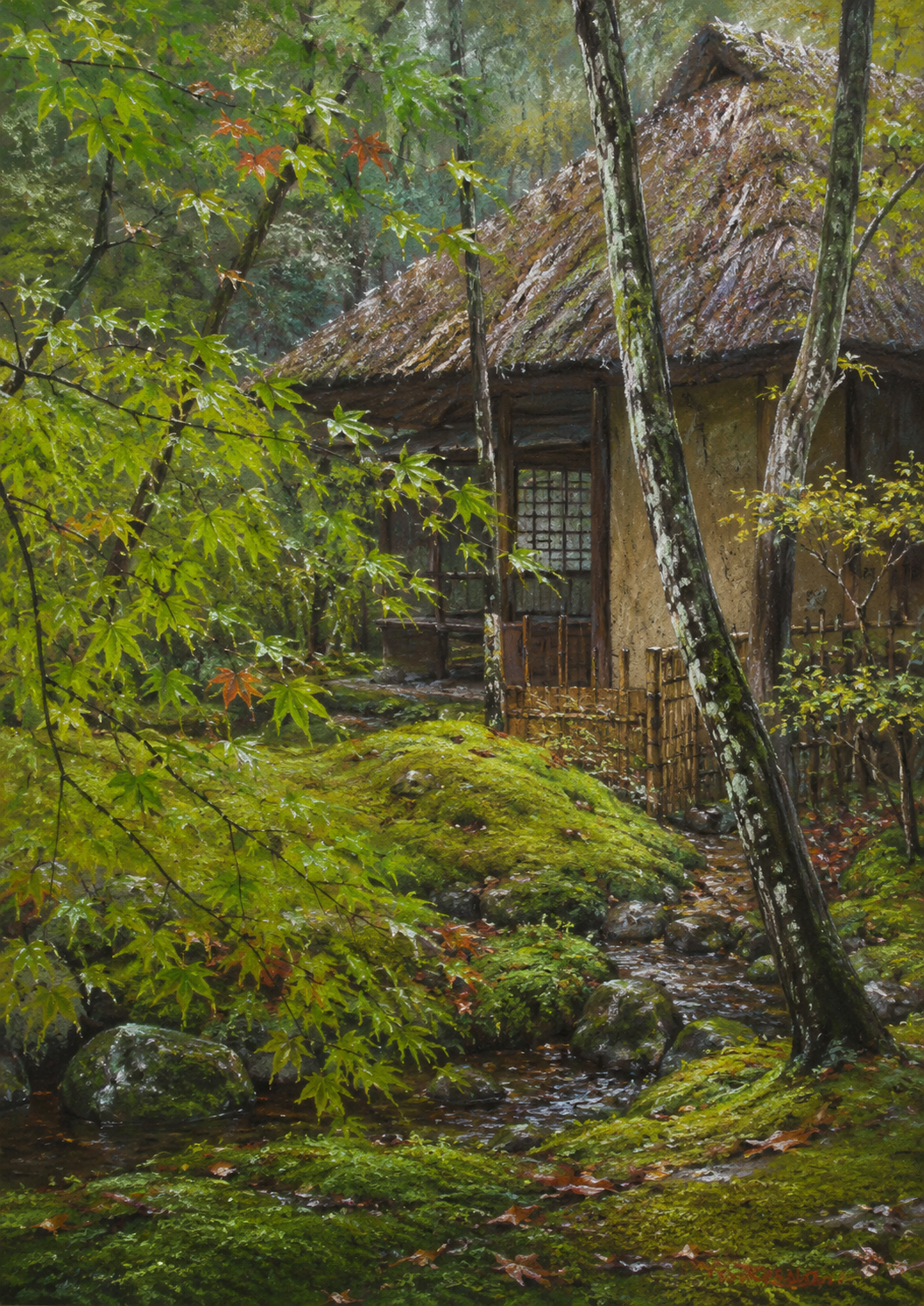
The Solitude of Moss and Thatch
Critique
1. Introduction This evocative oil painting captures a secluded traditional hut nestled deep within a verdant, misty forest. The scene is dominated by a weathered thatched roof and earthen walls, which appear seamlessly integrated into the surrounding wilderness. A small, clear stream flows through the foreground, adding a sense of movement and vitality to the otherwise still landscape. 2. Description The central structure features intricate shoji screen windows and is partially enclosed by a modest bamboo fence. Lush moss blankets the undulating ground and the damp rocks lining the stream, reflecting the high humidity of the environment. Overhanging maple branches with vibrant green leaves, punctuated by a few hints of orange, frame the upper and left portions of the composition. 3. Analysis The artist employs a rich, textured application of paint to convey the tactile qualities of the thatch and moss. A vertical composition emphasizes the height of the slender trees that disappear into the soft, atmospheric background. The color palette is restricted to earthy browns and various shades of green, which enhances the unified and immersive quality of the scene. 4. Interpretation and Evaluation The work explores themes of solitude and the quiet dignity of traditional rural life. The interplay between the solid, man-made hut and the soft, encroaching forest suggests a state of peaceful coexistence rather than conflict. Technical excellence is particularly evident in the rendering of wet surfaces and the subtle variations of light filtering through the dense canopy. 5. Conclusion In conclusion, the painting provides a powerful sensory experience that transports the viewer into a realm of quiet contemplation. The successful marriage of architectural detail and organic textures results in a work of significant emotional resonance. Ultimately, the piece stands as a masterful tribute to the timeless beauty found in remote, natural settings.
Same Subcategory
Similar Artworks
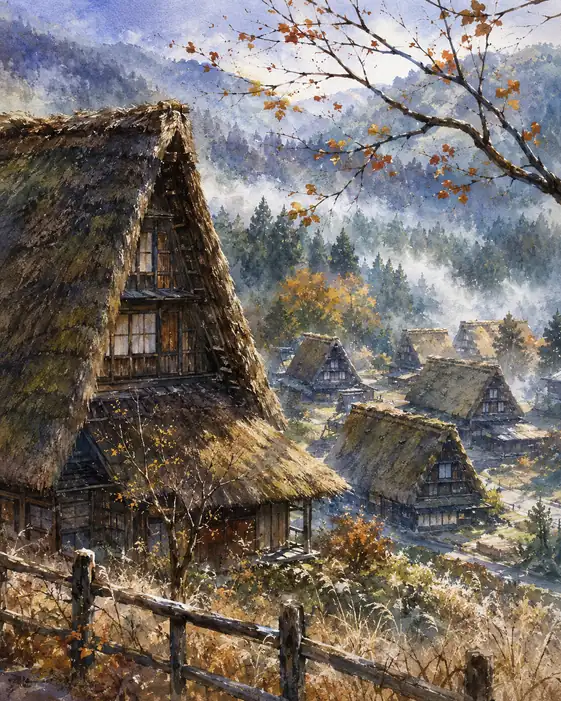 Echoes of the Thatch: A Misty Autumn Memory
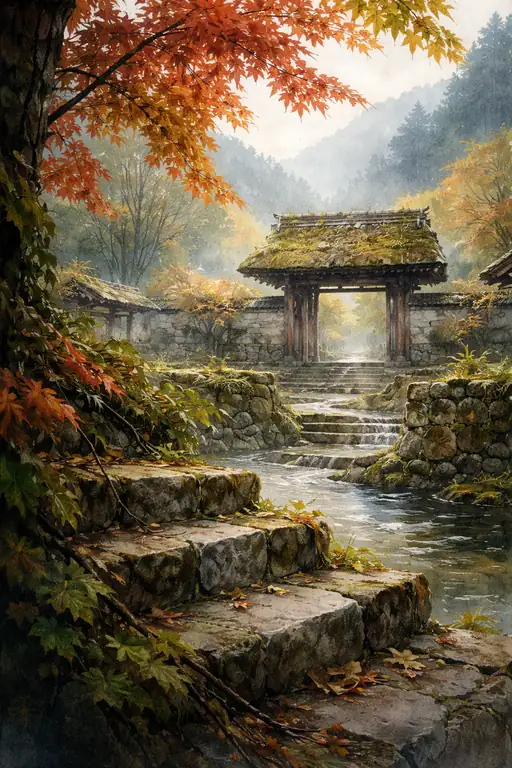 Whispers of Autumn: The Mossy Gate in the Mist
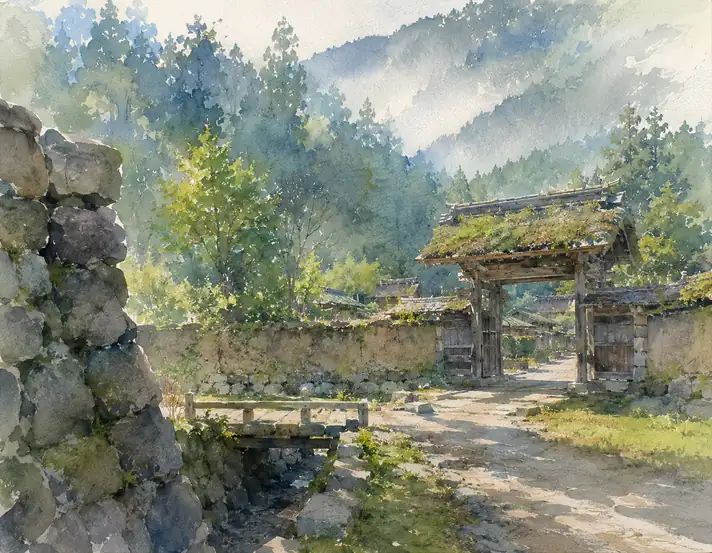 The Silent Gate Where Time Lingers
 Autumn Whispers in the Water's Mirror
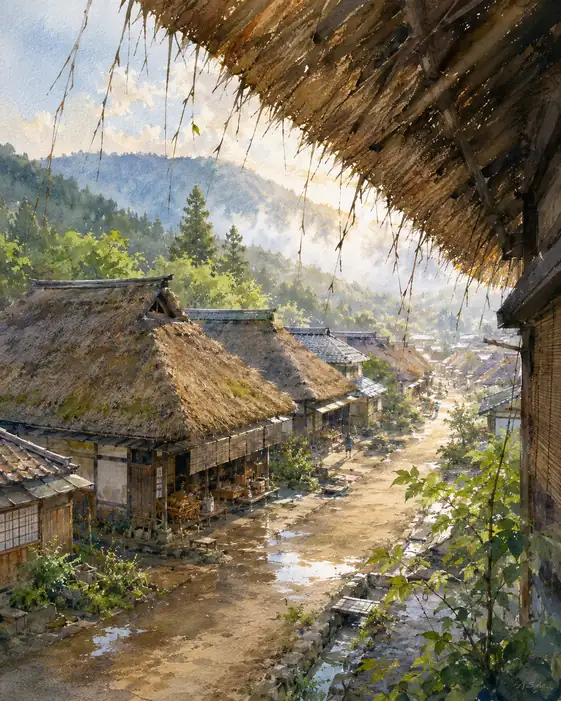 Echoes of the Thatched Village
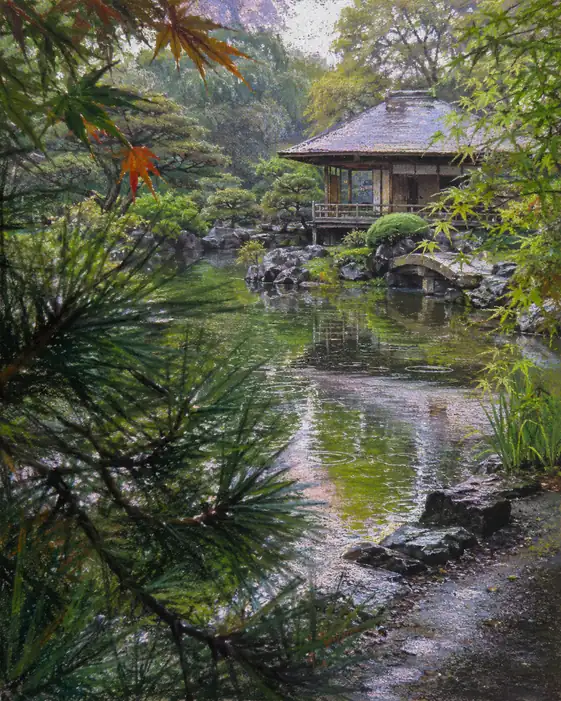 Rain-Soaked Reverie: The Garden's Silent Melody
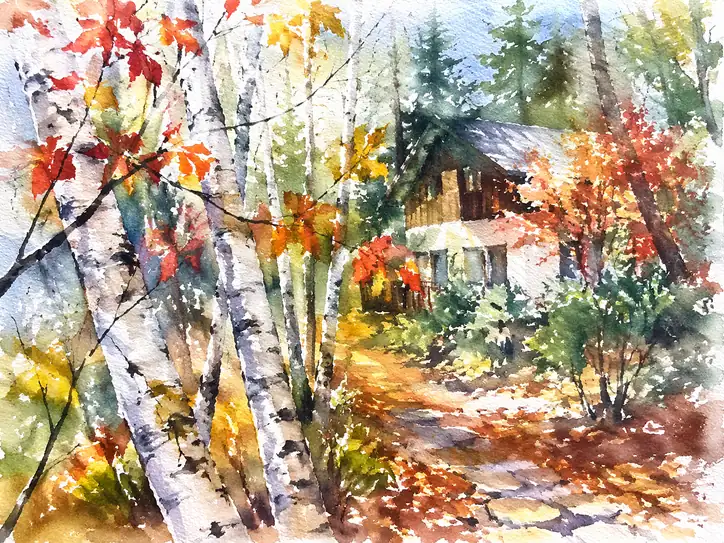 Warm Steam Rising in the Wintry Hot Spring Town
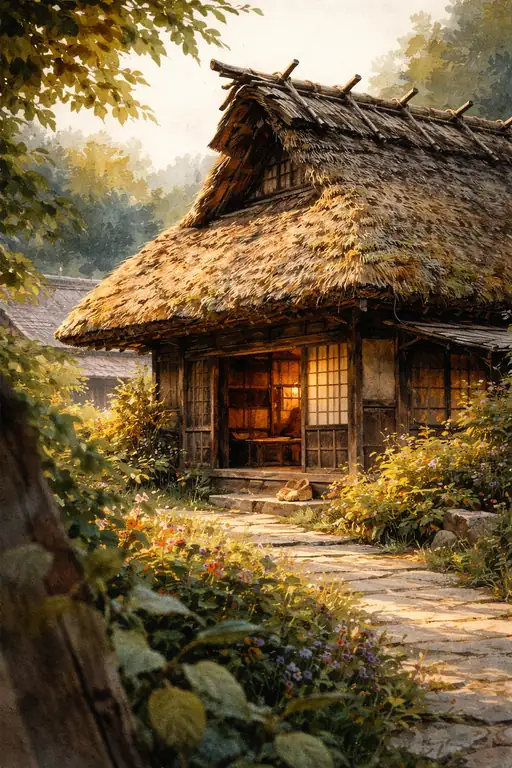 Whispers of the Evening Sun on the Stone Path
 A Warm Hearth in the Misty Valley
 Rustic Harvest Harmony