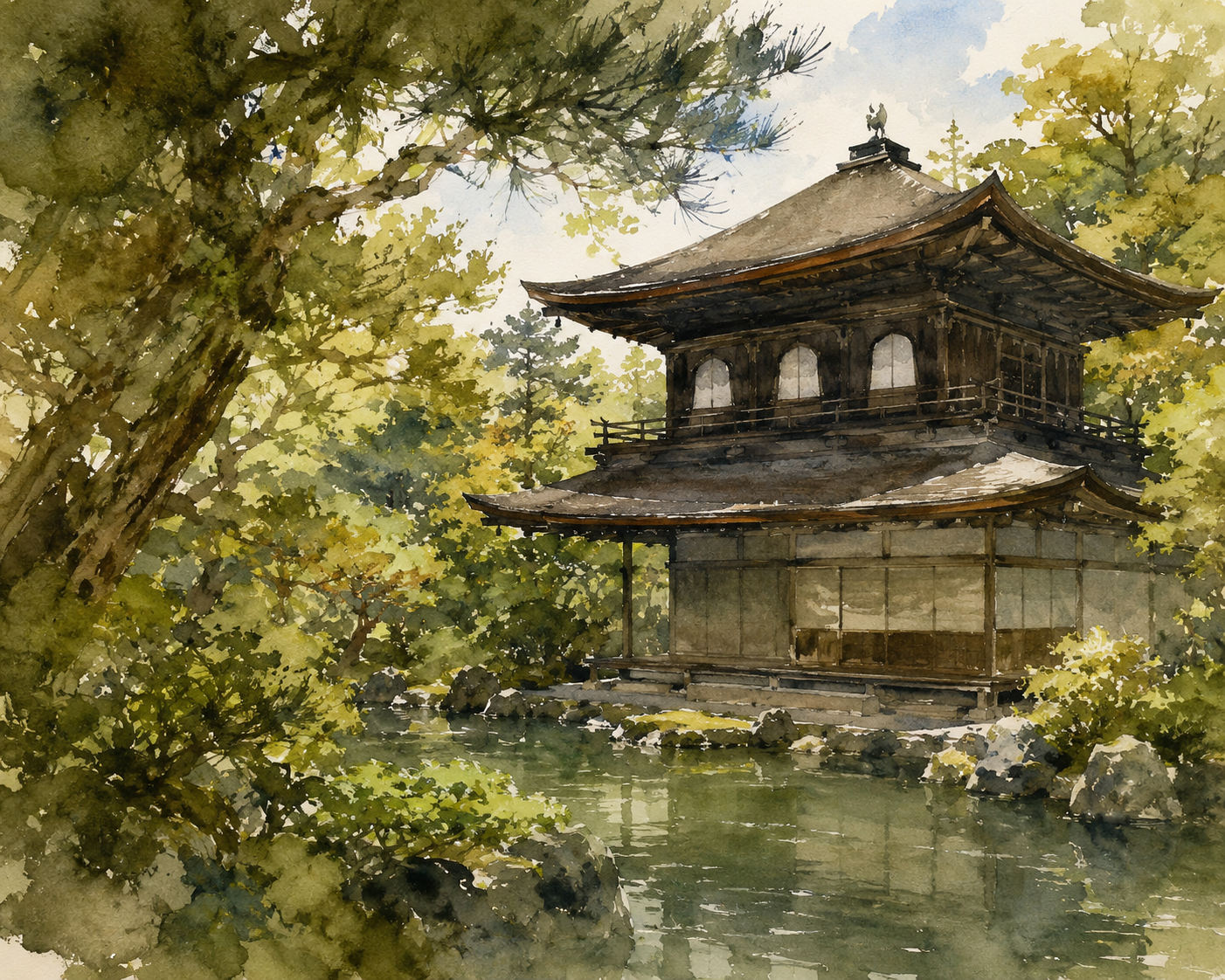
Echoes of Wabi-Sabi: The Silver Mirror
Critique
1. Introduction This masterfully executed horizontal watercolor painting depicts the Kannonden, or the Silver Pavilion, of Ginkaku-ji Temple in Kyoto. The artwork captures the understated elegance of this iconic Muromachi-era structure, which stands as a profound symbol of Zen Buddhist aesthetics and Japanese architectural history. Framed by a lush canopy of vibrant green foliage, the pavilion is reflected in the still waters of the foreground pond, creating a scene of absolute serenity and balanced composition. 2. Description The pavilion itself is rendered with a focus on its dual architectural styles: the lower Shinden-zukuri floor and the upper Zen-style hall with its distinctive bell-shaped windows. Atop the pyramidal roof, the bronze phoenix (ho-o) stands prominently against a soft blue sky. The surrounding garden is a tapestry of varied green hues, from the deep shadows of the ancient trees to the bright, translucent leaves catching the sunlight. The pond in the foreground acts as a mirror, its surface dappled with the reflections of the wooden structure and the mossy stones along the bank. 3. Analysis Technically, the artist demonstrates a sophisticated command of watercolor layering and transparency. The variety of greens in the forest is achieved through a skillful combination of wet-on-wet and dry-brush techniques, creating both soft atmospheric depth and crisp botanical detail. The wooden textures of the pavilion are subtly suggested with thin washes of sepia and umber, avoiding harsh outlines to maintain the soft, cohesive feel of the landscape. The play of light is particularly effective, with the sun illuminating the right side of the building and the upper leaves of the flanking trees. 4. Interpretation and Evaluation The work serves as a beautiful visual exploration of "Wabi-sabi," the Japanese aesthetic that finds beauty in simplicity and the natural cycle of growth and decay. Unlike its gold-leafed counterpart, Kinkaku-ji, the Silver Pavilion’s beauty is quiet and inward-looking, a quality the artist has successfully translated through a restrained yet rich color palette. Evaluation-wise, the painting is highly successful in its spatial arrangement; the large tree on the left provides a solid anchor that balances the detailed architecture on the right, while the central pond provides a necessary area of visual rest. 5. Conclusion In conclusion, this watercolor of Ginkaku-ji is a remarkable tribute to one of Japan’s most significant cultural landmarks. It transcends a mere architectural study to become an evocative sensory experience that captures the peaceful atmosphere of the temple grounds. By expertly balancing the man-made structure with its natural environment, the artist has created a timeless image that celebrates the enduring grace of Kyoto’s heritage. The painting is both technically impressive and emotionally resonant, making it a standout example of contemporary landscape art.
Same Subcategory
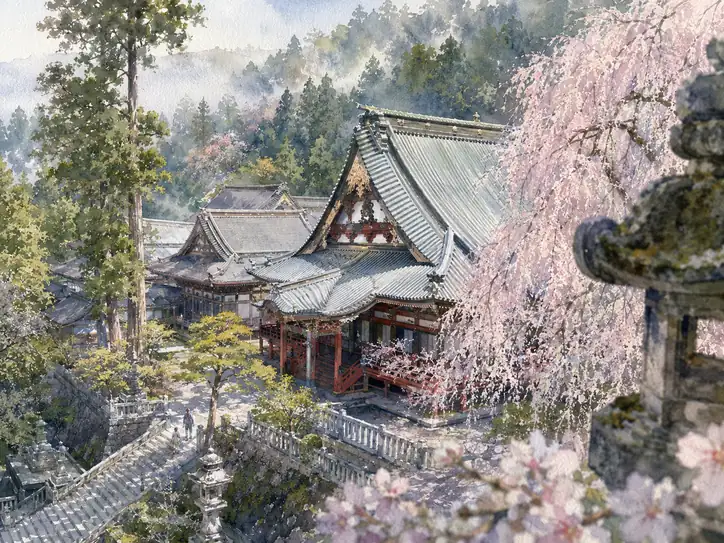 Whispers of the Weeping Sakura
Similar Artworks
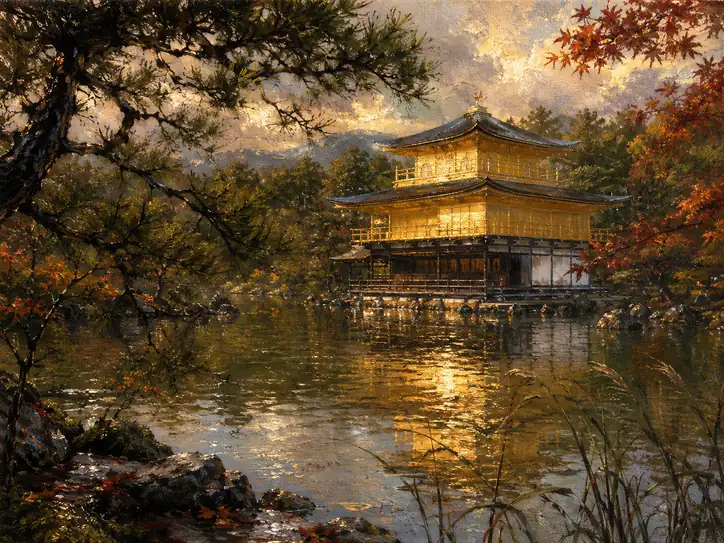 The Echo of Golden Stillness
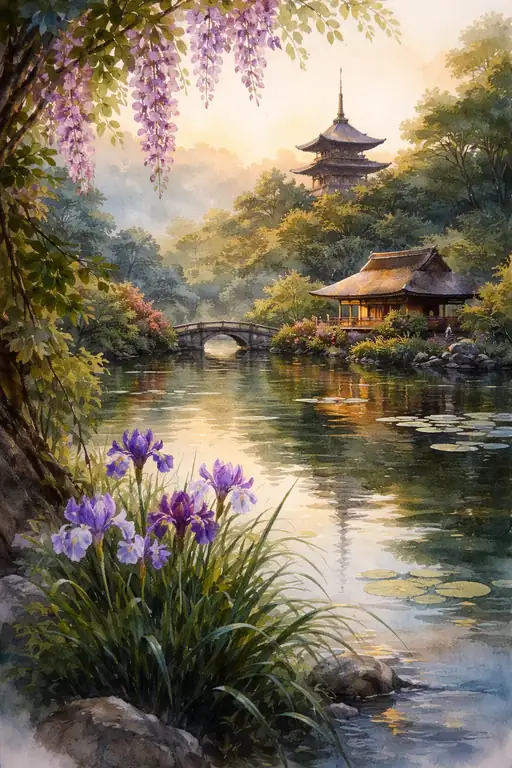 Sunset Harmony in the Temple Garden
 Serenity of the Whispering Waterfall
 Whispers of the Flowing Spring
 Fuji from the Wisteria Garden
 Eternity in the Golden Silence
 Prayer Among a Thousand Moss Stars
 Where the Spring Wind Pauses
 Where the Heart Finds Its Circle
 Whispers of the Golden Pond