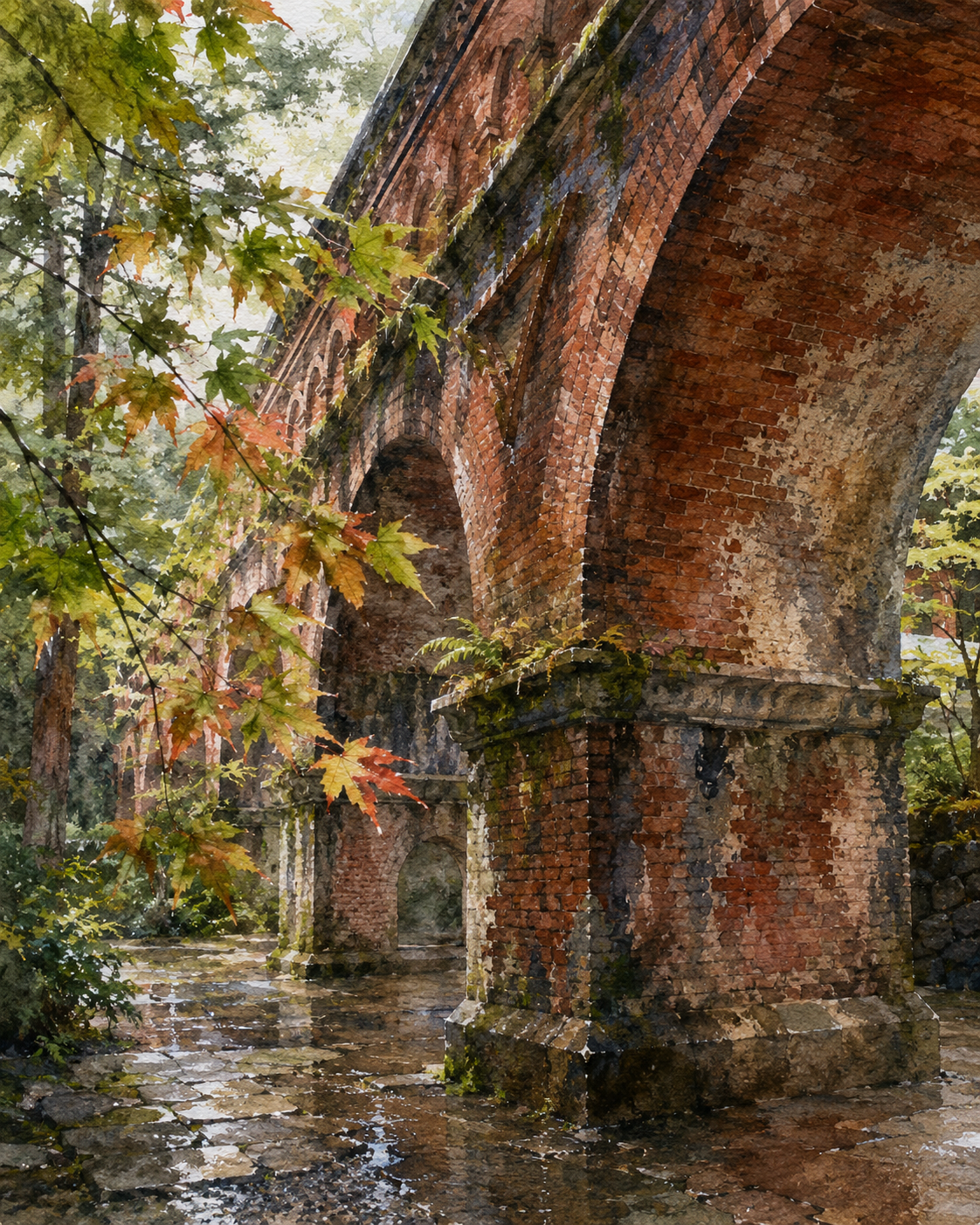
Chronicles of the Crimson Arches
Critique
1. Introduction This stunning vertical watercolor painting depicts the iconic Suirokaku Aqueduct at Nanzen-ji Temple in Kyoto, a site where Western industrial architecture meets Japanese spiritual tradition. The composition is elegantly framed by a branch of autumn maple leaves on the left, which adds a seasonal poignancy to the massive, rhythmic arches of the red brick structure. Through its rich textures and masterful use of light, the artwork captures the unique atmosphere of a location where history, nature, and engineering coexist in perfect, quiet harmony. 2. Description The focus of the piece is the weathered red brickwork of the aqueduct, its surface variegated with patches of green moss and small ferns that have taken root in the mortar. The large, rounded arches recede into the distance, creating a powerful sense of depth and perspective. Below the structure, a wet stone pavement glistens with moisture, mirroring the warm hues of the bricks and the soft light filtering through the trees. The maple leaves in the foreground, transitioning from green to a fiery orange, provide a delicate organic contrast to the solid, geometric forms of the masonry. 3. Analysis Technically, the artist displays a remarkable ability to render the complexity of old brickwork using the watercolor medium. The use of stippling and dry-brush techniques creates a tactile quality that suggests the passage of time and the effects of weathering. The color palette is dominated by warm ochres and siennas, balanced by the cool greys and shadows found within the archways. Furthermore, the depiction of reflections on the wet ground is exceptionally handled, using soft, horizontal brushstrokes to suggest a thin film of water that gives the scene a fresh, rain-washed appearance. 4. Interpretation and Evaluation The work can be interpreted as a meditation on the beauty of historical layers. The Suirokaku, built during the Meiji era, represents a bridge between Japan's past and its modernization, and the artist captures this narrative by showing the structure being slowly reclaimed by nature. Evaluation-wise, the painting is highly successful in its balance of architectural precision and atmospheric fluidity. The choice of a vertical format emphasizes the height and grandeur of the aqueduct, making the viewer feel as though they are standing directly beneath its towering arches. 5. Conclusion In conclusion, this watercolor is an evocative and technically superior representation of one of Kyoto's most beloved landmarks. It succeeds in capturing not just the physical appearance of the Suirokaku but also the specific mood of a damp autumn day in the temple grounds. By expertly juxtaposing the man-made strength of the bricks with the ephemeral beauty of the autumn leaves, the artist has created a timeless image that resonates with a deep sense of place and cultural continuity.
Same Subcategory
 Silent Transit Over the Frozen Giants
 Between Sky and Water: The Quiet Passage
Similar Artworks
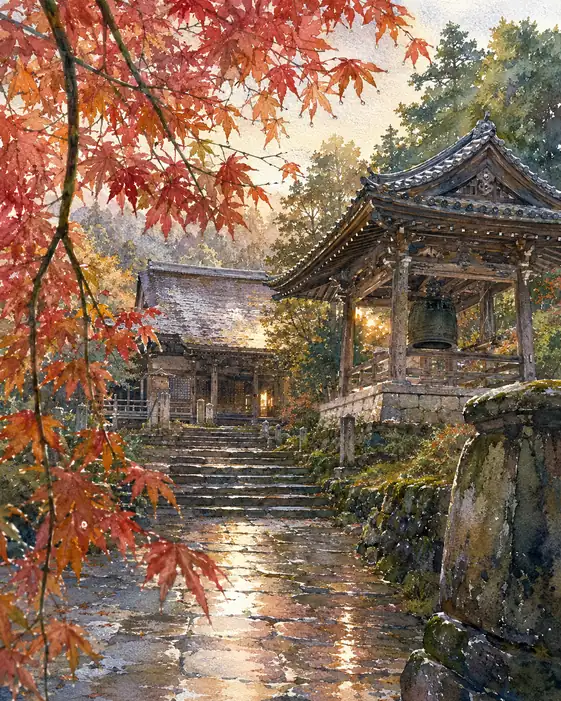 The Golden Echo of Autumn's Heart
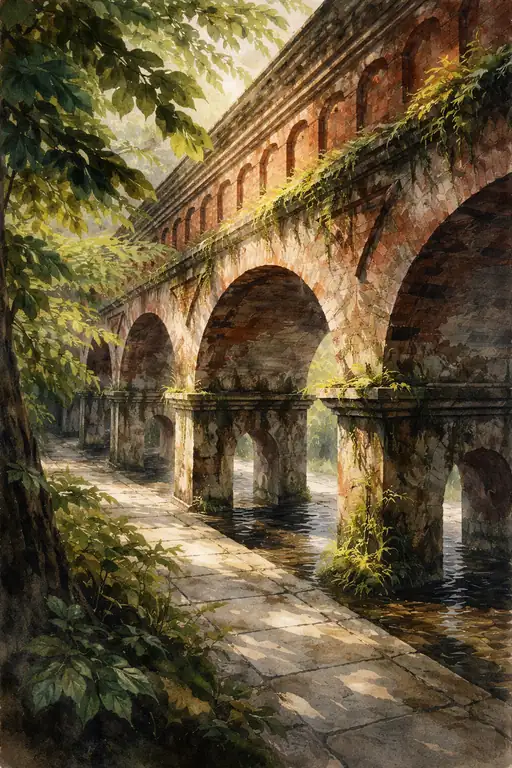 Time's Reclaimed Arches
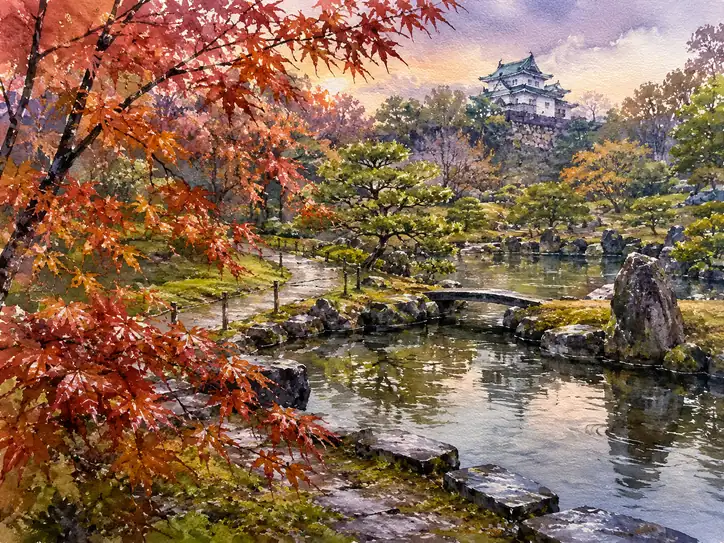 Ephemeral Fire of the Autumn Court
 Autumn's Crimson Whisper
 The Sanctuary of Eternal Stillness
 Whispers of Autumn: The Mossy Gate in the Mist
 Crimson Reflections
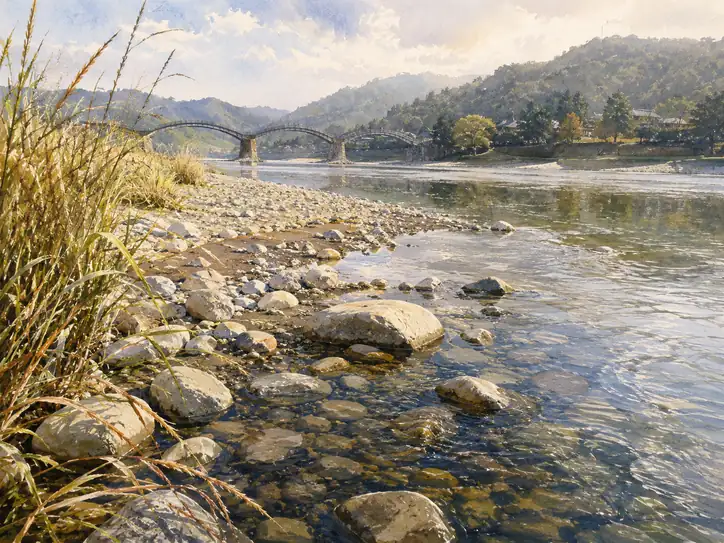 Whispers of the Eternal Bridge
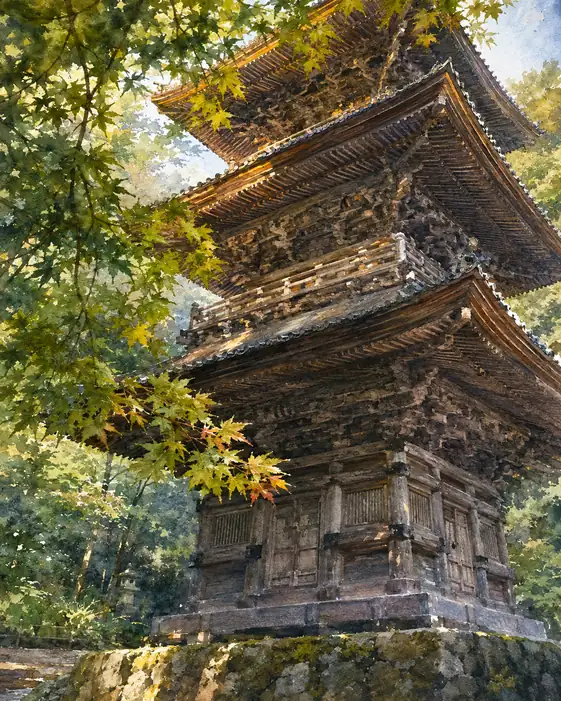 A Forest Three-Story Pagoda Through Maples
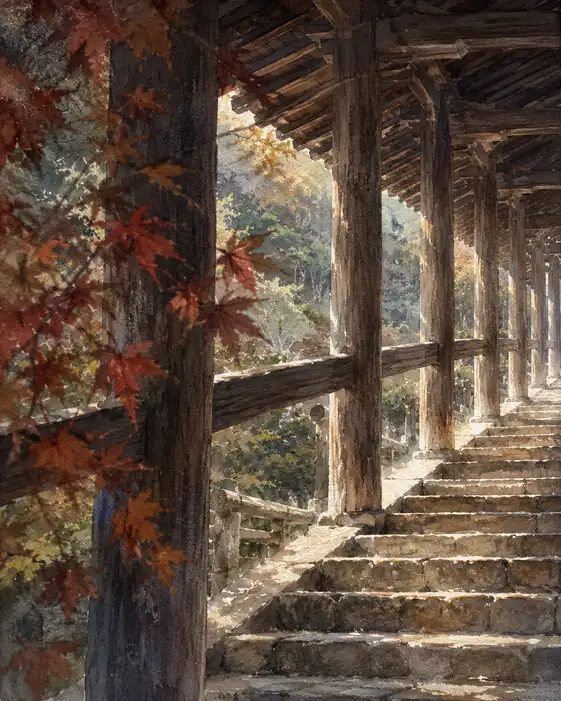 Echoes of Crimson Footsteps