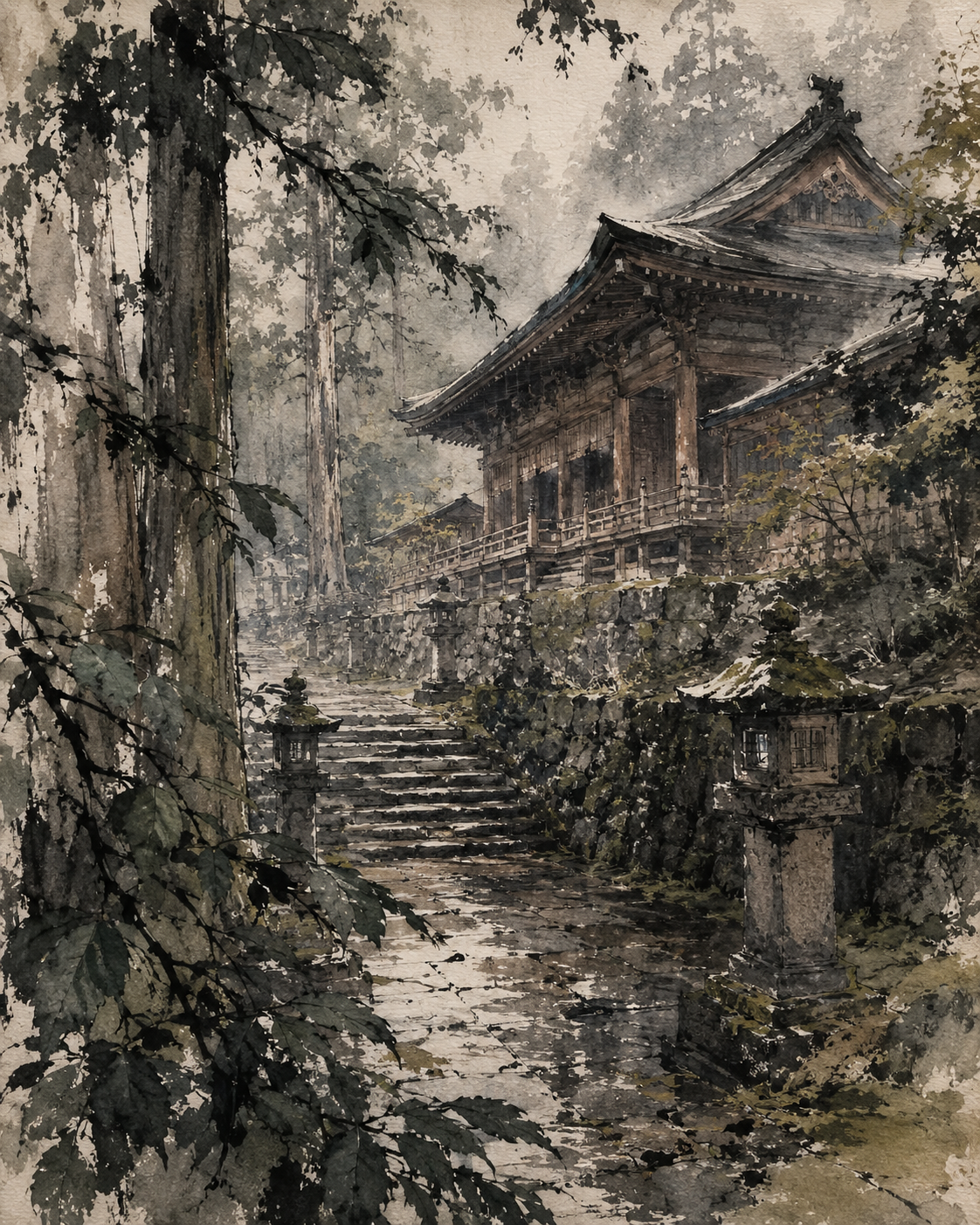
The Sanctuary of Eternal Stillness
Critique
1. Introduction This vertical watercolor painting captures the timeless serenity of a traditional Japanese temple nestled deep within a misty forest. The composition is masterfully framed by a massive, weathered tree trunk on the left, which directs the viewer's gaze toward a weathered stone stairway ascending into the heart of the sacred grounds. Through its muted palette and delicate washes, the artwork evokes a profound sense of history and spiritual stillness, inviting a contemplative exploration of the intersection between human architecture and the natural world. 2. Description The foreground is dominated by wet, glistening flagstones and moss-covered stone lanterns that stand like silent sentinels along the path. To the right, a formidable stone embankment supports a grand wooden hall, its intricate gables and balconies rendered with painstaking detail. Further back, more temple structures and additional stone lanterns are partially obscured by a dense canopy of ancient cedars. The background is characterized by a soft, atmospheric haze that suggests a damp, cool morning, where the boundary between the forest and the sky becomes indistinguishable. 3. Analysis Technically, the artist demonstrates exceptional control over the watercolor medium, using a sophisticated range of earthy tones, including deep umber, slate grey, and mossy green. The use of the wet-on-wet technique in the background creates a convincing sense of depth and moisture, while the sharp, dry-brush strokes in the foreground emphasize the rugged texture of the stone and bark. The play of light is subtle, appearing as soft reflections on the damp ground, which balances the heavy shadows found within the forest's depths. 4. Interpretation and Evaluation The work serves as a poignant meditation on the passage of time and the enduring nature of faith. The aged wooden beams and the moss-grown masonry suggest a structure that has harmoniously coexisted with its environment for centuries. Evaluation-wise, the painting is highly successful; the artist manages to convey both the physical weight of the architecture and the ethereal quality of the mountain mist. The choice of a vertical format enhances the feeling of looking upward toward a higher plane, reinforcing the spiritual theme of the subject. 5. Conclusion In conclusion, this watercolor is a masterful representation of Japanese aesthetic principles, emphasizing the beauty of imperfection and the quietude of nature. It transcends a mere landscape study to become an evocative sensory experience that captures the scent of damp earth and the silence of a sacred forest. By expertly balancing detail with atmospheric abstraction, the artist has created a piece that is as technically impressive as it is emotionally resonant, making it a standout contribution to contemporary landscape painting.
Same Subcategory
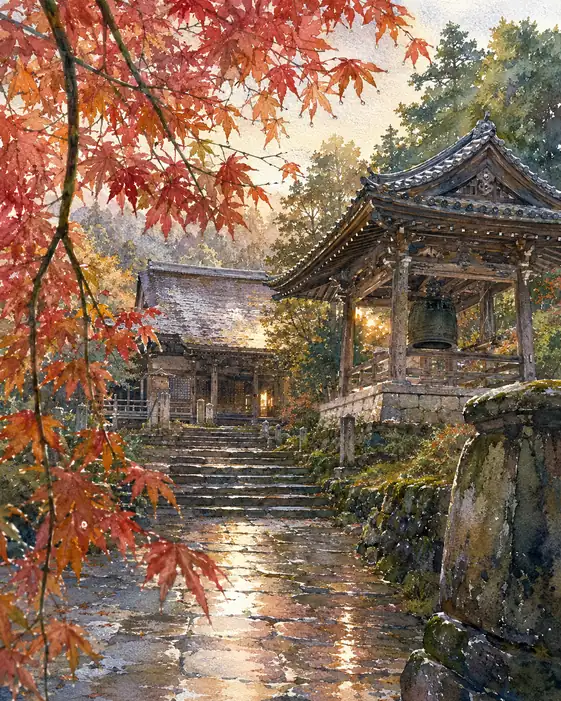 The Golden Echo of Autumn's Heart
Similar Artworks
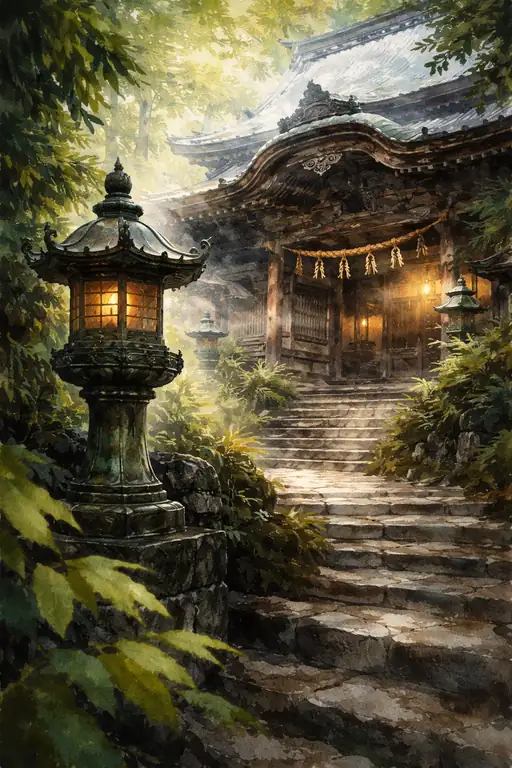 Sanctuary of the Silent Forest
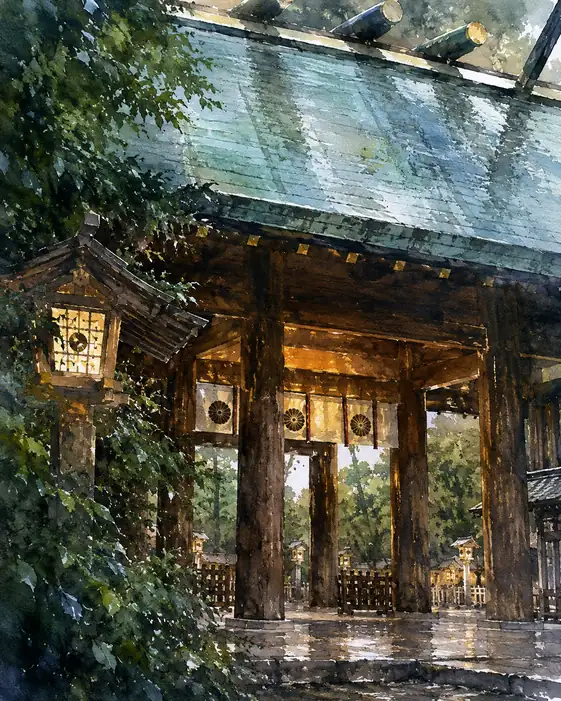 The Silent Breath of the Shrine
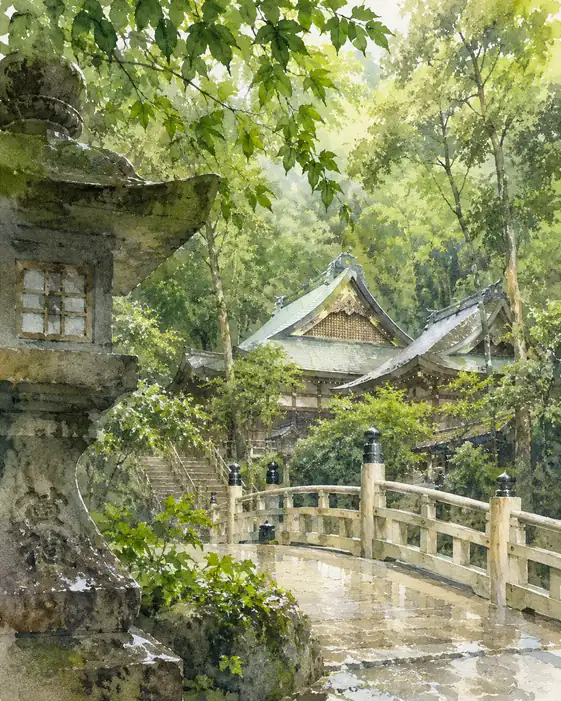 Stillness of the Hidden Sanctuary
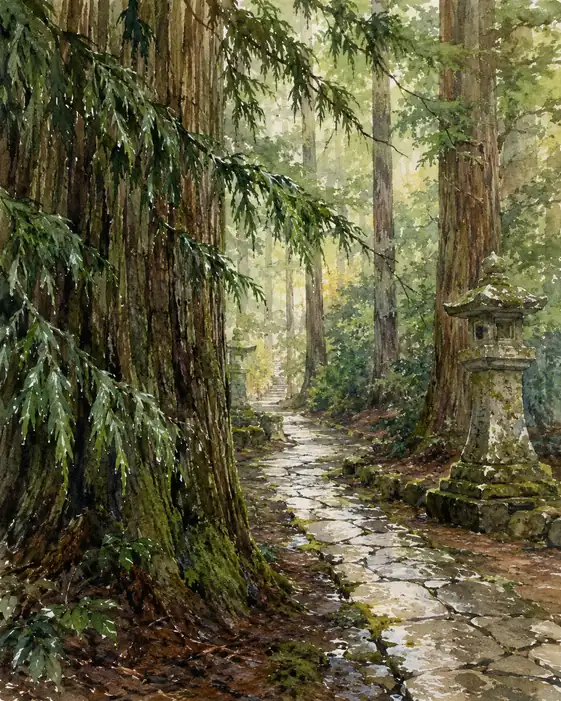 Whispers of the Sacred Grove
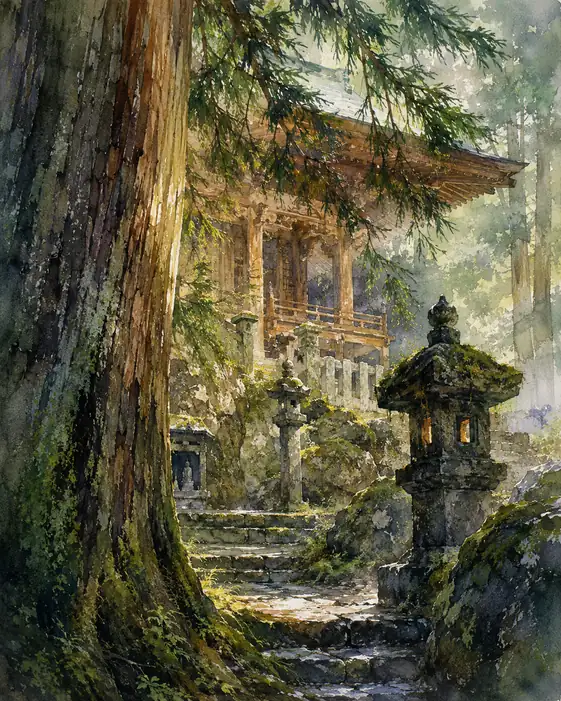 Sanctuary of the Ancient Cedars
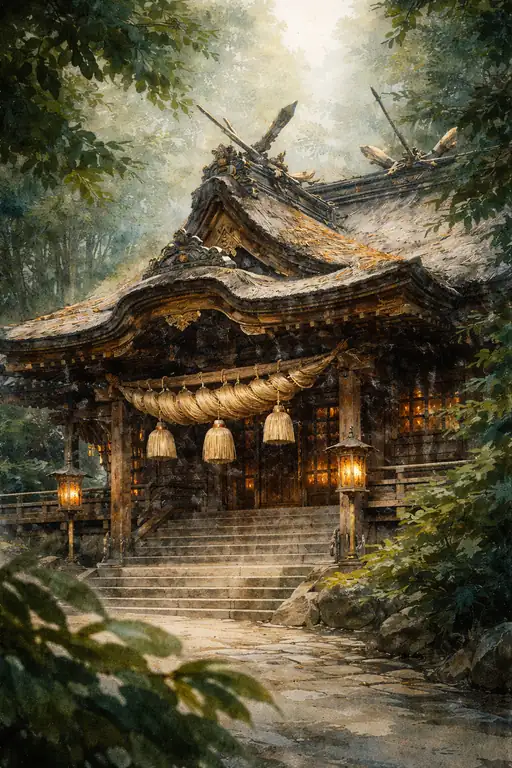 The Sacred Silence of the Moss-Covered Hall
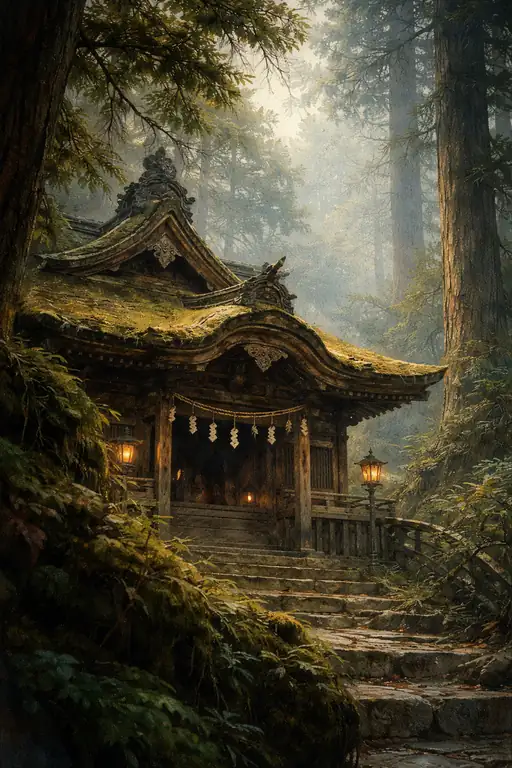 Sanctuary in the Shadows
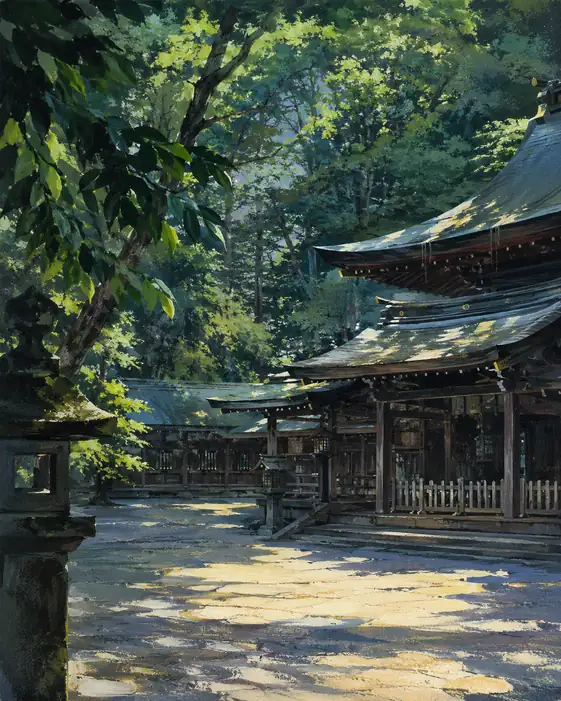 Whispers of the Sunlit Sanctuary
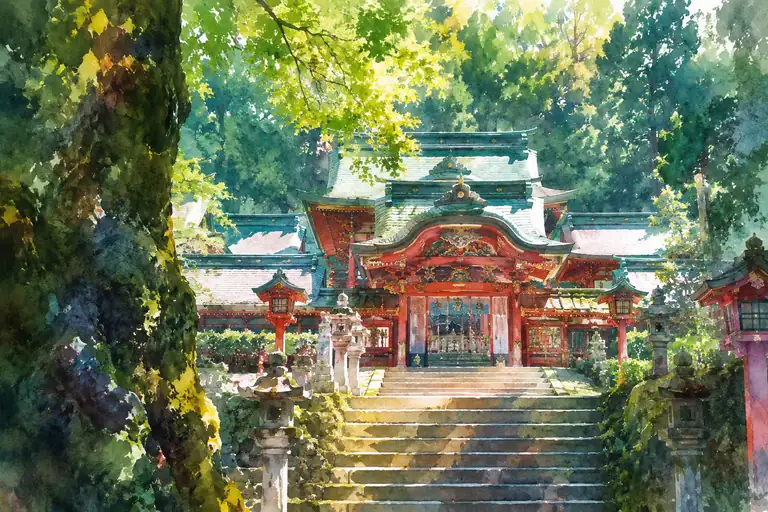 Sunlight on the Sacred Path
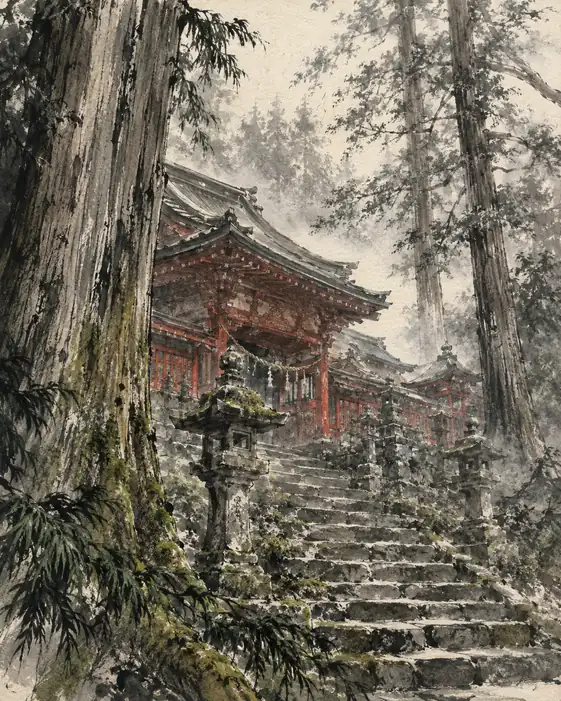 Threshold of the Ancient Silence