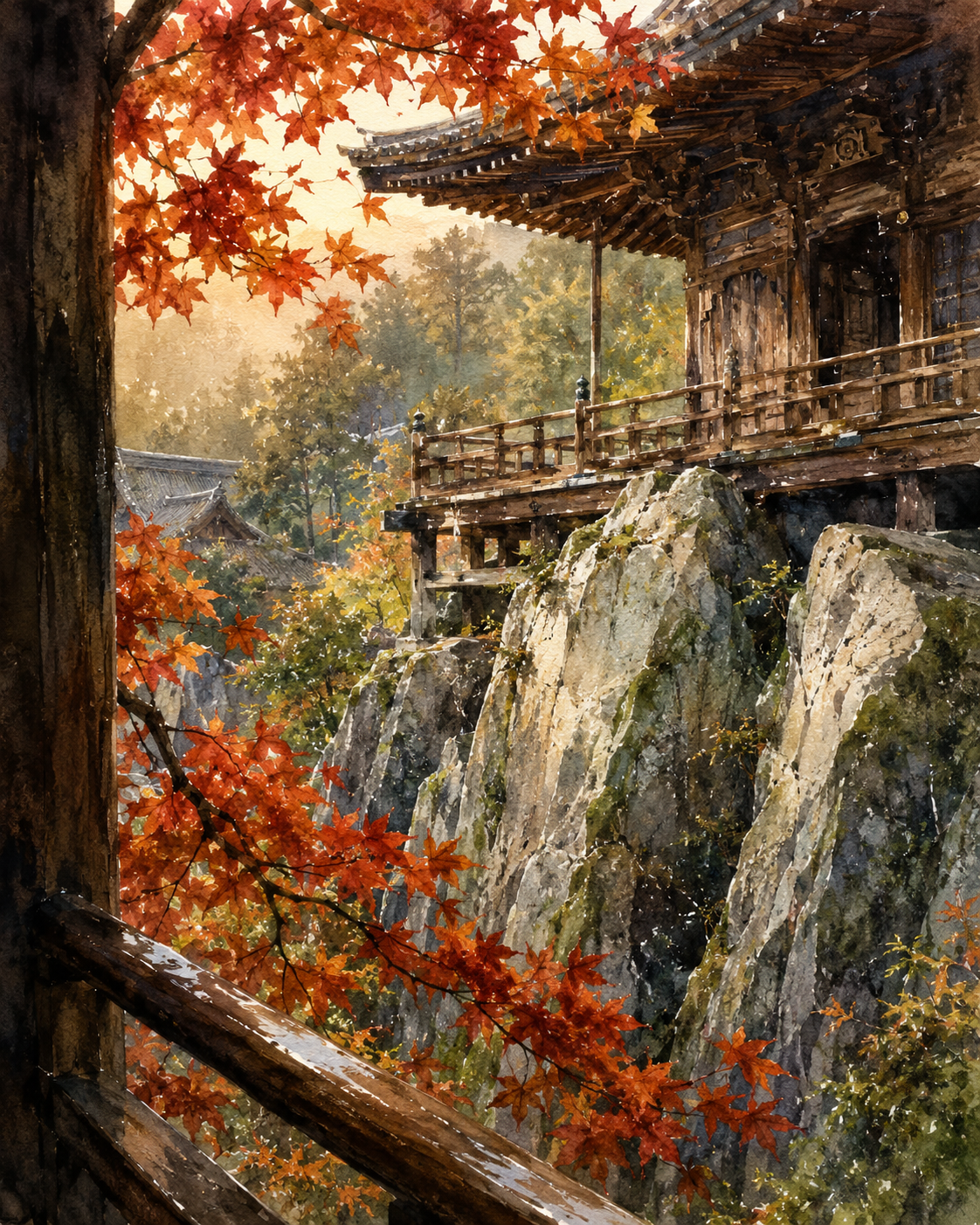
Crimson Reverie on the Temple Veranda
Critique
1. Introduction This watercolor painting presents a breathtaking view of a traditional Japanese temple perched precariously on a jagged cliffside amidst a sea of vibrant autumn foliage. The work captures the essence of "koyo," the Japanese tradition of viewing autumn leaves, by juxtaposing the enduring strength of wooden architecture with the fleeting beauty of seasonal changes. The artist uses a combination of precise detail and atmospheric washes to create a scene that is both grounded in reality and ethereal in quality. 2. Description The composition is dominated by a weathered wooden temple structure on the right, its intricate eaves and balcony extending over a sheer rock face. Brilliant red and orange maple leaves frame the left side and top of the image, their delicate shapes standing out against the misty, sunlit background. In the foreground, a dark, rain-slicked wooden railing provides a point of entry for the viewer’s eye. Below the main structure, the steep cliffs are covered in patches of green moss, while another temple roof is partially visible in the distant, hazy valley. 3. Analysis The artist demonstrates exceptional control over the watercolor medium, particularly in the rendering of the maple leaves' varied transparencies and the complex textures of the stone cliffs. The use of a vertical composition emphasizes the dramatic height of the temple’s location. Sunlight filters through the leaves and mist, creating a soft, warm glow that contrasts with the solid, dark tones of the wooden architecture. The wet texture of the foreground railing is captured with subtle highlights, suggesting a recent autumn rain. 4. Interpretation and Evaluation This piece excels in its ability to evoke a specific sensory experience—the crisp air and quiet reverence of a mountain temple in autumn. The choice of a close-up, high-angle perspective creates an intimate connection between the viewer and the scene, as if one is standing on the temple’s veranda. Technical mastery is evident in the balance between the architectural precision and the organic, fluid representation of nature. The work successfully communicates the Japanese aesthetic of "mono no aware," a sensitive awareness of the transience of all things. 5. Conclusion The painting is a vivid and emotionally resonant tribute to the harmony between human craftsmanship and the natural world. Through its sophisticated use of color, light, and composition, it captures a moment of sublime beauty that transcends simple landscape representation. Ultimately, the work serves as a powerful reminder of the spiritual and aesthetic significance of the changing seasons, offering the viewer a window into a world of profound tranquility and natural splendor.
Same Subcategory
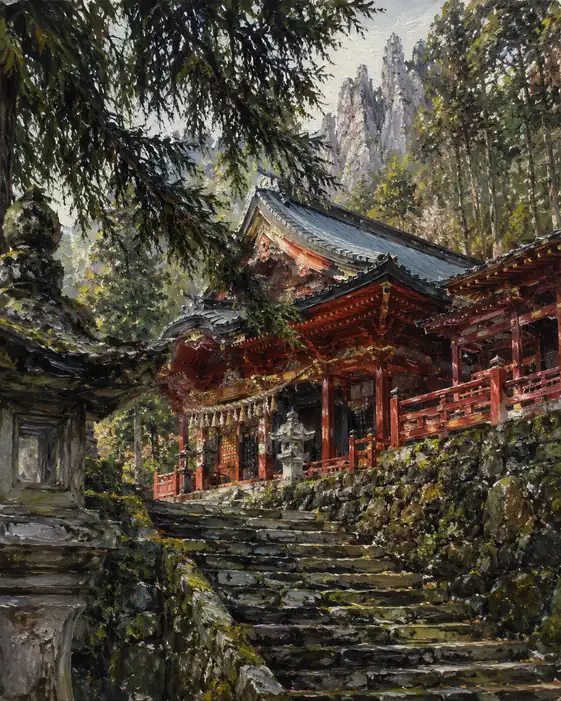 Eternal Prayer in the Vermilion Woods
Similar Artworks
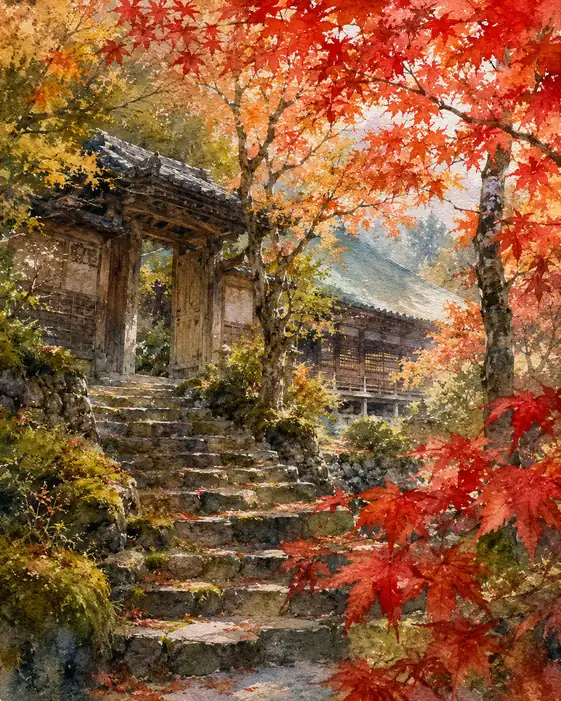 The Crimson Threshold of Silence
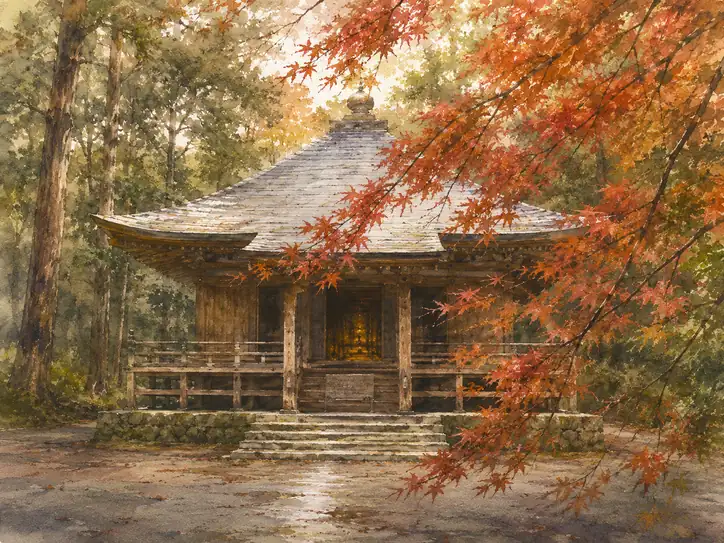 Golden Glow in the Maple Shadows
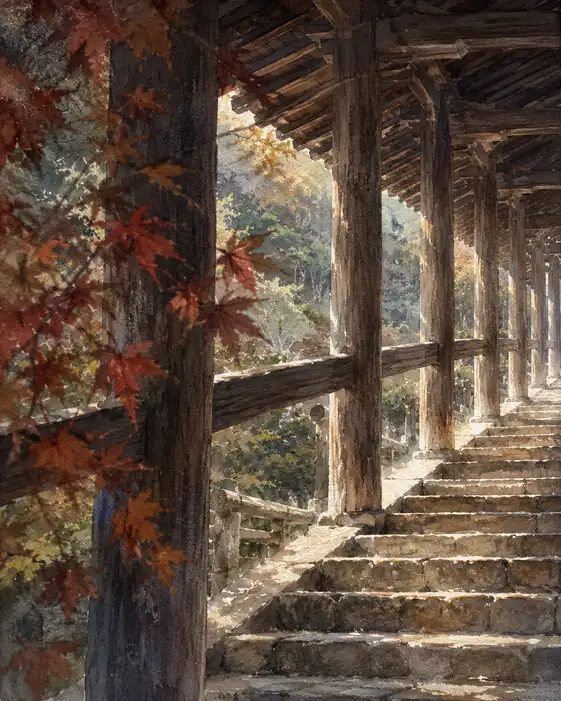 Echoes of Crimson Footsteps
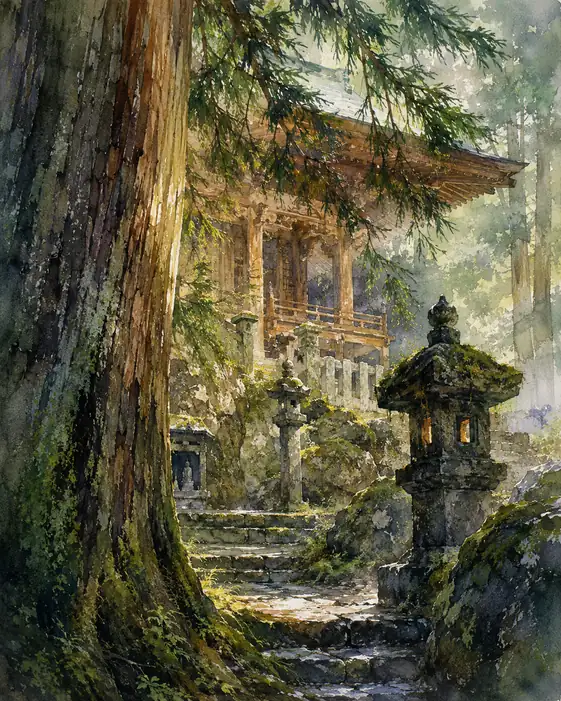 Sanctuary of the Ancient Cedars
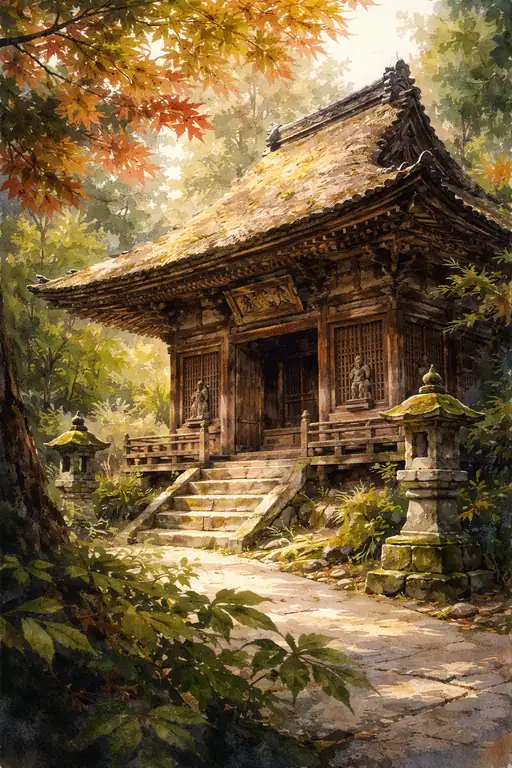 Sunlight Through the Crimson Gate
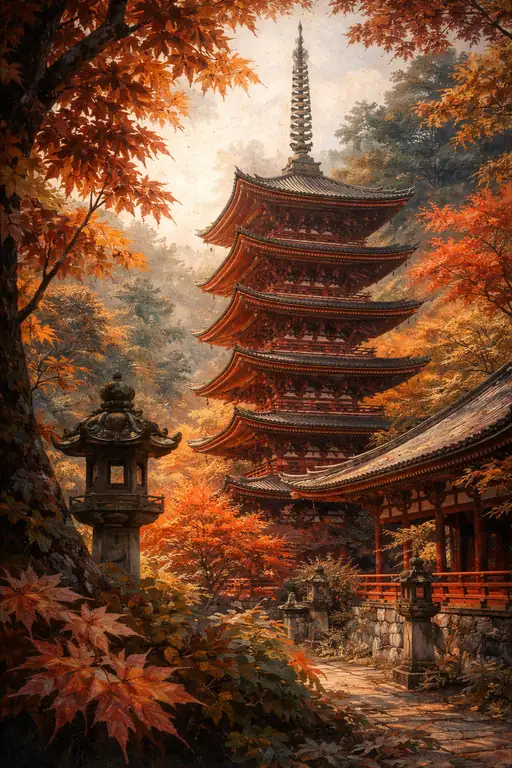 Autumn's Golden Reverie
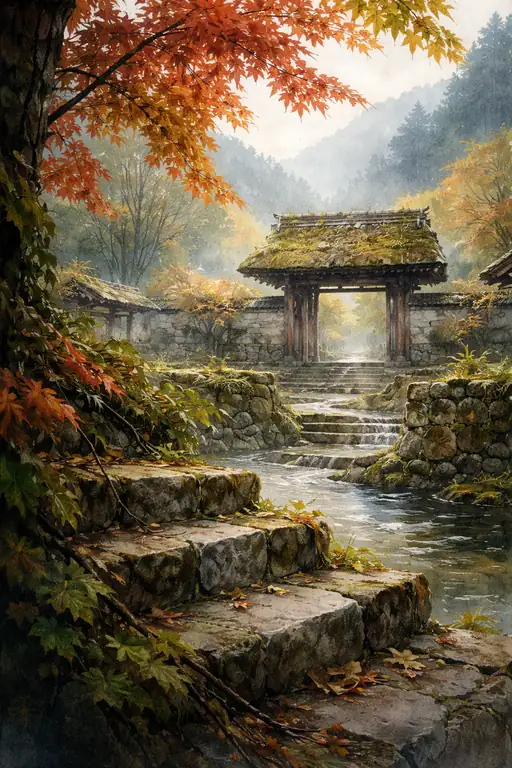 Whispers of Autumn: The Mossy Gate in the Mist
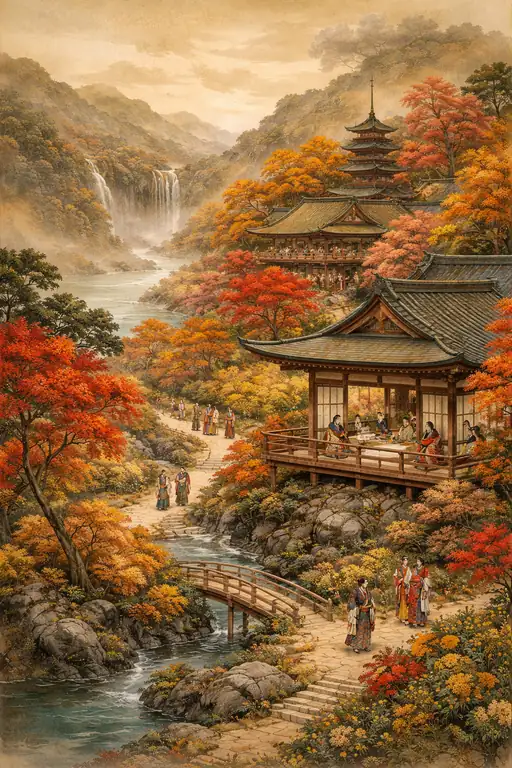 Crimson Canopy
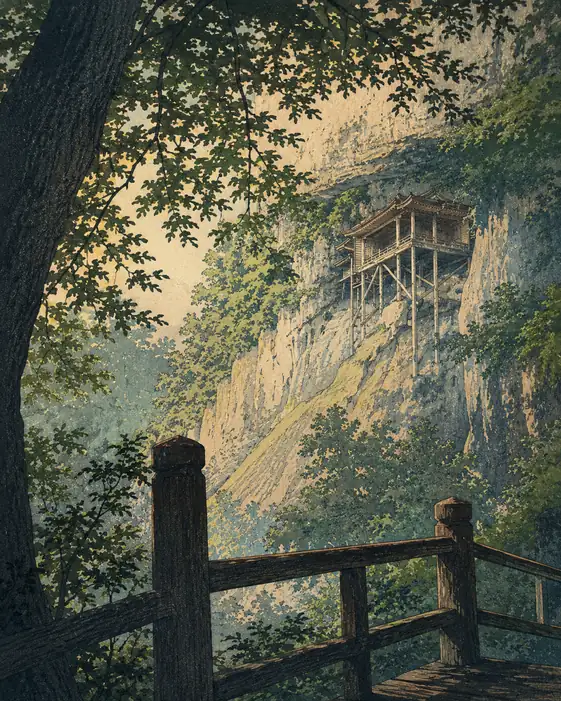 Sanctuary Suspended in the Silent Heights
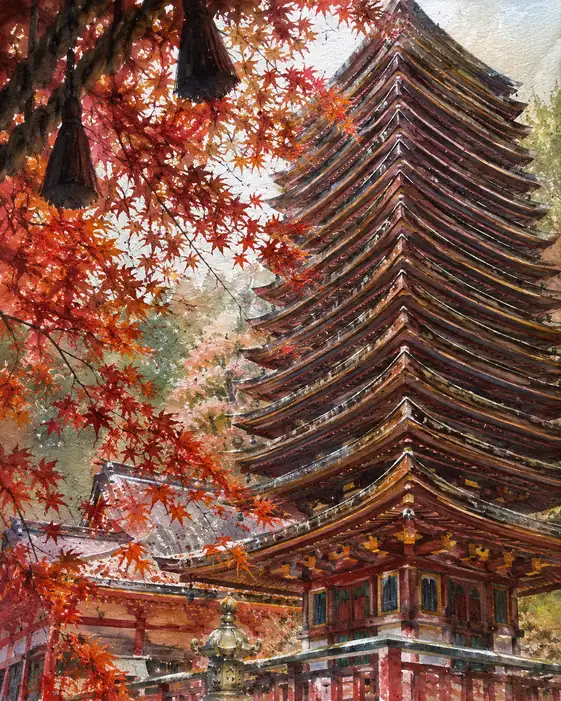 Vermilion Prayer in the Wind