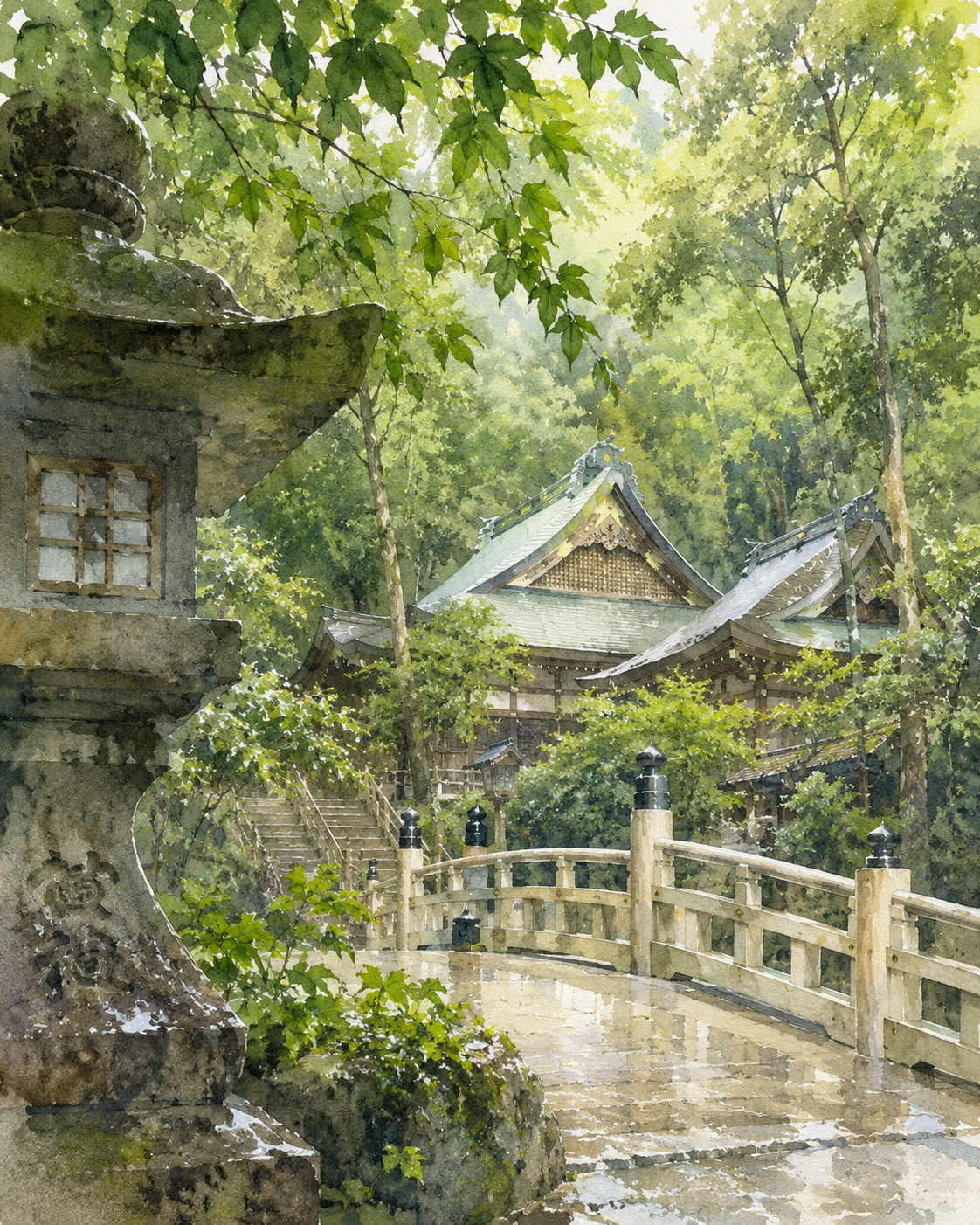
Stillness of the Hidden Sanctuary
Critique
1. Introduction This watercolor painting presents a serene view of a traditional Japanese shrine complex nestled within a dense, verdant forest. The artist employs a delicate touch to capture the quiet dignity of the sacred architecture and its natural surroundings. The overall atmosphere is one of profound tranquility and spiritual stillness. 2. Description In the foreground, a large weathered stone lantern occupies the left side, grounding the viewer's perspective. A wet stone bridge arcs across the lower right, its surface reflecting the soft light filtered through the trees. In the background, multiple shrine buildings with intricate gabled roofs are partially veiled by a lush canopy of maple leaves and deep forest greenery. 3. Analysis The composition utilizes the lantern as a strong vertical anchor, creating a sense of depth that draws the eye toward the distant buildings. The color palette is dominated by a rich spectrum of greens, contrasted with the muted grays and browns of the stonework and timber. Technical mastery is evident in the wet-on-wet watercolor technique, particularly in the shimmering reflections on the pavement and the translucent quality of the foliage. 4. Interpretation and Evaluation This work successfully interprets the concept of "Shinrin-yoku" or forest bathing, where the boundary between human-made structures and the natural world becomes blurred. The depiction of wet surfaces suggests a recent rainfall, adding a layer of sensory realism and a sense of purification to the scene. The execution of light and shadow demonstrates a high level of technical skill, evoking a palpable sense of moisture and cool air. 5. Conclusion While the initial impression is one of simple scenic beauty, a closer examination reveals a sophisticated balance of textures and atmospheric depth. The painting serves as a masterful tribute to the timeless harmony found within Japan's sacred landscapes. It is an exceptional example of atmospheric watercolor painting.
Same Subcategory
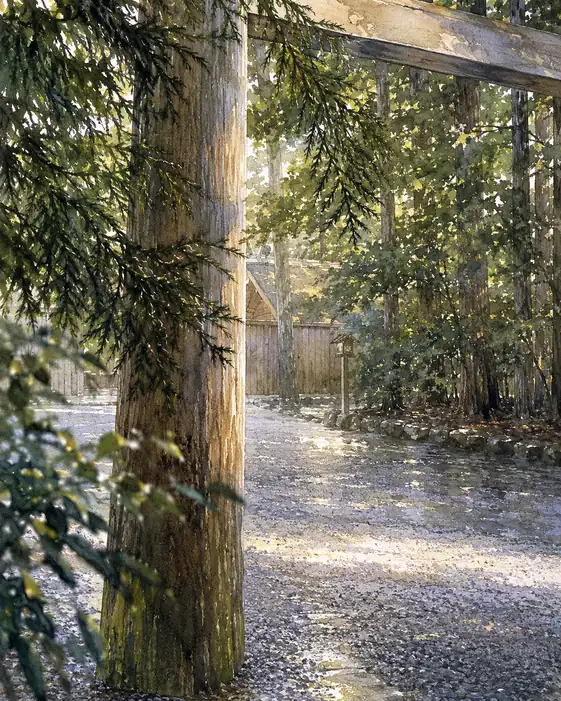 Sunbeams Dancing on the Path of Gods
Similar Artworks
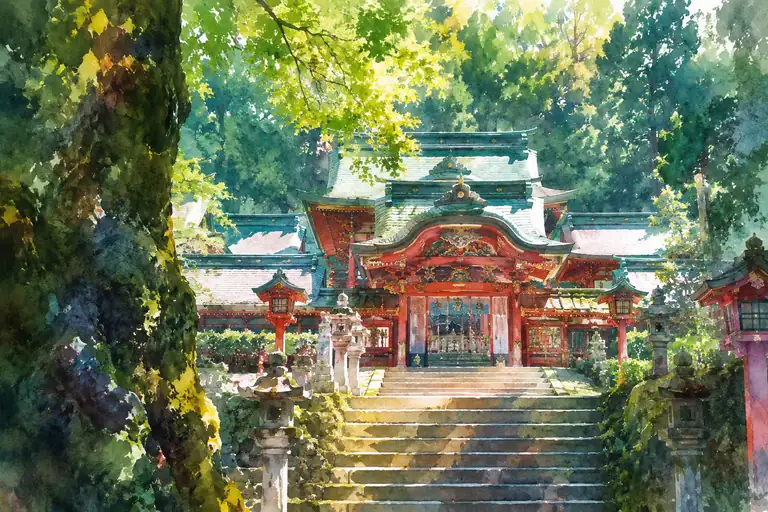 Sunlight on the Sacred Path
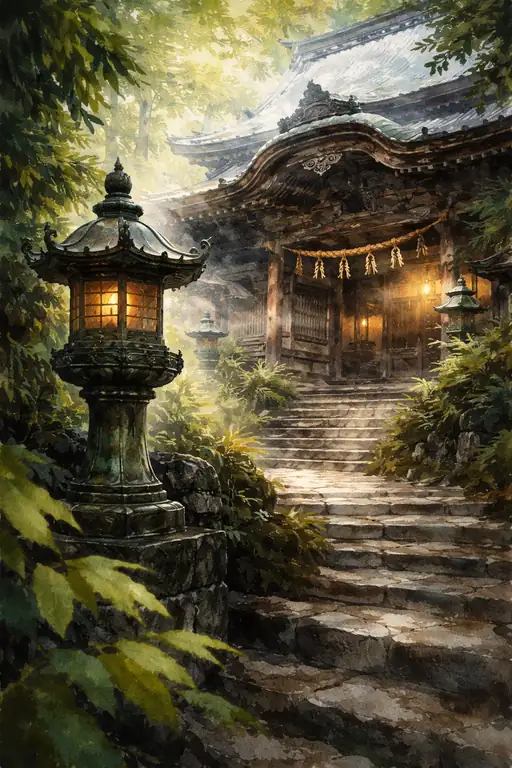 Sanctuary of the Silent Forest
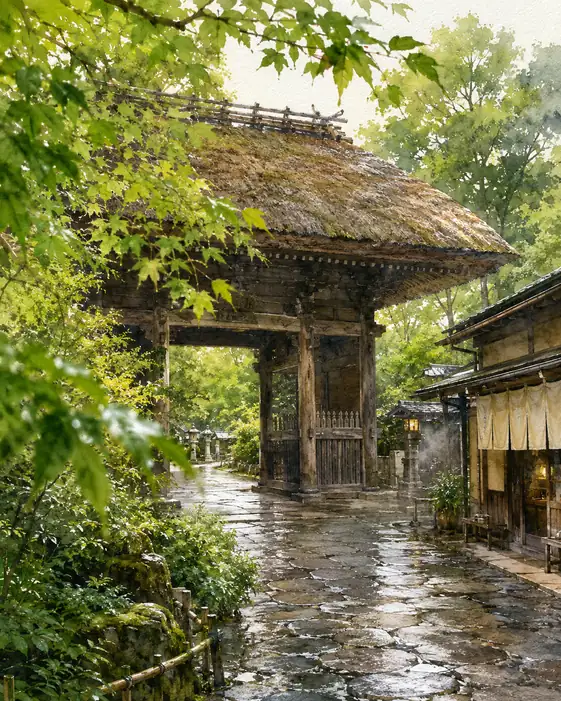 Whispers of the Rain-washed Sanctuary
 Whispers in the Mossy Sanctuary
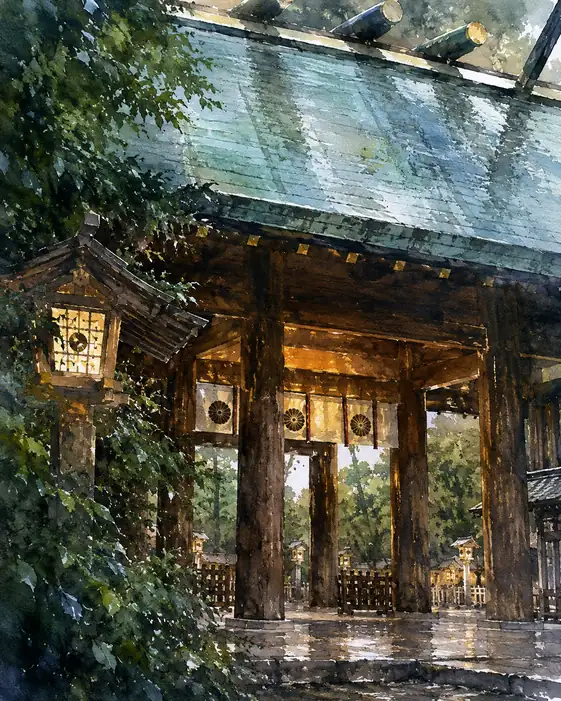 The Silent Breath of the Shrine
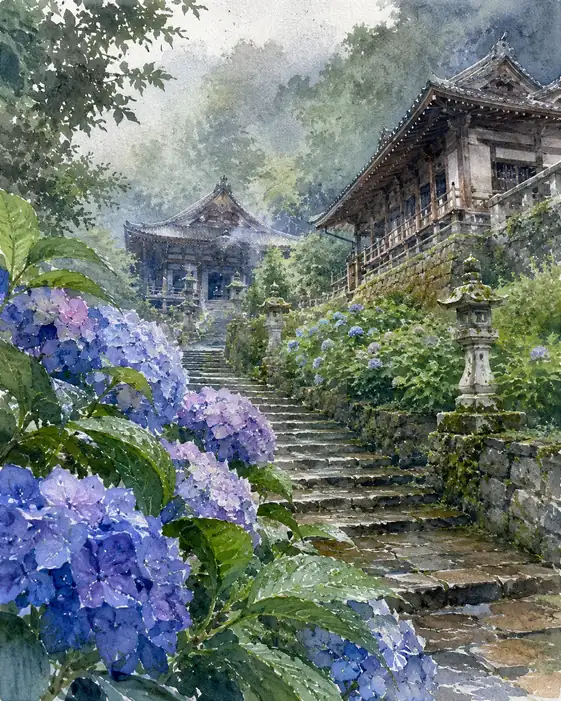 Lullaby in the Azure Rain
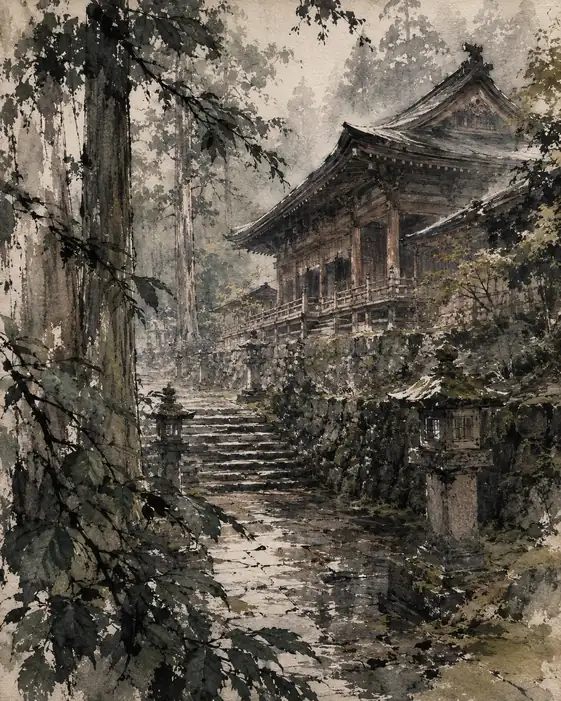 The Sanctuary of Eternal Stillness
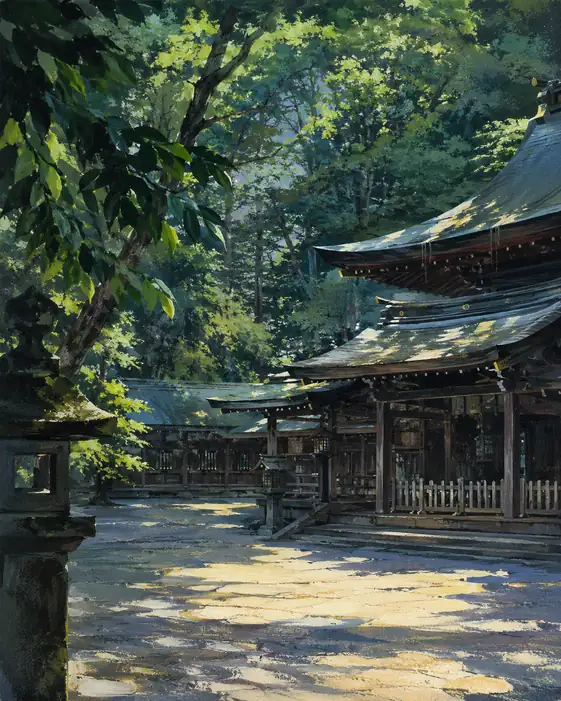 Whispers of the Sunlit Sanctuary
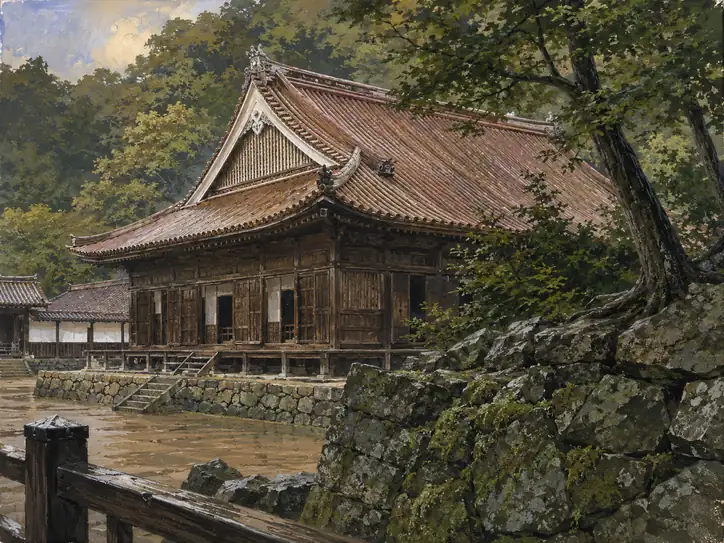 Eternity in the Moss-Covered Hall
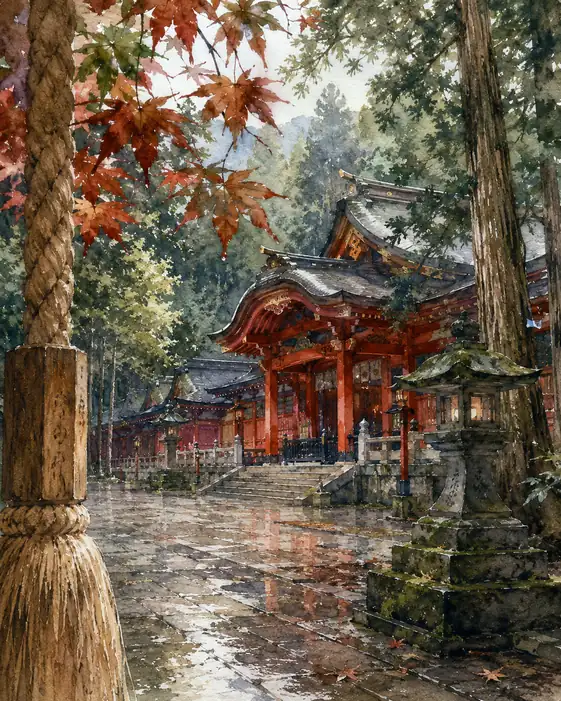 Serenity in the Autumn Rain