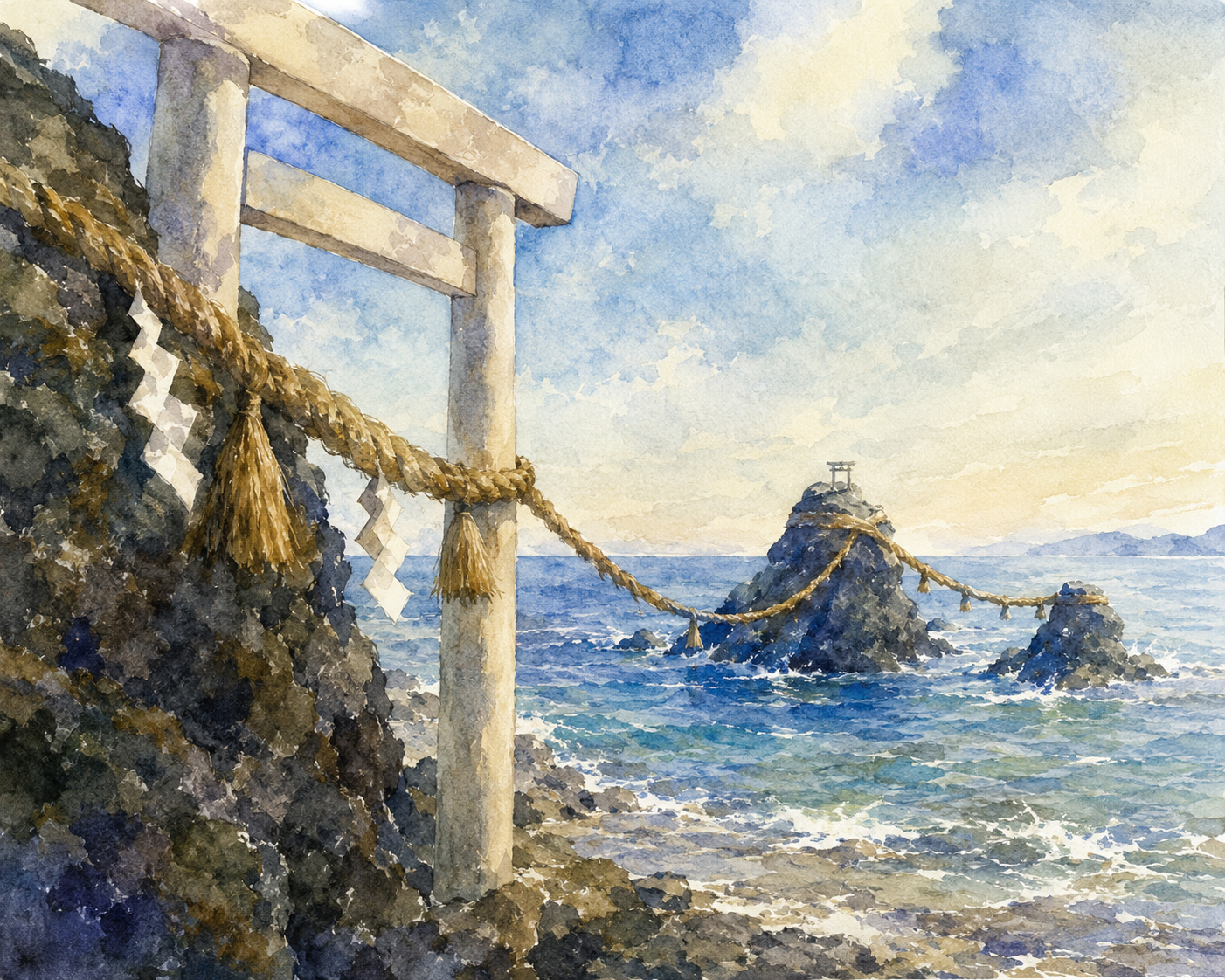
Sacred Bonds: The Dawn of Eternity
Critique
1. Introduction This watercolor painting depicts the serene and sacred coastal landscape of Meoto Iwa, the "Married Couple Rocks," a celebrated landmark in Japan. The composition is framed by a massive stone torii gate in the foreground, which serves as a symbolic entrance to the spiritual scene that unfolds across the ocean. A thick, sacred shimenawa rope, adorned with white paper streamers, elegantly connects the rugged shoreline rocks to the offshore formations. The artist captures the essence of this traditional site through a harmonious blend of meticulous detail and the atmospheric, fluid qualities of watercolor, evoking a sense of tranquility and reverence for the natural world. 2. Description The foreground features a weathered stone torii gate on the left, its pale surface rendered with delicate grey and beige washes. A heavy, braided shimenawa rope is tied to the gate, stretching across the frame toward two prominent rocks rising from the deep blue sea. The rocks are depicted with dark, textured brushwork, emphasizing their craggy and ancient character. A small, secondary torii gate sits atop the larger offshore rock, further signifying the sacred nature of the site. The ocean is rendered with vibrant shades of ultramarine and cerulean, with white foam indicating the gentle movement of waves against the shore under a bright, cloud-filled sky. 3. Analysis Technical mastery is evident in the artist’s ability to balance the heavy, solid forms of the rocks and torii with the light, ephemeral qualities of the water and sky. The use of stippling and dry-brush techniques creates a convincing texture for the volcanic rocks and the coarse fiber of the sacred rope. In contrast, the sea and sky are treated with broad, transparent washes that utilize the white of the paper to suggest brilliant light. The composition follows a dynamic diagonal line created by the shimenawa rope, which effectively links the foreground to the background and guides the viewer's eye across the expansive maritime environment. 4. Interpretation and Evaluation The painting succeeds in translating a culturally significant landscape into a compelling visual experience that emphasizes the spiritual connection between land and sea. The deliberate inclusion of the large foreground torii creates a sense of scale and perspective, making the viewer feel as though they are standing at the threshold of a sacred space. The work skillfully avoids clichéd representations by focusing on the raw, natural beauty of the textures and the specific quality of light found at the coast. It is a highly proficient technical study that respects the traditions of Japanese landscape art while utilizing the western watercolor medium to achieve a fresh and luminous result. 5. Conclusion In summary, this work is a refined and sensitive portrayal of a sacred Japanese site, showcasing the artist's ability to capture both physical form and spiritual atmosphere. The initial impression of a grand coastal vista is enriched by the thoughtful details of the sacred ornaments and the varied textures of the natural elements. The artist’s control over the watercolor medium allows for a vivid yet peaceful interpretation of the Meoto Iwa, leaving a lasting impression of harmony and timelessness. This piece serves as an excellent example of how traditional subject matter can be revitalized through confident and expressive representational painting techniques.
Same Subcategory
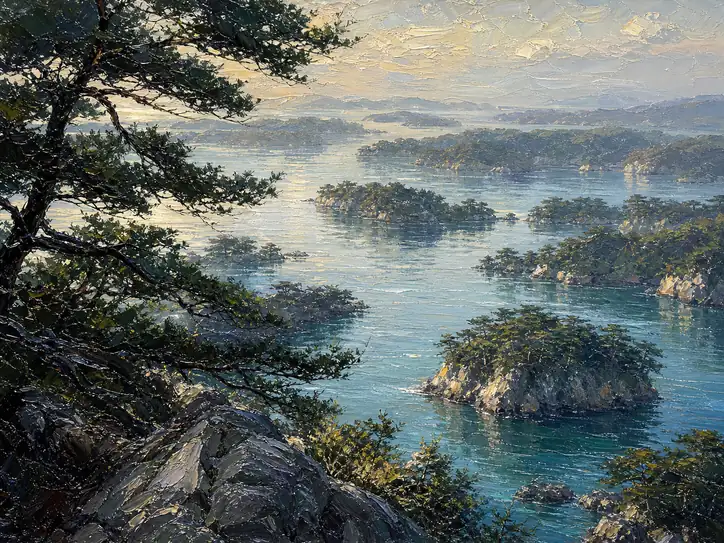 The Shimmering Archipelago of Ancient Pines
Similar Artworks
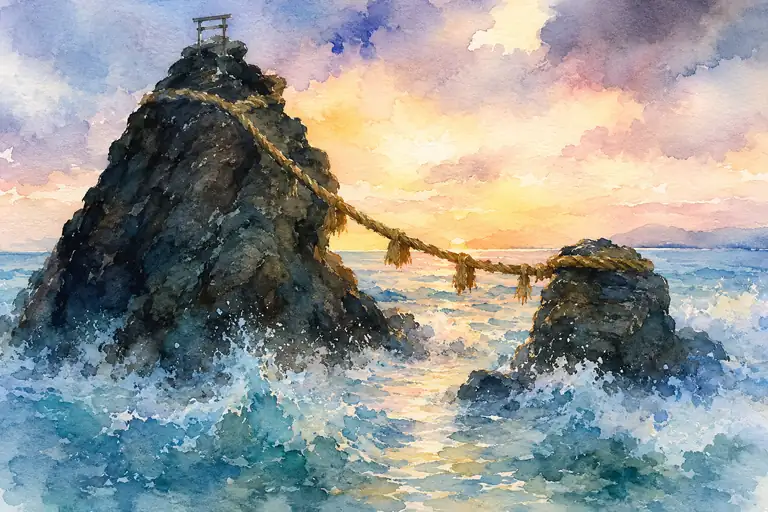 The Sacred Bond: Twilight Over the Tides
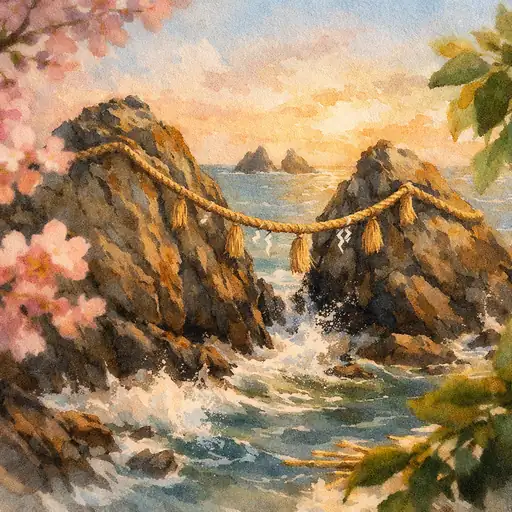 The Sacred Bond at Sunset
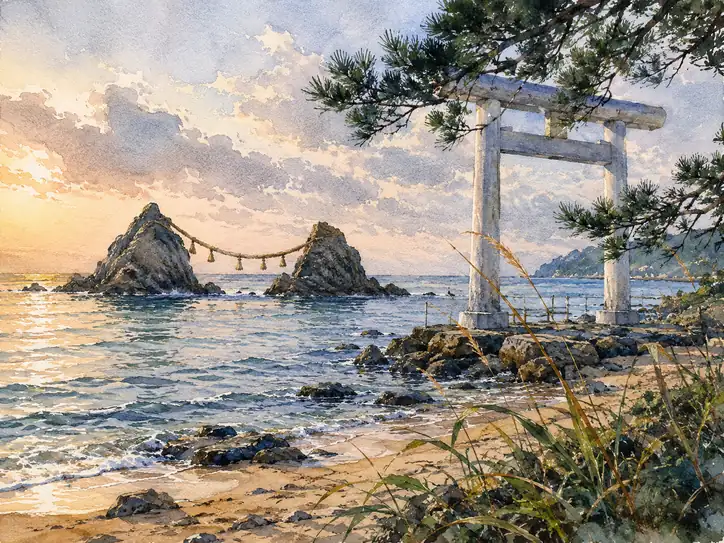 Vow of the Crimson Tide
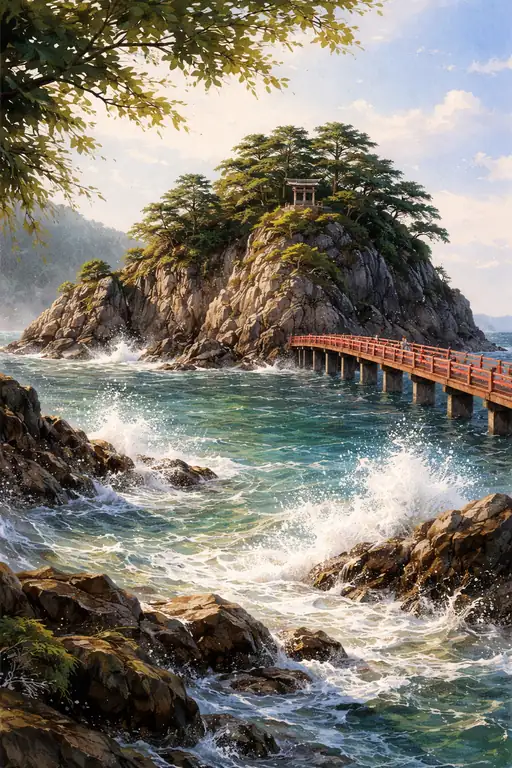 Sacred Shores: The Red Path to the Craggy Isle
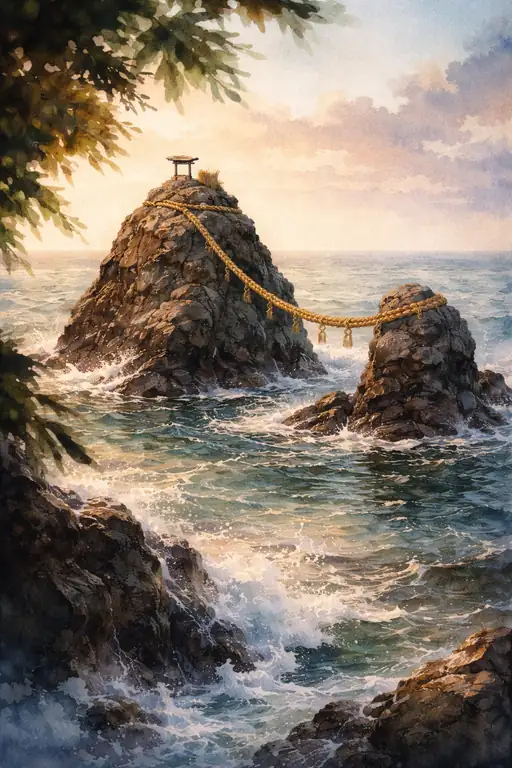 Echoes of an Eternal Vow
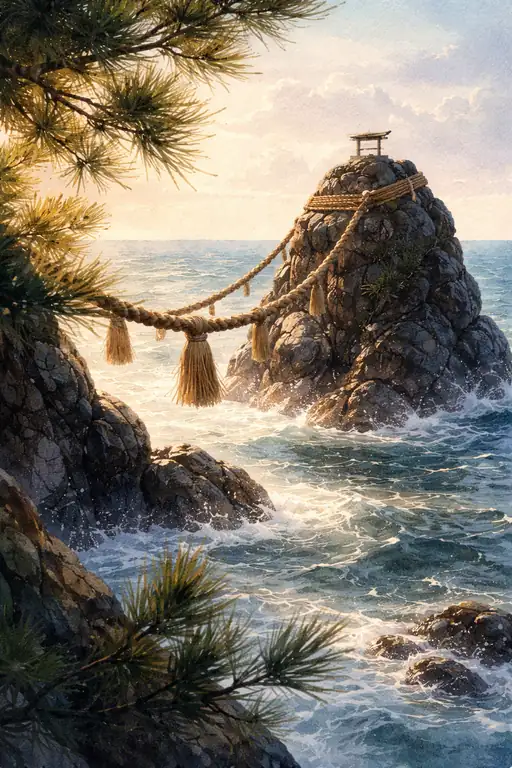 Symphony of the Eternal Tide
 The Crimson Threshold to Peace
 Threshold to the Divine Peak
 Guardian of the Sacred Path
 Awakening the Sacred Path