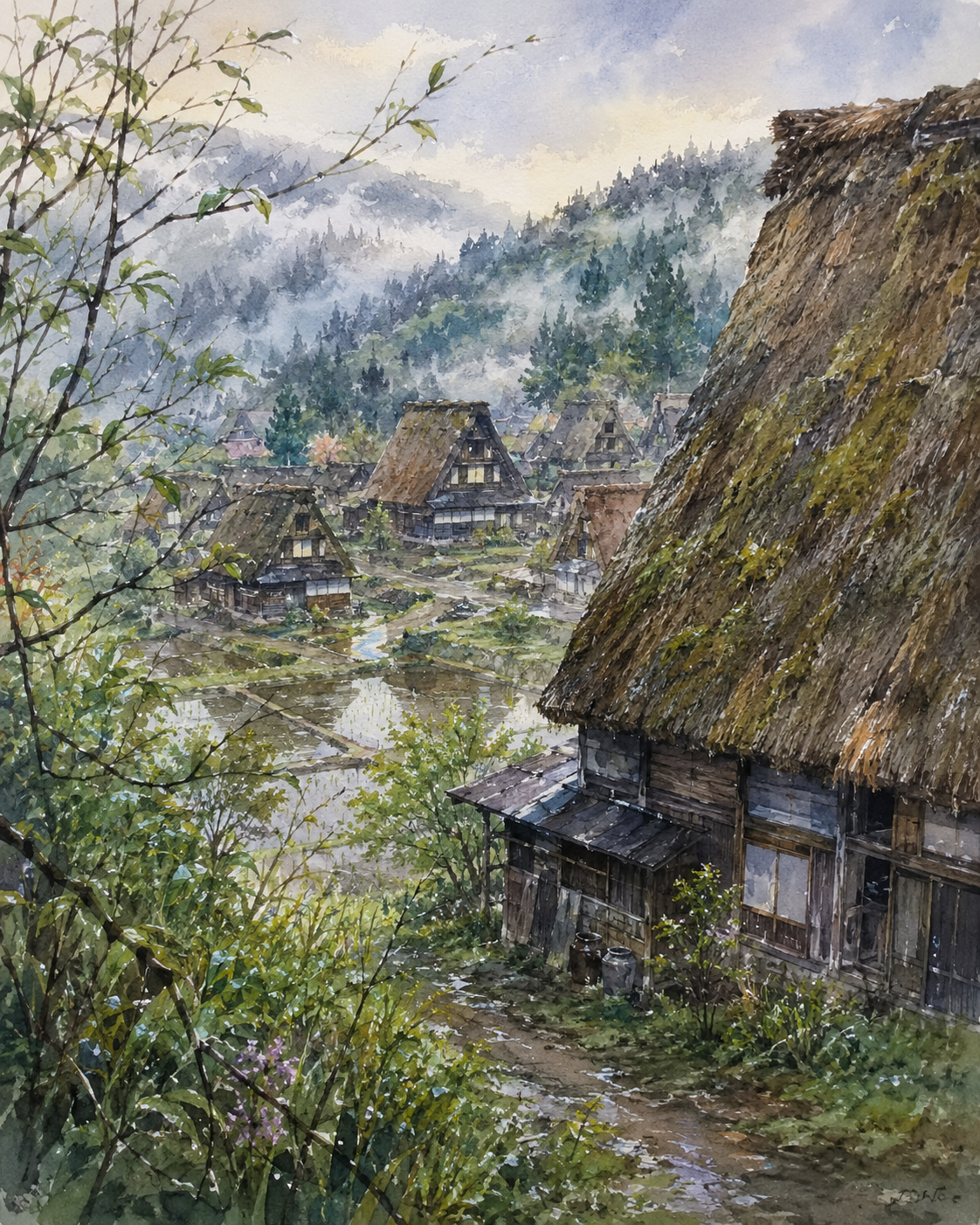
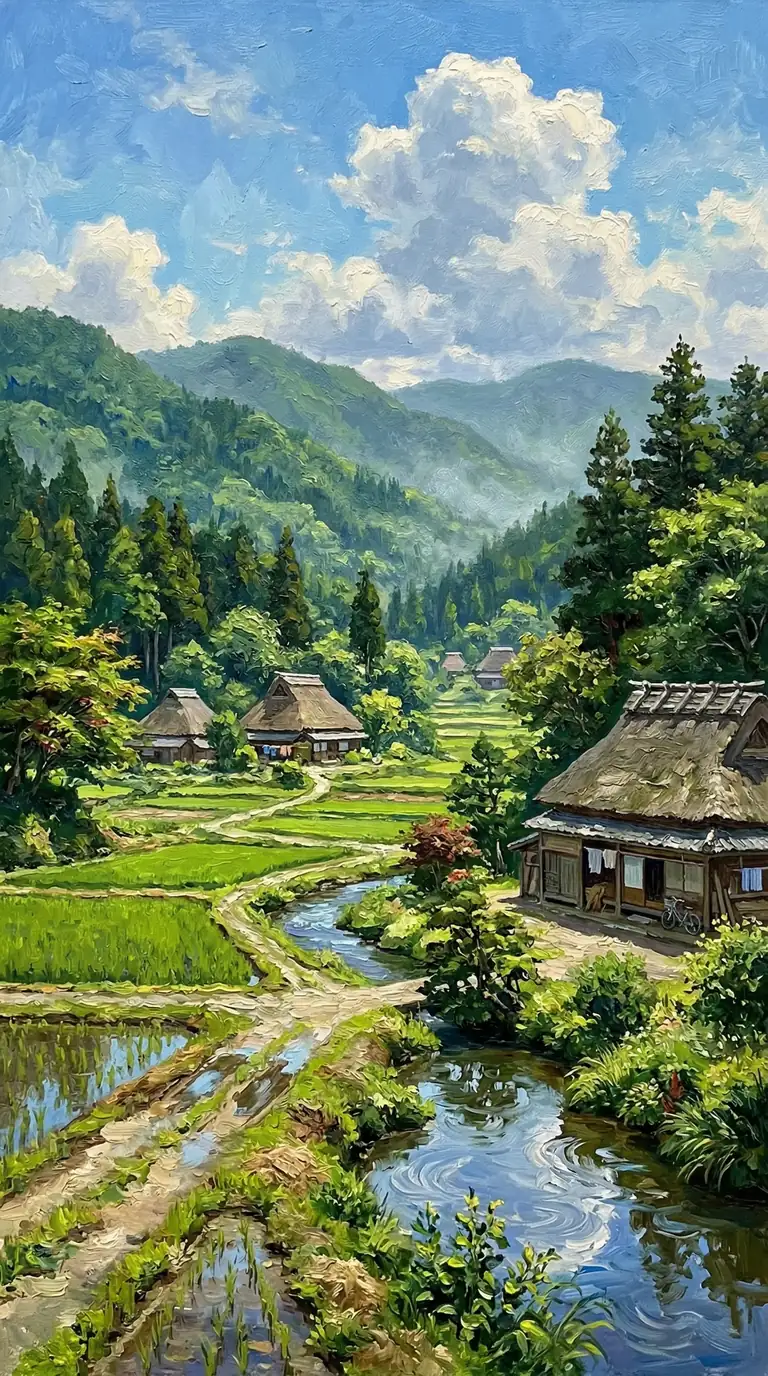
Mirror of the Verdant Heart: Morning at the Water's Edge
Critique
1. Introduction This watercolor painting offers a vivid and evocative portrayal of a traditional Japanese rural landscape, featuring the distinctive thatched-roof architecture of a mountain village. The work highlights the intricate connection between agricultural practices and the natural environment, specifically focusing on the flooded rice paddies that characterize the region. Through a lush color palette and sensitive brushwork, the artist conveys a sense of growth, moisture, and the quiet rhythm of rural life. 2. Description In the foreground, a large, weathered house with a steep thatched roof anchors the right side of the composition, while dense green foliage frames the left. A damp dirt path leads the eye toward the center, where several flooded rice paddies reflect the pale morning sky and the surrounding structures. Beyond the village, a series of rolling hills covered in a dense forest of pine and cedar rise into a soft, misty atmosphere, suggesting a high-altitude setting. 3. Analysis The technical highlight of this work is the masterful depiction of reflections on the water's surface, achieved through delicate washes that mirror the forms of the houses and the light of the sky. The artist uses a wide range of green tones—from deep forest hues to bright, translucent yellows—to create a sense of vibrant vitality in the vegetation. The diagonal placement of the path and the receding scale of the buildings effectively establish a strong sense of spatial depth. 4. Interpretation and Evaluation The painting can be interpreted as a tribute to the enduring harmony between man and nature, centered on the cyclical nature of rice cultivation. From a critical perspective, the work excels in its ability to capture specific textures, such as the coarseness of the thatch and the fluidity of the water, within a unified atmospheric whole. The balance between the solid, geometric forms of the architecture and the organic, soft textures of the landscape is particularly noteworthy. 5. Conclusion What begins as a charming representation of a rustic village reveals itself to be a sophisticated study of light, reflection, and natural abundance. This artwork successfully translates the unique character of the Japanese countryside into a cohesive and emotionally engaging visual narrative. Its combination of technical precision and poetic atmosphere marks it as a distinguished example of contemporary landscape painting that honors traditional subjects.
Same Subcategory
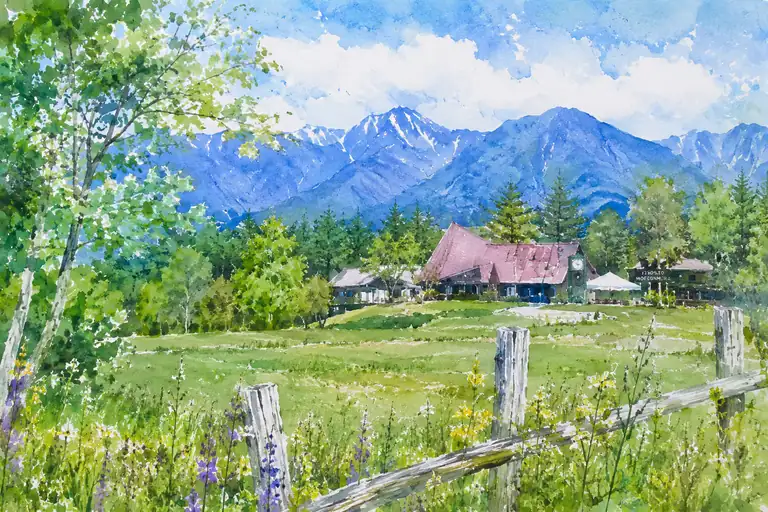 Pastoral Serenity under Blue Peaks
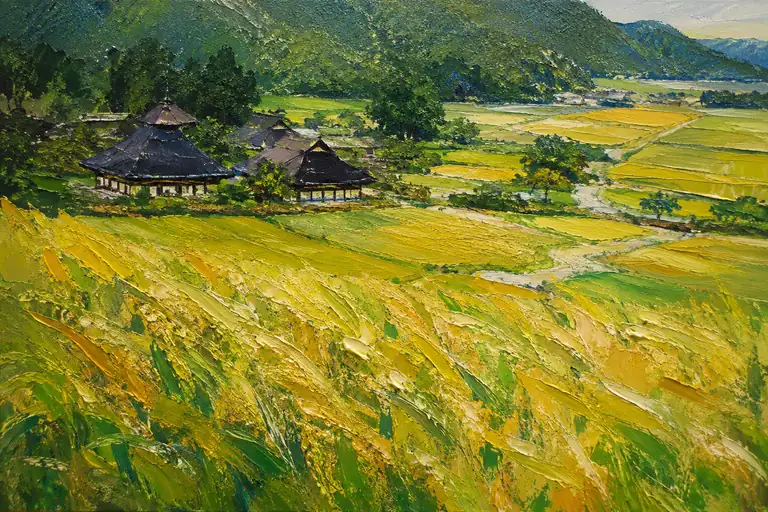 Golden whispers of the autumn harvest dancing upon the ancient rice fields here.
Similar Artworks
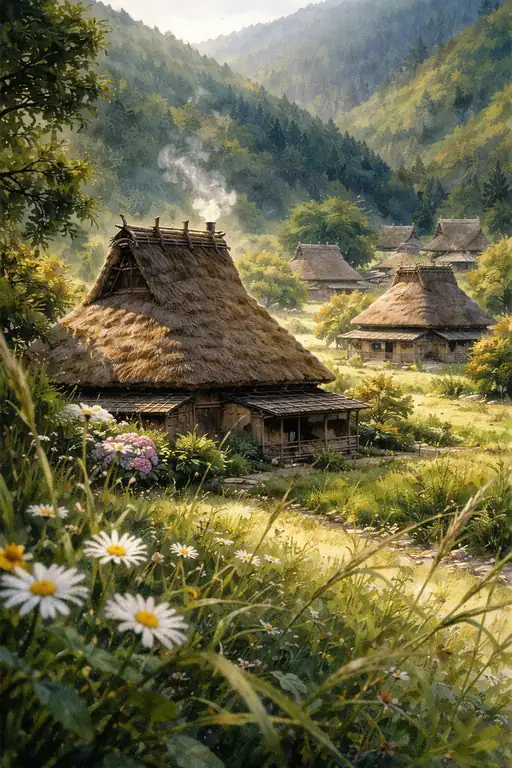 Whispers of the Golden Valley
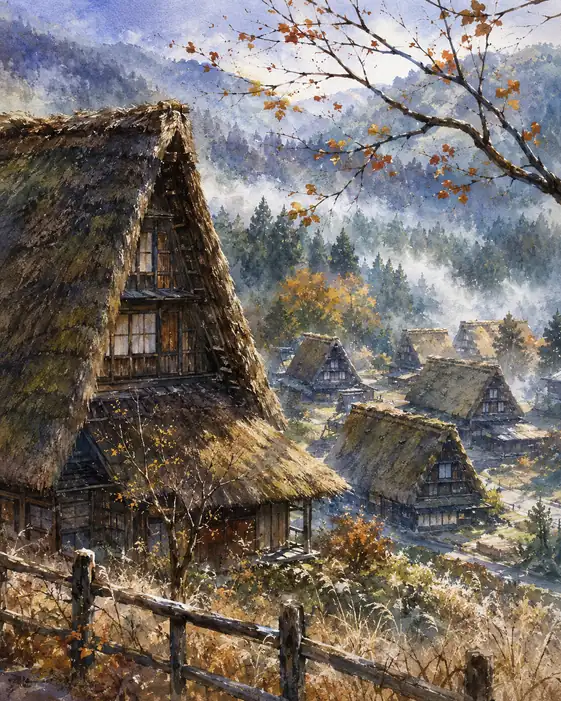 Echoes of the Thatch: A Misty Autumn Memory
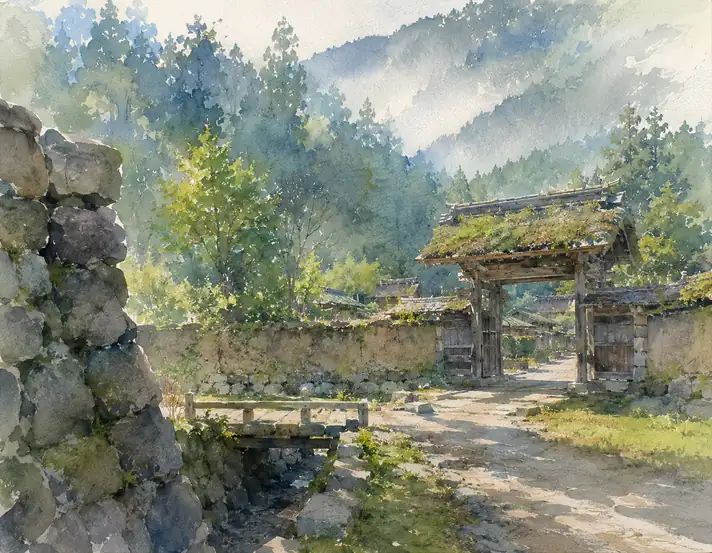 The Silent Gate Where Time Lingers
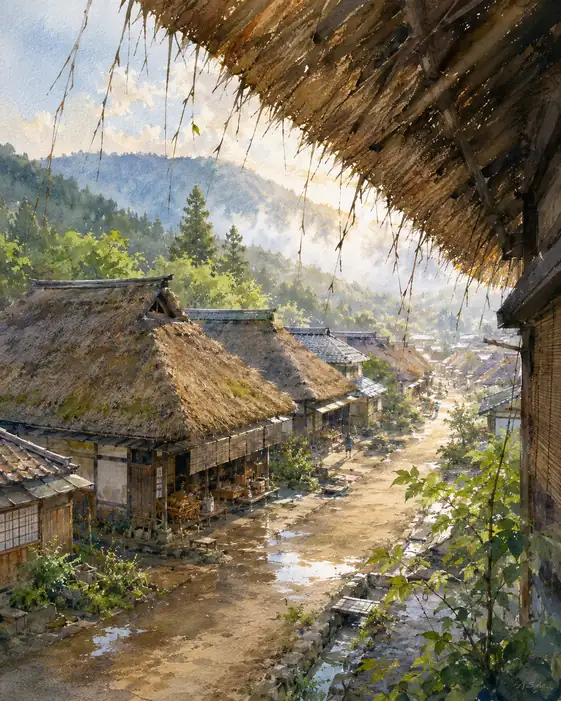 Echoes of the Thatched Village
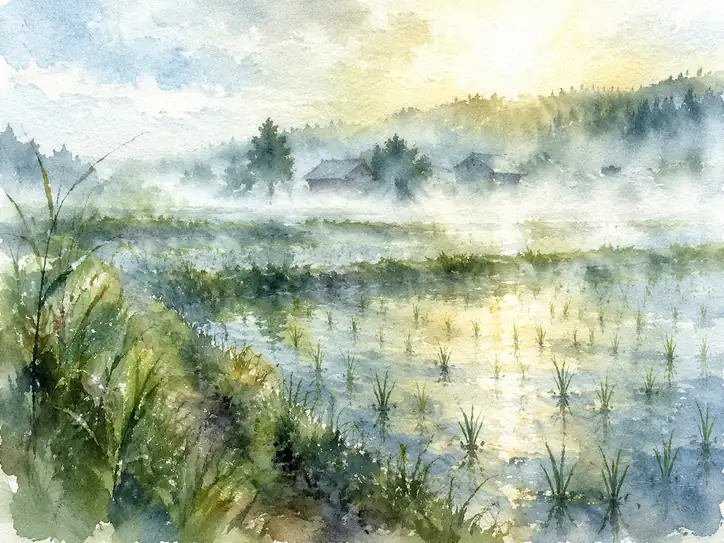 Awakening of the Hazy Paddies
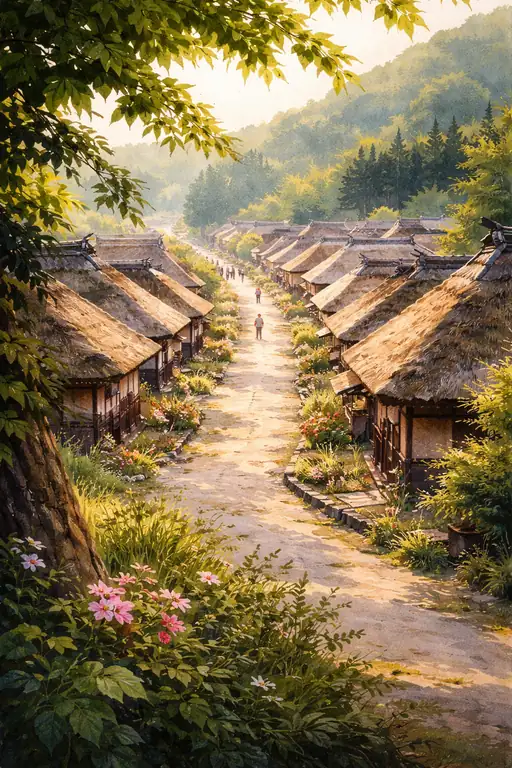 Tranquil Shadows Along the Thatched Village Road
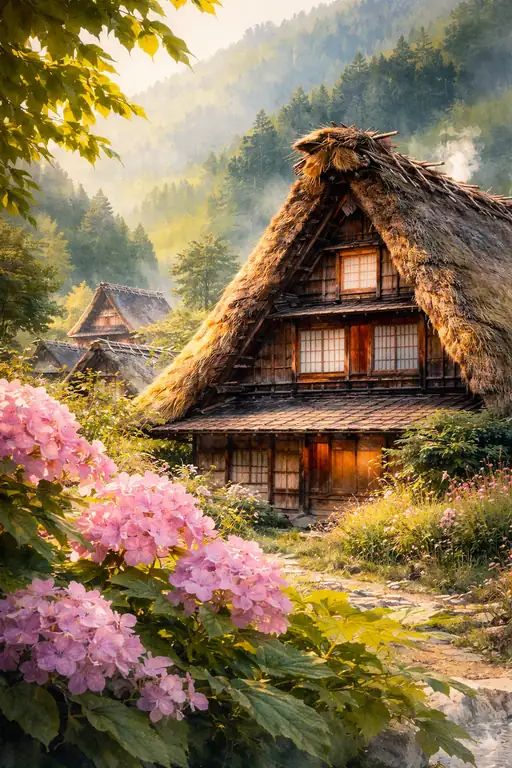 Summer Bloom Beneath the Thatched Eaves
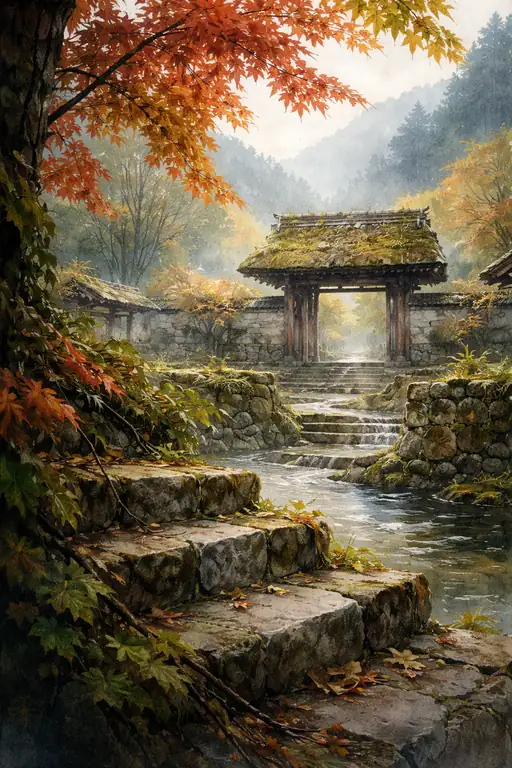 Whispers of Autumn: The Mossy Gate in the Mist
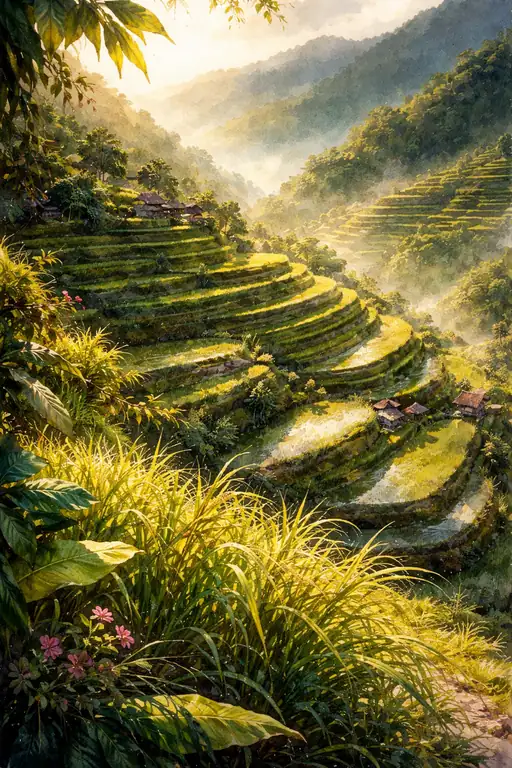 Golden Terraces Touched by the Morning Mist
 Autumn's Ascendancy: A Tapestry of Crimson and Gold