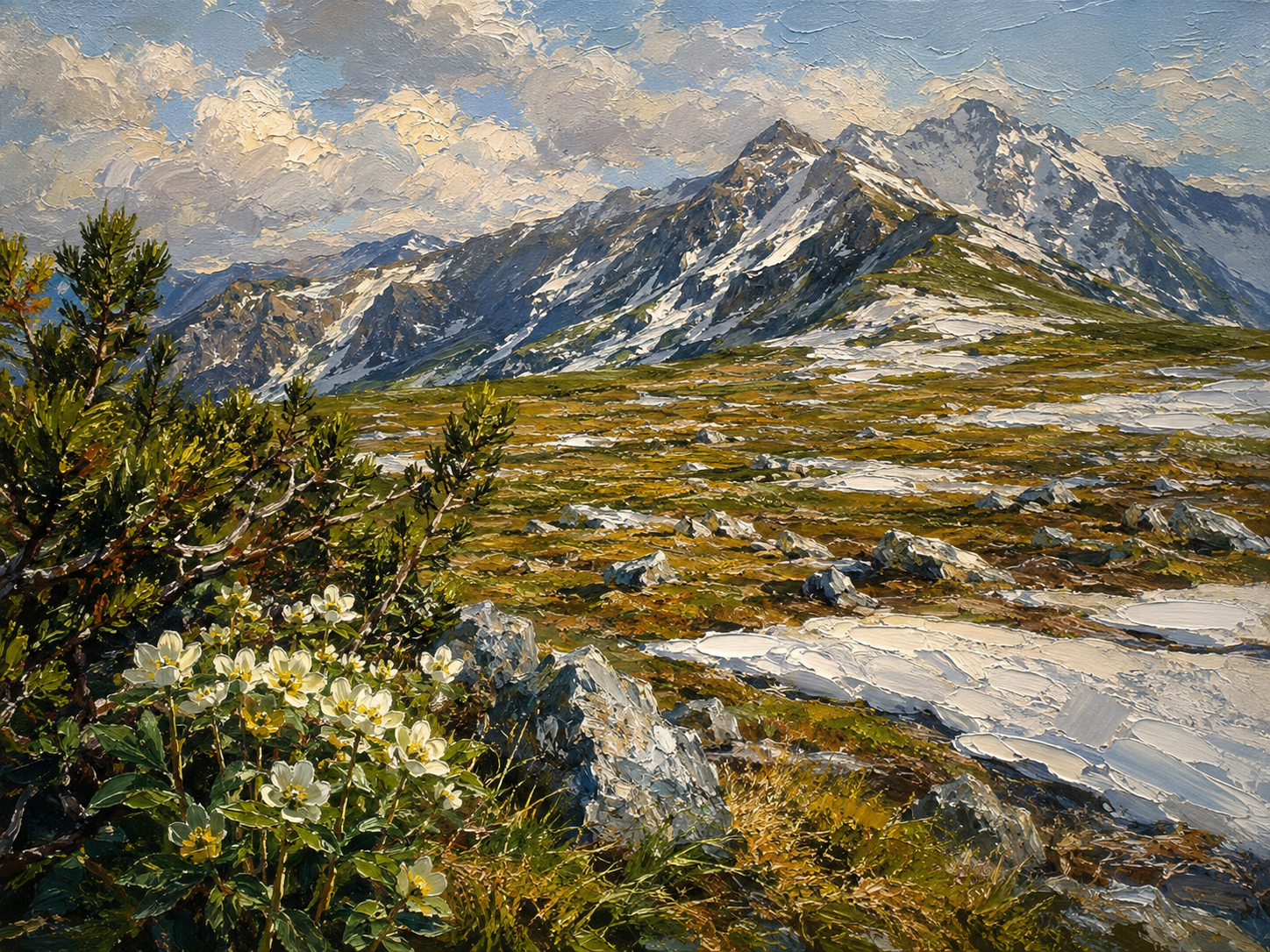
Resilience in the Kingdom of Peaks
Critique
1. Introduction This oil painting presents a majestic high-altitude landscape, featuring rugged, snow-capped peaks under a dynamic, cloud-filled sky. The composition captures the raw beauty and formidable atmosphere of an alpine environment, where the harshness of the terrain coexists with the delicate life of mountain flora. Utilizing a bold impasto technique, the artist emphasizes the physical presence of the landscape, inviting viewers to experience the texture and scale of the mountains through a sophisticated interplay of material and light. 2. Description The background is dominated by towering mountain ranges with sharp ridges, their surfaces partially covered in thick layers of white snow. Above them, a turbulent sky is rendered with swirling brushstrokes of gray, blue, and white, suggesting shifting weather patterns. In the foreground, clustered white wildflowers with yellow centers and dark green pine branches occupy the left side, providing a counterpoint to the vast expanse of the rocky, snow-streaked meadow that stretches toward the peaks. The color palette is composed of cool whites, blues, and grays, contrasted by earthy greens and yellows. 3. Analysis The technical highlight of this work is the expressive use of heavy impasto, which adds a tactile dimension to the snow and rocky outcrops. The composition is balanced by the strong diagonal line of the mountain ridge, which creates a sense of upward movement and depth. Color distribution is carefully managed; the brilliant whites of the snow are offset by the subtle grays of the rock, while the small blossoms in the foreground act as critical focal points that humanize the vastness. The lighting appears diffused yet powerful, illuminating the scene from above the clouds. 4. Interpretation and Evaluation The primary strength of the painting lies in its vigorous execution and its ability to convey the essence of the wilderness. The artist demonstrates exceptional control over the oil medium, using thick applications to mimic the geological features of the mountain. While the style borders on expressionistic, the accurate depiction of alpine light and vegetation reveals a disciplined study of nature. This work successfully evokes the sublime—a mixture of awe and solitude—and stands as a potent representation of the untamed natural world through the lens of modern impressionism. 5. Conclusion At first glance, the painting impresses with its energetic application of paint, but a sustained observation reveals a harmonious structural integrity. The piece functions effectively at multiple distances, offering a grand vista from afar and a complex mosaic of textures upon closer inspection. It transcends mere topographical documentation, instead capturing the atmospheric spirit and vitality of the high mountains. Ultimately, the artist has created a compelling visual narrative that celebrates the enduring grandeur and intricate beauty of the alpine ecosystem.
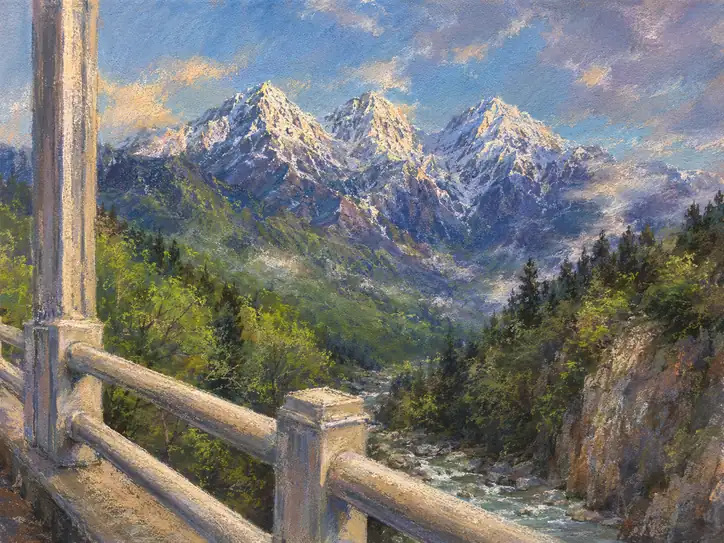 A Glimpse of the Eternal
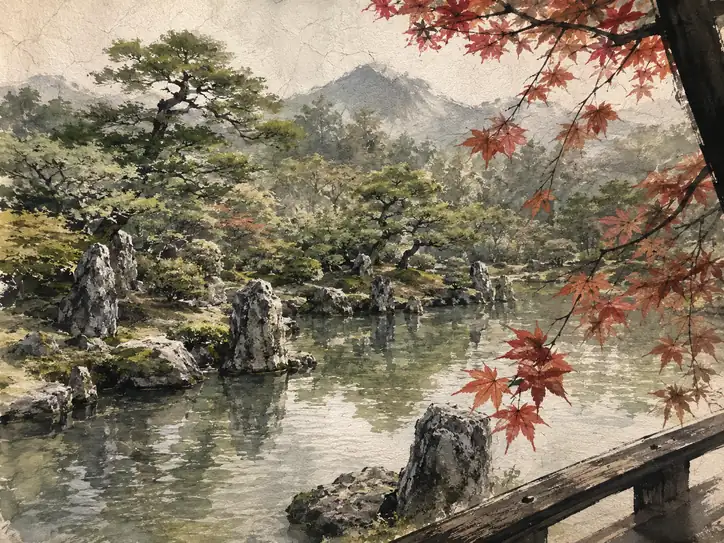 The Infinite Garden: Breath of the Autumn Mist
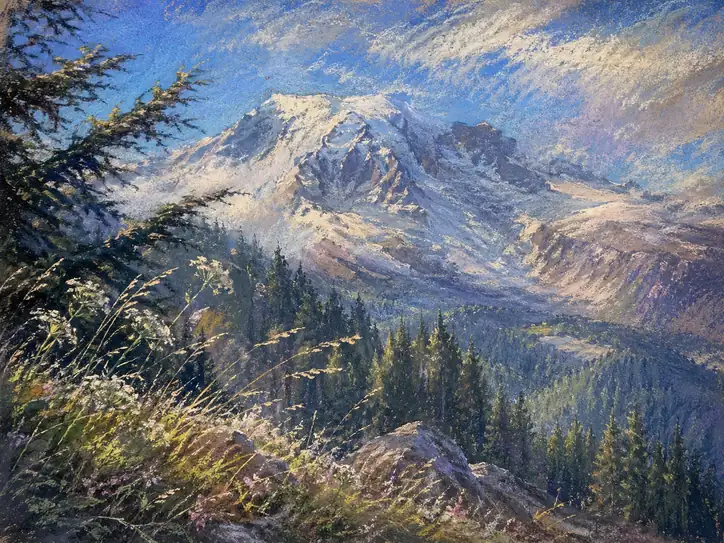 The Peak Where Silence Breathes
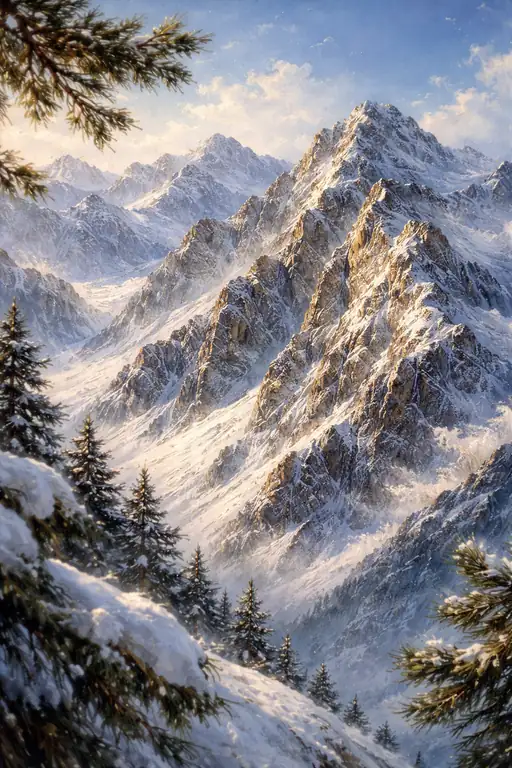 Sovereign of the Crystalline Summit
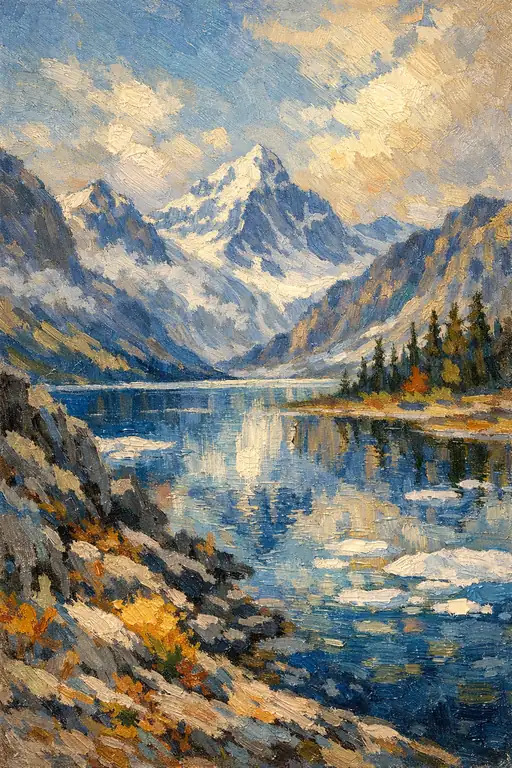 Silent Majesty of the Frozen Mirror
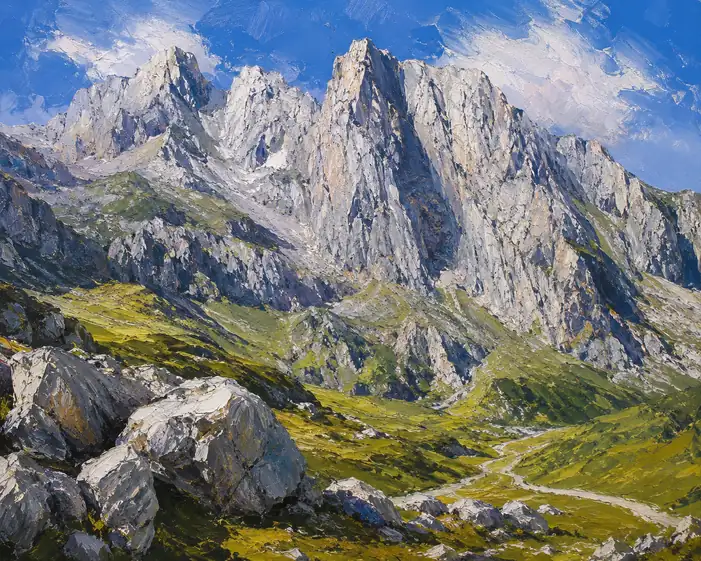 The Silent Roar of Stone
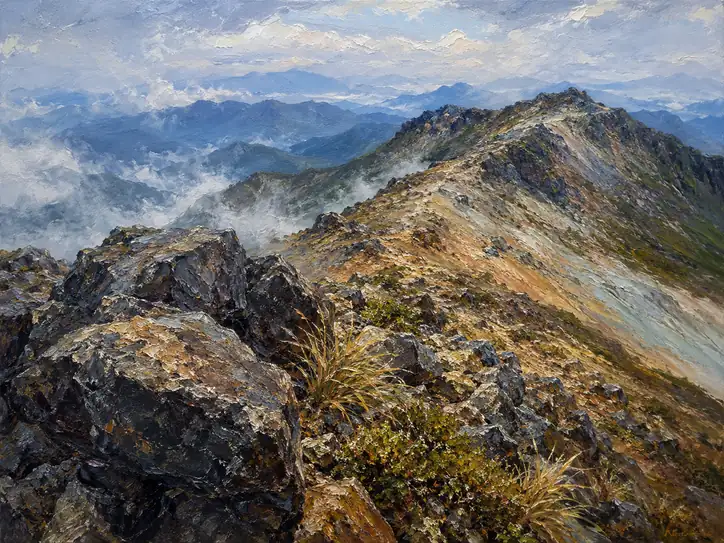 Echoes from the Alpine Crest
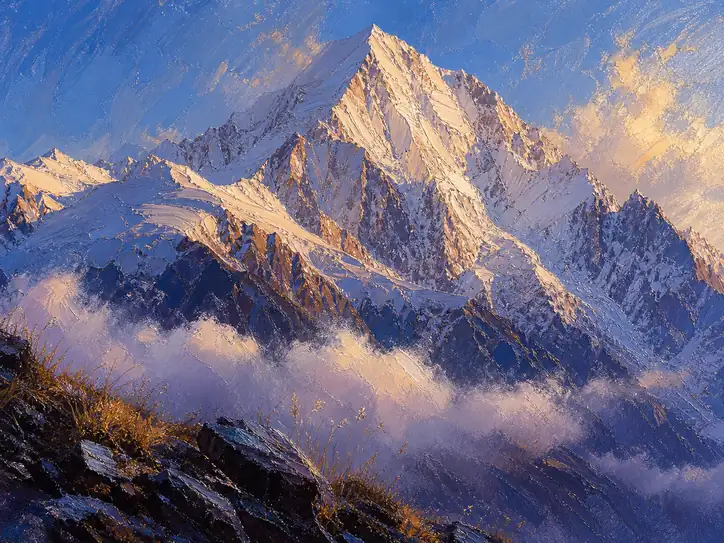 Summit of Golden Solitude
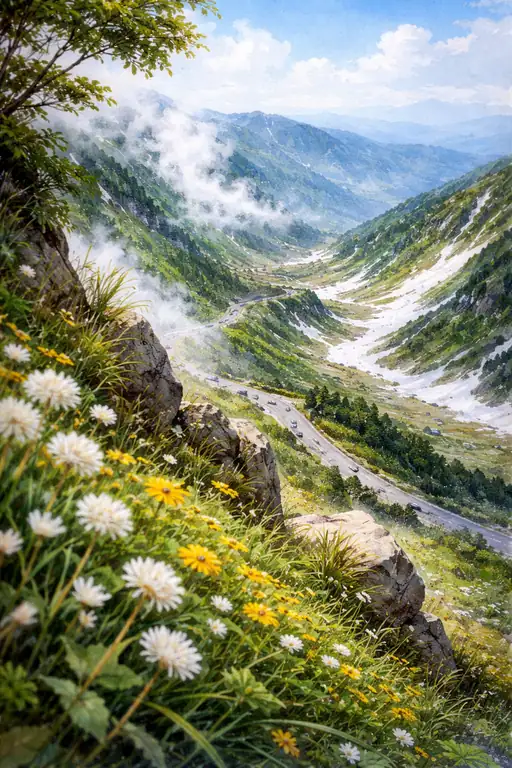 Whispering Heights
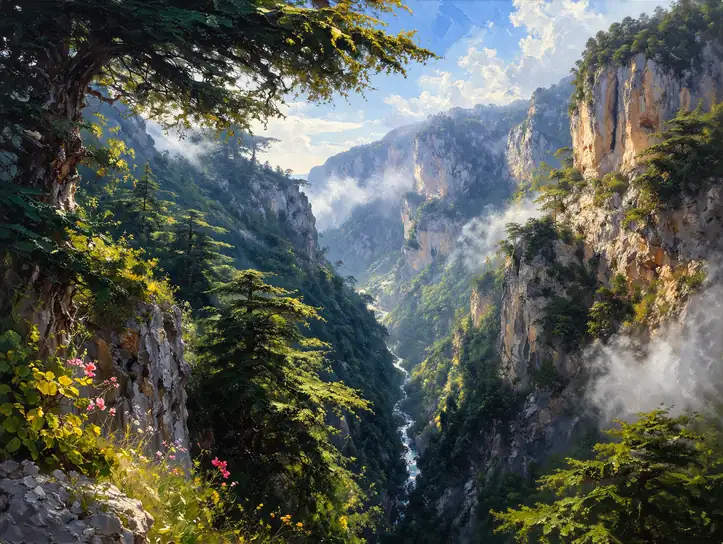 A Solitary Pause
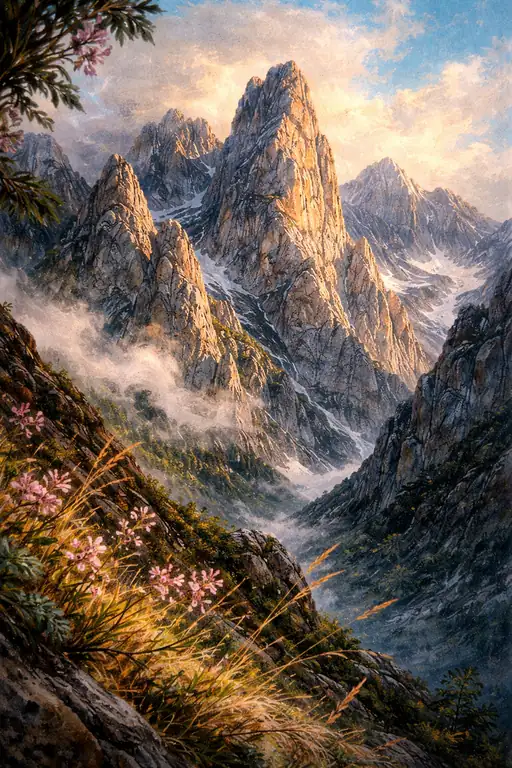 Awakening of the Giants