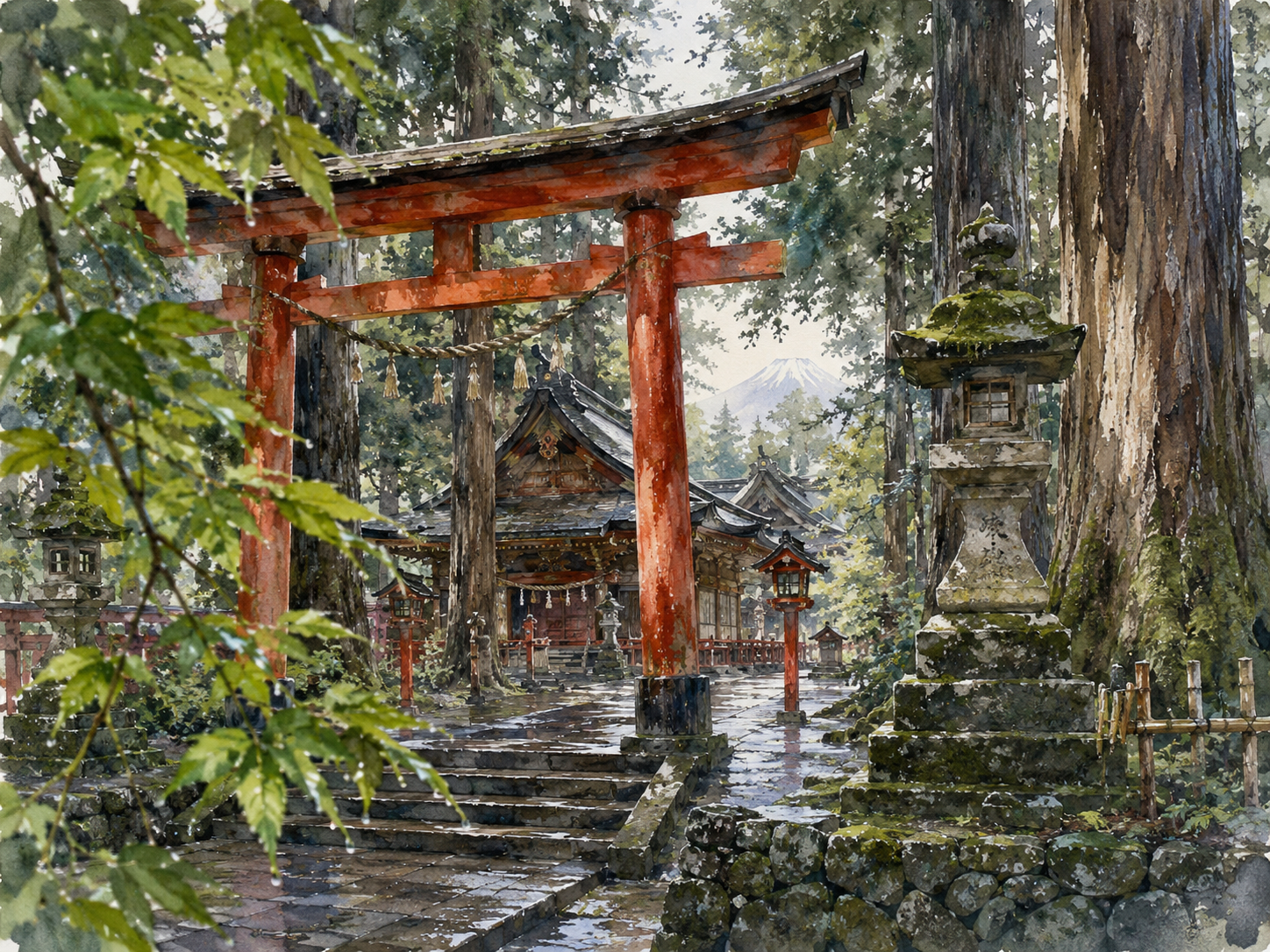
Sacred Breath in the Ancient Forest
Critique
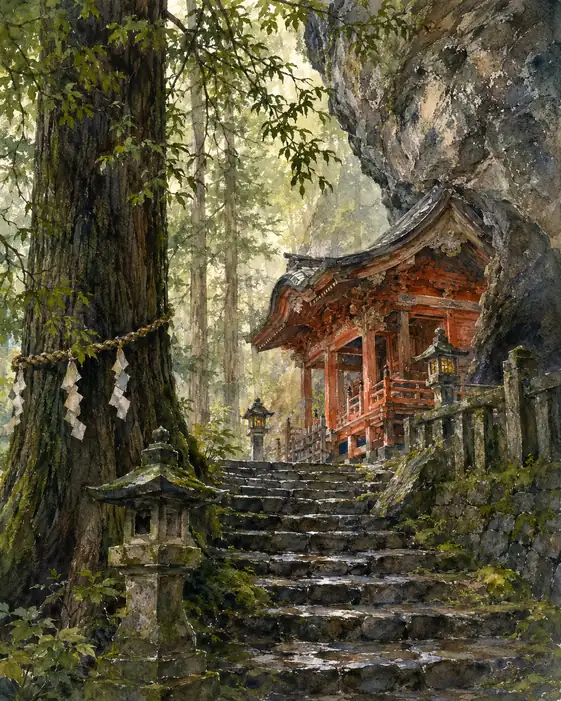
1. Introduction This watercolor painting is an exceptionally detailed depiction of an ancient shrine nestled in a deep forest. The artist evocatively captures the moist atmosphere after a rain and the texture of moss-covered stone through masterful technique. While taking a traditional Japanese sacred space as its subject, the meticulous depiction of details such as light reflections and dripping water conveys a profound sense of awe toward nature. 2. Description A vibrant vermilion torii gate stands in the center, with the shrine building situated quietly behind it. In the foreground, green maple leaves dripping with water are arranged, while on the right, a magnificent stone lantern covered in moss stands beside towering ancient trees. The stone-paved path is wet, faintly reflecting its surroundings, and the elegant silhouette of Mount Fuji can be glimpsed in the misty distance. 3. Analysis The color palette creates a rhythmic composition through the contrast between the torii's red and the forest's deep greens. Techniques such as dry brushing are employed to express transparent shadows and complex stone textures. The composition is built with skillful layering that guides the eye from the foreground to the distance, effectively emphasizing the depth and sanctity of the shrine grounds. 4. Interpretation and Evaluation This work is an outstanding reinterpretation of the "kannabi" concept—nature as a divine dwelling—through modern realism. The artist's sharp observation and skill culminate in the depiction of glowing moss and an atmospheric expression of humidity. The power to encapsulate the forest's breath and a sacred presence within silence offers the viewer a refreshing emotional experience and a sense of tranquility. 5. Conclusion While it appears as a traditional landscape, closer inspection reveals the artist's will to fix nature's ever-changing expressions onto paper. Natural elements—rain, wood, stone, and the mountain—show high harmony within a single frame, resulting in extreme formal excellence. Ultimately, this piece is a work of art with universal value that captures the essence of the Japanese landscape where nature and faith merge.
Same Subcategory
Similar Artworks
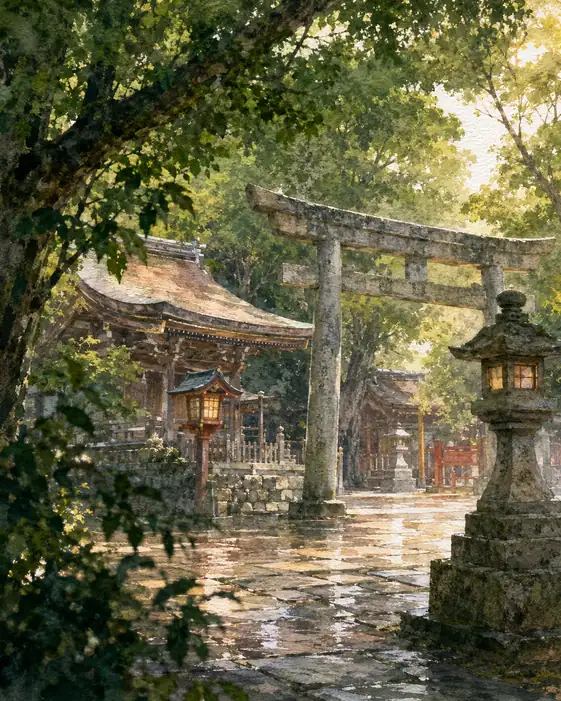 Sanctuary in the Emerald Mist
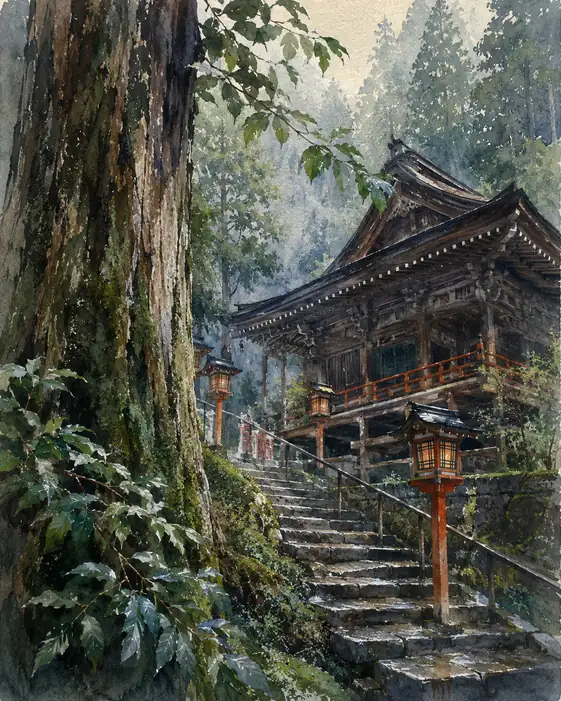 Guardian of the Ethereal Mist
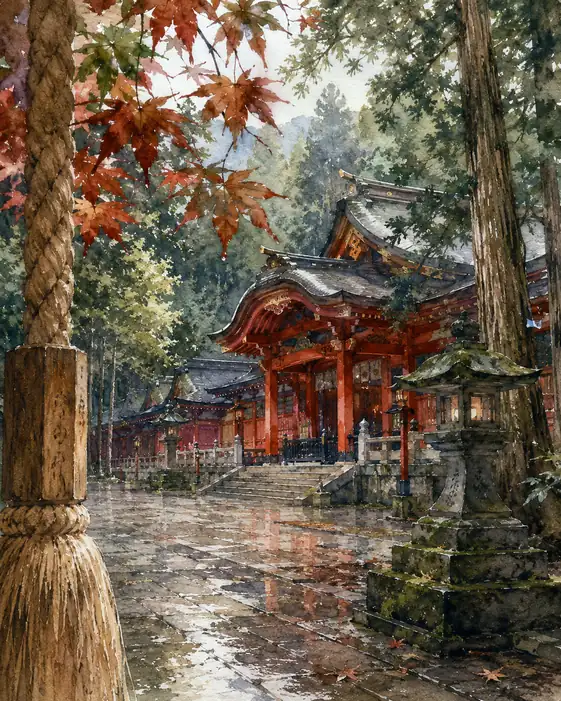 Serenity in the Autumn Rain
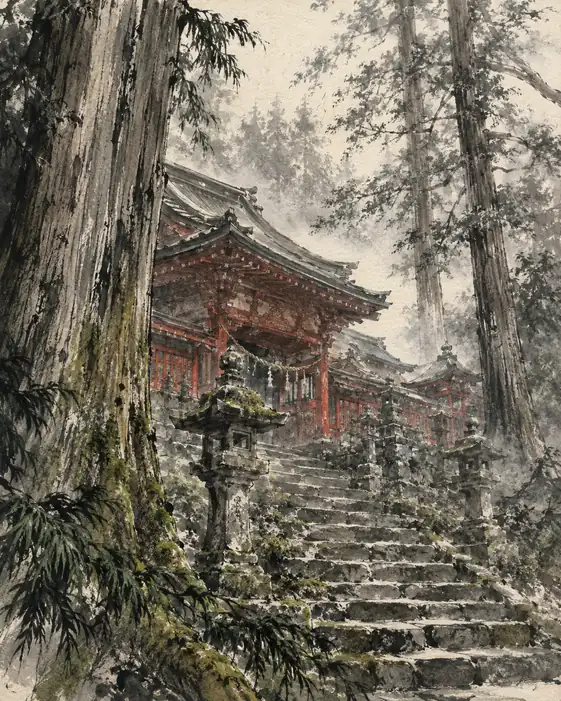 Threshold of the Ancient Silence
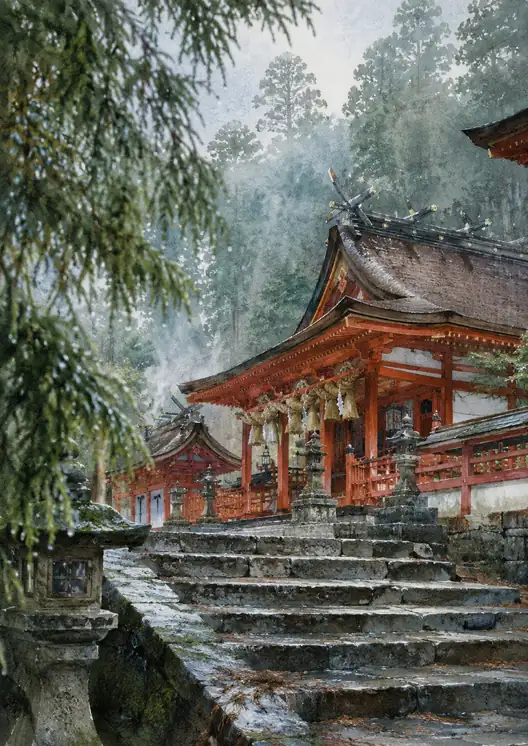 The Vermilion Silence of the Mist
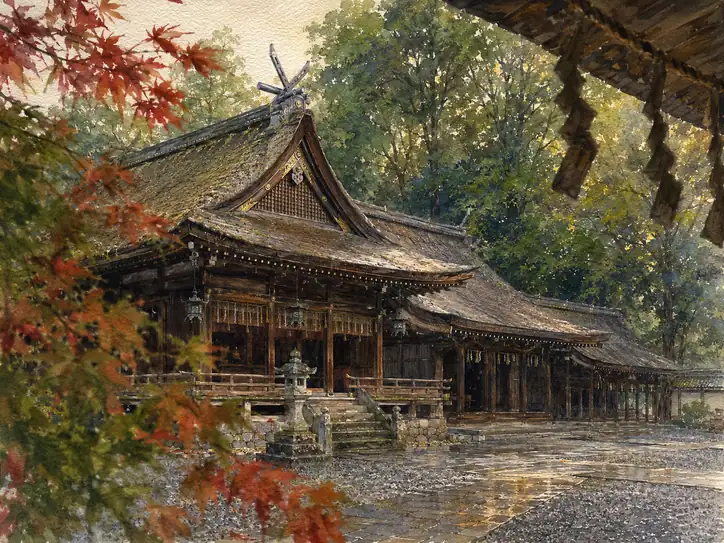 Sanctuary of the Whispering Leaves
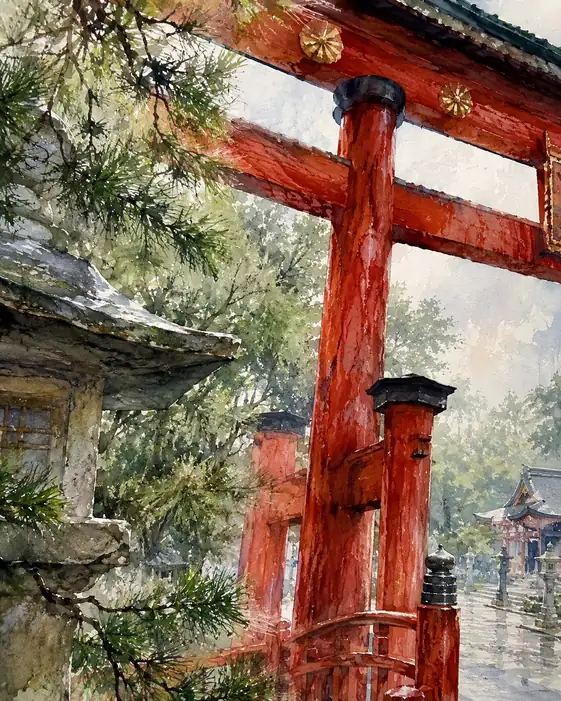 Eternal Silence of the Vermilion Gate
 The Ancient Spirit’s Sanctuary
 Echoes from the Misty Heights
 The Threshold Between Realms