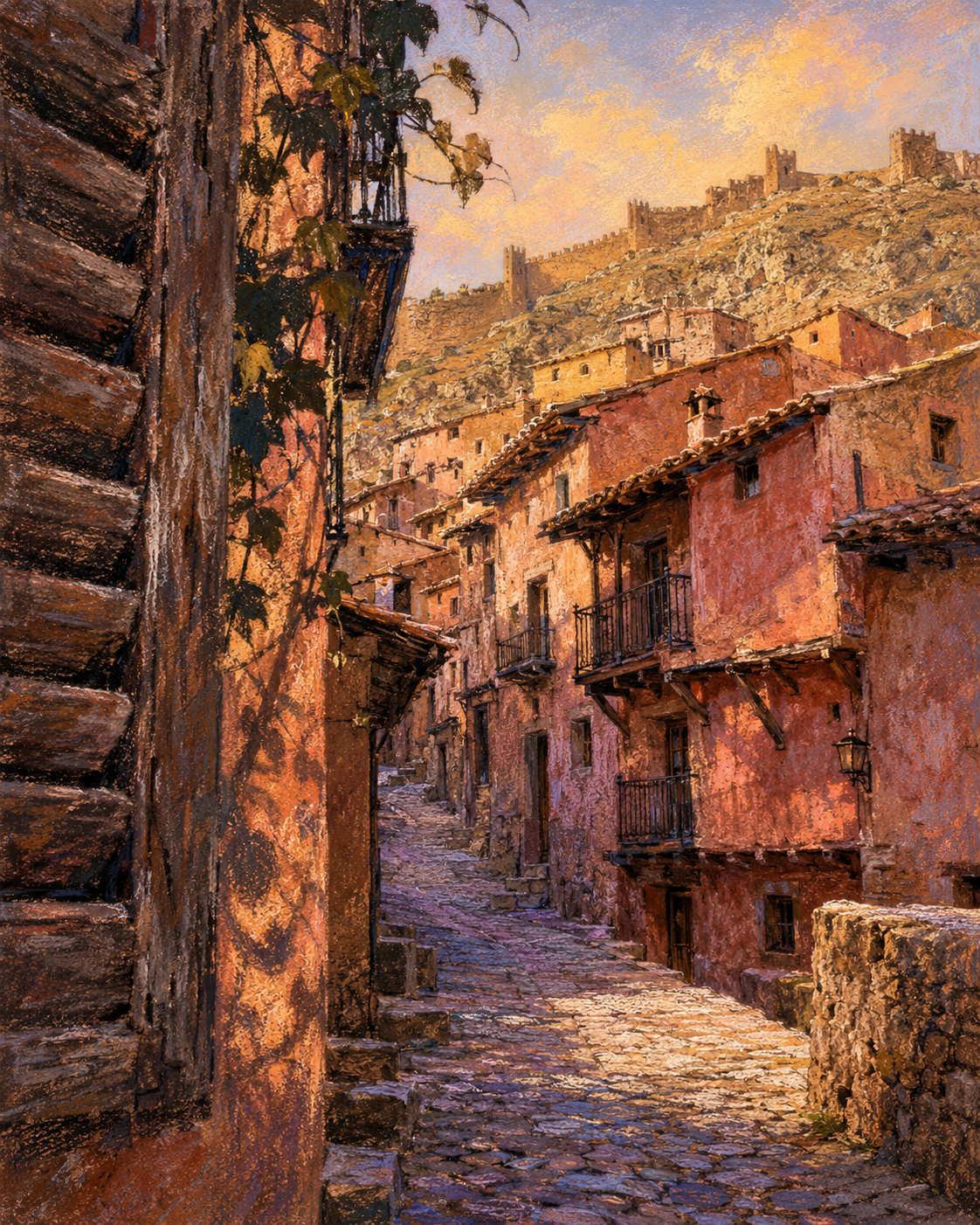
Echoes of the Pink Stones
Critique
1. Introduction This vibrant oil painting captures a narrow, sun-drenched street in a historic European village, characterized by its distinctive reddish-pink stone architecture. The scene leads the viewer's eye up a winding cobblestone path towards a medieval fortification that crests the rugged hillside in the background. The work emphasizes the enduring beauty of ancient masonry and the play of intense sunlight across textured surfaces. The overall mood is one of quietude and historical depth, rendered with a rich, painterly technique. 2. Description The composition is dominated by multi-story buildings with terracotta-colored walls and dark wooden balconies. In the immediate foreground on the left, a textured wall with wooden shutters and climbing ivy is partially visible, providing a sense of scale and framing the street. The cobblestone path occupies the lower center, showing a variety of cool blue and grey tones in the shadowed areas. The background features a steep slope where more buildings huddle beneath a long, crenelated stone wall that follows the contour of the ridge under a pale golden sky. 3. Analysis The artist utilizes a strong vertical format to accentuate the upward climb of the street and the height of the surrounding terrain. A heavy, textured application of paint—reminiscent of the impasto style—creates a tactile quality that represents the aged plaster and rough stone. The color palette is centered on warm, saturated pinks and ochres, which are heightened by the brilliant sunlight. These warm tones are effectively balanced by the cool, violet-tinted shadows on the path and the underside of the balconies, creating a convincing sense of atmospheric light. 4. Interpretation and Evaluation This artwork successfully evokes the unique atmosphere of a specific Mediterranean locale, likely inspired by the village of Albarracín. The technical skill is evident in the confident brushwork and the sophisticated handling of light and shadow, which define the complex architectural forms. The choice of a high-contrast lighting scheme adds drama and a sense of midday heat to the scene. The painting functions as both a record of historical architecture and an expressive study of color and light, demonstrating a high degree of artistic maturity. 5. Conclusion In summary, the painting offers a compelling and atmospheric journey through a historic urban landscape. The initial impression of vibrant color and ancient stone is reinforced by the detailed execution of textures and the masterly control of luminosity. The work invites the viewer to step into the quiet, sun-lit alleyway and experience the weight of history. It is a harmonious composition that balances architectural solidity with the ephemeral quality of sunlight, resulting in a visually and emotionally engaging piece of art.
Same Subcategory
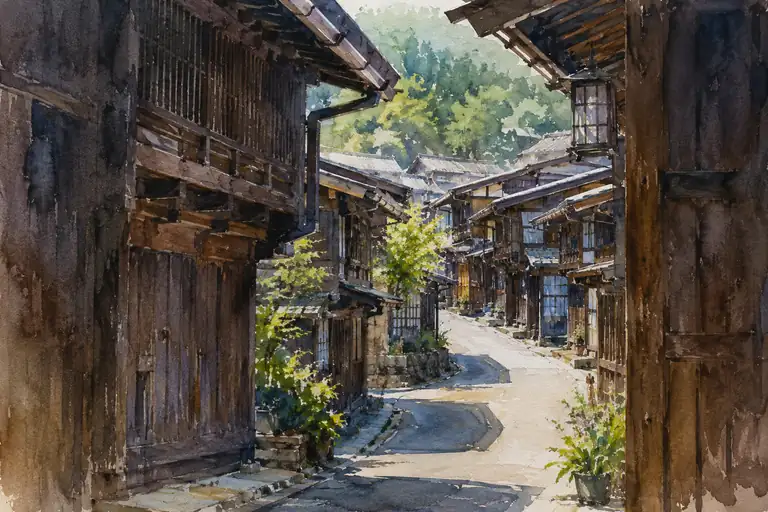 Path through the Echoes of Time
Similar Artworks
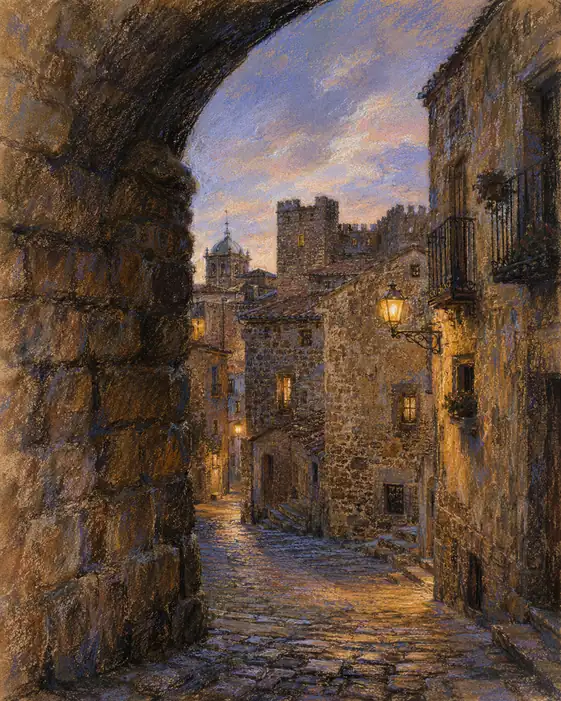 Golden Glow in the Twilight Alley
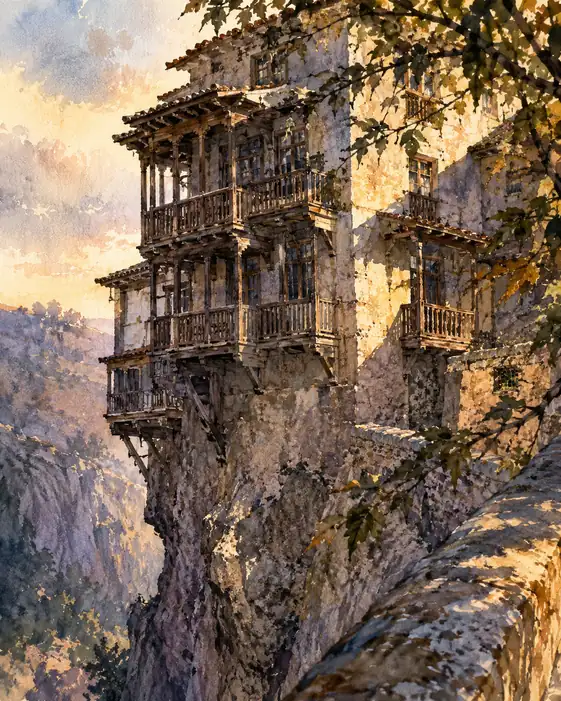 The Precarious Beauty of History
 Twilight Path to the Timeless Shore
 Descending the Cobblestone Path to the Lake
 The Church in the Golden Valley
 A Path of Silent Prayer
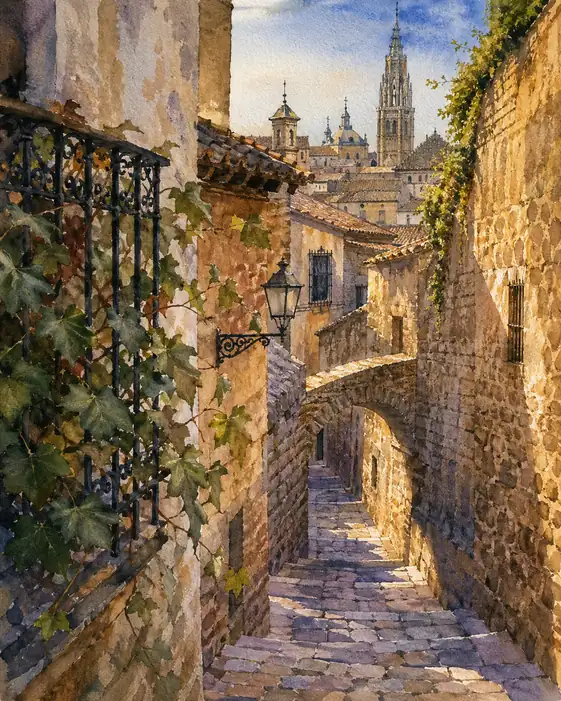 Toledo: Steps to the Eternal Spire
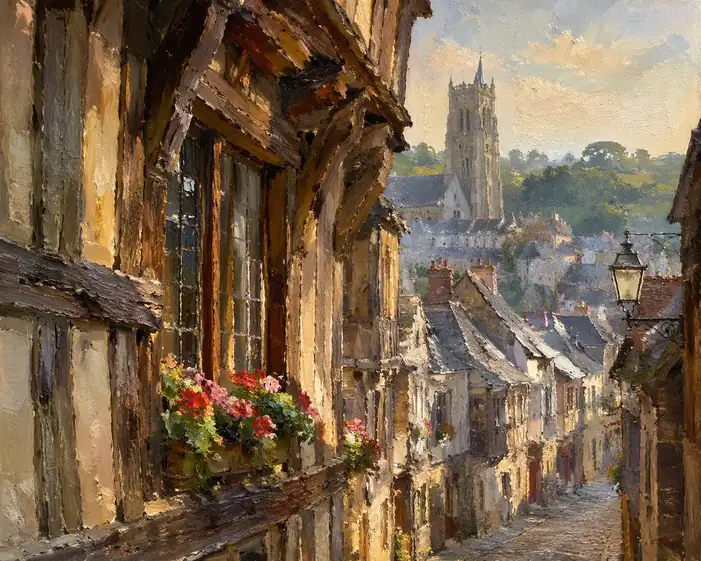 Nostalgic Light of the Old Town
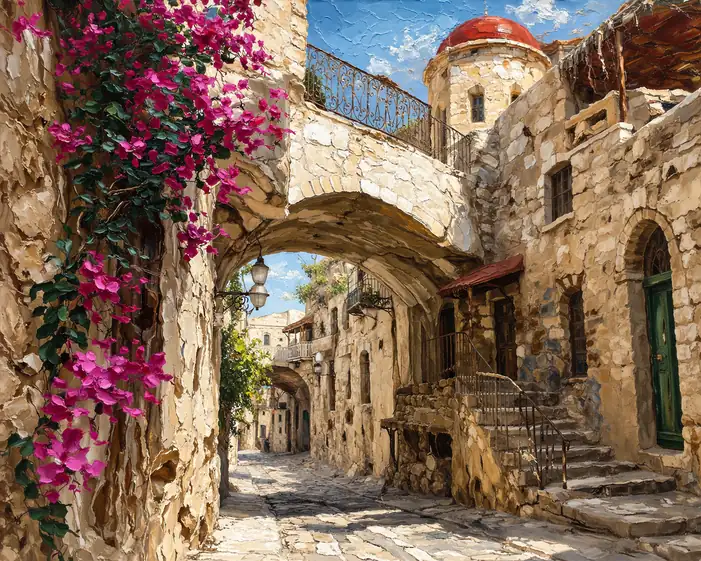 Sun-Drenched Stone Alley with Bougainvillea
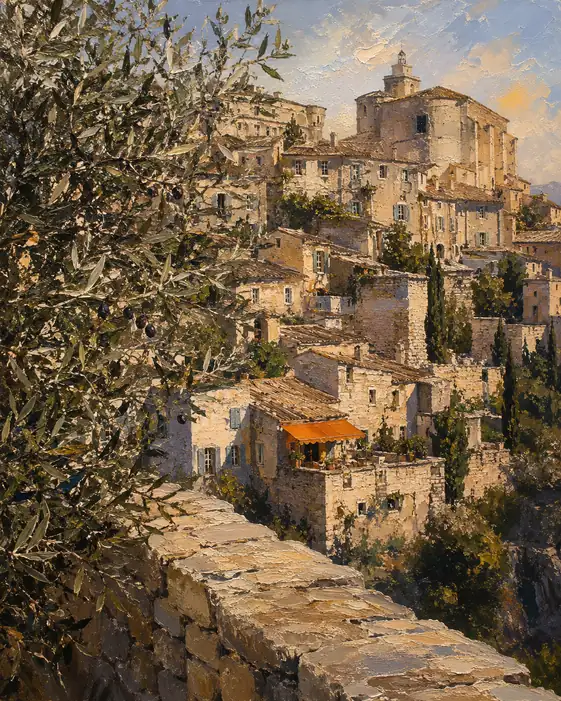 Timeless Echoes of the Sunlit Village