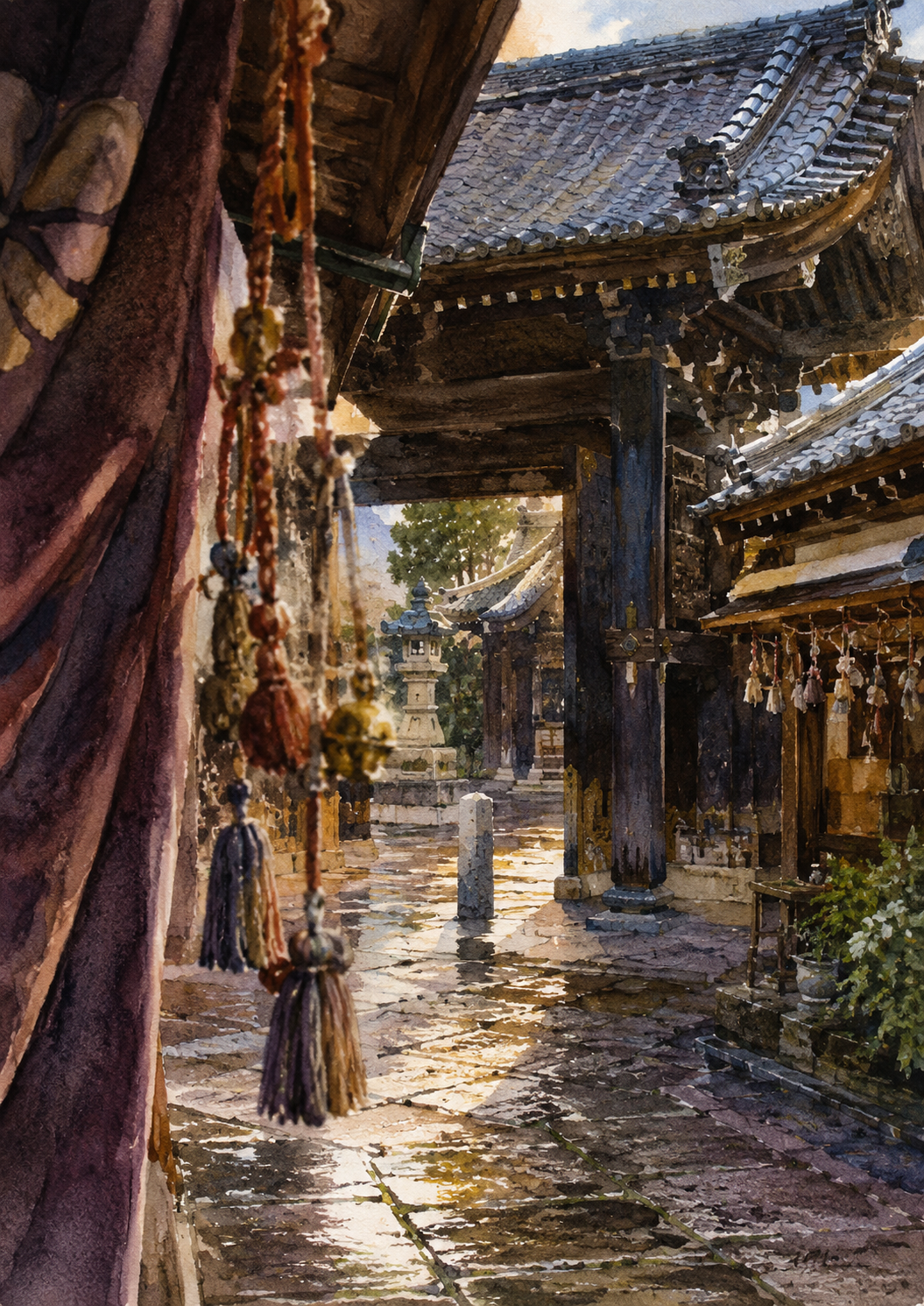
Shadows of the Sacred Path
Critique
1. Introduction This watercolor painting depicts a serene view within a Japanese temple complex, capturing a moment of profound quietude. The scene is observed from a shaded interior, looking out through an architectural frame toward a sun-drenched courtyard. The composition draws the viewer into a space where traditional architecture and natural light coexist in perfect harmony. 2. Description In the foreground, decorative tassels hang from a dark fabric on the left, adding a sense of depth and tactile presence. The middle ground is dominated by a massive wooden gate, its weathered pillars rendered in deep blues and ochres. Beyond the gate, a stone-paved path reflects the brilliant sun, leading the eye toward a stone lantern and a secondary building. 3. Analysis The artist utilizes a sophisticated interplay of light and shadow to define the spatial layout of the temple grounds. The use of high-contrast values creates a dramatic atmosphere, with cool shadows contrasting sharply against warm, luminous highlights. Masterful watercolor washes suggest the texture of aged wood and the reflective quality of the damp stone surface. 4. Interpretation and Evaluation The work succeeds in conveying the spiritual weight of the site through its attention to architectural detail. The inclusion of the foreground elements creates a private perspective, suggesting a moment of contemplation. The technical execution of the light reflections is particularly noteworthy, as it provides a sense of atmospheric moisture and temporal specificity. 5. Conclusion This painting stands as a refined example of how light can be used to transform a traditional subject into a dynamic visual experience. The balanced composition and precise color palette evoke a feeling of timelessness. Upon closer inspection, the initial impression evolves into a complex study of light, texture, and the quiet dignity of sacred spaces.
Same Subcategory
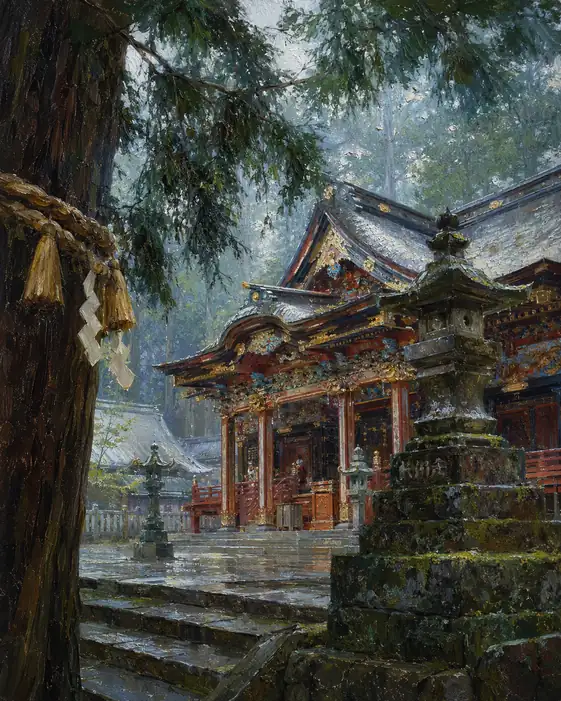 Whispers of the Misty Sanctuary
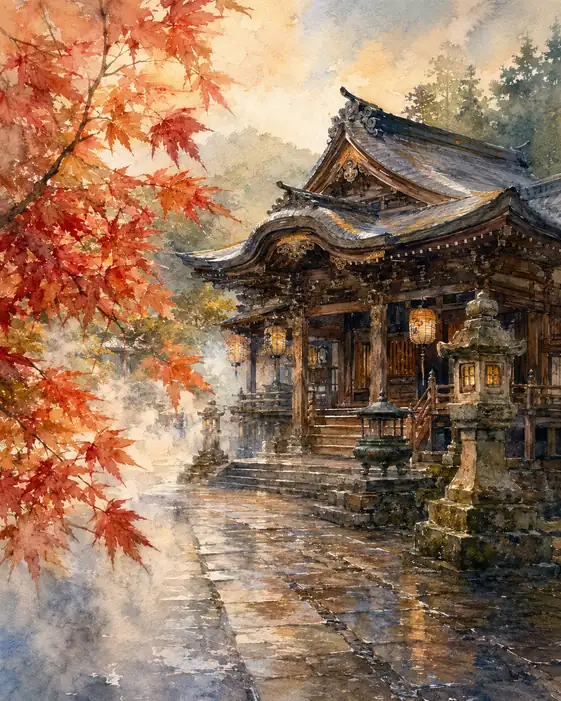 Fleeting Crimson, Eternal Prayer
Similar Artworks
 Crimson Gate in the Misty Sanctuary
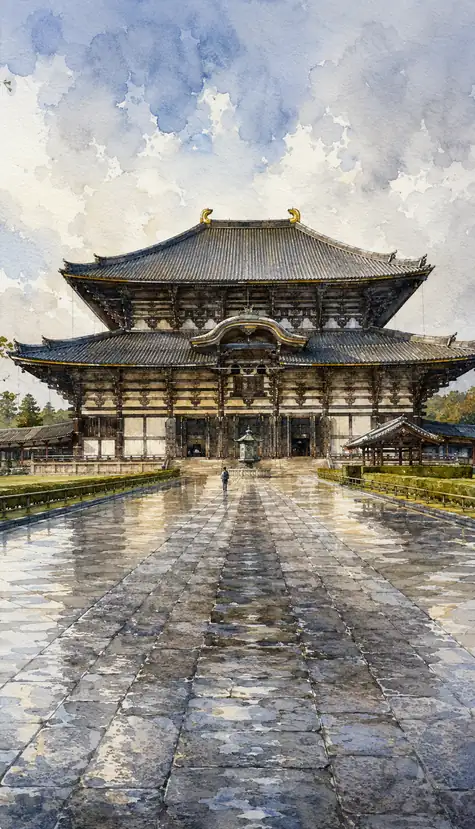 One Pilgrim Before the Great Roof
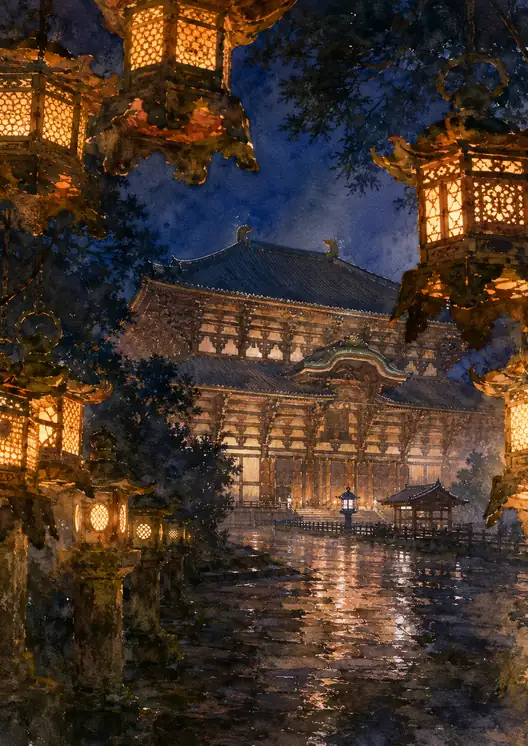 Quiet Guidance in the Indigo Night
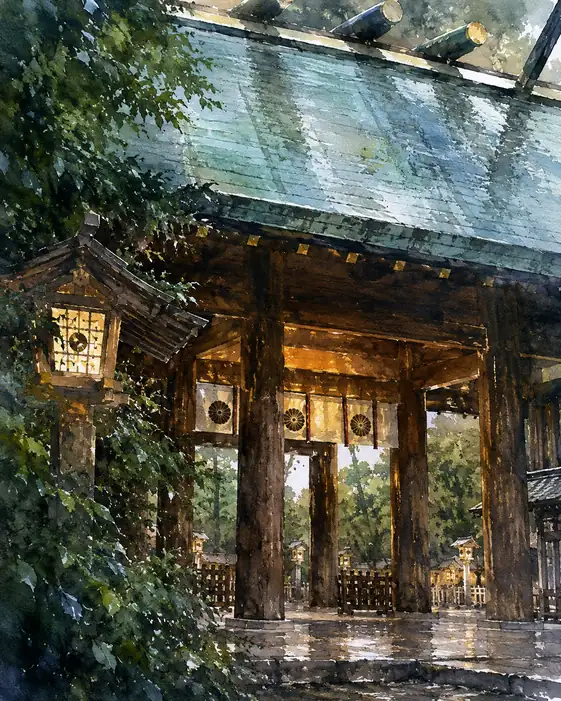 The Silent Breath of the Shrine
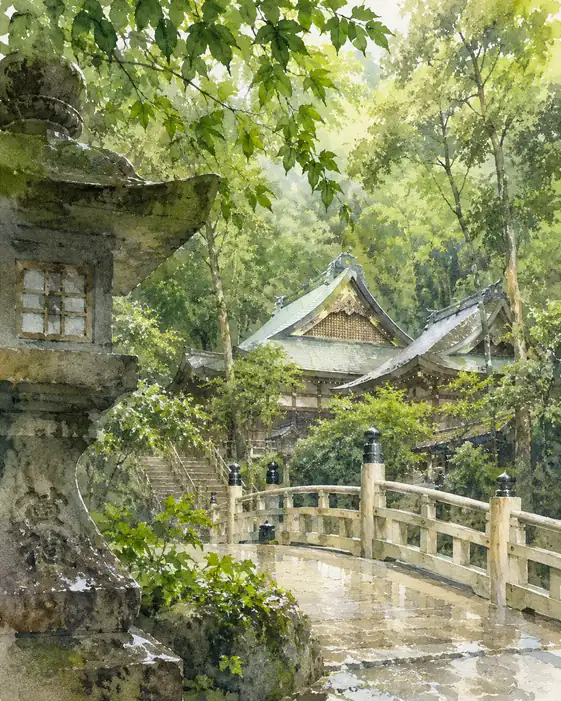 Stillness of the Hidden Sanctuary
 Quiet Prayers under the Clearing Sky
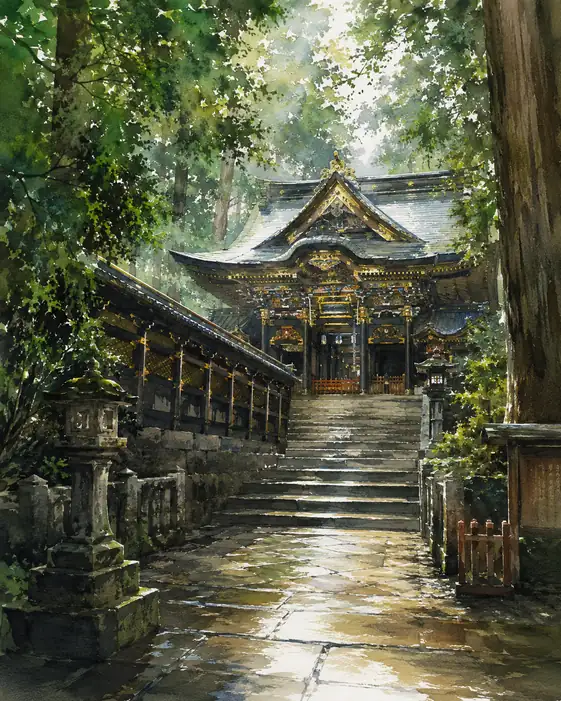 Gold Dwells in the Forest's Silence
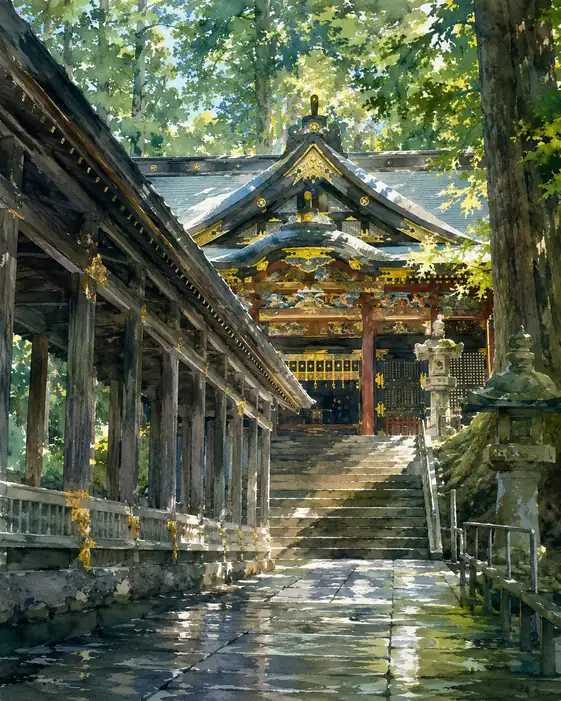 Sunbreaks Toward the Gilded Sanctuary
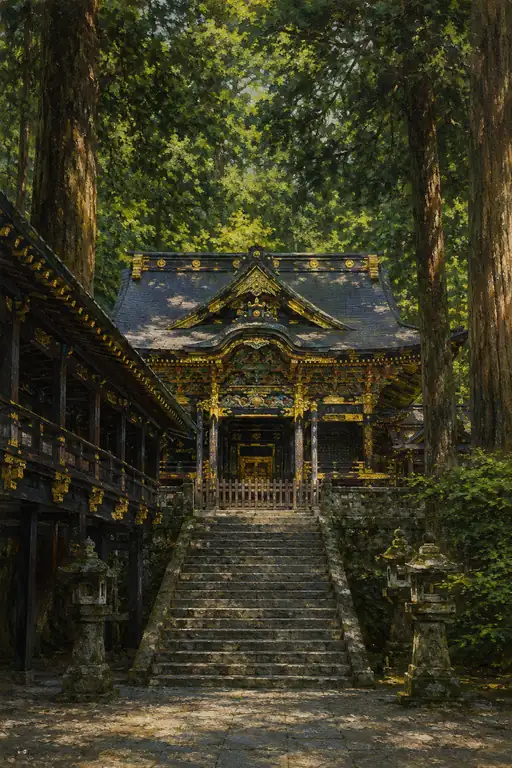 Sanctuary of Gold and Moss
 A Fleeting Shadow on the Crimson Wall