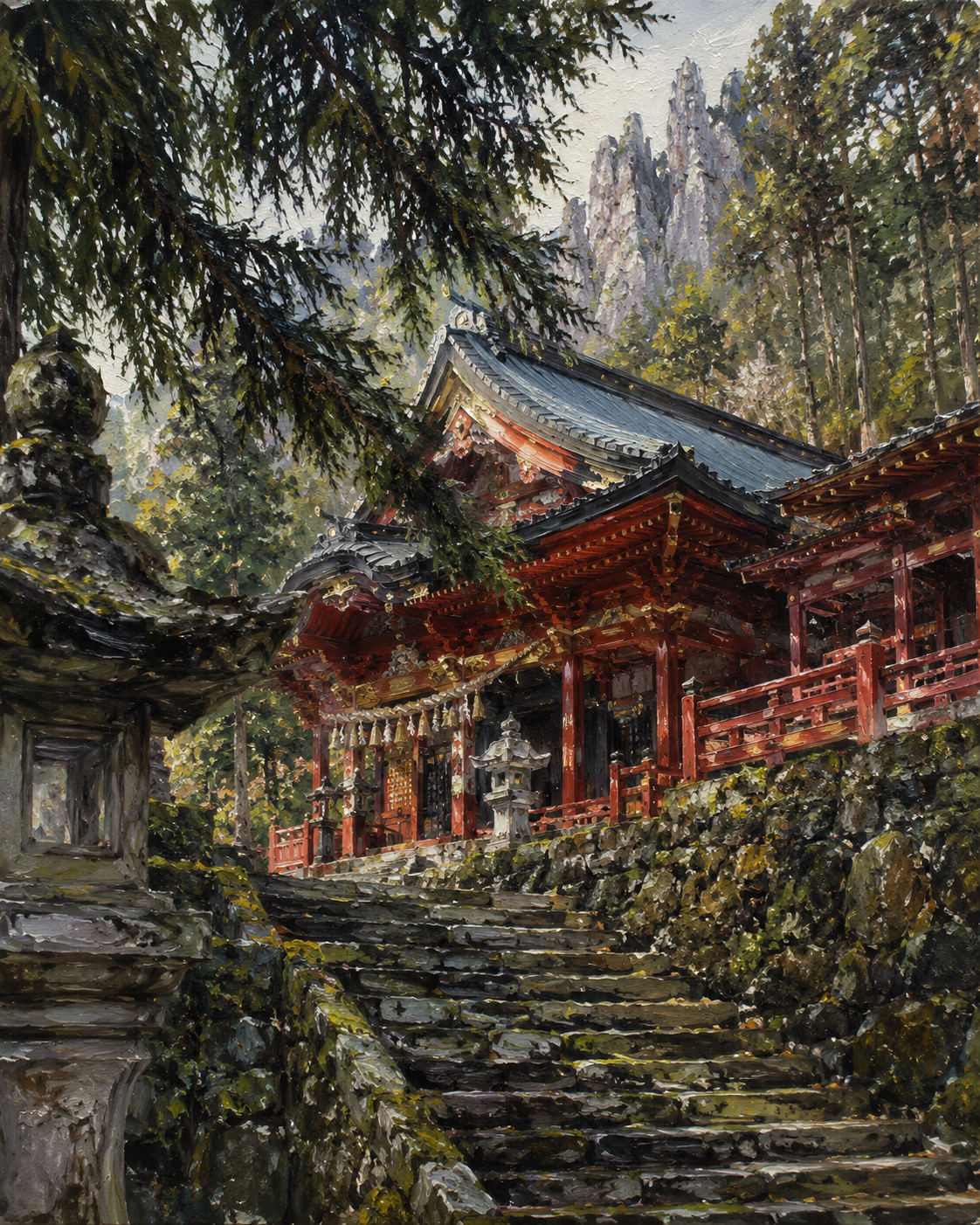
Eternal Prayer in the Vermilion Woods
Critique
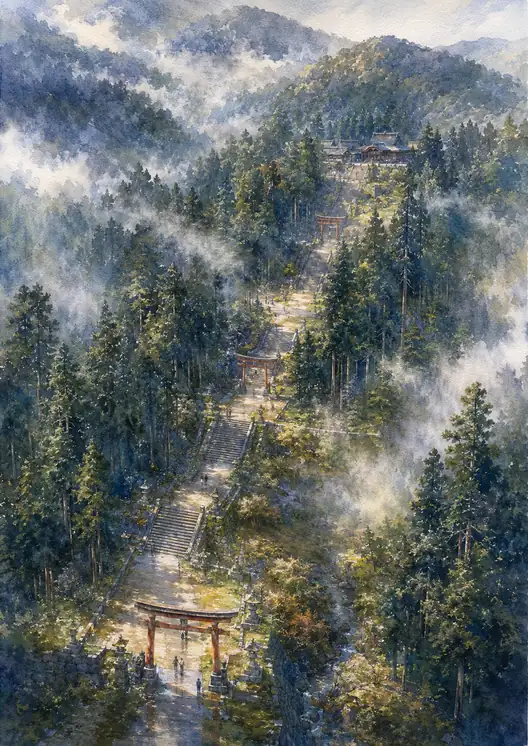
1. Introduction This painting depicts a traditional Japanese shrine nestled within a mountainous forest. The vibrant vermilion structure at the center stands in striking contrast against the rugged rock peaks. A weathered stone lantern and moss-covered steps in the foreground guide the viewer toward the sacred precinct. The work captures the serene yet majestic atmosphere of a mountain sanctuary. 2. Description The central shrine features intricate woodwork and an ornate roof, rendered in bright oranges and reds. On the left, a large stone lantern leads to ancient stone stairs that ascend toward the building. Vertical rock faces and dense evergreen trees dominate the upper composition. Dappled sunlight filters through the trees, highlighting the textures of the stone. 3. Analysis The color palette creates a dynamic balance between the warm architecture and the cool hues of nature. The artist employs a heavy impasto technique, using thick paint to give the rocks a tangible quality. The vertical composition emphasizes the height of the peaks and the spiritual elevation. Rhythmic brushstrokes capture the shimmering light and mountain air. 4. Interpretation and Evaluation This piece reinterprets the beauty of architecture coexisting with nature through a powerful, material-focused approach. The descriptive ability shown in the details conveys a sense of historical depth and unique spirituality. It successfully blends traditional Japanese subject matter with a modern sensibility. The solemn atmosphere is a testament to the artist's technical mastery and vision. 5. Conclusion The painting is a superb realization of the grandeur of a mountain temple, achieved through vigorous brushwork and light effects. While the shrine's colors initially command attention, the profound depth of the surroundings gradually becomes the focus. The artist depicts the harmony between nature and human devotion using the properties of oil paint effectively.
Same Subcategory
 Sanctuary Above the Haze
 Echoes from the Ancient Heights
Similar Artworks
 Sanctuary of the Ancient Cedars
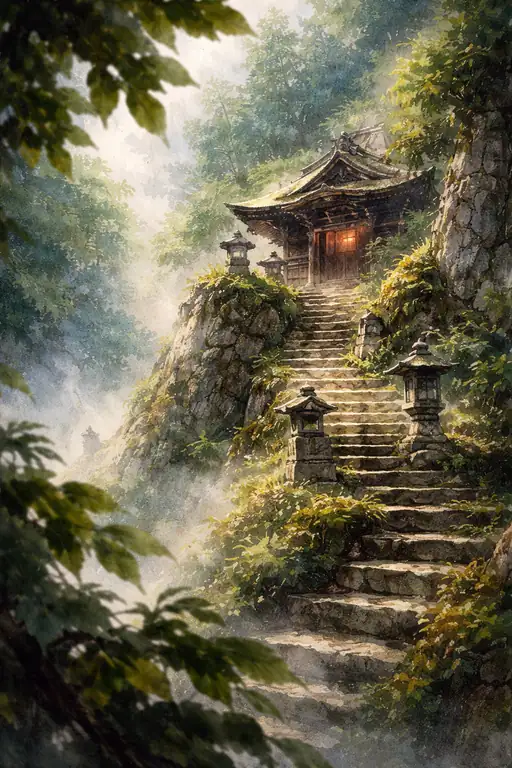 One Step Closer to the Divine
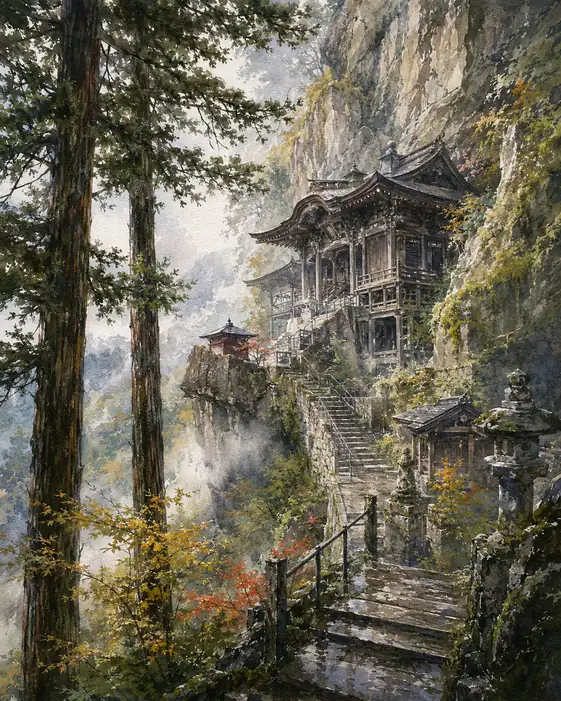 Prayer in the Mountain Mist
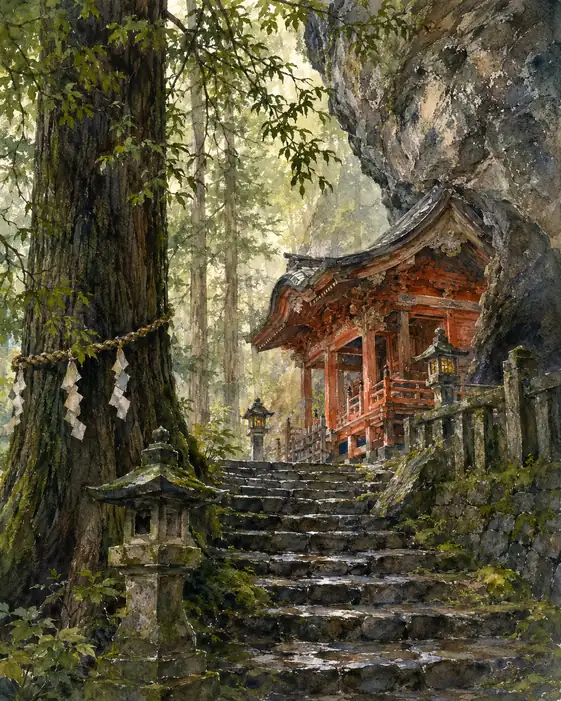 The Ancient Spirit’s Sanctuary
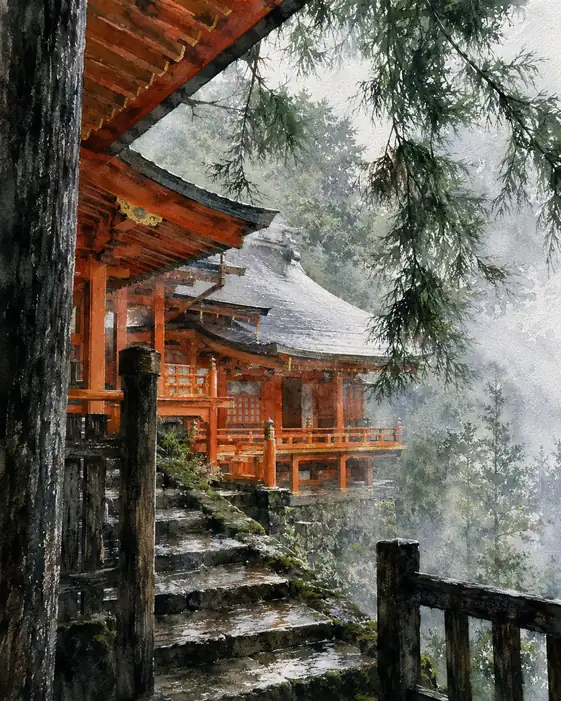 Sanctuary Veiled in Misty Rain
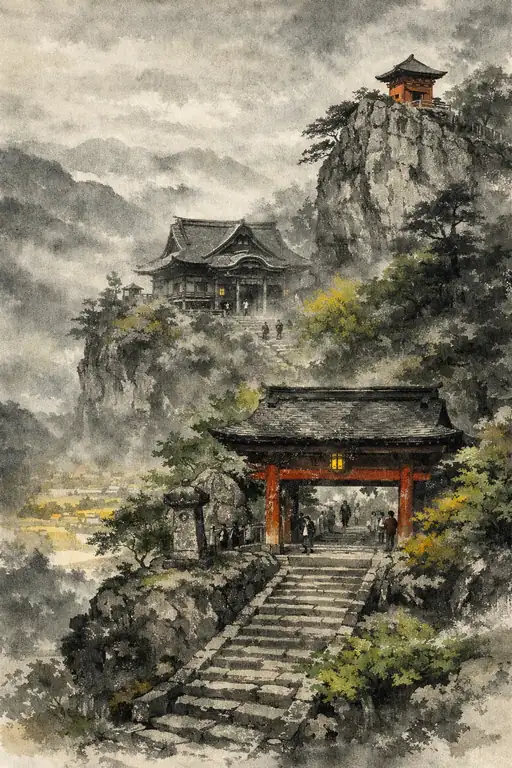 Where Earth Touches the Heavens
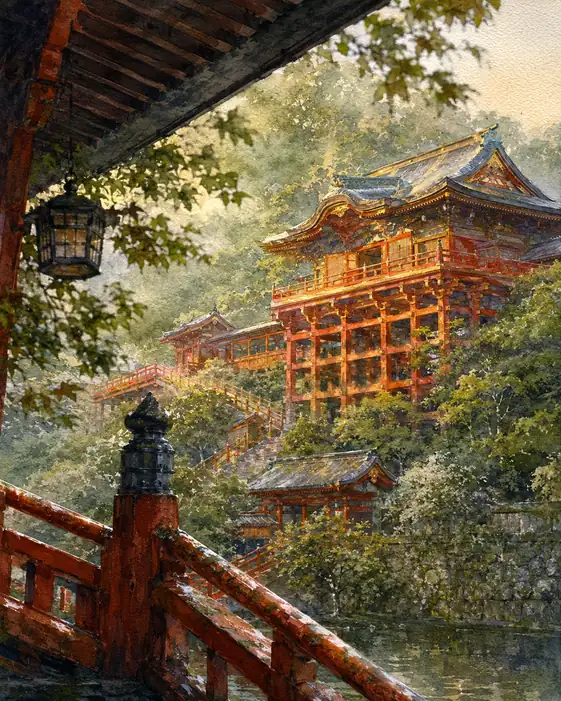 Vermilion Stage at the Mountain's Foot, Waiting for the Ariake Wind
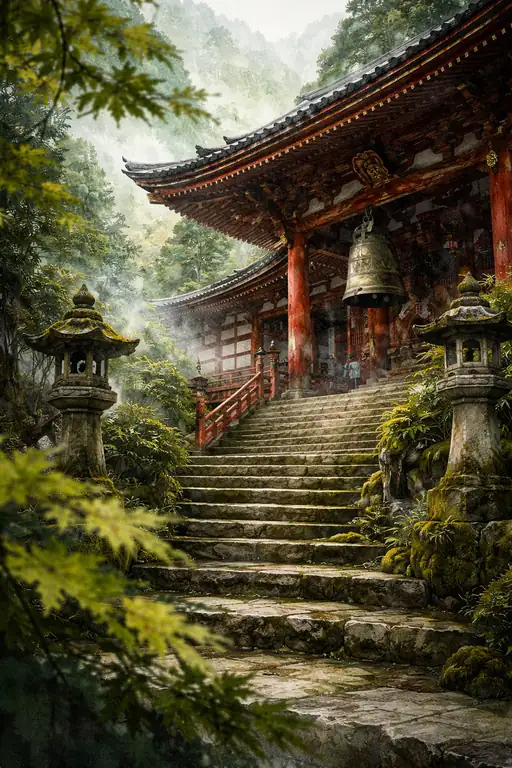 Echoes of the Sacred Mist
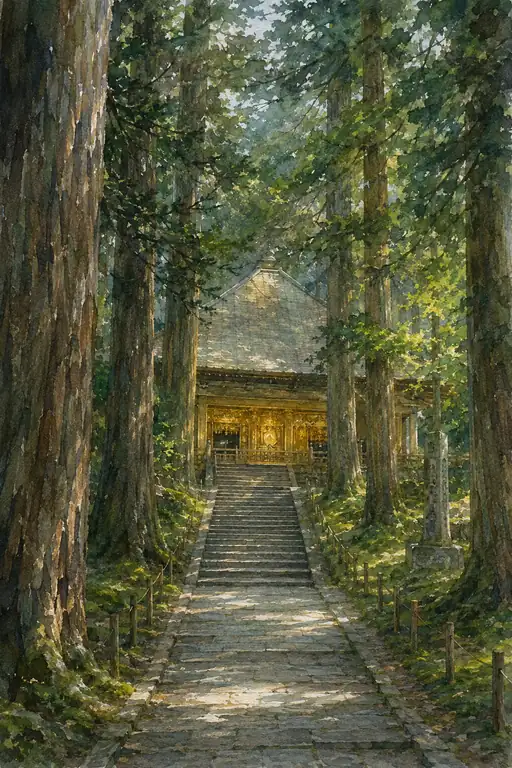 A Sanctuary of Golden Silence
 Silent Steps through the Sacred Forest