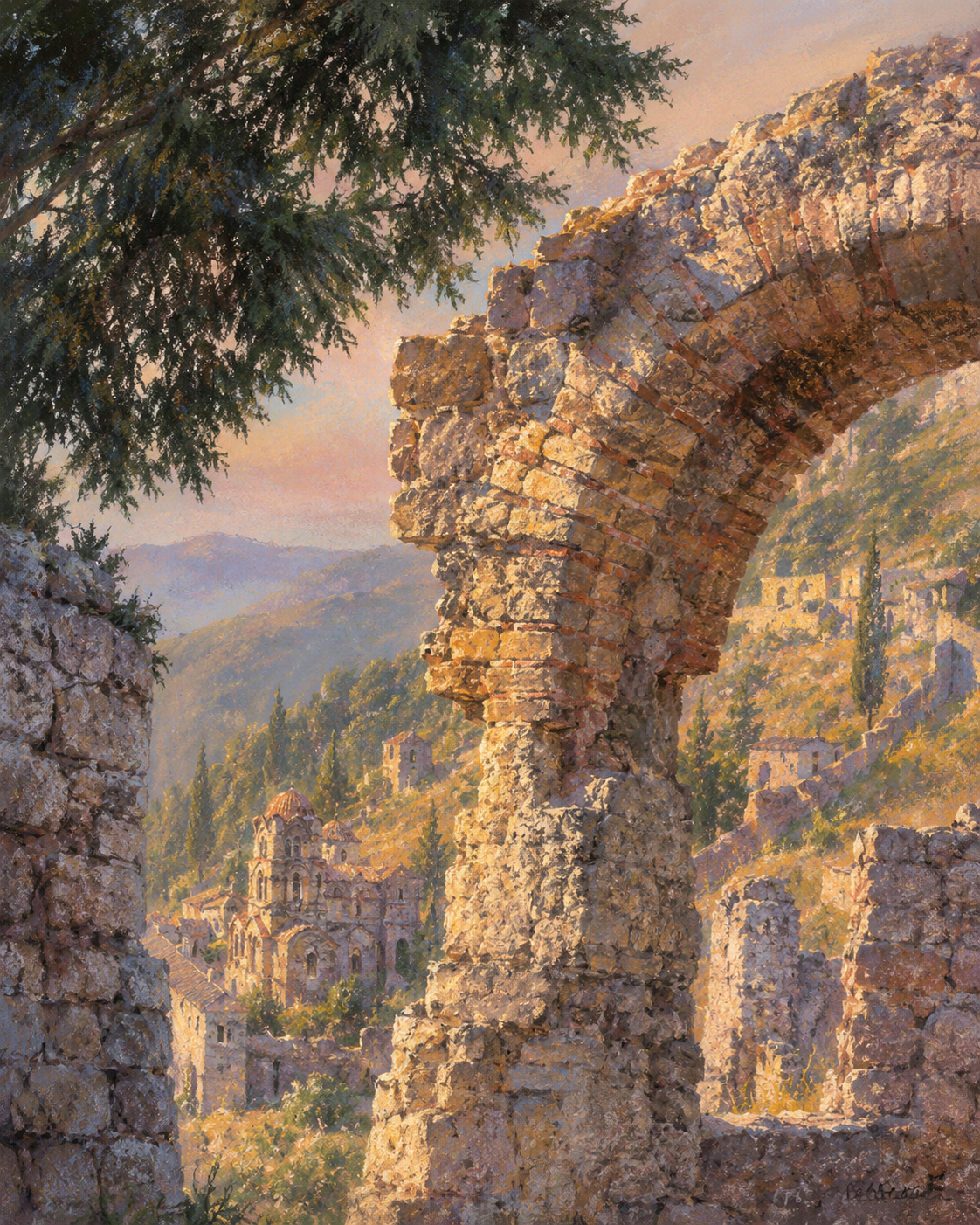
Gateway to the Sunlit Sanctuary of Mystras
Critique
1. Introduction This vertical landscape painting, executed with a rich and expressive painterly texture, depicts an ancient stone archway framing a distant mountain village. The composition effectively utilizes the architectural ruins as a repoussoir element, leading the viewer's eye toward the sunlit buildings nestled in the valley. The overall mood is one of timeless tranquility, capturing a specific moment of atmospheric evening light. This work successfully merges historical remnants with a natural Mediterranean setting, creating a deeply evocative scene. 2. Description The foreground is dominated by a massive, crumbling arch made of weathered stone and red brick, its surface showing intricate textures and Significant signs of age. Through this opening, a cluster of Byzantine-style buildings, including a prominent domed church and stone houses, is visible on a steep hillside. A dark green tree with dense foliage overhangs the arch from the left, while distant, hazy mountains form the backdrop under a soft, glowing sky. The warm light of the setting sun illuminates the entire valley, casting long, soft shadows. 3. Analysis The artist employs a warm color palette featuring shades of gold, ochre, and terracotta, which contrast sharply with the cool blues and purples used in the shadows and distant peaks. The technical execution is characterized by short, vigorous brushstrokes and areas of impasto that emphasize the tactile quality of the weathered masonry and the vibrancy of the light. The interplay between the solid, shadowed foreground ruins and the brightly illuminated background structures creates a strong sense of atmospheric perspective and depth. 4. Interpretation and Evaluation The work suggests a deep appreciation for historical architecture and its integration into the natural world. The use of the arch as a frame within a frame provides a sense of discovery, as if the viewer is stumbling upon a hidden sanctuary from a bygone era. The technical skill in rendering how light interacts with various surfaces—from the rough, uneven stone to the delicate leaves of the trees—is particularly impressive and contributes to the painting's immersive quality. The composition is balanced and harmoniously organized. 5. Conclusion This painting is a successful exploration of light and form within a historical context. The harmony achieved between the man-made structures and the surrounding landscape offers a profound and reflective viewing experience for the observer. While the initial focus is on the dramatic architectural framing device, the wealth of detail in the background village gradually reveals the complexity and narrative depth of the scene. The final impression is one of enduring beauty and a respectful nod to the layers of history embedded in the land.
Same Subcategory
Similar Artworks
 Byzantine Echoes Through the Stone Arch
 Sentinel of the Sun-Drenched Stone
 Poseidon's Last Golden Gaze
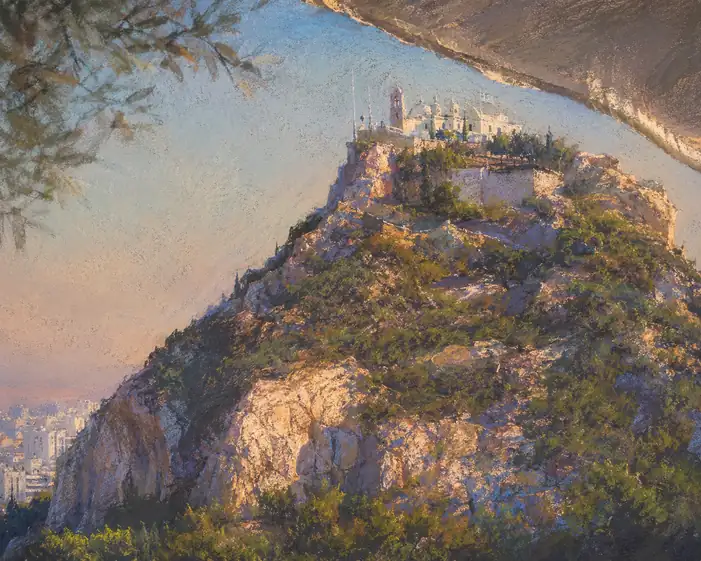 Sanctuary Above the Haze
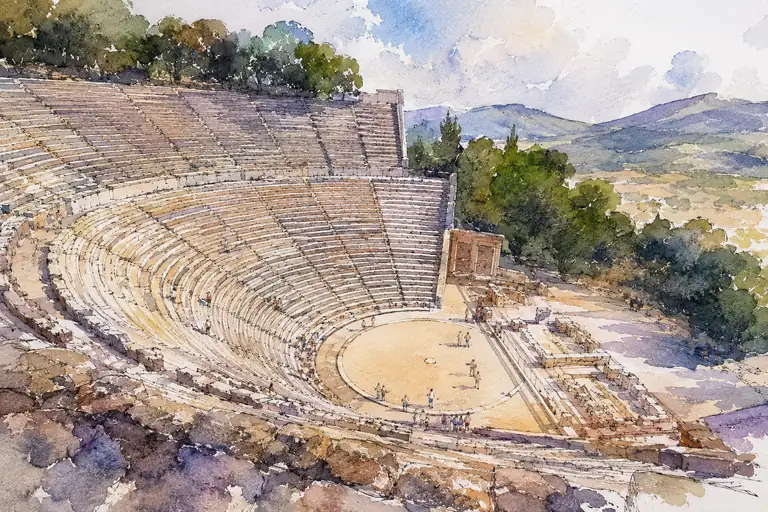 Whispers from the Ancient Tiers
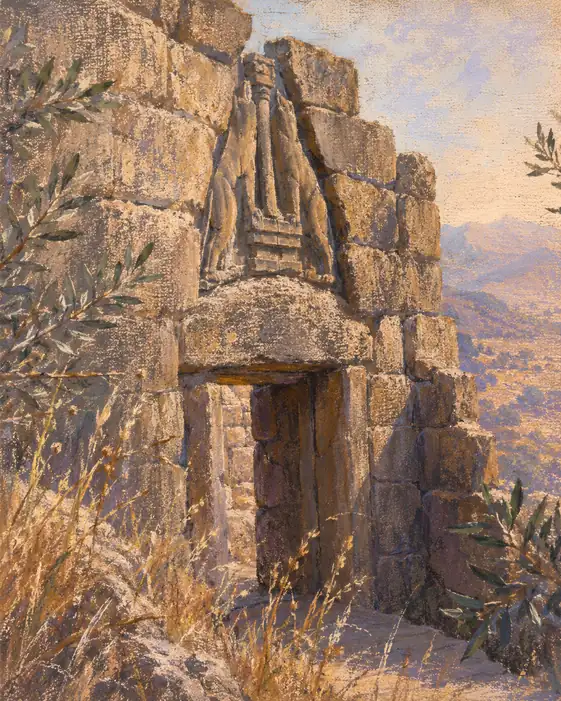 Guardians of the Bronze Age
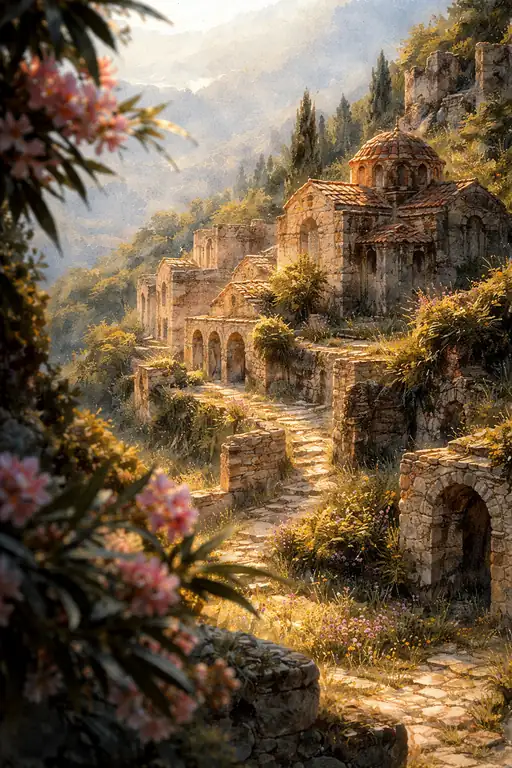 Whispers of the Mount: A Byzantine Reverie
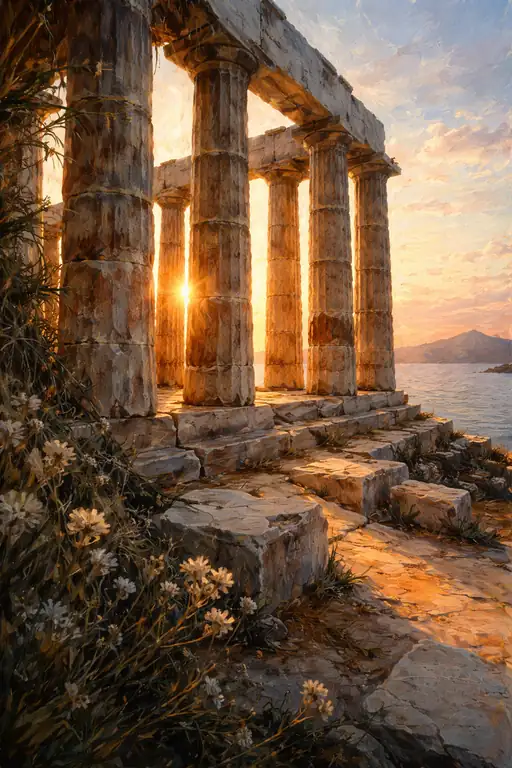 Echoes in Stone: A Sunlit Requiem
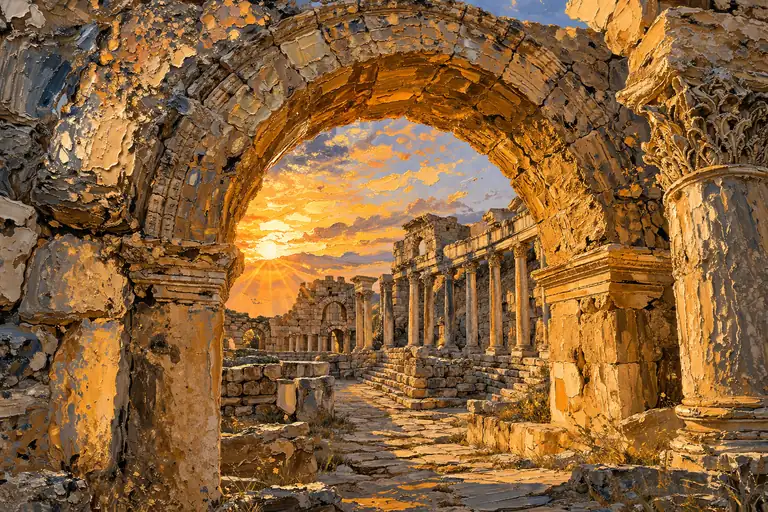 Eternal Sun Through Ancient Arches
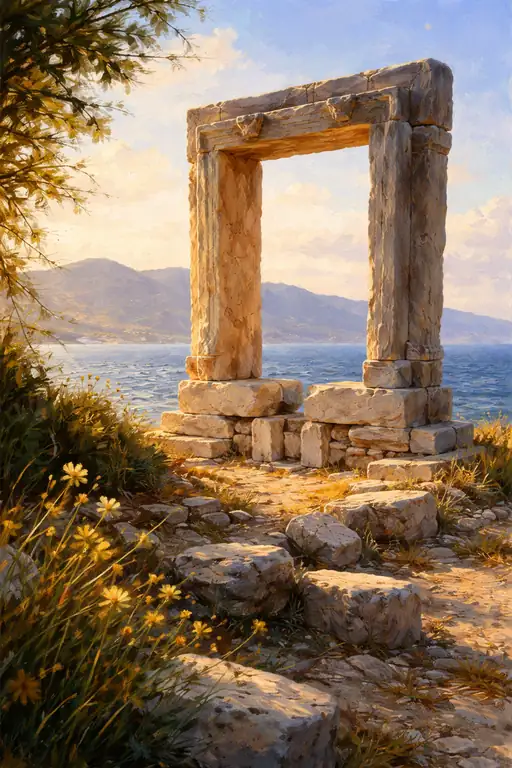 Eternal Silence of the Great Portara