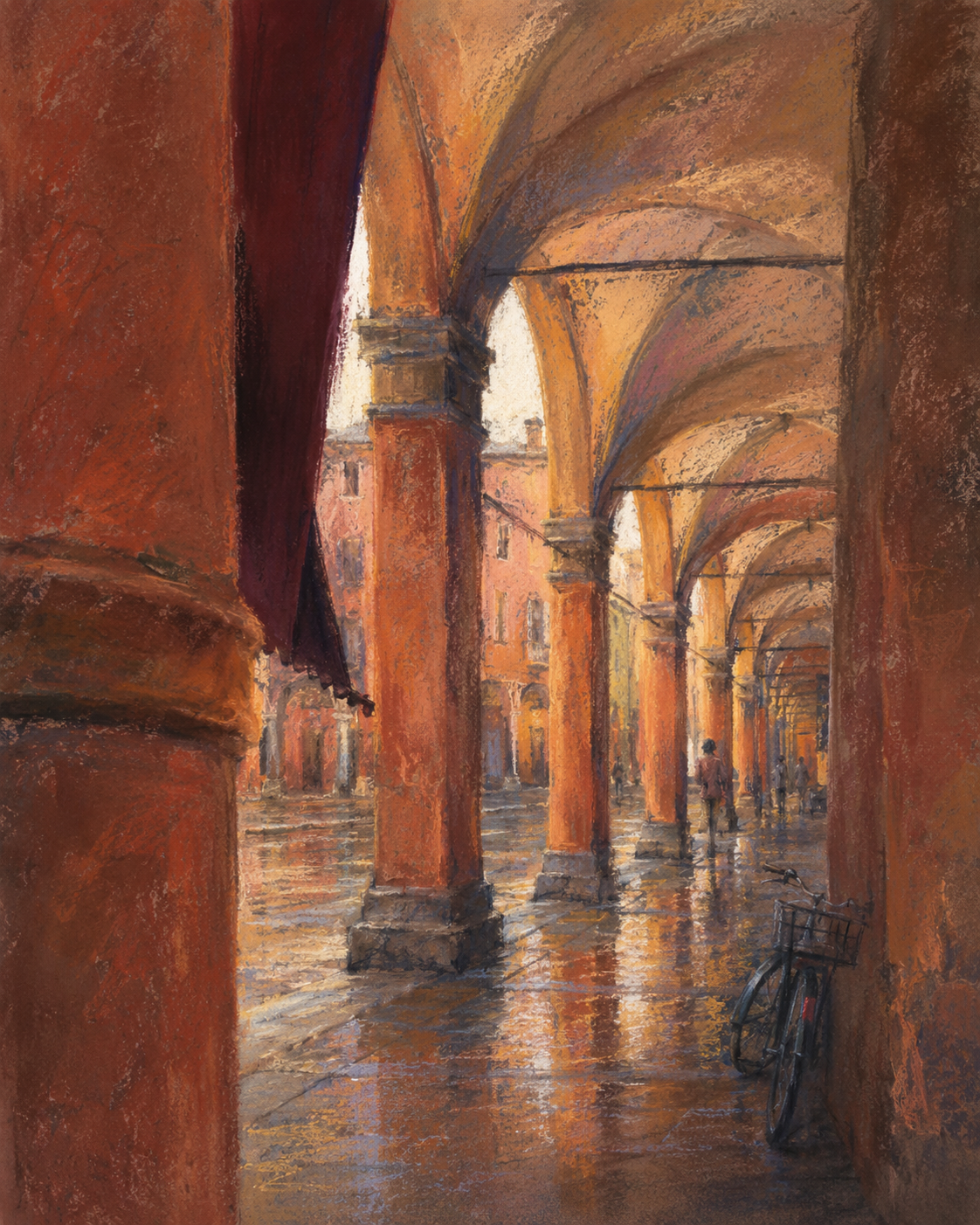
Bologna's Amber Reflection
Critique
1. Introduction This vibrant pastel drawing captures the atmospheric charm of a historic European street scene, characterized by its iconic arched porticoes. The composition utilizes a strong one-point perspective to draw the viewer deep into the warm, terracotta-colored corridor. Set after a rainfall, the damp ground reflects the ambient light and architectural forms, adding a layer of visual complexity to the urban environment. The artist's use of rich, saturated colors creates a sense of Mediterranean warmth and historical depth. This work invites an appreciation for the unique rhythm and texture of traditional city planning. 2. Description The scene is dominated by a series of grand arches supported by massive square pillars, all rendered in deep shades of orange and burnt sienna. In the foreground, a large pillar frames the left side, partially obscured by a dark crimson awning that adds a sense of enclosure. On the right, a solitary bicycle leans quietly against a wall, serving as a sign of local life. The middle ground features several small figures walking through the light-filled passage. The pavement is wet, mirroring the arches and the warm glow of the sun in a series of shimmering, horizontal strokes. 3. Analysis The artist employs a textured application of pastel, creating a tactile quality that suggests the rough, aged surfaces of the stone and plaster. A palette of warm earth tones is contrasted with the cool, luminous reflections on the ground, establishing a balanced temperature throughout the piece. The rhythmic repetition of the arches creates a powerful sense of receding space and structural order. Light is handled masterfully, appearing to emanate from the end of the corridor and filtering through the side openings to illuminate the vaulted ceilings. The overall composition is both stable and dynamic due to the strong perspective lines. 4. Interpretation and Evaluation This work successfully translates the architectural identity of a city like Bologna into a highly expressive and moody artistic statement. The technical choice of pastel allows for a soft blending of colors that perfectly captures the hazy, post-rain atmosphere. By including the bicycle and distant figures, the artist grounds the monumental architecture in a contemporary, human context. The painting effectively communicates a feeling of nostalgia and urban poetry, celebrating the beauty found in everyday public spaces. It is an accomplished example of how color and light can transform a structural subject into an emotional experience. 5. Conclusion The initial impact of the overwhelming orange hue eventually gives way to an appreciation for the subtle shifts in light and shadow. The artist has achieved a remarkable sense of depth and atmosphere, making the viewer feel as though they are standing within the cool shade of the porticoes. Closer inspection reveals the energetic mark-making that gives the work its vitality and modern feel. This pastel drawing stands as a beautiful tribute to the enduring appeal of classical urban design. It leaves a lasting impression of warmth, light, and the quiet beauty of a city after the rain.
Same Subcategory
Similar Artworks
 Whispers under the Golden Arches
 Shadows of Bologna's Arcades
 Dialogue of Light in the Columned Court
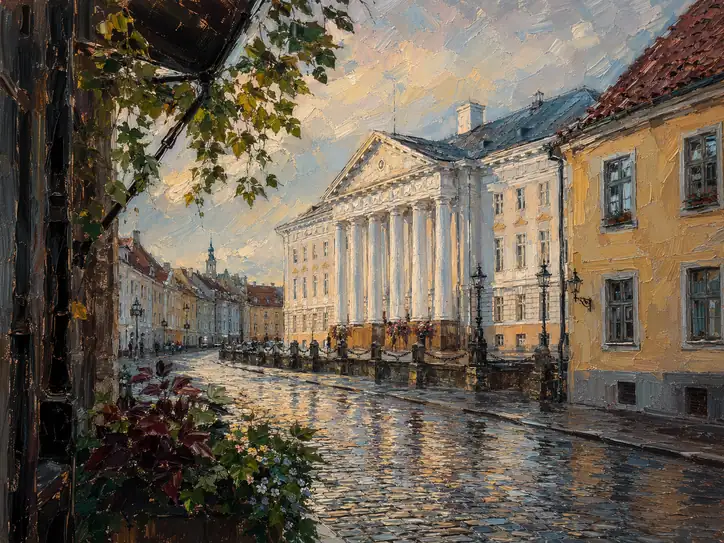 The Sky's Mirror on a Silent Street
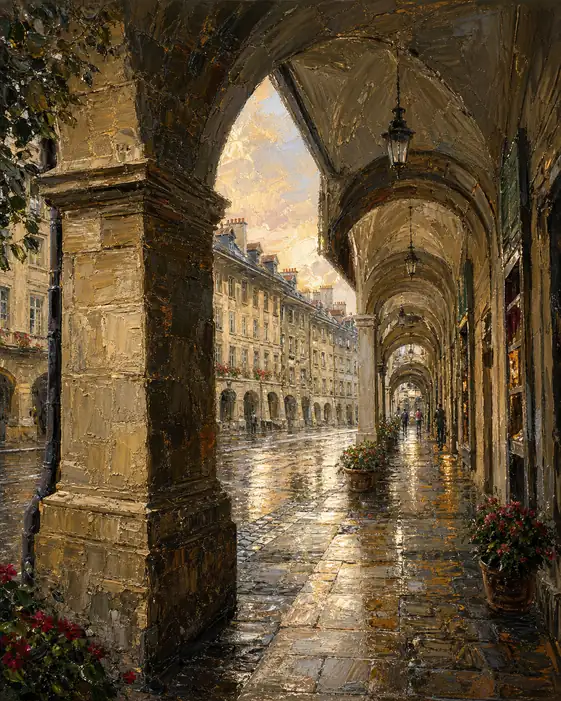 Gilded Pathways Under Arches
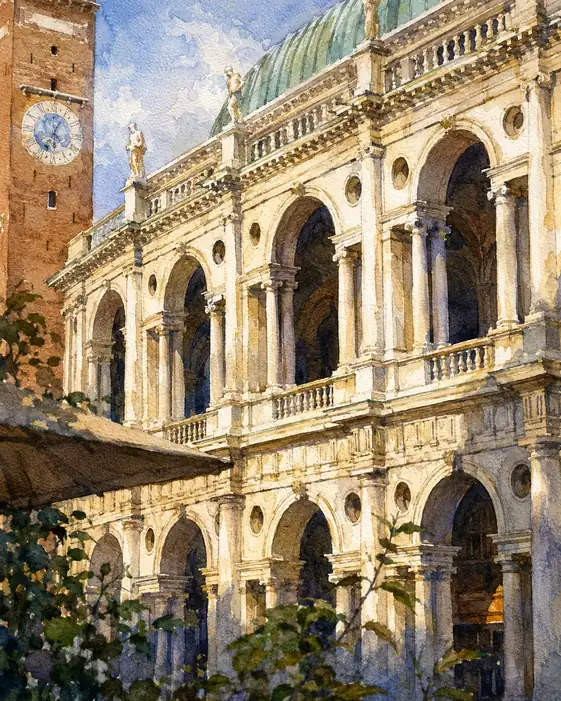 The Golden Hour at Palladio's Loggia
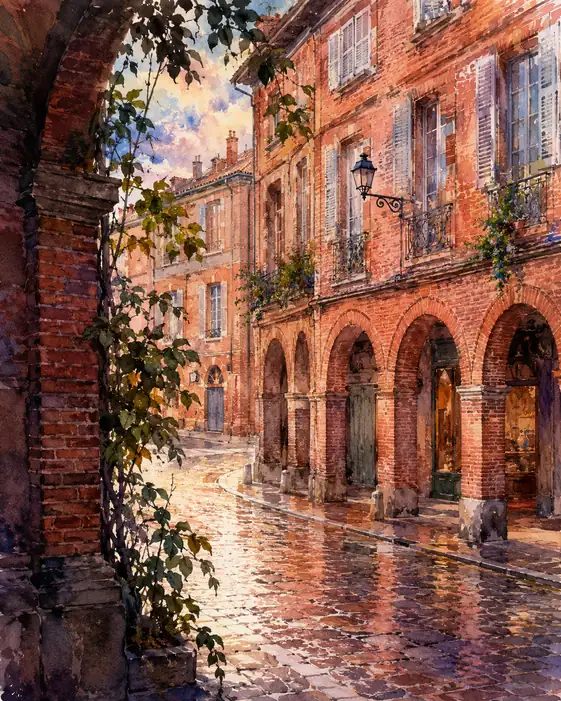 Echoes of a Sunlit Afternoon
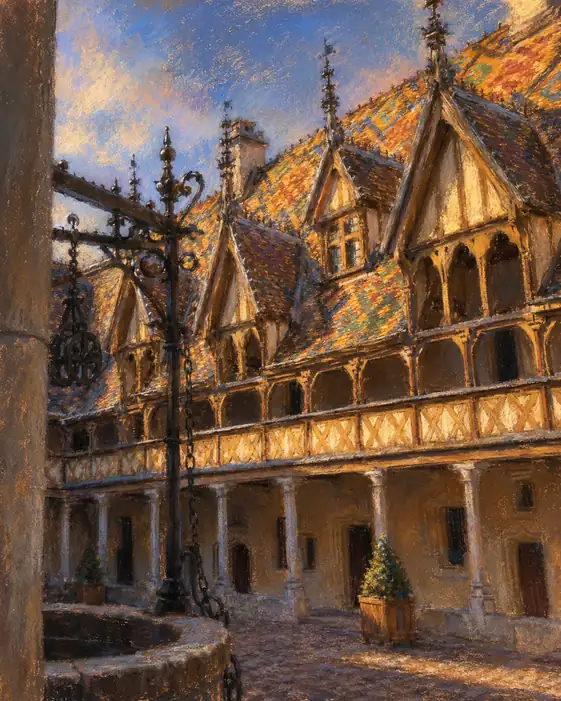 Tapestry of Eternal Light
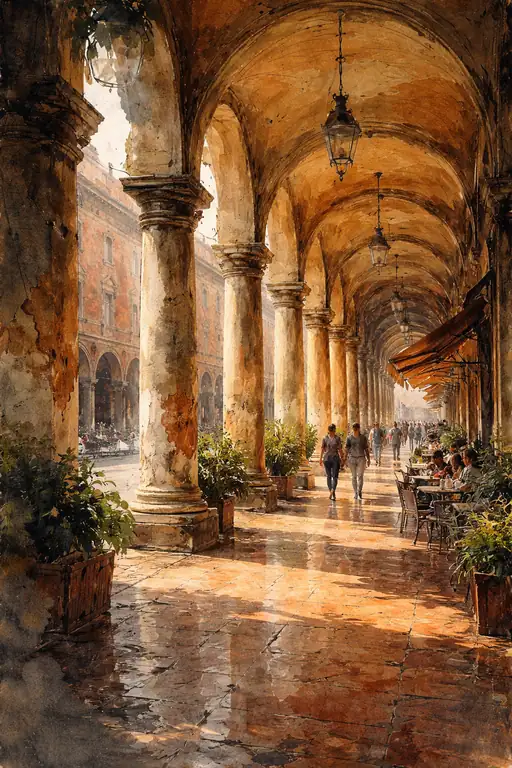 The Golden Corridor: A Symphony of Stone and Light
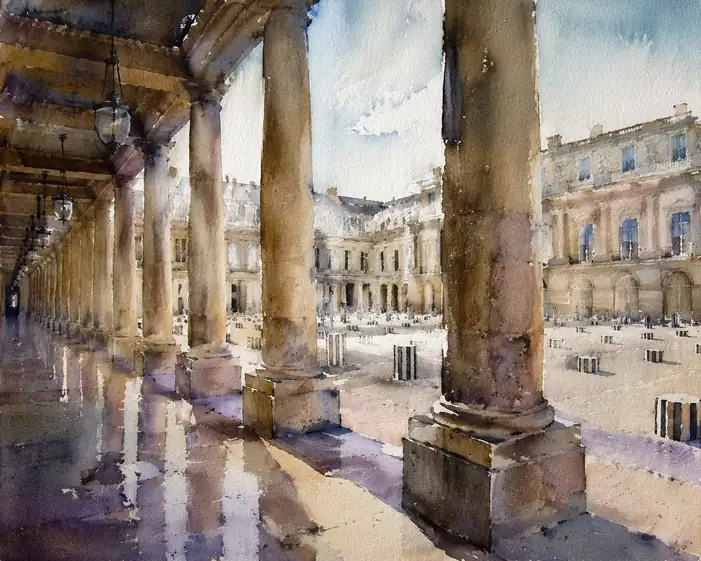 Palais-Royal: Shadows and Striped Reflections