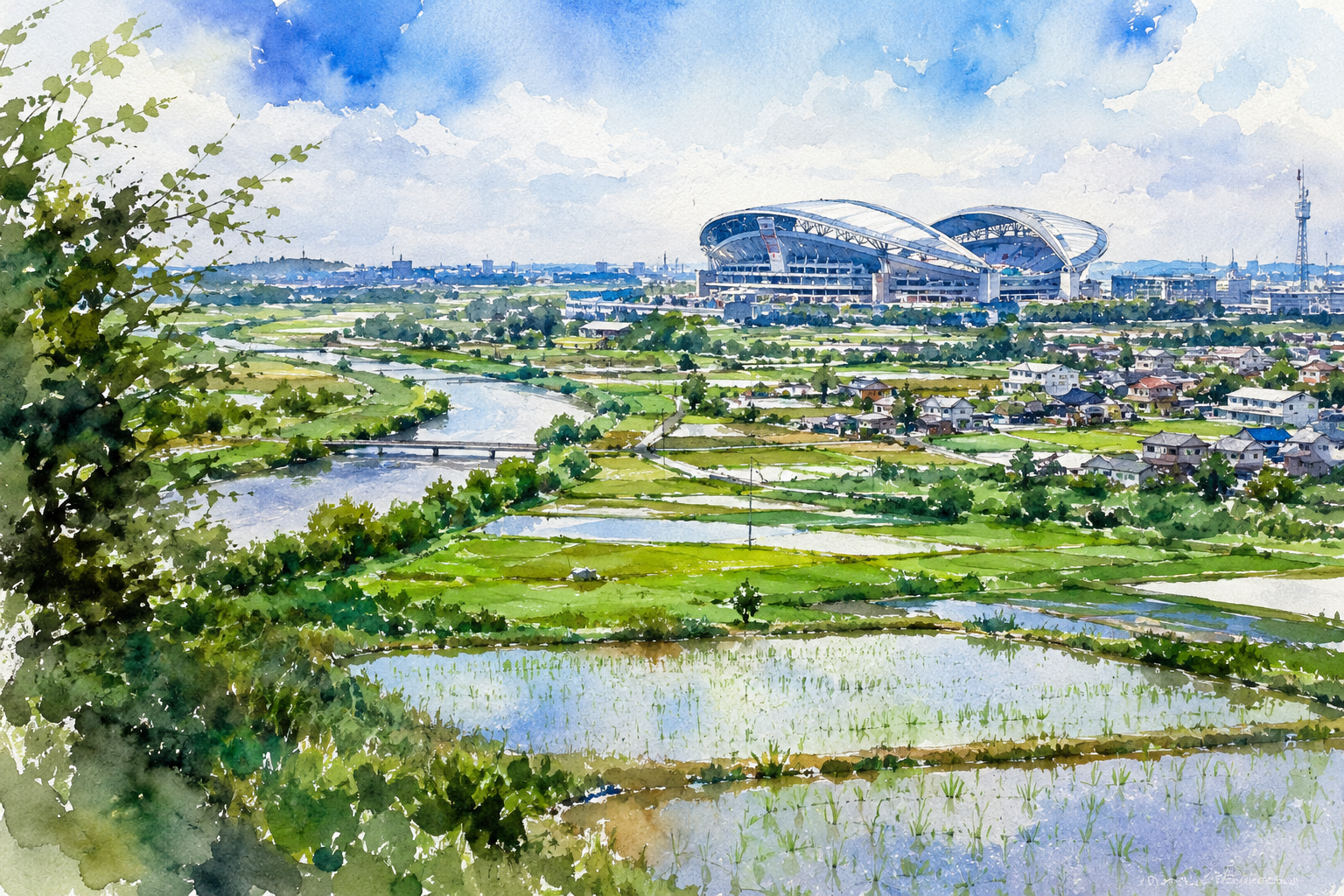
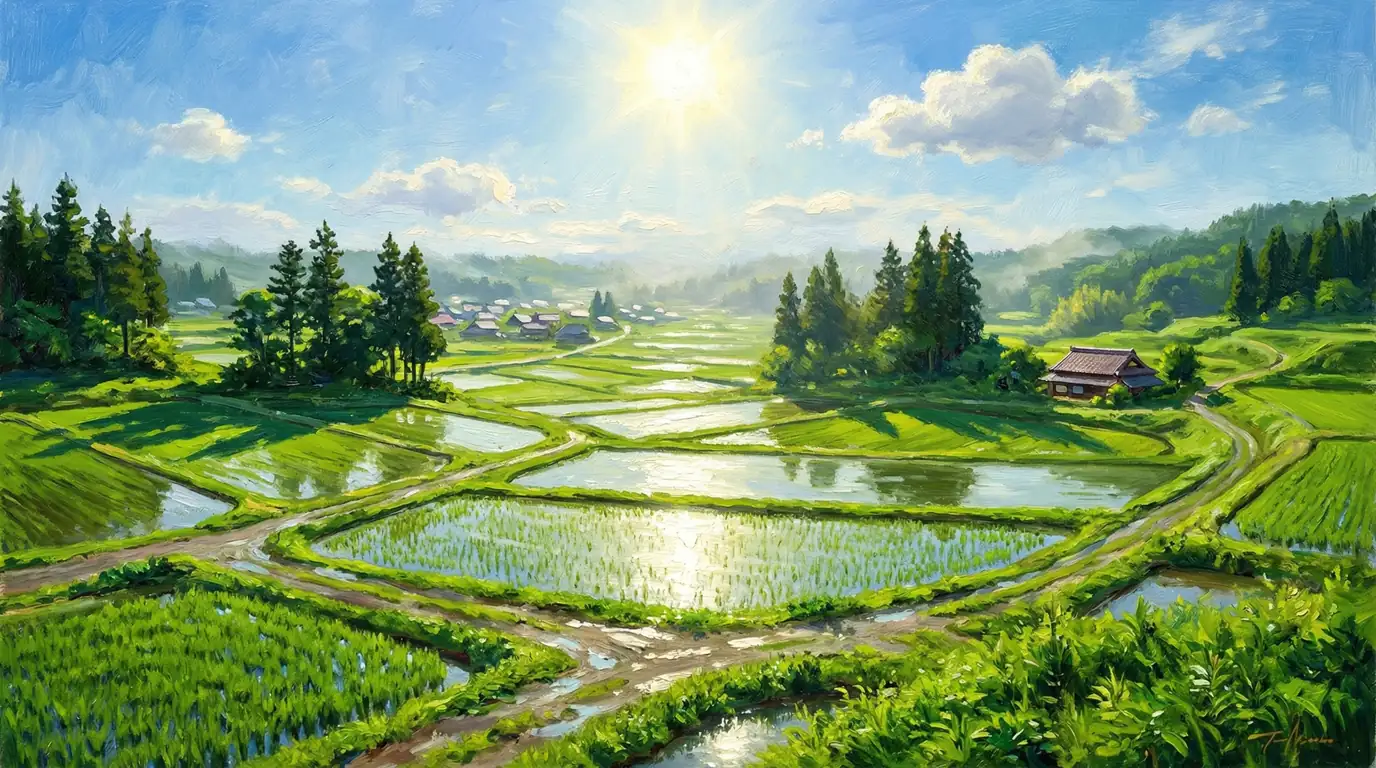
Future Over the Emerald Fields
Critique
1. Introduction This watercolor painting presents a panoramic view of a lush rural landscape, featuring flooded rice paddies in the foreground and a prominent modern stadium in the distance. The work explores the coexistence of traditional agricultural life and contemporary urban development, rendered with a bright and airy palette that suggests a clear early summer day. Through delicate washes and precise detailing, the artist captures a quintessentially Japanese scene where the natural and man-made worlds meet in a harmonious, sunlit environment. The composition invites a sense of nostalgia for the countryside while acknowledging the presence of modern cultural landmarks. 2. Description In the immediate foreground, several water-filled rice fields reflect the blue of the sky, with young seedlings arranged in neat rows. These fields are bordered by dense green foliage and a winding river that meanders toward the middle ground, where a small residential area is nestled among the trees. The horizon is dominated by a large, architecturally distinct stadium with a sweeping white roof, which stands as a silent sentinel over the plains. Above, a vast expanse of blue sky is punctuated by soft, billowing white clouds, created using the expressive bleeds and textures characteristic of high-quality watercolor paper. 3. Analysis The artist masterfully utilizes a palette of fresh greens and deep blues to establish a unified and refreshing atmosphere across the canvas. The transparency of the watercolor medium is effectively employed to render the reflective surfaces of the water and the hazy quality of the distant city skyline. Structurally, the large tree on the far left acts as a "repoussoir," pushing the viewer's gaze deeper into the valley and providing a sense of scale for the sprawling landscape. The contrast between the organic, irregular shapes of the vegetation and the smooth, engineered curves of the stadium creates an engaging visual rhythm that sustains interest throughout the piece. 4. Interpretation and Evaluation This work can be interpreted as a peaceful meditation on progress, showing how massive modern structures can integrate into a traditional landscape without overwhelming its inherent beauty. The technical skill displayed is exceptional, particularly in the artist's ability to maintain clarity and light even in the more densely painted areas of foliage. The choice of a high vantage point allows for a comprehensive understanding of the geography, making the viewer feel like an observer of a vast, living world. This painting is a successful example of contemporary landscape art, demonstrating a thoughtful balance between realistic representation and the evocative potential of watercolor. 5. Conclusion Upon first glance, the eye is drawn to the impressive silhouette of the stadium, but the true depth of the work lies in the meticulously rendered rice fields and the life they represent. The painting celebrates the beauty of a changing Japan, where the past and future are bathed in the same radiant light. Ultimately, it is a refined and optimistic piece that showcases the artist's command over color and composition, leaving the viewer with a sense of clarity and appreciation for the evolving tapestry of the natural and cultural landscape.
Same Subcategory
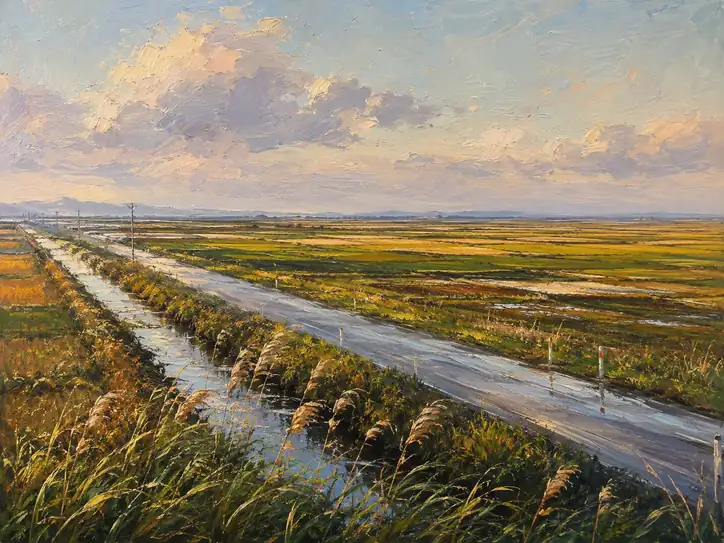 Reflection on the Eternal Fields
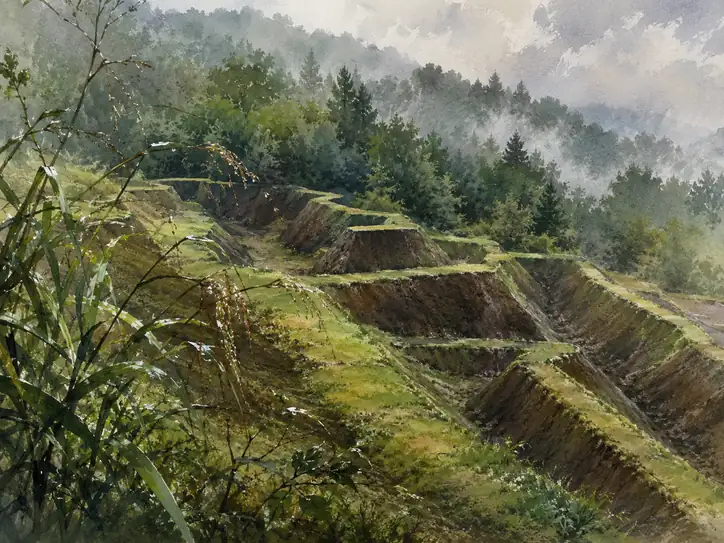 Where Clouds Rest on the Stairway to Heaven
Similar Artworks
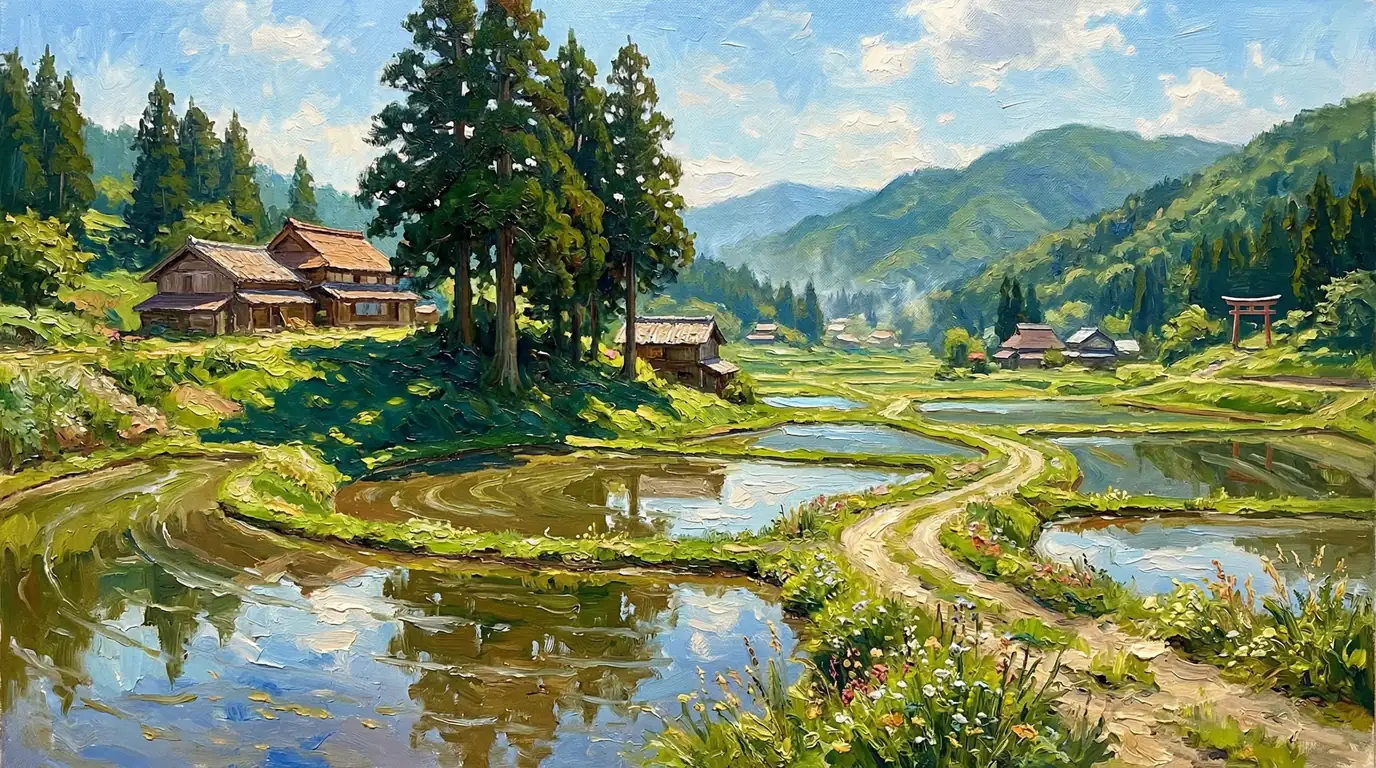 Nostalgia in the Verdant Valley
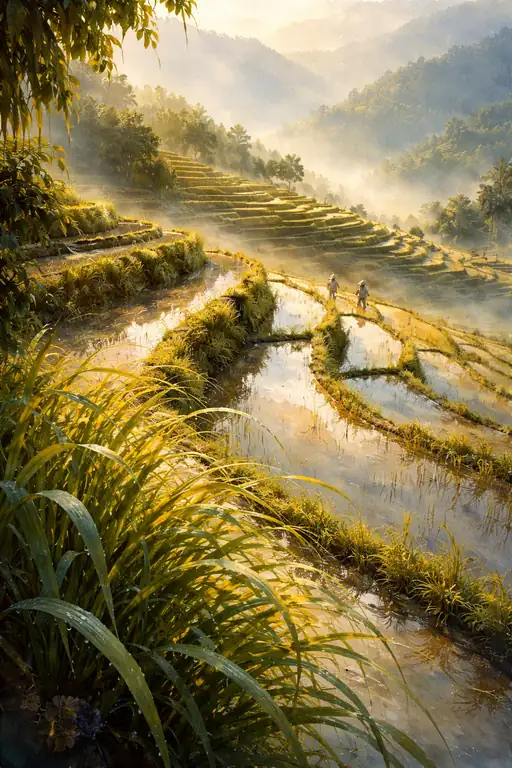 Golden Terraces: The Rhythm of the Harvest
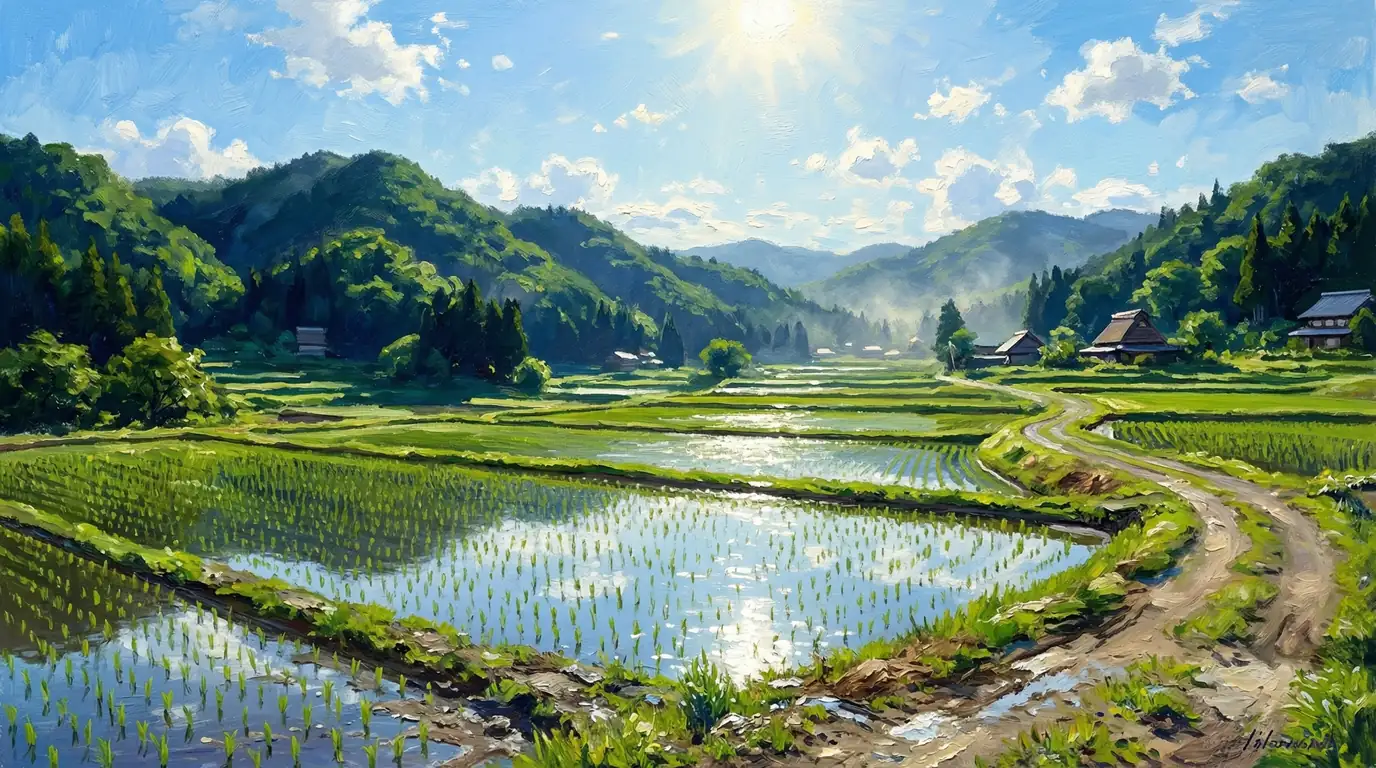 Sunlit Promise of the Harvest
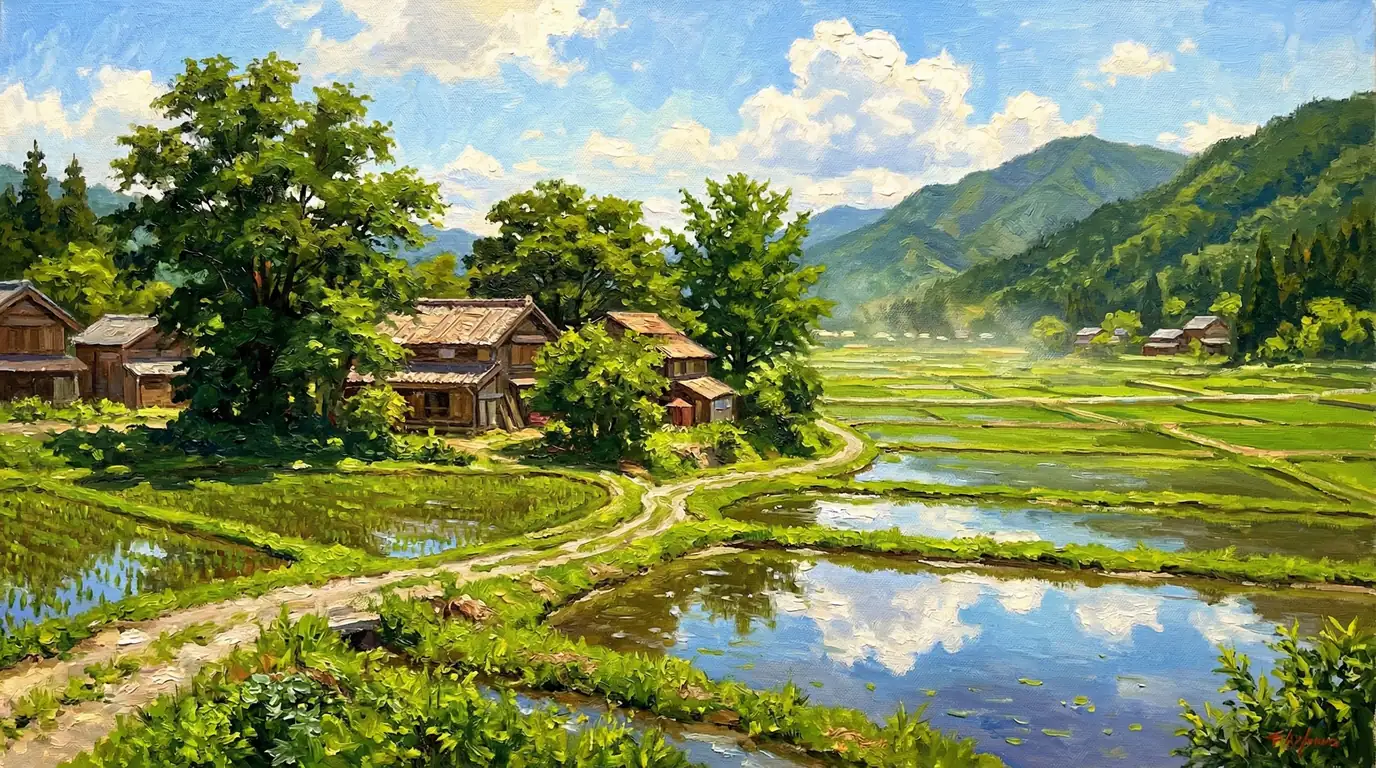 Summer's Gentle Embrace
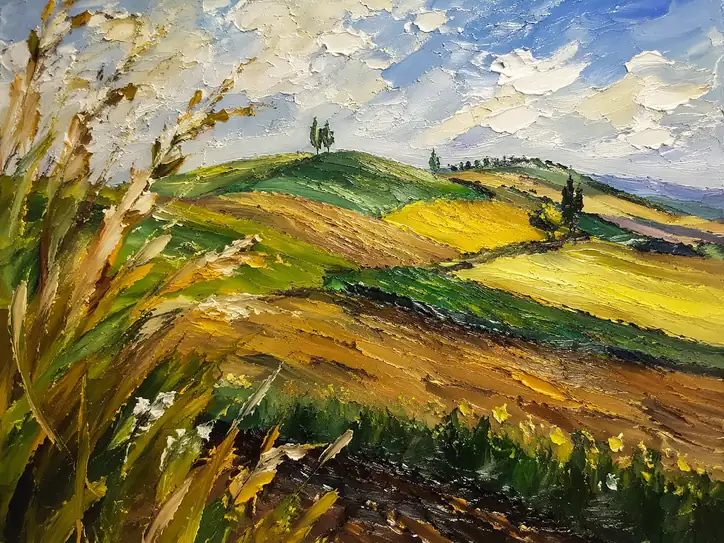 The Symphony of Sunlit Slopes
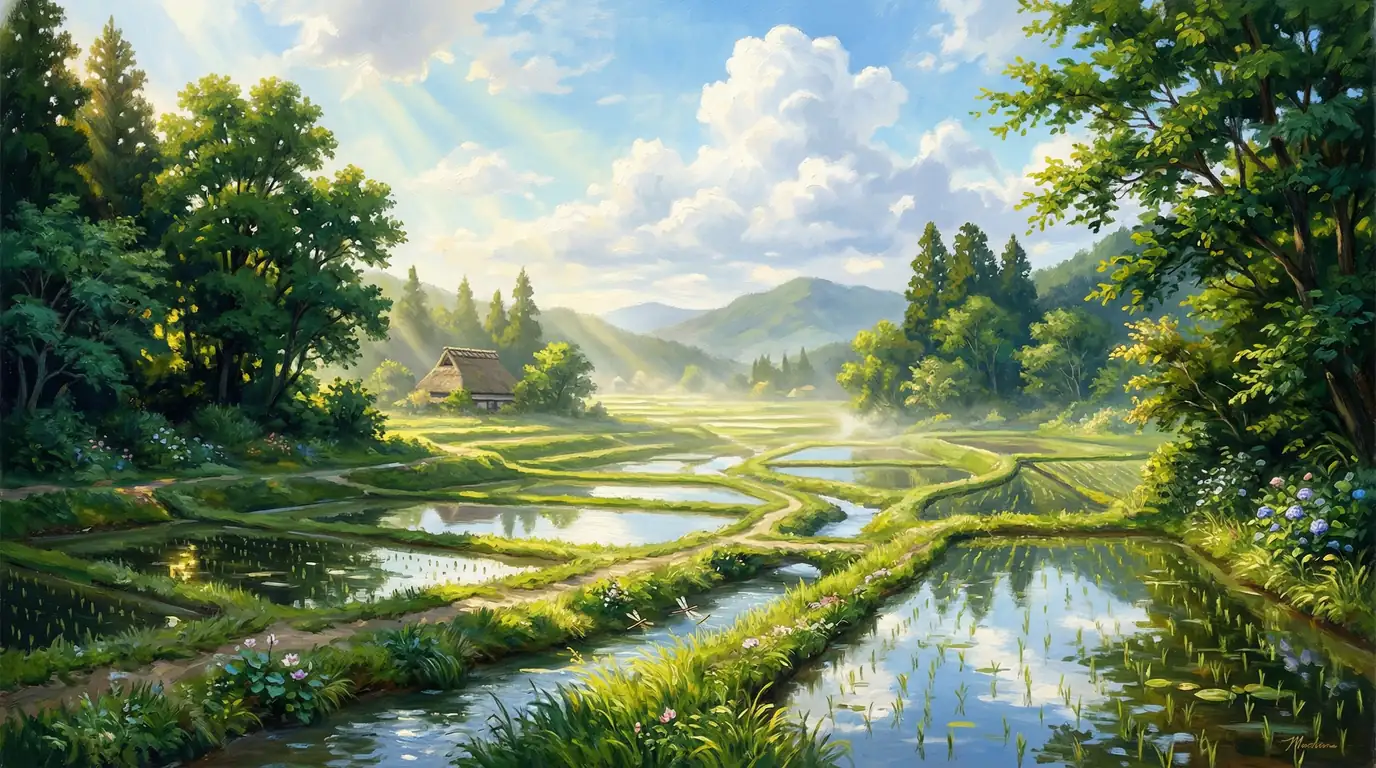 Rays of Hope Over the Terraces
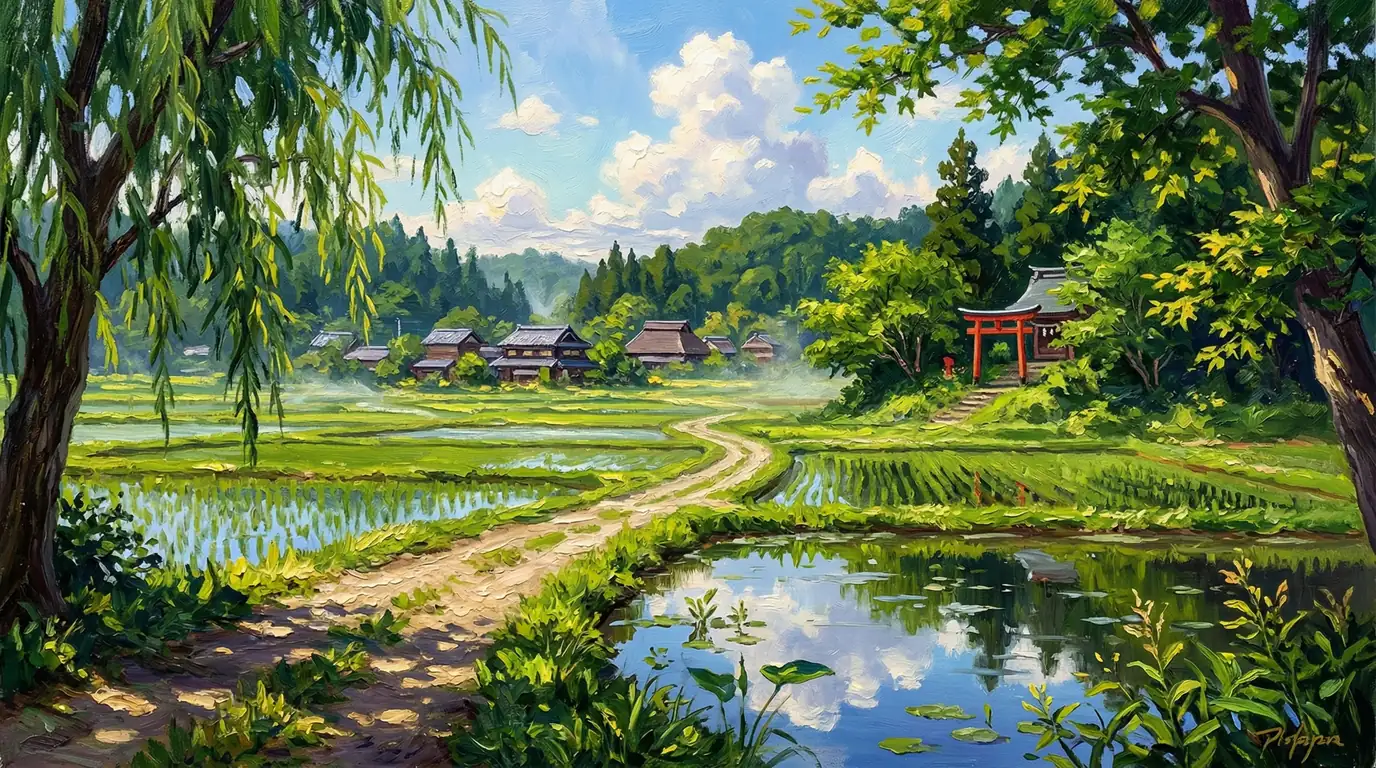 The Shrine Beyond the Summer Fields
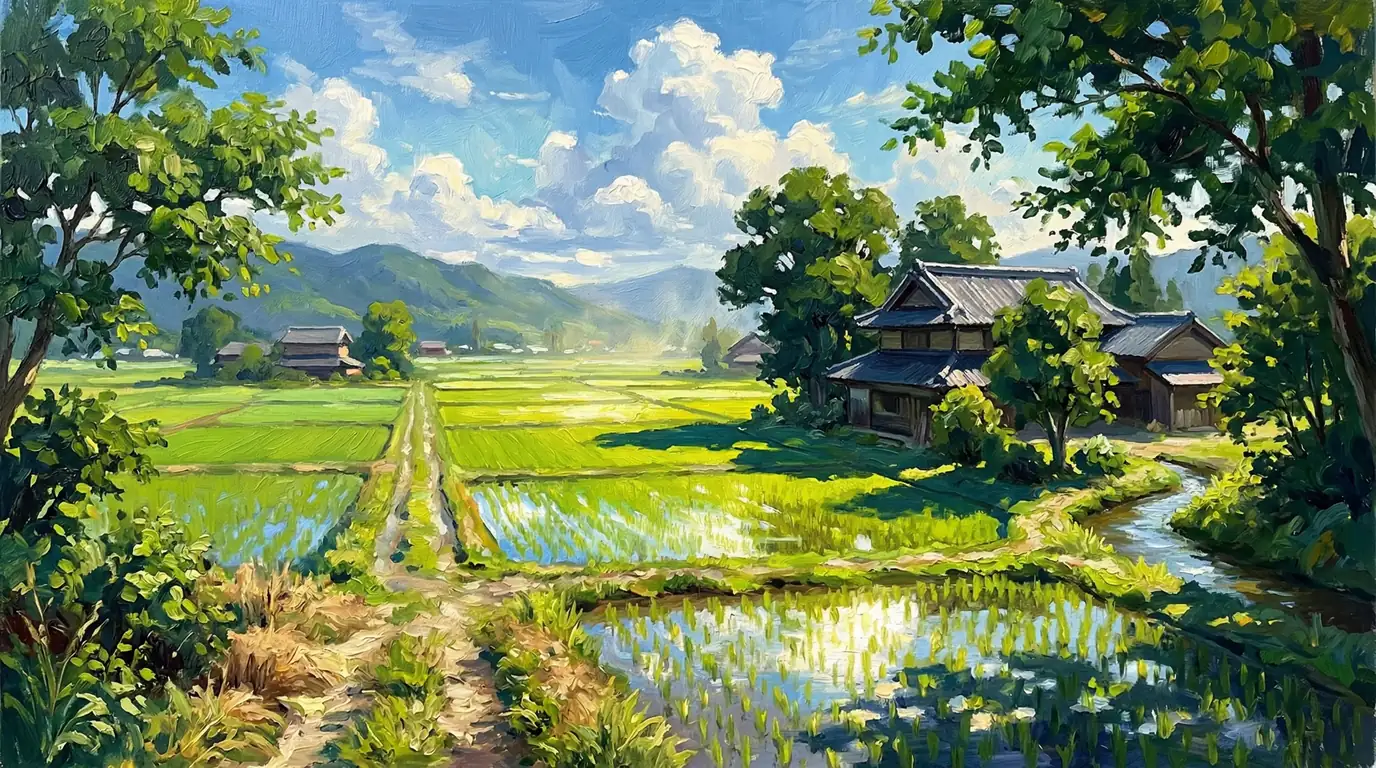 Sky Reflected in the Flooded Fields
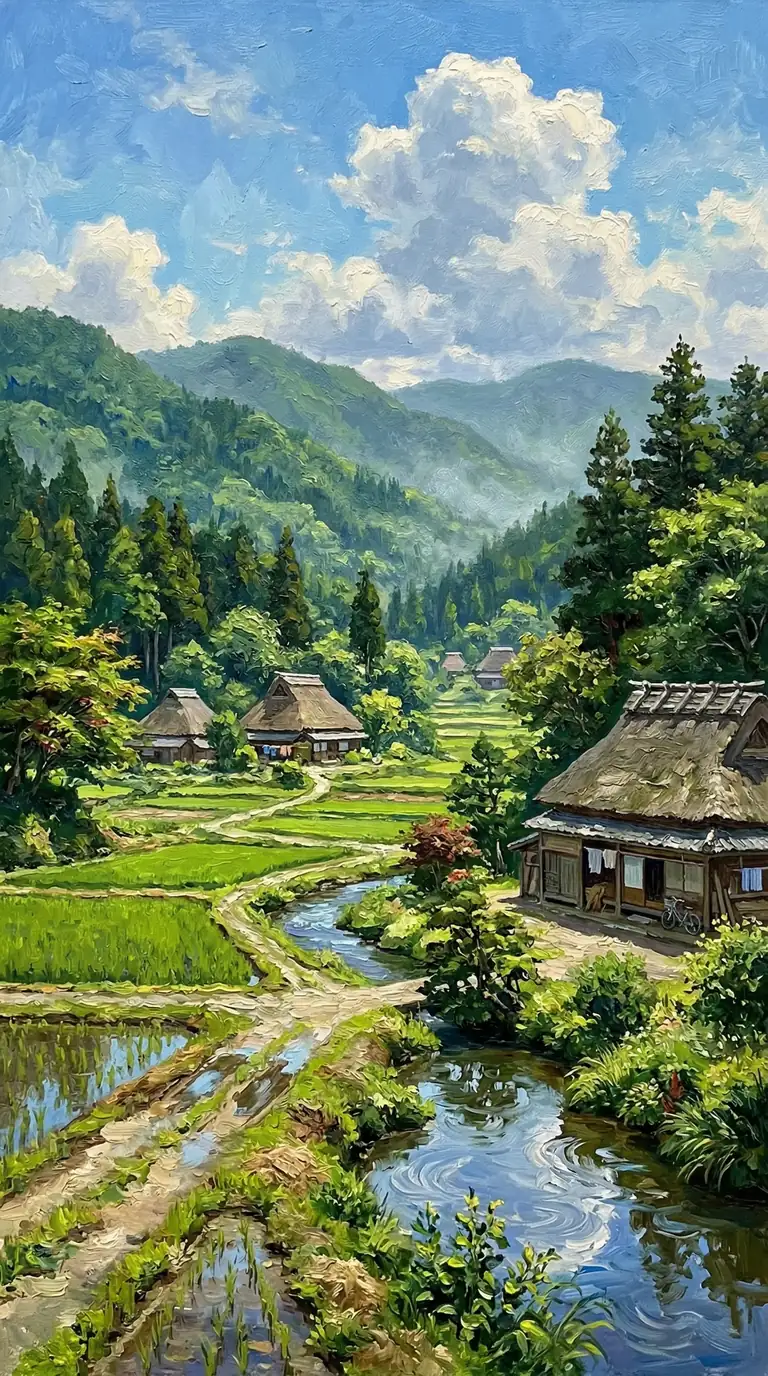 Autumn's Ascendancy: A Tapestry of Crimson and Gold
 Golden Echoes of the Terrace