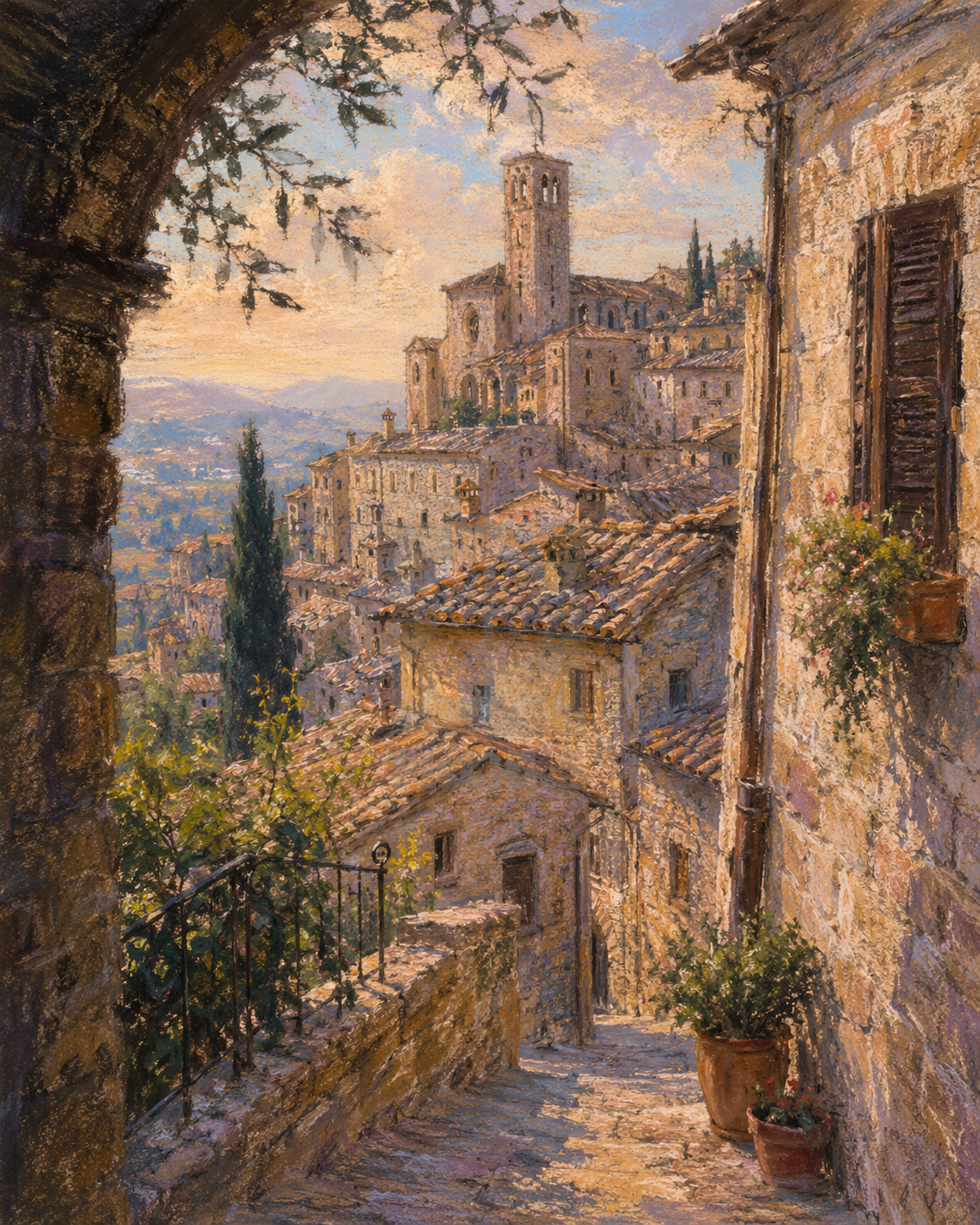
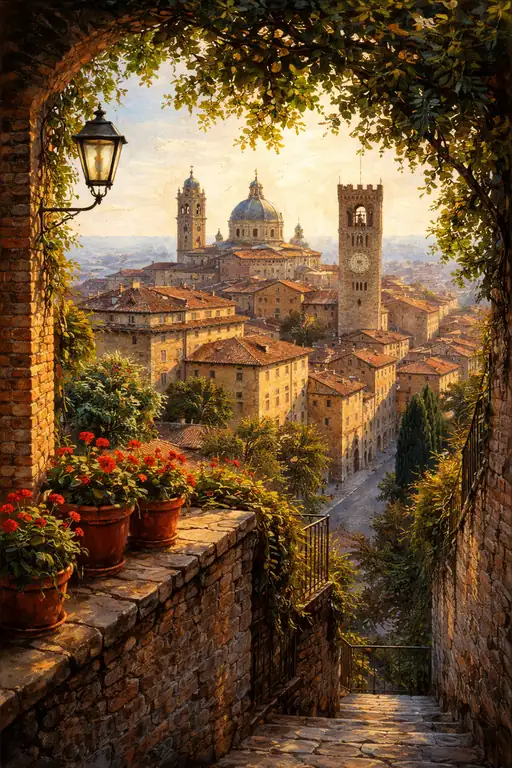
The Golden Gate to Assisi
Critique
1. Introduction This oil painting presents a captivating view of a historic hillside village seen through a weathered stone archway. The scene is enveloped in the warm, golden glow of late afternoon, which enhances the textured beauty of the ancient masonry and tiled roofs. By using the arch as a natural frame, the artist creates a sense of discovery, drawing the viewer’s eye toward the dense cluster of architecture that rises toward a central tower. The work evokes a profound sense of nostalgia and peace, capturing the quiet dignity of a place where time seems to have slowed down. 2. Description The foreground is framed on the left by a heavy, dark stone arch and on the right by the sunlit side of a rustic building complete with flower-filled pots. Beyond this entrance, a cascade of stone houses descends the hillside, their walls rendered in shades of ochre, cream, and sienna. At the peak of the settlement stands a tall, rectangular bell tower that anchors the composition against a soft, cloud-filled sky. Narrow streets and stairways are visible between the buildings, leading into a valley that fades into hazy blue mountains in the far distance, while potted plants add touches of vibrant green and red throughout. 3. Analysis The artist effectively employs a "frame-within-a-frame" composition, which provides immediate depth and guides the viewer’s perspective toward the distant focal point. The use of impasto technique is prominent, adding a tangible physical dimension to the stone walls and cobblestones, making the surfaces appear weathered and authentic. A warm color palette dominates the piece, with brilliant yellows and oranges in the light-struck areas contrasting with the deep, cool violets and blues in the shadows. This strong interplay of light and shadow not only defines the complex forms of the village but also establishes a rhythmic movement across the canvas. 4. Interpretation and Evaluation The painting can be interpreted as a celebration of enduring human heritage and the harmonious integration of architecture into the natural landscape. The technical execution is exceptional, particularly in the artist's ability to manipulate light to create a palpable sense of warmth and atmosphere. While the theme is a classic one in European landscape painting, the artist’s specific focus on texture and the intimacy of the foreground elements gives the work a fresh, engaging quality. It successfully balances the grandeur of the hilltop vista with the humble details of everyday life, such as the terracotta pots and window shutters. 5. Conclusion Upon initial viewing, one is struck by the majestic silhouette of the village, but closer inspection reveals a wealth of small, carefully observed details that bring the scene to life. The work beautifully encapsulates a moment of quiet reflection, where the beauty of the past is illuminated by the fleeting light of the present. Ultimately, this painting is a masterful achievement that demonstrates a seamless blend of rigorous technical skill and a deeply felt emotional appreciation for the subject, leaving a lasting impression of timelessness.
Same Subcategory
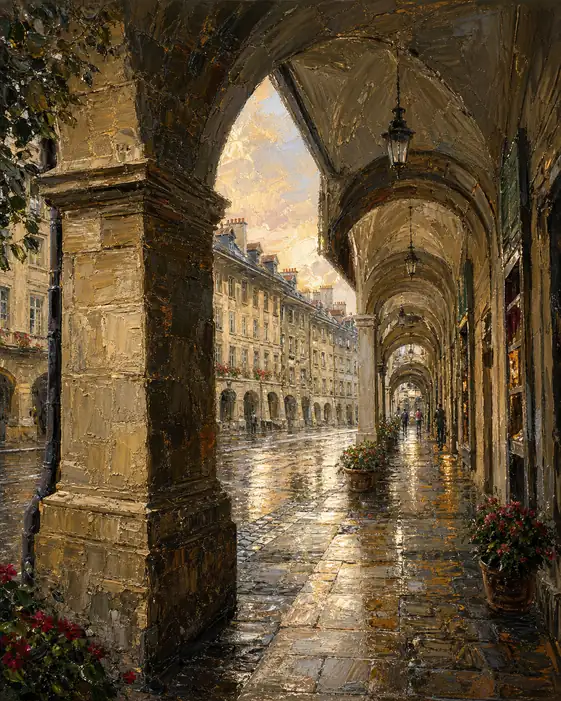 Gilded Pathways Under Arches
Similar Artworks
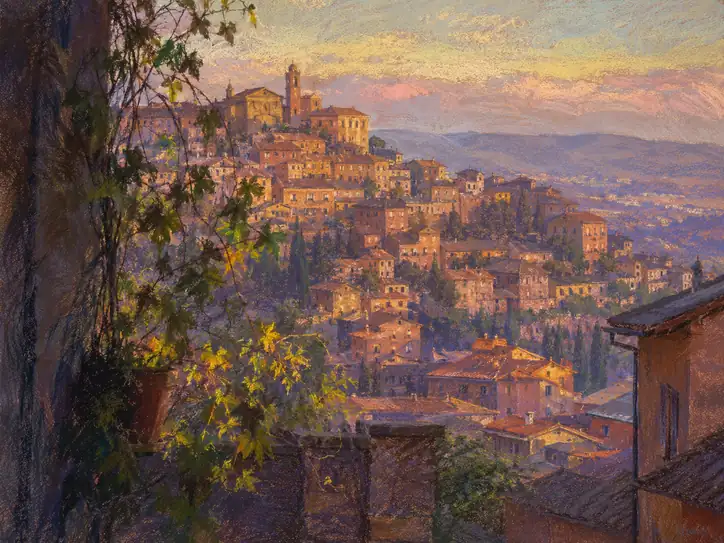 Resonance of the Golden Hillside
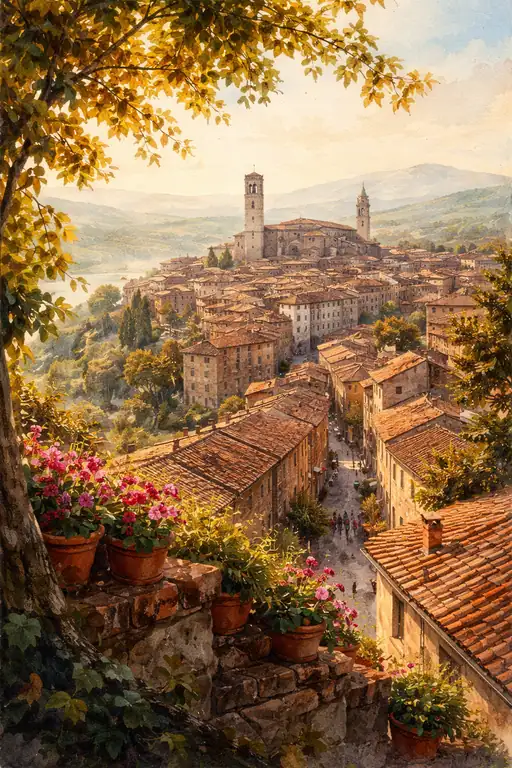 Tuscan Sunlit Terraces
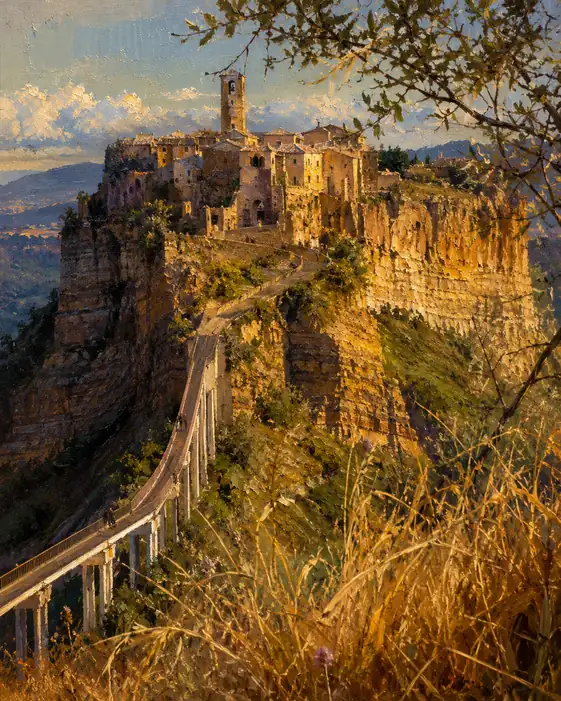 The Kingdom on a Vanishing Cliff
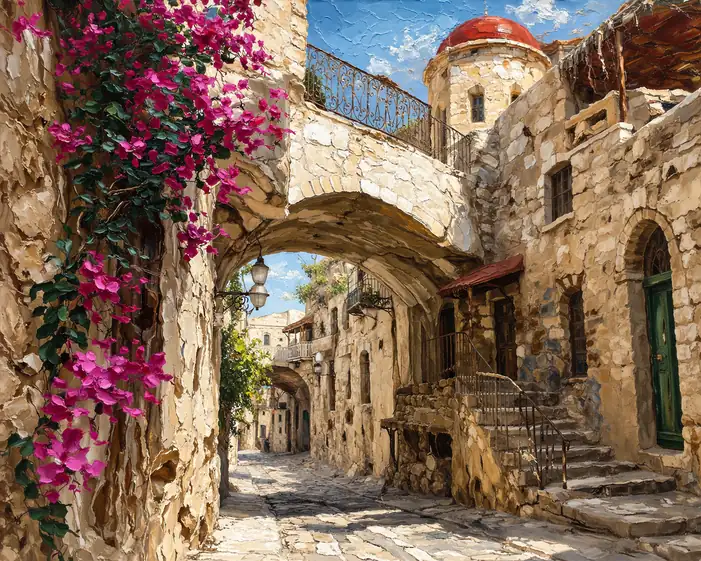 Sun-Drenched Stone Alley with Bougainvillea
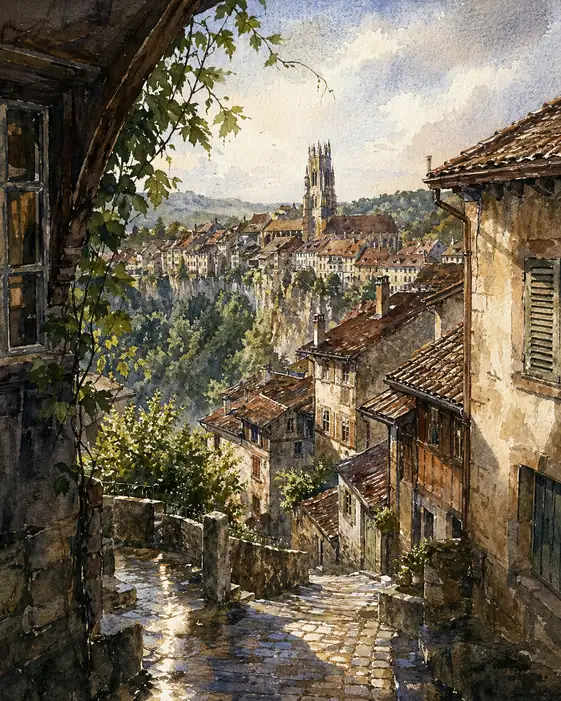 Sunlit Descent into the Verdant Valley
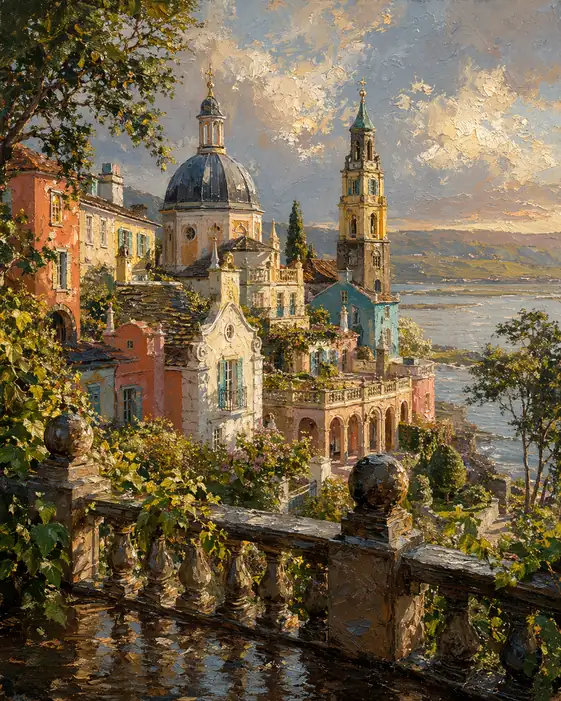 Vibrant Mediterranean Coastal Town
 Through the Arch of Golden Memories
 Echoes of Time Through the Rosy Arch
 The Spire's Watch: Afternoon in the Old Town
 Golden Spires of the Eternal Town